Internet + Traditional Chinese Medicine Industry Investment and Venture Capital Trend Report: TCM Poised to Become a Trillion-Yuan Industry
The “Internet + TCM Industry Forum” themed “Change and Opportunity: Seeking New Focal Points for the Traditional Chinese Medicine Industry,” hosted by VCBeat, co-organized by Kan Zhongyi, and supported by media partners including Toutiao, Sohu Health, NetEase Technology, Bioon, Life Times, People’s Health Channel, 36Kr, Health Point, China Digital Healthcare Network, and New Kangjie, was held on the afternoon of July 1 at the Zhubang 2000 Business Building in Ciyunsi, Chaoyang District, Beijing.
This forum brought together industry leaders, including Lu Gang from Legend Star, Li Sirui from Tasly, Gong Qiao from Taikang Online, Xu Jing from Kangmei Smart Pharmacy, Zheng Wei from Zhongjing Sci-Tech Investment, Zhu Tianyu from BlueRun Ventures, and Luo Feng from Kan Zhongyi, to jointly discuss key issues amid the transformation of the traditional Chinese medicine (TCM) industry against the backdrop of healthcare reform.
At this conference, VCBeat launched the world’s first “Venture Capital Trends Report on the ‘Internet + Traditional Chinese Medicine’ Industry.” The report reviews recent policies related to Traditional Chinese Medicine (TCM), surveys nearly 100 projects, and provides an in-depth analysis of the business models, product logic, and unique advantages of 20 selected projects. It focuses on outlining venture capital trends in the “Internet + TCM” sector and introduces the development of the TCM industry overseas, particularly in South Korea and Japan.
VCBeat has compiled the insightful perspectives shared by conference attendees for our readers. This is the fourth article in the series.
At the forum, VCBeat released the "Internet Plus Traditional Chinese Medicine Industry Venture Capital Trends Report (Abridged Edition)." This report was compiled by VCBeat over the course of one month, with ten key team members analyzing 73 relatively active TCM industry products currently on the market and conducting in-depth interviews with 20 of them. The report includes six in-depth case studies of specific products, eight analyses of pharmaceutical companies’ strategic layouts, insights from five professional investors, and four case studies of overseas TCM industry startups.
1Large Market: Traditional Chinese Medicine Is Poised to Become a Trillion-Yuan Industry
According to data released by the National Health and Family Planning Commission, the market size of China’s traditional Chinese medicine (TCM) industry exceeded RMB 600 billion in 2013, growing at an annual rate of over 30%. Currently, TCM consultations account for an estimated 20% of total primary care visits, generating an output value of RMB 125.3 billion. The government has set a target to raise this proportion to approximately 30% by 2020, which implies that the primary care TCM market could reach RMB 188 billion by then. Furthermore, data indicate that the output value of the Chinese herbal medicine industry reached RMB 164.2 billion by the end of 2014. According to Zhongyan Puhua, China’s demand for Chinese herbal medicines was 2.9 million tons in 2014 and is projected to reach 6.7 million tons by 2020, at which point the industry’s output value could attain RMB 379.3 billion.
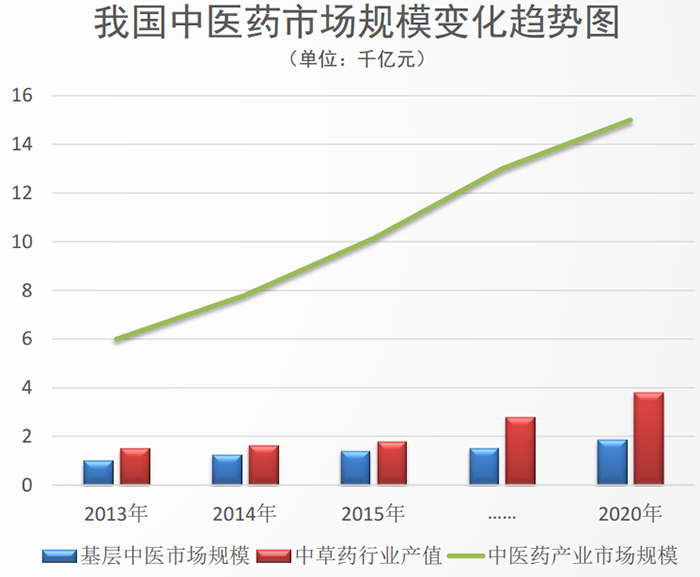
VCBeat believes that the large market size of the traditional Chinese medicine (TCM) industry is mainly due to two reasons.
From a domestic perspective, the traditional Chinese medicine (TCM) industry aligns with the broader policy environment of tiered diagnosis and treatment. First, compared with Western medicine, TCM is more holistic in nature and characterized by the ability of individual practitioners to provide comprehensive care; TCM physicians can make diagnoses without relying heavily on large-scale medical equipment, which fits well with the healthcare conditions in primary care markets. Second, data show that in 2014, outpatient costs at TCM hospitals were approximately 15% lower on average than those at general hospitals, while inpatient costs were 34.7% lower on average. The relatively lower treatment costs of TCM can effectively alleviate the financial burden of healthcare access for residents at the grassroots level. Furthermore, the TCM concept of “preventive treatment of disease,” which emphasizes “preventing disease before it occurs,” “preventing progression after onset,” and “preventing recurrence after recovery,” offers significant advantages and enjoys a strong public foundation in the prevention, management, and rehabilitation of common and chronic diseases at the primary care level.
From the perspective of international market conditions, Traditional Chinese Medicine (TCM) has gained significant popularity globally. Currently, TCM has spread to 183 countries and regions worldwide, with intergovernmental agreements signed with over 80 nations. According to the World Health Organization, TCM has been legally recognized through national or local government legislation in 29 countries and regions, including Australia, Canada, Austria, Singapore, Vietnam, Thailand, the United Arab Emirates, and South Africa. Furthermore, 18 countries and regions have incorporated TCM into their medical insurance systems. In addition, the domestic TCM industry is increasingly attracting the attention of international tourists.
2Policy Support: Encouraging Entrepreneurship in Five Key Areas
In recent years, the Chinese government has successively issued a series of policies to encourage and support the development of the traditional Chinese medicine (TCM) industry. Judging by the frequency and intensity of these policy releases, VCBeat believes that the state’s supportive stance toward the TCM sector is becoming increasingly clear, with steadily intensifying support. The Outline of Strategic Planning for the Development of Traditional Chinese Medicine (2016–2030), released in February 2016, further outlined five major directions for the development of TCM over the following fifteen years.
Informatization of Traditional Chinese Medicine (TCM): Promoting “Internet+” TCM Medical Services. Vigorously develop new models of TCM medical services, such as telemedicine, mobile healthcare, and smart healthcare, and gradually establish a standardized system for cross-hospital sharing and exchange of TCM medical data. Explore online applications for extended internet-based medical orders and electronic prescriptions in TCM services; leverage information technologies like mobile internet to provide convenient services including online appointment scheduling, waiting reminders, pricing and payment processing, access to diagnostic reports, and medication delivery; strengthen the application of big data in TCM. Enhance the construction of information infrastructure in TCM hospitals and improve their information systems. Establish an online verification mechanism for the authenticity and validity of patient prescriptions, achieving vertical integration with population health information and horizontal interoperability across sectors. Improve the statistical information system for TCM and establish a national direct-reporting network for comprehensive TCM statistics.
Health Management and Chronic Disease Management: Establish a comprehensive chronic disease prevention and control network and working mechanism characterized by division of labor and collaboration among TCM hospitals, primary healthcare institutions, and disease prevention and control agencies, accelerating the formation of a tiered diagnosis and treatment order with separate management for acute and chronic conditions; promote the establishment of community health management models integrating TCM content, implement TCM health interventions for high-risk populations, and enhance the level of TCM health management at the grassroots level; vigorously develop non-pharmacological TCM therapies to fully leverage their unique role in the prevention and treatment of common, frequently occurring, and chronic diseases.
Traditional Chinese Medicine (TCM) Wellness and Healthcare Services and Products: Support social forces in establishing TCM wellness and healthcare institutions, achieving group-based development or chain operations, and exploring a TCM health assurance model that integrates health culture, health management, and health insurance. Encourage TCM hospitals and TCM physicians to provide technical support, such as healthcare consultations, conditioning services, and medicated diet therapy, to TCM wellness and healthcare institutions. Promote the popularization of TCM wellness knowledge and easy-to-master TCM techniques and methods, such as physiotherapy and tuina massage. Encourage TCM institutions to fully leverage modern scientific and technological advances, including biotechnology, bionics, and intelligent technologies, to develop a range of health foods, healthcare products, and medical devices and equipment. Accelerate the development of technical and industrial systems for TCM preventive treatment of disease. Promote healthy work and lifestyle practices that incorporate the TCM concept of preventive treatment of disease.
Traditional Chinese Medicine (TCM) for Elderly Care: Promoting the integrated development of TCM and elderly care services, and facilitating the integration of TCM medical resources into elderly care institutions, communities, and households. Support collaboration between elderly care institutions and TCM medical facilities to establish expedited access channels for medical consultations. Encourage TCM medical institutions to provide home-based consultations, health examinations, and wellness counseling services tailored to the elderly population. Encourage TCM practitioners to offer wellness counseling and conditioning services within elderly care institutions. Encourage private capital to establish new nursing homes and sanatoriums primarily focused on TCM-based health and elderly care, explore the establishment of specialized institutions integrating TCM with medical and elderly care services, and develop a cohort of demonstration bases for such integrated care models.
E-commerce for Traditional Chinese Medicine (TCM) Materials: Develop e-commerce for TCM materials. Leverage big data to strengthen the collection of production information, as well as dynamic monitoring, analysis, forecasting, and early warning of price trends for TCM materials.
3Three Major Challenges Urgently Need to Be Addressed
Although the market for the traditional Chinese medicine (TCM) industry is substantial and enjoys policy support from the state, significant challenges persist, including a shortage of TCM professionals, disorder in the herbal medicine market, and low efficiency in TCM treatment and heritage transmission.
In 2011, the National Administration of Traditional Chinese Medicine released the findings of the first national survey on the basic status of traditional Chinese medicine (TCM). The results showed that there were only about 400,000 TCM practitioners in China. The number of licensed TCM physicians per 10,000 people nationwide was merely around three.
In the future, due to factors such as resource scarcity and ecological crises, the difficulty of obtaining authentic traditional Chinese medicinal materials may increase. Issues such as how to ensure the quality of medicinal materials and how to trace their place of origin have emerged. Although various parties are making efforts to change the current situation, the effectiveness still needs to be improved.
Inefficiencies in the field of Traditional Chinese Medicine (TCM) are manifested, on one hand, in the low efficiency of knowledge transmission and, on the other hand, in the lack of objective evaluation criteria for TCM diagnostic and therapeutic outcomes.
4Six Major Entrepreneurial Opportunities
The Advantages of the Traditional Chinese Medicine (TCM) Industry and Its Ongoing Challenges Create Six Major Opportunities for Entrepreneurship in the “Internet Plus TCM” Sector
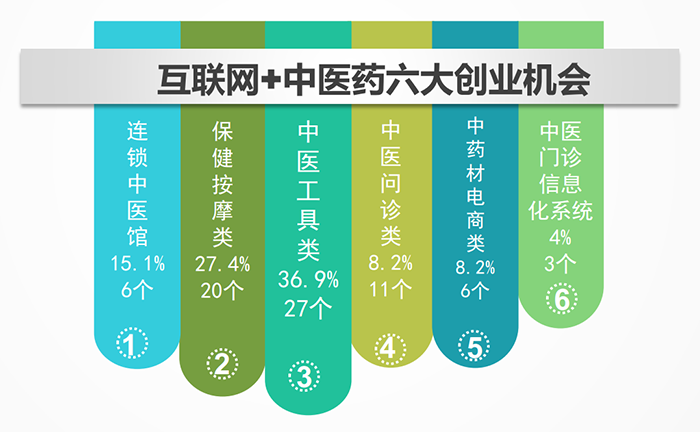
These six major opportunities are: information systems for TCM outpatient clinics, e-commerce platforms for Chinese herbal medicines, TCM utility products, health and massage products, TCM consultation services, and chain TCM clinics.
Currently, a market search using keywords such as “Traditional Chinese Medicine (TCM),” “Chinese herbal medicine,” or “TCM and Chinese herbal medicine” yields over 1,100 available app products. When including products that lack dedicated apps and are accessible only via WeChat or PC platforms, the total number of internet-plus TCM products on the market exceeds 2,000.
Geographically, current “Internet + Traditional Chinese Medicine” entrepreneurial ventures are primarily concentrated in Beijing, Shanghai, and Guangdong.
From a temporal perspective, startups in the “Internet + Traditional Chinese Medicine (TCM)” sector have gradually increased since 2013, with a modest startup boom emerging in this field in 2015.
From the perspective of operational models, products can be categorized into two dimensions. In terms of usage scenarios, 40% of products currently adopt an O2O (Online-to-Offline) model, while 30% operate on a purely online basis. Classified by target users, B2C-type products are more prevalent, accounting for 61%.
In terms of quantity, TCM tool-based products currently account for the largest share at 37%, followed by health and massage products at 27%, while TCM outpatient clinic information systems are the least numerous.
Chain Traditional Chinese Medicine (TCM) Clinics: Chain TCM clinics were generally established at an earlier stage. With the development of mobile internet technology, traditional TCM clinics have integrated information technology solutions to upgrade their products and services.
Wellness Massage Category: Wellness massage products primarily adopt the O2O (Online-to-Offline) model, with only a subset utilizing the O+O (integration of online and offline) model.
TCM Tool-Based Products: These products primarily focus on “knowledge bases,” with most dedicated to disseminating knowledge of Traditional Chinese Medicine (TCM). Additionally, the category includes AI-assisted diagnostic systems, smart hardware, and online education products.
TCM Consultation Category: TCM consultation products encompass both pure online and O2O models. Consultation fees and herbal medicine costs constitute the two primary revenue streams for these products.
E-commerce of Traditional Chinese Medicinal Materials: E-commerce products in this sector primarily adopt the B2B model, mainly addressing the challenges of traceability and quality control for traditional Chinese medicinal materials.
In the information systems for traditional Chinese medicine (TCM) outpatient clinics, SaaS and PaaS are two common product forms.
5Total financing exceeds RMB 2 billion
According to available data, a total of 41 products have secured financing (including acquisitions), with the majority at the angel round. Currently, 14 products have completed Series A financing. However, only three projects have reached Series B, and merely one has advanced to Series C.
Encouragingly, the total financing amount for the "Internet Plus" traditional Chinese medicine industry has currently exceeded RMB 2 billion.
The primary investors in “Internet + Traditional Chinese Medicine (TCM)” fall into five categories: private capital, foreign capital, industrial capital, insurance funds, and state-owned capital. Among these, private capital serves as the main driving force, with investments predominantly concentrated at the angel round stage.
Few foreign investors have entered the traditional Chinese medicine (TCM) sector, with only seven known cases based on public information. Foreign capital tends to favor asset-light "Internet Plus" projects; Honghui Capital is the sole exception, having invested in Junhetang, a chain of offline clinics.
There are two types of industrial capital investing in the “Internet + Traditional Chinese Medicine (TCM)” sector: healthcare industry companies and internet O2O (Online-to-Offline) companies. These investments primarily aim to generate synergies with their existing businesses. For instance, Tianyi Group, the parent company of Meinian Onehealth, invested in Zhangzhongyi, a TCM O2O company; Jointown Pharmaceutical Group, which specializes in pharmaceutical distribution, invested in Oriental Chinese Herbal Medicine Network and Zhenyaocai, both online portals and trading platforms for Chinese herbal medicines; and 58.com and Kung Fu Bear, which focus on urban services and O2O models, invested in massage service providers including Diandao Massage, Dianqiuxiang Massage, and Songmingwu.
Insurance capital involvement remains limited, with only one notable case: Ping An Insurance and the Starr Foundation’s investment in Gushengtang. It is understood that commercial health insurance has failed to effectively integrate Traditional Chinese Medicine (TCM) primarily due to TCM’s lack of standardization and insufficient data accumulation, which hinder effective cost control.
There is only one case of state-owned capital investing in "Internet Plus" Traditional Chinese Medicine (TCM), namely, the Zhongwei Fund's investment in TCM Materials Tiandi Network.
6Traditional Pharmaceutical Companies Attempt Three Major Strategic Layouts
With the rapid development of traditional Chinese medicine (TCM) in China, service capabilities have significantly improved, and the scale of the TCM industry has expanded considerably. According to data from the National Bureau of Statistics, the market size of Chinese proprietary medicines in China exceeded RMB 570 billion in 2014, accounting for 30% of the domestic pharmaceutical market. TCM exports reached RMB 7.559 billion, with 1,592 TCM manufacturing enterprises nationwide.
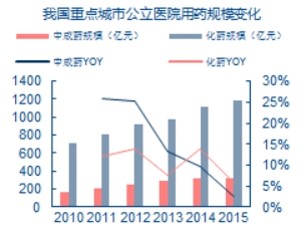
Currently, the share of pharmaceuticals in the overall hospital terminal market is gradually declining, and this trend also applies to proprietary Chinese medicines. There are two main reasons behind this trend. On one hand, medical insurance cost containment has placed significant pressure on hospitals, requiring them to gradually reduce the proportion of pharmaceutical expenditures. In May 2015, the General Office of the State Council issued the “Guiding Opinions on Pilot Comprehensive Reforms of Urban Public Hospitals,” which stipulated that efforts should be made to lower the overall drug proportion (excluding traditional Chinese medicine decoction pieces) in pilot city public hospitals to approximately 30% by 2017. On the other hand, price reductions resulting from centralized bidding have led to a continuous decline in drug prices.
In this market environment, if traditional Chinese medicine enterprises wish to survive and thrive, they must gradually explore various new marketing and operational models.
Currently, traditional Chinese medicine (TCM) enterprises are pursuing three main strategies in their internet expansion: establishing self-owned platforms, joining third-party platforms, and developing online-to-offline (O2O) models; building a closed-loop TCM diagnosis and treatment service system via internet platforms; and connecting the upstream and downstream segments of the TCM industry through B2B e-commerce platforms.
7Japan and South Korea Are More Traditional, While Europe and the US See More Innovation
In overseas markets, Traditional Chinese Medicine (TCM) has maintained a presence in Japan and South Korea; however, these markets have seen relatively limited exploration of the internet sector and remain rather traditional.
By comparison, the United States is currently more advanced, actively integrating the traditional Chinese medicine (TCM) industry with various emerging technologies. Two product models are relatively common in the U.S. market: one focuses on promoting acupuncture and massage therapies, while the other centers on health management, incorporating smart hardware devices.
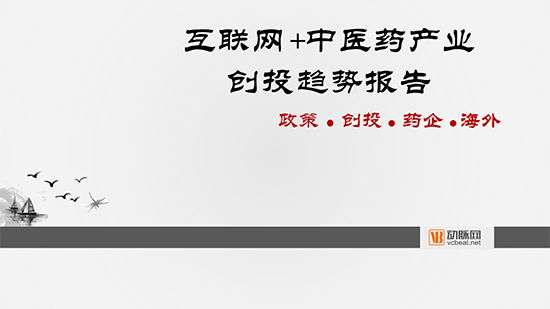
"Internet + Traditional Chinese Medicine Industry Venture Capital Trends Report" (2016 Edition)New~
Purchase Report,Please click here
Long-press and scan the QR code with your mobile phone to purchase this report directly.