

Fosun and Alipay Forge Strategic Alliance to Integrate Mobile Access with Comprehensive Healthcare Ecosystem
In this era, which prizes consortium-building and industrial integration, cooperation between giants no longer seems novel, and the media has long grown accustomed to it. Yet just yesterday, a partnership between two such titans still sent the entire capital market into a frenzy. One might ask: which other two companies could possess such allure as to captivate attention from all quarters? The answer is Alibaba and Fosun.
On July 4, Fosun Pharma and Alipay signed the Framework Agreement on Business Cooperation. The two parties agreed to establish a close online-offline alliance through business cooperation, aiming to leverage their respective advantageous resources to provide mutual support in technology, platforms, marketing, media, and other areas, and to engage in long-term and sustained strategic collaboration based on existing businesses and future planned ventures.
The Core of Collaboration: Integration of the Industry Chain and Payment
1. Modes of cooperation that both parties may adopt in their collaboration within the healthcare services sector:
Alipay leverages its credit system solutions and expertise in building credit infrastructures to help the Group actively explore credit-based financial solutions tailored to its customers.
2. Alipay commits to providing the Company and its controlled subsidiaries/affiliates with the most favorable payment rates under equivalent conditions.
3. Guided by the principle of mutual benefit, both parties shall establish a Business Innovation Working Group to hold regular monthly exchanges and actively pilot innovative projects (such as cloud pharmacies and medical knowledge bases), jointly exploring people-centric innovative business models in the health sector.
4. Both parties shall leverage their own resources or engage their respective partners to conduct positive promotional activities for this collaboration and the specific projects thereunder, either jointly or separately.
Respective Needs: Industry Data and Industry Entry Points
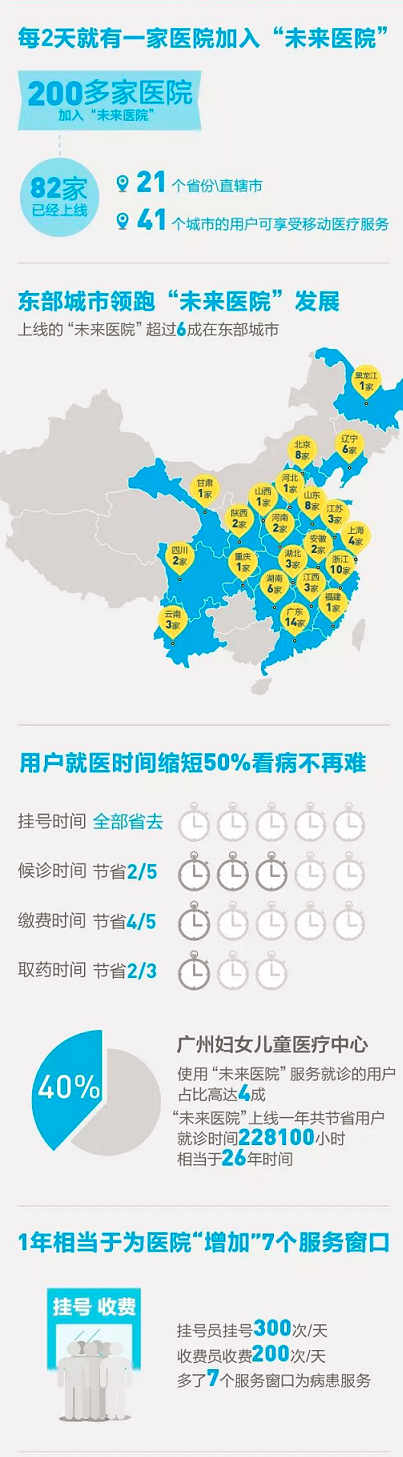
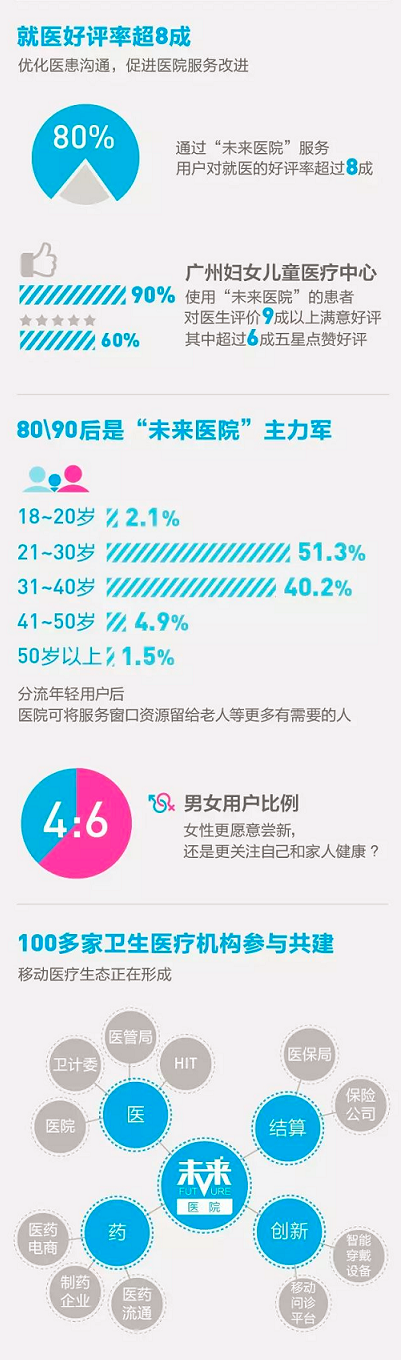
Previously, Alipay launched the “Future Hospital” initiative in May 2014. Through its solutions, patients can complete appointment registration, waiting, payment, and report viewing on their mobile phones, thereby avoiding repeated queuing. Meanwhile, it adds channels for doctor-patient communication and evaluation to enhance patient satisfaction, and features intelligent reminders for the medical consultation process. Therefore, forming partnerships with as many medical institutions as possible to acquire more industry data is an urgent need for Alipay.
On June 10 last year, Alipay released the “One-Year Service Data Report for Future Hospitals.” The report indicated that the “Future Hospital” service led to clear improvements in patient satisfaction rates, hospital operational efficiency, and the time patients spent seeking medical care.
Turning our attention to Fosun, its strategic layout in recent years across hospitals, pharmaceuticals, medical devices, diagnostics, and even senior living real estate has been extensive and far-reaching.
Through mergers and acquisitions, Fosun currently owns not only three general hospitals, two specialized oncology hospitals, and one high-end medical center, but has also successively acquired Alma Lasers, a global leading supplier of laser aesthetic medical devices, and OXFD, a provider of in vitro diagnostic products and services for tuberculosis. In the pharmaceutical sector, Fosun controls China’s largest pharmaceutical distribution channel by indirectly holding a 29.98% stake in Sinopharm Group Co., Ltd. Additionally, it established Starcastle Central, China’s first comprehensive elderly care community, through a joint venture with Fortress Investment Group.
However, with the rise of mobile healthcare, Fosun has long lacked a robust, integrated mobile entry point and payment tool to penetrate and integrate its various healthcare business segments. Rather than building a mobile platform from scratch, Fosun’s decision to partner with Alipay represents the simplest and most expedient approach. As a leading mobile application, Alipay boasts an absolutely dominant user base and market share. Furthermore, its premier position in the payment sector and the financial ecosystem of Ant Financial constitute highly valued strategic assets for Fosun in this collaboration.
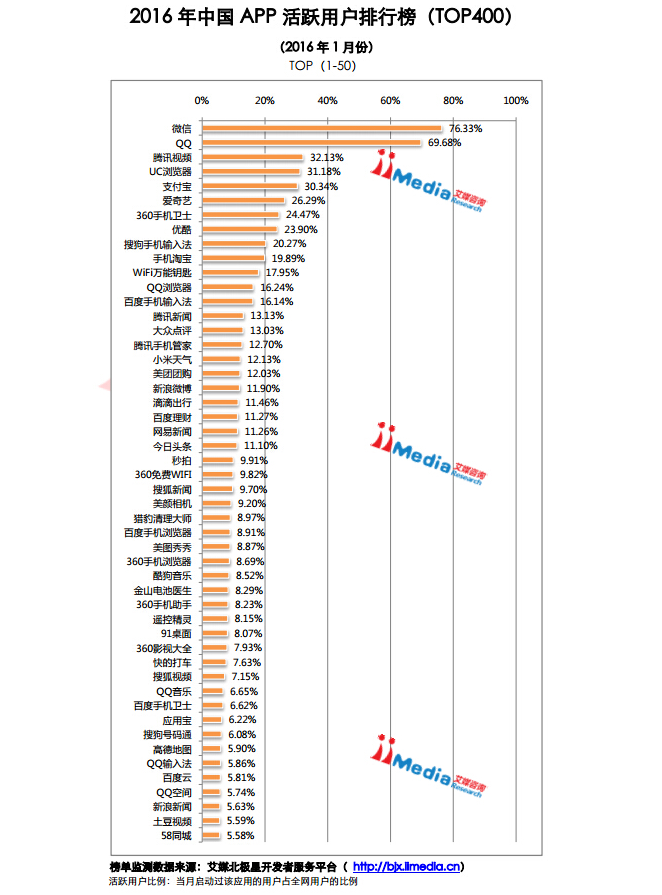
According to the “Top 400 Most Active Chinese Apps” ranking released by iiMedia Research in February, Alipay ranked among the top five apps in China with a user activity rate exceeding 30%, an impressive achievement for a non-social and non-entertainment application.
VCBeat Analysis: The Ideal Integration
If this collaboration is successfully concluded, it will not only facilitate the integration of Fosun Group’s offline medical service system with its leading online payment capabilities, thereby further optimizing its overall medical services.
Meanwhile, by leveraging Fosun’s comprehensive industry coverage—spanning a wide network of medical institutions and pharmaceutical resources—Alipay can rapidly secure a dominant market share in the healthcare sector. This is instrumental for Alipay to establish a big data-driven health management platform and facilitate the strategic shift from patient treatment to preventive care.
In summary, the two parties can be described as a match made in heaven in terms of business. However, the success of collaboration between industry giants ultimately depends on whether they can seamlessly integrate their respective strengths with those of their partner in the later stages, thereby achieving a synergistic effect where 1+1>2.