

Where Lies the Key to Healthcare Cost Control? Insights from Wu Yuxiong of Guangdong Family Doctor Association
Previously, Dai Tao, Deputy Director of the Medical and Health Science and Technology Development Research Center under the National Health and Family Planning Commission, stated at the “2016 Boao Forum for Entrepreneurs in China”: “Many reforms may satisfy some segments of the population, but healthcare reform is the only one that leaves everyone dissatisfied—doctors are dissatisfied, patients are dissatisfied, and the government is also dissatisfied.”
Nevertheless, Dai Tao also stated that realizing the "Healthy China" initiative requires deepening healthcare reform, adhering to a people-centered approach focused on safeguarding and improving public health, rather than prioritizing the development of medical institutions. The growth of medical institutions should serve to guarantee the health of the population. The goal is to achieve better outcomes with lower costs, meaning that corporate profitability must take a back seat—even if this may seem counterintuitive.
Yet, in the face of a trillion-dollar healthcare market, capital continues to flow in proactively. Guided by policy trends, the primary care market has clearly emerged as one of the hottest sectors. Although primary care still grapples with challenges such as inadequate service capacity and payment-related issues, these very pain points represent key opportunities for private capital to make strategic inroads.
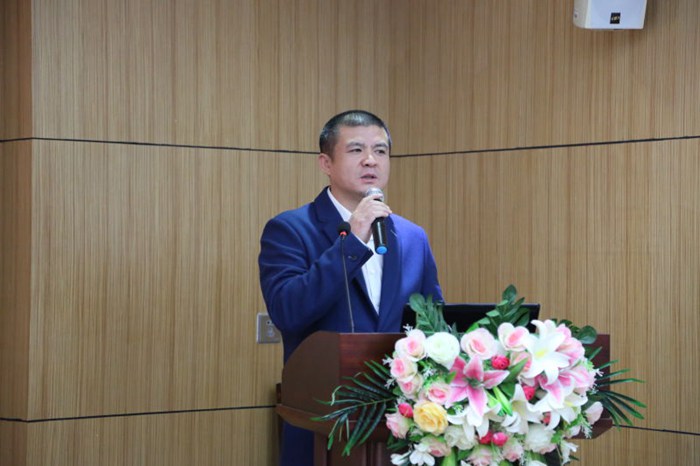
Wu Yuxiong, Founder of the Guangdong Family Doctors Association
The Guangdong Family Doctor Association was established in December 2014, with the initial aim of serving family doctors and related technical personnel in Guangdong Province, and promoting the widespread adoption of systems such as family doctor services, first-contact care in communities, two-way referrals, and tiered diagnosis and treatment.
In 2015, the Guangdong Provincial Government planned to establish a new health insurance company. At that time, the Family Doctor Association had been established for only about a year. However, its grassroots medical reform concepts, cost control systems, and operational models already implemented gained recognition from relevant authorities, leading to its designation as the guide and advisor for the proposed insurance company’s establishment.
From the payer’s perspective, governments and insurance companies share a common objective: effective financial stewardship. The government strives to keep the basic medical insurance fund within a controllable and secure range, while insurance companies aim to avoid operating at a loss. However, the current reality is that the basic medical insurance fund is in a precarious state, commercial health insurers are experiencing widespread losses, and even the critical illness insurance programs outsourced by the government to commercial health insurers are operating at a loss.
According to a May 2016 report by Xiangsheng Daily, Xiangya Hospital in Changsha, Hunan Province, temporarily stopped admitting inpatients covered by Changsha’s medical insurance program, accepting only outpatient visits. It was reported that since 2008, the Changsha Medical Insurance Bureau’s basic medical insurance account had insufficient funds, resulting in substantial unpaid reimbursements to hospitals. Among these, the Critical Illness Mutual Aid Fund owed Central South University Xiangya Hospital as much as RMB 31.8709 million. By the end of 2015, three medical insurance authorities—the Provincial Medical Insurance Bureau, the Inter-regional Networked Medical Insurance system, and the Changsha Medical Insurance Bureau’s medical insurance for retired cadres—collectively owed the three Xiangya hospitals affiliated with Central South University a total of RMB 461.7509 million from the pooled fund.
Furthermore, Wu Yuxiong revealed that during a research trip to a province in central China in 2014, he learned that the central hospital of a certain city in that province had an annual revenue of over RMB 200 million, yet the local municipal healthcare security administration owed it more than RMB 90 million. This highlights the significant pressure and conflicts between hospitals and healthcare security administrations. Additional data indicates that approximately 60% of healthcare security funds are not being utilized efficiently.
Against this backdrop, the key issue becomes how to effectively control costs while ensuring the quality of medical services. According to health economics principles, treatment costs rise progressively from clinics to primary, secondary, and tertiary hospitals, with administrative overhead increasing by 40%–60% at each higher level. Therefore, strengthening primary care is the optimal approach to addressing cost challenges.
In response, Wu Yuxiong told VCBeat: “The essence of precision medicine in the United States is to leverage genetic technologies to achieve clear diagnoses and well-defined clinical pathways for complex and refractory diseases that typically require treatment at large hospitals. This enables such conditions to be managed at primary care institutions, thereby significantly reducing healthcare costs.”
In this light, the tiered diagnosis and treatment system currently being vigorously promoted appears to have identified the key to cost containment. However, Wu Yuxiong disagrees: “Tiered diagnosis and treatment should be an outcome, not a rigidly imposed system. It is a state and result that emerges when medical institutions at all levels position themselves according to their resource capabilities and fulfill their respective roles. For instance, in the United Kingdom, 90% of medical services are delivered at the primary care level, but this has been achieved over decades of development, underpinned by an adequate supply of general practitioners.”
In other words, the current tiered diagnosis and treatment model, which relies on health insurance incentives and stringent policy mandates but fails to decentralize doctors and medical resources, is fundamentally unable to enhance the professional competencies of primary healthcare institutions and their staff, and is therefore likely to yield minimal results.
It is precisely for this reason that Wu Yuxiong has established two core tasks for the Family Physician Association:
1. Enhance the diagnostic and treatment capabilities of primary healthcare institutions through new technologies;
2. Develop new business models to extend more medical services to primary healthcare institutions.
In terms of new technologies, the Family Doctor Association has partnered with Mingdong Software (listed on the NEEQ), which undertakes the primary system development work, to launch the “General Practice Information System” for primary healthcare institutions, including an Expert Guidance System and a Clinical Decision Support System.
The expert guidance system comprises two components: the cloud and the terminal. The cloud aggregates a large pool of experts, including those featured in the annual "Lingnan Famous Doctors Directory" and star-rated family physicians, while the terminal is used by primary care physicians (or primary healthcare workers). Primary care physicians conduct outpatient consultations at the terminal and upload patient medical records to the platform in real time. When encountering conditions beyond their capacity, they can instantly consult experts on the platform, thereby reducing misdiagnosis and rapidly enhancing their clinical skills through hands-on mentorship. The platform also connects with major hospitals, enabling primary care physicians to facilitate two-way referrals. During the referral process, mutual evaluations among physicians at different levels, combined with doctor-patient feedback, form a comprehensive performance assessment system for primary care physicians.
The clinical decision support system within the general practice information system primarily adopts the British Medical Association’s (BMJ) Best Practice (BP) system. Building on this foundation, it establishes rigorous diagnostic and treatment protocols, transforming indiscriminate prescribing and testing into pre-authorization reviews to prevent overmedicalization. This approach promotes standardized services among primary care physicians across the province, addressing the challenges of implementing “first-contact care at the primary level and tiered diagnosis and treatment.”
In terms of introducing new business models, the two apps launched by the Family Doctor Association, “U Hu” and “Shouhu,” have both established relatively mature operational frameworks.
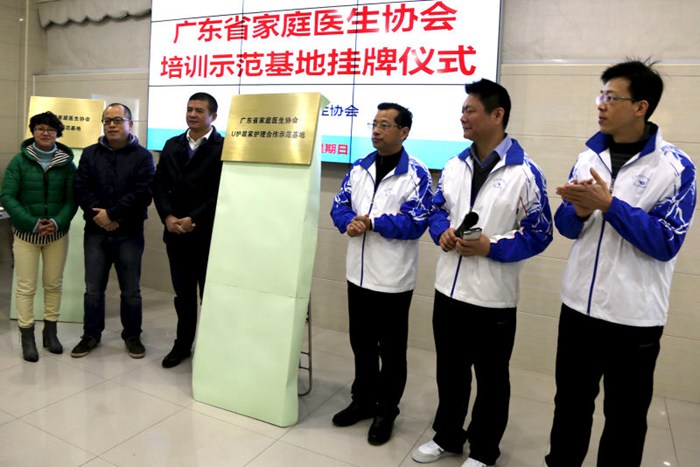
The UHu App is a platform that enables nurses to practice independently. Nurses must first affiliate with a primary healthcare institution. For patients requesting in-home nursing services through the platform for the first time, physicians and nurses conduct joint home visits in advance to assess whether the patient’s health status and home environment are suitable for such care. After its launch in September 2015, this model faced questions regarding regulatory compliance; however, the Health Department of Guangdong Province ultimately expressed its support for the approach.
The platform’s nurses are primarily those who have left their hospital positions and nurses from secondary hospitals and primary healthcare institutions who have available time. This represents a guided return and efficient utilization of nursing resources. Medical insurance does not cover out-of-hospital nursing care; although some regions have introduced limited pilot policies, the government-guided prices are extremely low. For instance, nurses receive only slightly more than 10 yuan per home visit, which holds little appeal. According to Wu Yuxiong, nearly all home nursing services provided through the platform are paid out-of-pocket by patients, at a rate of 80–100 yuan per visit.
The Shouhu APP platform is a mental health cloud service platform jointly developed by the Guangdong Provincial Mental Health Center and the Family Doctor Association.
Approximately 17.5% of the population in China suffers from mental disorders, with the prevalence of severe mental disorders being around 1%. In recent years, incidents involving violent acts by patients with severe mental illness have occurred frequently, primarily due to the lack of effective supervision methods by guardians, leading to poor medication adherence and uncontrolled conditions among patients.
GuardianshipAPPThe intensive care module consists of three parties: municipal administrators, primary care physicians responsible for patient management, and guardians. Among them, the patient's guardian, throughAPPUpload patient condition and medication adherence data within the timeframe specified by the attending physician to generate monitoring records. Based on these records, the attending physician can assess the patient’s status and medication compliance; if any risk indicators are identified, the treatment plan can be promptly adjusted or hospitalization arranged. If the caregiver fails to submit the monitoring records as scheduled, the platform will issue reminders to both the caregiver and the attending physician to address gaps and oversights in patient monitoring.
Finally, regarding payment, the government will issue monitoring subsidies to primary care physicians based on historical monitoring records automatically generated in the backend. The Family Doctor Association is also actively introducing third-party services onto the platform to enrich its business ecosystem. A current case in point is “Dr. Robin,” a company providing asthma HMO services. After integrating with the primary healthcare platform, Dr. Robin charges patients a service fee, provides digital asthma monitoring devices, delivers comprehensive health management services based on the monitoring data, and assigns partnered primary care physicians to offer online consultations and outpatient treatment.
To date, the expenditures of the Family Doctor Association have been no less than those of a mobile healthcare enterprise. Since its establishment, the association has cumulatively invested tens of millions of yuan in the aforementioned operations, with funding primarily derived from donations, among which insurance companies are the most significant “financial backers.”
Having discussed the operations conducted by the Family Doctor Association as a public-welfare platform, we now turn to an unavoidable topic for its founder, Wu Yuxiong: commercial activities. Within his overall strategic layout for the primary healthcare market, what kind of commercial platform exists alongside the public-welfare initiative?
According to Wu Yuxiong, Guangdong Quanke Holdings Co., Ltd., jointly initiated by CITIC Ecological Environment Technology Development Co., Ltd., Guangdong Quanke Health Management Co., Ltd., and Guangzhou Jiahu Nursing Service Co., Ltd., is currently in the preparatory stage, with a registered capital of RMB 500 million.
Guangdong General Practice Holdings Co., Ltd. primarily collaborates with local governments to establish industry guidance funds for investing in the construction of community clinics and nurse stations. The company plans to establish and partner with more than 20,000 standardized primary healthcare institutions within five years through equity participation, controlling stakes, and management output, thereby initially achieving the goal of extending high-quality medical services to the grassroots level. The total investment is expected to exceed RMB 20 billion.
When discussing the company’s advantages in investing in primary care institutions, Wu Yuxiong stated, “I have always believed that a clinic run by a physician who is both competent and dedicated to patient care will not incur losses. Therefore, we leverage information technology to assist physicians while also ensuring they remain focused on delivering high-quality care. This allows us to confidently provide investment or loans to support the establishment and operational funding of their clinics.”
In simple terms, the General Practice Information System not only enhances the professional capabilities of primary healthcare institutions and physicians but also standardizes their clinical practices through a clinical decision support system. This effectively eliminates the currently widespread issue of over-treatment, a development that is highly favored by payers, namely the National Healthcare Security Administration and insurance companies.