

Startup Health Report: Digital Health Funding Reaches Record $3.9 Billion in First Half of 2016
According to the mid-2016 report by Startup Health, total financing and investment in digital health reached a record high of $3.9 billion in the first half of 2016. The number of seed-stage and Series A financing rounds was roughly equal, indicating a thriving landscape for early-stage tech innovators. Moreover, the majority of capital was injected at the Series A stage, providing greater opportunities for startups.
(This report originates from StarUp Health and has been compiled and published by VCBeat. Please cite the source when reposting. Thank you!)
Key Points:
1. Reexamining the Insurance Industry: After breaking through the traditional stronghold of health insurance, Oscar Health continues to innovate and has now become a spokesperson for the new generation of internet culture;
2. Achievements in Asia and the Middle East: In recent years, China, India, and Israel have adopted internet healthcare solutions and released a significant number of technologies;
3. Early-Stage Survival Status: In the first half of 2016, the number of seed-round and Series A financing rounds was roughly equal, accounting for 65% of all financing rounds. Although there were more Series A rounds, external observers often labeled companies seeking seed-stage investment as undercapitalized; nevertheless, opportunities for Series A financing remained abundant.
4. A Pioneer in Public Trading: As Evolent Health’s stock price rebounds to its IPO level, shareholders are wondering what this means for other publicly listed internet healthcare companies. Although the true value of most companies’ products may yet to be fully realized, the current market valuation remains below entrepreneurs’ expectations.
5. Global Innovation: According to StartUp Health data, more than 7,600 startups worldwide are dedicated to the development of internet-based healthcare solutions. Cross-border innovation in technology, talent, and national collaboration will continue to flourish, driving genuine transformation in healthcare systems both domestically and internationally.
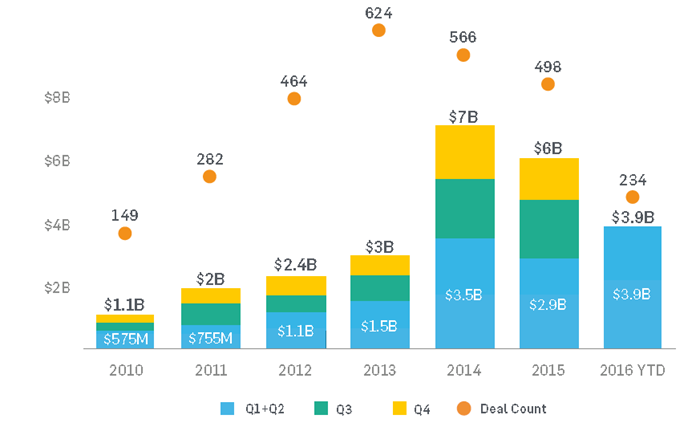
2016Year-to-Date Internet Healthcare Investment and Financing Amount Compared to the Same Period Last Year
2016 witnessed the most robust first half for internet healthcare, with cumulative financing and investment totaling $3.9 billion to date, surpassing the previous record of $3.5 billion set in the first half of 2014. Compared with prior trends, although the number of transactions declined in the first half of this year, capital inflow continued to increase.
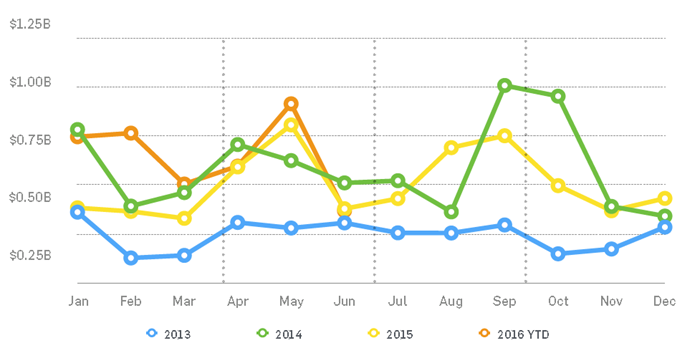
Comparison of Internet Healthcare Funding Amounts by Month
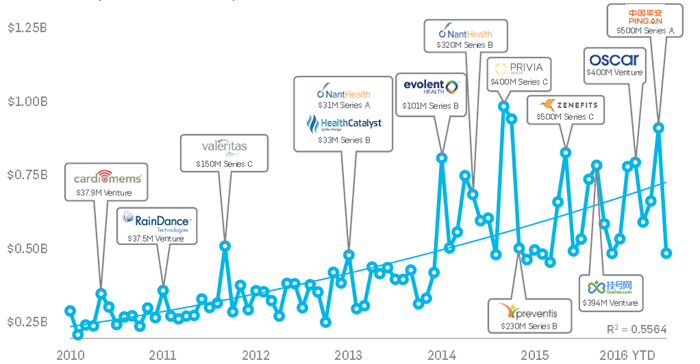
On the surface, the financing amount in June 2016 appeared to hit a trough; however, this was primarily because Ping An Good Doctor completed a $500 million Series A financing round in May, which directly inflated the total figure.
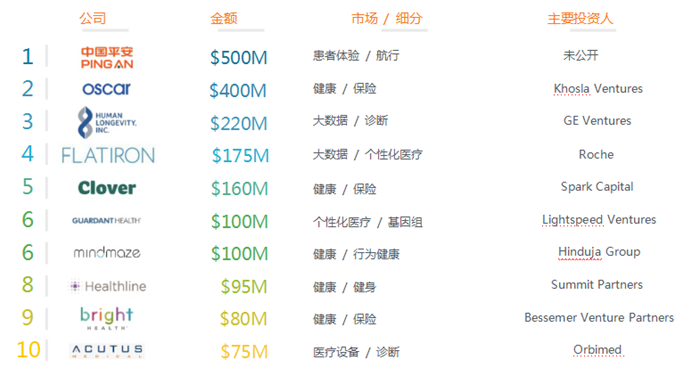
2016Top 10 Companies by Total Financing Amount in the First Half of the Year
China’s Ping An Good Doctor topped the list with total financing reaching $500 million in 2016. Meanwhile, healthcare companies that revamped their business models after rethinking insurance operations—such as Oscar, Clover, and Bright Health—secured substantial investments.
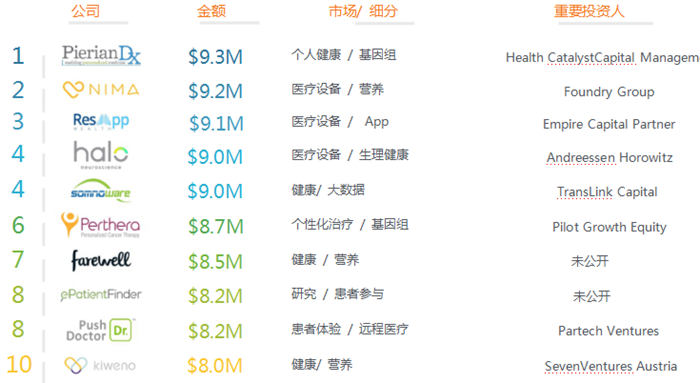
2016Annual total financing amount is less than 1Top 10 Companies with Tens of Millions in Revenue
Companies with total financing below $10 million have demonstrated a trend toward horizontal development in internet healthcare innovation, with funding amounts distributed relatively evenly across the most active subsectors. Meanwhile, an increase in the number of gene sequencing and medical device companies has been observed.
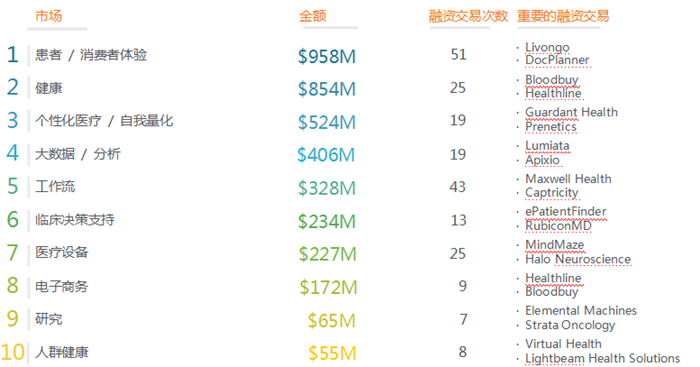
2016Top 10 Most Active Subsectors in the Internet Healthcare Industry
In 2016, patient/consumer experience continued to dominate the internet healthcare sector, leading in both total funding amount and number of financing rounds.
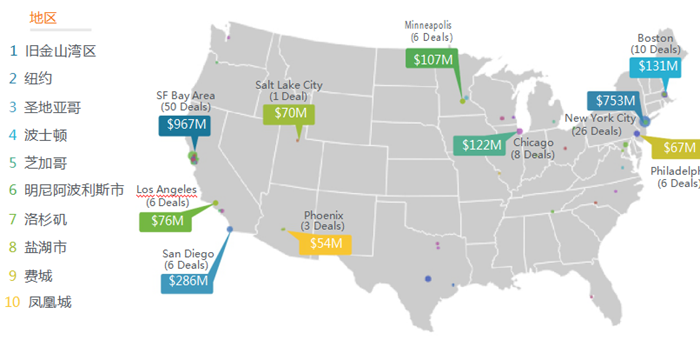
2016Top 10 Most Active Regions in U.S. Digital Health Investment and Financing Year-to-Date
In the United States, the San Francisco Bay Area and New York continued to attract the most funding in the digital health sector in 2016. Meanwhile, emerging technology incubation hubs, such as Los Angeles and San Diego, were on the rise and ranked among the top ten in terms of activity level.
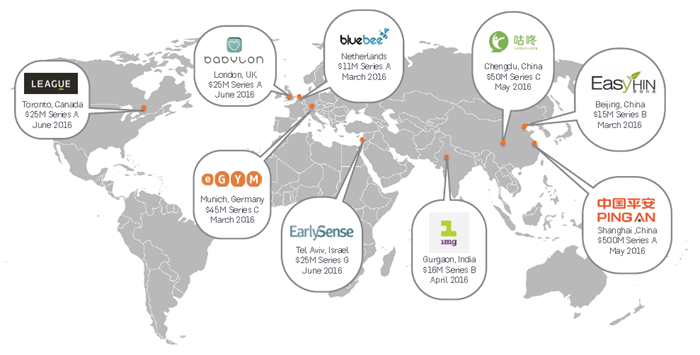
2016Notable Investment Projects Year-to-Date
This year, excellent innovative achievements have continued to emerge worldwide. For instance, India is vigorously promoting a vast consumer-centric healthcare system, China has begun connecting millions of patients with physicians, and Israel has developed groundbreaking software solutions.
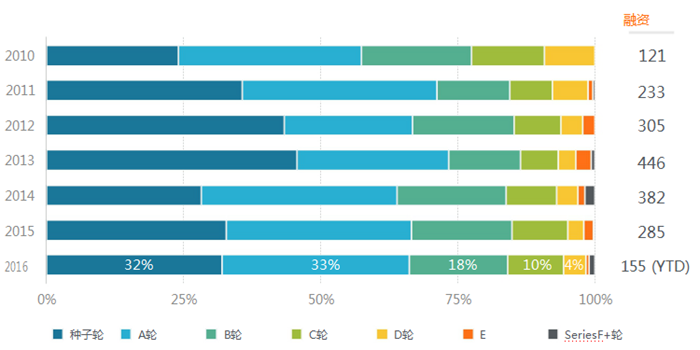
Projects That Have Completed Phase I Financing
Over the first half of the year, we have observed that the number of seed-round and Series A financing deals was virtually identical, with early-stage funding accounting for more than 65% of the total capital raised. This indicates that investors continue to closely monitor innovative projects and business models.
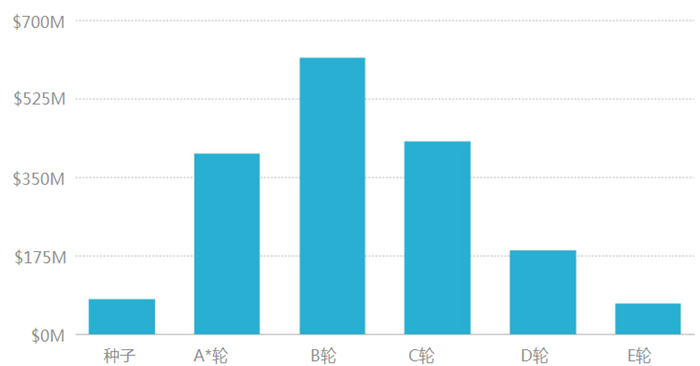
2016Annual Financing Round Activity
Although the ratio of seed-round to Series A financing deals was 1:1, the actual total funding amount ratio stood at 1:5. In the first half of the year, Series A financing totaled $400 million (excluding “Ping An Good Doctor”), while seed-round financing amounted to $100 million. Series B financing climbed to $600 million, whereas Series D and Series E rounds saw relatively smaller funding amounts.
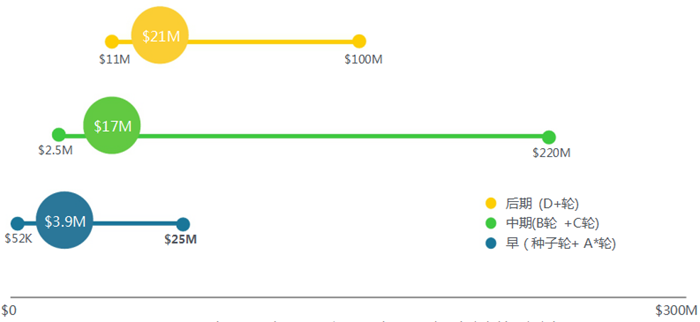
2016Year-to-Date Investment and Financing Scale and Horizontal Scope
Although the mid-stage financing round saw the largest scale, exceeding $200 million, the total capital raised in the mid and late stages was very close; by comparison, the total early-stage funding was lower.
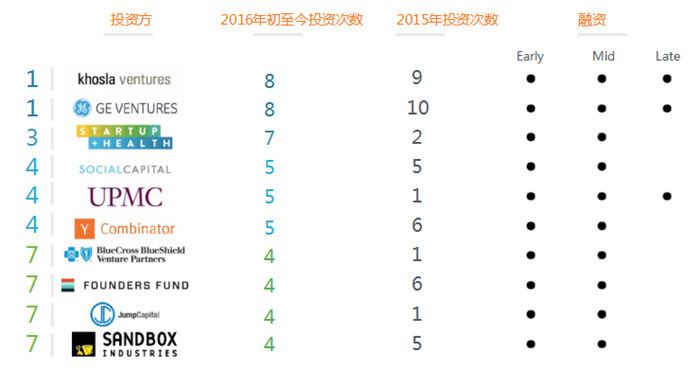
2016Most Active Investors Year-to-Date
In the first six months, 10 investment firms were the most active, with half of them having invested in a number of projects that reached or exceeded their total annual investment volume for the entire year of 2015.
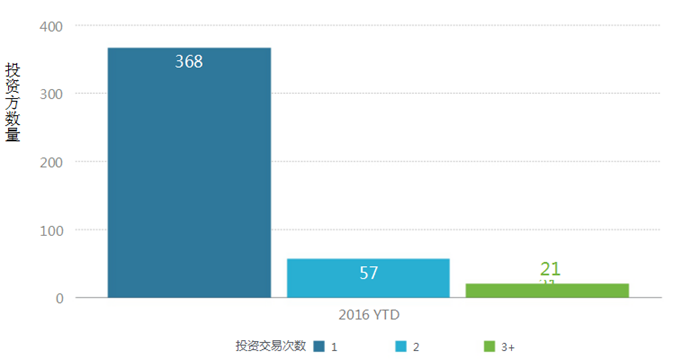
2016Year-to-Date Investor Volume
2016 continues to demonstrate that investors’ appetite for the internet healthcare sector has not waned. From the beginning of this year to date, 446 investment firms have injected capital into this field, with 21 of them making more than three investments.
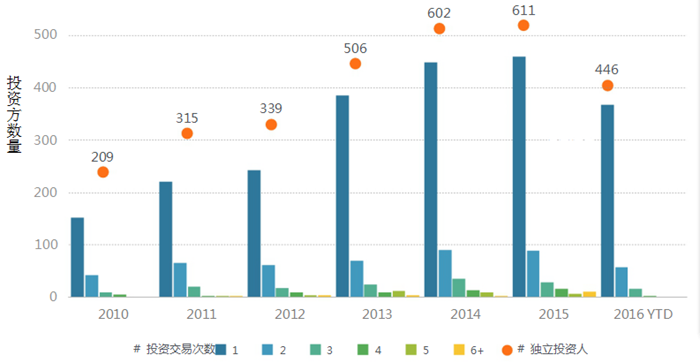
2010Year ~ 2016Comparison of the Total Number of Investors by Year
Investors have flocked to the internet healthcare industry, with the current number of investors reaching twice that of 2010. By mid-2016, this trend showed no signs of slowing down.
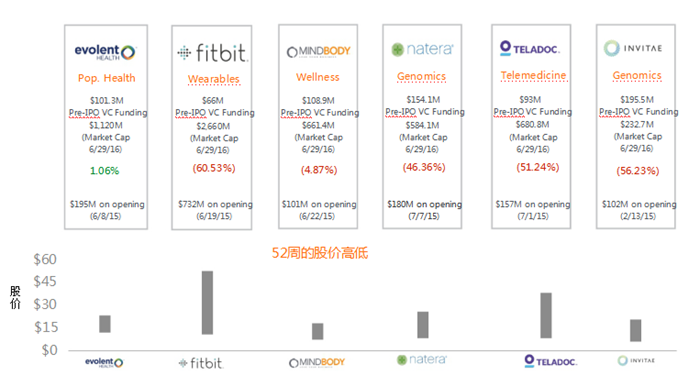
Review of 2015Annual Internet Healthcare IPO
As numerous internet healthcare companies go public, Evolent Health’s stock price continues to climb, while other publicly listed companies remain volatile; market recognition of and confidence in their technological value still need to improve.
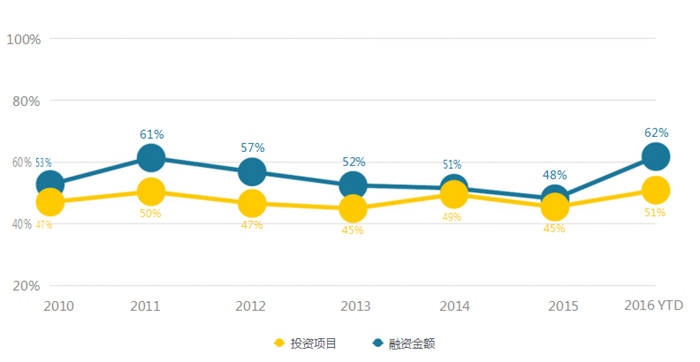
50 in the Field of Internet HealthcareMarket for Middle-Aged and Elderly People Aged [X] and Above
Driven by the continued expansion of the global internet healthcare industry, companies are eager to serve the consumer market for adults aged 50 and above, a sector that is also attracting significant investor attention. From early 2016 to the present, investment projects targeting this demographic have accounted for 51% of the total number of investments.
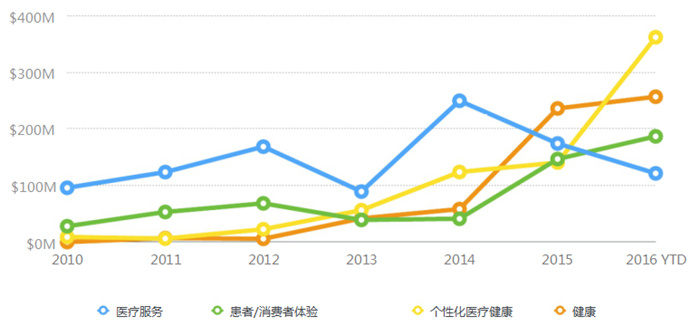
Growth in Niche Segments
Funding for projects in the consumer market for adults aged 50 and above has continued to grow, with some active projects having secured financing since 2010. Among these, personalized medical and healthcare projects have experienced the most rapid growth, while patient/consumer experience projects have seen steady increases.
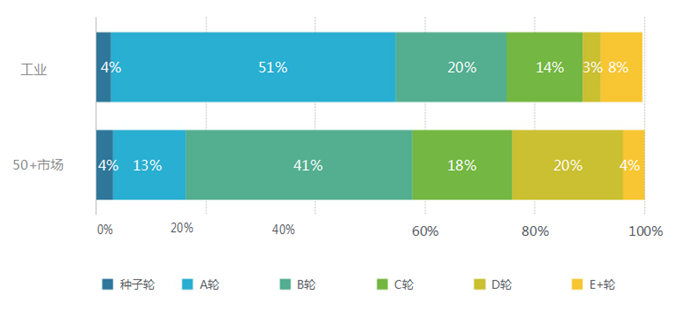
50Overview of Financing Rounds for the Market of Middle-Aged and Elderly People Aged [X] and Above
During the seed and Series A funding rounds, investments in projects targeting the market for middle-aged and elderly individuals aged 50 and above accounted for less than 20%. However, during the Series B funding round, investment in this market became dominant, reaching 41%.
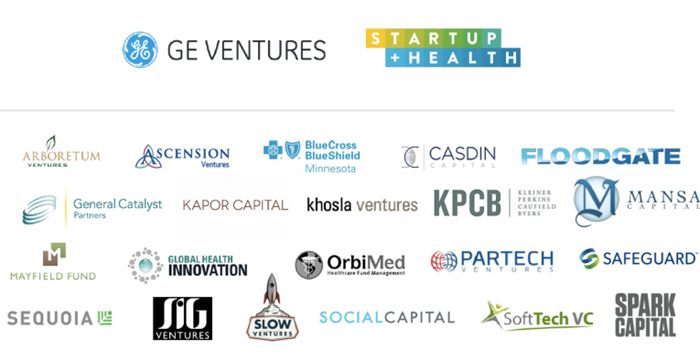
Top Venture Capitalists in the 50+ Senior Market, Early 2016 to Present