

The Life-or-Death Gateway of Precision Medicine: Integrating Diagnosis and Treatment
On July 5, the second installment of “China Healthcare Venture Capital Dialogues” arrived as scheduled. We invited Mr. Cai Daqing, Managing Director at Legend Capital, and Mr. Wang Hui, Managing and Founding Partner at Honghui Capital, to discuss precision medicine with our audience. By exploring their six incisive perspectives, can we catch a glimpse into the critical determinants of success and failure in the future of precision medicine?
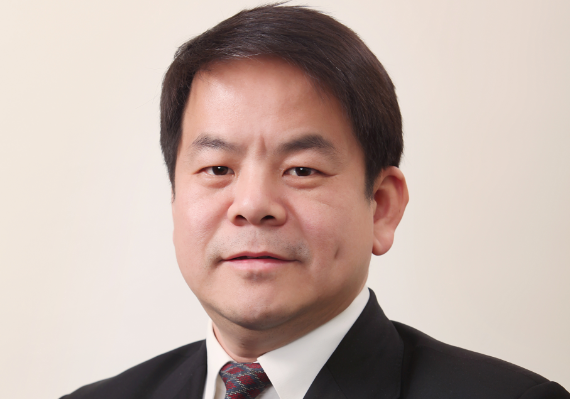
Cai Daqing
Managing Director, Legend Capital
Mr. Cai Daqing oversees Legend Capital’s specialized healthcare fund. Over the past seven years, Legend Capital has invested in more than 40 healthcare companies, with total investments reaching up to USD 300 million. He previously served as a Director and Chief Financial Officer (CFO) at BGI Genomics, working alongside scientists and entrepreneurs who were among the earliest participants from China in the Human Genome Project.
Legend Capital'sCore business is positioned in early-stage venture capital and expansion-stage growth investment.Currently, Legend Capital manages US dollar and RMB funds with a total scale exceeding RMB 26 billion, focusing on innovation and growth opportunities in China.
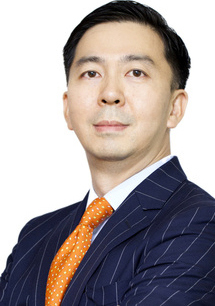
Wang Hui
Founder of Honghui Capital
Two years ago, he founded Honghui Capital, which currently manages four funds with a total asset under management exceeding RMB 4 billion. In the VC and PE industries, he has executed more than 30 projects.
Honghui Capital's Investment FocusFocusing on healthcare services, mobile health, medical devices (including imaging equipment, diagnostic reagents, and medical consumables), and biopharmaceuticals (chemical drugs, biological drugs, and biologics).
1Cai Daqing: The integration of diagnosis and treatment holds immense promise for the future of precision medicine.
Five years ago, before the term “precision medicine” had even emerged, Legend Capital took the lead in investing in Berry Genomics in the field of medical sequencing—a decision that was also tied to my own professional experience.
With the advancement of genomic science, President Obama proposed the Precision Medicine Initiative last year, and China subsequently launched its own national research plan for precision medicine, galvanizing researchers across the fields of biology and medicine.
China’s Precision Medicine Initiative shares many similarities with that of the United States, while also exhibiting certain differences. Both countries place significant emphasis on the practical implementation of big data analytics, cohort studies, and related initiatives.
Although "precision medicine" is a relatively new term, it essentially reflects the growing aspiration in medicine to more accurately grasp the underlying nature of certain diseases and, based on this understanding, identify corresponding, more precise therapeutic approaches, thereby forming a closed loop. From the perspective of integrating diagnostics and therapeutics, the future prospects of precision medicine are immense.
2Cai Daqing: The biggest bottleneck in precision medicine is the limited understanding of natural laws, especially the biological principles of medicine and the human body.
The future is bright, but the path ahead may not be smooth; precision medicine also faces its own bottlenecks. I believe the greatest bottleneck lies in our limited understanding of natural laws, particularly the biological principles governing medicine and the human body. Precision medicine is not merely a slogan or a new buzzword; it demands arduous exploration.
Many issues in medical science cannot be thoroughly resolved simply by pouring in vast amounts of money. Precision medicine has galvanized collective attention and pooled diverse resources to tackle some of these challenges, yet the laws of natural science do not always bend to human will.
3Cai Daqing: There is immense potential for innovation at the intersection of gene sequencing technology and commercial insurance.
Precision medicine holds significant potential for more accurately identifying health risk factors, improving population stratification, and enabling more effective and targeted subsequent treatments. This will bring about substantial changes to the health insurance industry, with very promising prospects.
Currently in China, the application of gene sequencing technology and commercial health insurance are both in relatively early stages of exploration. We look forward to seeing effective models of integration emerge.
4Wang Hui: The Economics of Precision Medicine.
How Does Precision Medicine Generate Revenue? In fact, certain drugs and even diagnostic technologies are becoming increasingly precise, reflecting a broader historical trend. Significant advances have been made both in terms of precision medicine technologies and subsequent treatment modalities, as well as from the perspective of health economics.
5Wang Hui: The challenges and breakthroughs in precision medicine in China lie in talent.
Regarding the challenges, fueled by capital enthusiasm, there is a prevailing sense of impetuousness across investment circles, industrial sectors, and consumer groups. Therefore, the ability to separate fact from fiction amidst the noise is also of critical importance.
However, both investors believe that talent is the key breakthrough point and major challenge for precision medicine in China. Especially in technology-driven fields, the importance of talent goes without saying.
6Cai Daqing & Wang Hui: The Path to the Future of Precision Medicine Requires Us to Explore with Greater Composure.
Domestic startup teams and investment funds attach great importance to precision medicine, hoping to catch the next wave. However, at present, basic research that should ideally be funded by scientific foundations and government agencies is being undertaken by venture capital (VC) firms instead, a trend whose efficiency is open to question.
In the entire field of precision medicine, any seminar held is always packed with attendees. Many startup teams have emerged, commanding high valuations. In my view, a bubble has already formed.
In the first half of this year, more than 40 specialized pharmaceutical investment funds were established, but the market does not have sufficient capacity to absorb them.
How can we more calmly explore the path of precision medicine development in the future? These matters still require our joint discussion.
Special Session of the Legend Star WILL Conference
Xiangyi Hui 2 MED TED
Only Technology Can Create Disruption!
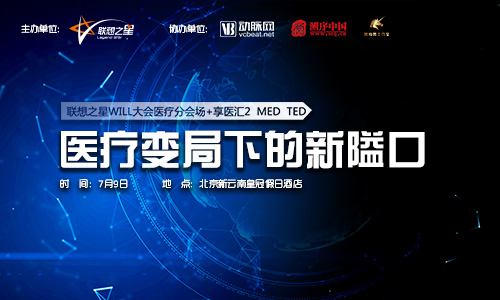
Event Registration Link:http://m.grouplus.cn/ebsufm
Scan the QR code to enter Future Healthcare
![[MED TED主题演讲活动]活动二维码.png](https://cdn.vcbeat.top/upload/image/d6/3a/13/38/333d4c0b44101bfae06c36e93d942890.png "1466235958996136.png")