

Is Now the Right Time for DTP Pharmacies? An Emerging Opportunity in China's Evolving Healthcare Landscape

In the past two years, driven by rising operational costs for retail pharmacies and declining profit margins, both traditional retail enterprises and online pharmacy platforms have successively launched offline retail pharmacies centered on Direct-to-Patient (DTP) services. In July of this year, Jianke, a pharmaceutical e-commerce company, established its first DTP pharmacy in Dongguan. As early as 1999, Jingwei Pharmacy had already begun exploring the DTP model. Currently, DTP operations account for more than 28% of total sales at Yibao Quanxin Pharmacy. Meanwhile, Shanghai Pharmaceuticals’ DTP business continues to grow at a high rate of 48%, with nearly 30 designated DTP pharmacies now operating across 20 provinces and municipalities nationwide.
DTC/DTP (Direct-to-Customer/Direct-to-Patient) Model: A Marketing Approach Directly Targeting Consumers. A comprehensive DTP pharmacy must include at least four essential elements: prescriptions, medications, logistics, and payment. The absence of any one of these components makes it extremely difficult to conduct DTP operations.
From the perspective of the background for establishing DTP pharmacies, they can be categorized into three types:
The first category comprises DTP pharmacies operated by commercial distributors such as Shanghai Pharmaceuticals, Sinopharm, and China Resources Pharmaceutical. These distributors maintain close collaborations with pharmaceutical manufacturers, granting them significant advantages in distribution channels and pricing policies. Examples include Beijing Yibao Quanxin, Guoda Pharmacy, Shanghai Zhongxie Pharmacy, and Cardinal Health Pharmacy.
The second category comprises chain pharmacies, including Laobaixing, Yixintang, and Jingwei Pharmacy.
The third category comprises those established by e-commerce enterprises, which are essentially chain pharmacies. For instance, after initiating its offline pharmacy layout, Jianke.com also announced the commencement of building DTP (Direct-to-Patient) pharmacies.
Furthermore, DTP services can be categorized by their presentation format into DTP counters/dedicated zones and DTP specialty stores. As the names suggest, the DTP counter model involves allocating a separate area within a pharmacy for DTP operations, whereas under the DTP specialty store model, the entire pharmacy is dedicated exclusively to DTP services. For instance, Zhongxie Pharmacy, a subsidiary of Shanghai Pharmaceuticals, operates as a DTP specialty store.
DTP pharmacies are jointly promoted by multiple participants in the industry chaina product of VCBeat, capable of creating value across all segments of the supply chain: for commercial enterprises, it canEstablish stickiness with upstream manufacturers from the time of drug market launch to secure high gross margins; for pharmaceutical companies,It enables increased drug volume, timely feedback on patient medication information, and facilitates follow-up education; forFor members of the healthcare ecosystem, such as patients, physicians, and insurance institutions, it serves as a high-quality platform.
The core of China's healthcare reform involves medical care,Pharmaceuticals and Medical Insurance. The pace of healthcare reform directly determines the development stage of DTP (Direct-to-Patient) pharmacies, while the market serves as the primary driver behind the formation of the DTP pharmacy industry. According to estimates by industry insiders, the total sales volume of the top five enterprises in China’s DTP business has exceeded RMB 3 billion. With a compound annual growth rate of approximately 30%, the overall market size is projected to surpass RMB 7 billion by 2015.
Pharmacy Reform: A Long-Standing IssueAt present, the majority of pharmacies operate from leased premises. From an operational perspective, a rent-to-sales ratio of 5% to 8% is considered reasonable. However, for pharmacies in third-tier cities, rental costs have generally exceeded this threshold, commonly reaching over 10%. This implies that a pharmacy with annual sales of RMB 1 million would need to allocate RMB 90,000 to RMB 100,000 for rent expenses.
In first-tier cities, this proportion is significantly exceeded. In megacities such as Beijing, pharmacy rental costs account for approximately 20% to 25% of total operational expenses. As pharmacy services upgrade, the costs associated with licensed pharmacists and sales staff continue to rise. Statistics show that labor costs in the retail market are increasing by 10–15% annually, while commercial real estate rents are growing at a rate exceeding 25%, leading to a steady climb in operating costs.
The viability of individual stores is continuously weakening. Pharmacies are expanding their customer reach by increasing the number of outlets, making mergers and acquisitions a mainstream trend, aligning with the U.S. model. From the perspective of market share, if a company’s market share reaches 26%, it indicates the potential to stand out from evenly matched competition. If a company’s market share reaches 42%, the median level, it can emerge from competition and gain a competitive advantage. If a company’s market share reaches the upper limit of 74%, it is within an absolutely safe range, regardless of the strength of other competitors.
This year has been a major year for mergers and acquisitions in the retail pharmacy sector. Taking Yixintang as an example, in September, it successively acquired Chongqing Hongshengqiao Grand Pharmacy, obtained 100% equity interest in Yunnan Hongyun Pharmaceutical Co., Ltd., and acquired four local chain pharmacies in Sichuan Province. In October, a wholly-owned subsidiary of Yixintang further acquired the assets and operating rights of 95 pharmacies in regions including Yibin, Deyang, Chengdu, Dazhou, and Meishan in Sichuan Province for RMB 237 million.
Generally, an industry is considered to have low market concentration when the four-firm concentration ratio (CR4) is less than 30% or the eight-firm concentration ratio (CR8) is less than 40%. Based on the market size of China’s top 100 chain pharmacies in 2014, the CR4 and CR8 for China’s chain pharmacy sector remained below 30% and 40%, respectively, from 2004 to 2014. This indicates that China’s chain pharmacy industry is currently characterized by low concentration and fragmented competition.
According to data from the China Food and Drug Administration (CFDA), the total number of pharmacies reached 434,920 in 2014. Chain pharmacies accounted for approximately 39.42% of this total, while independent pharmacies made up about 60.58%. In terms of industry growth potential, China’s chain pharmacy rate still has considerable room for improvement compared to the United States, where the chain penetration rate stands at 74.20% in its relatively mature pharmaceutical retail sector. With China’s current pharmaceutical retail market size exceeding RMB 1.5 trillion, a mere 5% increase in chain penetration would unlock nearly RMB 75 billion in additional market value.
From a policy perspective, under the continuous pressure of the new Good Supply Practice (GSP) and the Two-Invoice System, small-scale pharmaceutical distribution companies and pharmacies with weak competitiveness are facing immense financial strain and regulatory challenges. To remain competitive and avoid market exit, mergers and acquisitions have become the optimal solution, which has indirectly driven greater consolidation in the pharmaceutical distribution industry.
Large chain pharmacies are vying for market share and population coverage in the existing market through mergers and acquisitions, naturally aiming to survive in the second half of the industry’s development. However, beyond this cutthroat frontline competition, adopting the DTP (Direct-to-Patient) pharmacy model to enhance sales per square meter and ARPU (Average Revenue Per User) is also a prudent and forward-looking strategy.
From the perspective of pharmacy operations, pharmaceuticals can be categorized into three price tiers—high, medium, and low—forming a pyramid structure. The base consists of generic drugs; the middle tier is dominated by major brands, including branded products from joint ventures and well-known domestic enterprises; and the apex comprises high-end products, such as new and specialized drugs. These high-end products are initially introduced to clinical settings after development by manufacturers but have not yet achieved significant sales volume, remaining in the early stage of market entry. As these products mature, they gradually transition into the middle tier of the pyramid, becoming best-selling items under major brands. The pyramid model reflects not only the price stratification of pharmaceuticals but also the profit objectives of pharmacies. Currently, many pharmacies operate only at the base and middle tiers of the pyramid, without venturing into the apex segment.
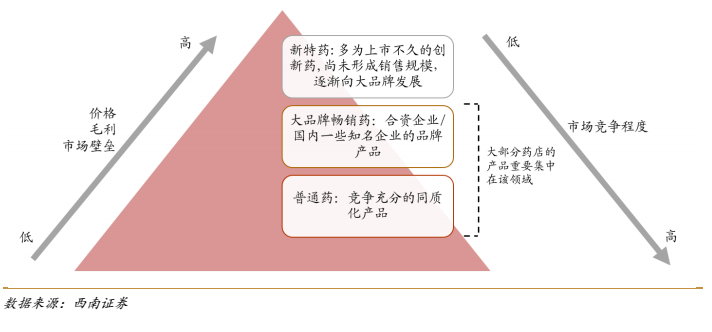
From the perspective of profitability, high-end innovative drugs exhibit characteristics of high gross margins, DTPThe revenue and profit scale of the pharmacy are significantly larger than those of ordinary chain pharmacies.

Large-scale mergers and acquisitions among retail pharmacies do not conflict with the development of Direct-to-Patient (DTP) pharmacies; rather, they are mutually reinforcing. The surge in demand for incremental market growth among consolidated retail enterprises will strengthen their willingness to operate DTP pharmacies. Moreover, larger retail enterprises possess sufficient cash flow to explore and support risk control, profit models, and service standards for DTP pharmacies.
The growth potential of pharmacies is being continuously squeezed, prompting all stakeholders to rack their brains in search of transformation. The DTP (Direct-to-Patient) pharmacy model has been placed under high expectations by the pharmaceutical retail industry, largely because it enables pharmacies to achieve organic expansion on top of extensible development, thereby breaking the stalemate of stagnant growth.
As with all revolutionary developments, during the period of reform and transition in the existing system, DTP pharmacies have faced pressure and exclusion from various quarters. Any deeply entrenched resistance has the potential to stifle them in their infancy. However, resistance often accompanies opportunity. Both national policies and the progress of healthcare reform are driving the growth of this emerging model. For pharmacies, the critical juncture has arrived: they must decide whether to adapt to the trend by carefully assessing the situation or fade into obscurity amidst the wave of reform.
On July 12 this year, the National Development and Reform Commission (NDRC) released the “Plan for Division of Responsibilities among Departments on Key Tasks under the Guiding Opinions on Promoting the Healthy Development of the Pharmaceutical Industry” (hereinafter referred to as the “Plan”), which explicitly states that “medical institutions are prohibited from restricting the outflow of prescriptions.” It further requires medical institutions to issue prescriptions using the generic names of drugs, proactively provide prescriptions to patients, and safeguard patients’ right to choose where to purchase their medications.
In fact, the relaxation of restrictions on the outflow of prescriptions is not a new proposal. As early as 2007, the "Measures for the Administration of Prescriptions" clearly stipulated that hospitals shall not restrict the outflow of prescriptions in any way. This issue was mentioned again in April this year in the "Key Tasks for Deepening the Reform of the Medical and Health System in 2016" issued by the State Council.
In addition to the most direct policies, the zero-markup policy for pharmaceuticals is also a significant force driving the outflow of prescriptions. By controlling revenue and expenditure processes, it can promote prescription outflow at its source.
The core of the zero-markup drug policy lies in dismantling the mechanism of “subsidizing healthcare with drug profits.” By providing subsidies to public hospitals, it transforms their operational revenue model from three sources—service fees, drug markups, and government subsidies—to two sources: service fees and government subsidies. Taking a specific region as an example, the Plan stipulates that hospitals be compensated through three measures—adjusting medical service prices, fiscal subsidies, and hospital absorption—according to a cost-sharing ratio of 7:2:1.
Under the zero-markup drug pricing policy, prescribing more expensive and larger volumes of medications would only increase pharmacy workload and hospital management costs, without benefiting physicians’ or hospitals’ revenues. This will ultimately promote the separation of medical services from pharmaceutical sales and facilitate the outflow of prescriptions.
For retail pharmacies to launch DTP (Direct-to-Patient) services, the outflow of prescriptions from hospitals is a prerequisite. Although a top-down, comprehensive rollout of prescription outflow is unlikely before hospital compensation mechanisms are fully established, this trend is virtually irreversible in the long run.
Taking the comparison between China and the United States as an example, in 2015, hospital channels accounted for 80% of pharmaceutical sales in China, while retail channels accounted for 20%. In the United States, the situation is exactly the opposite, which explains why retail giants like CVS can thrive so comfortably. DTP (Direct-to-Patient) pharmacies primarily sell prescription drugs. The market space created by the outflow of prescriptions from hospitals is undoubtedly huge and highly attractive to retail pharmacies.
Traditionally, prescription outflow has largely occurred naturally as patients physically carry their prescriptions out of hospitals. The practice of leveraging this natural outflow to conduct Direct-to-Patient (DTP) services is referred to as prescription drug retailing.Under this model, DTP pharmacies can only passively influence prescription flows through marketing and patient education, and are unable to establish direct, point-to-point relationships with healthcare institutions.
Another model is known as "out-of-hospital prescription fulfillment," which is built upon a tripartite collaboration among hospitals, pharmaceutical companies, and retail pharmacies. Through clinical promotion efforts, hospitals continuously direct physicians’ prescriptions to specialized off-site pharmacies. There, licensed pharmacists review and verify the prescriptions before dispensing the medications to patients (or providing home delivery services), while also offering ongoing medication counseling and disease management support.Under this model, pharmaceutical manufacturers often hold significant bargaining power, making it difficult for ordinary pharmacies to secure DTP pharmacy agency rights. This explains why mainstream DTP pharmacies are predominantly affiliated with the three major distributors: Sinopharm, China Resources Pharmaceutical, and Shanghai Pharmaceuticals.
Compared with the traditional hospital-based prescription drug sales model, the outsourcing of prescriptions to external pharmacies adds specialized prescription fulfillment by pharmacies and follow-up professional services for patients. As a result, through establishing long-term, sustainable partnerships with pharmacies for prescription referrals, hospitals enable pharmacies to acquire more precise patient users; hospitals can better facilitate the transition toward separation of prescribing and dispensing while safeguarding their revenue; and pharmaceutical companies can achieve broader channel penetration with the support of retail pharmacies. This represents a balanced, win-win scenario for all three parties.
According to industry estimates, China’s prescription drug market is valued at approximately RMB 900 billion. If healthcare system reforms, such as the outflow of prescriptions, reachIn an ideal scenario, with the establishment of a tiered diagnosis and treatment system and the improvement of information systems (such as PBM), reference can be made to the 70% share of outpatient prescription drug sales in the U.S. market.Accounting for this proportion, the scale of prescription drugs at retail terminals will reach 630 billion yuan.
Prior to the release of the “Guiding Opinions of the General Office of the State Council on Pilot Comprehensive Reform of Urban Public Hospitals” in May 2015, provinces across China relied on a bidding system to manage drug pricing and determine eligibility for inclusion in medical insurance coverage and hospital formularies. This implies that the provincial unified bidding system will be weakened or even phased out entirely, thereby maximizing the autonomy of public hospitals in procurement. The National Health and Family Planning Commission will transition from an operator of drug procurement to a regulatory overseer.
The pharmaceutical companies are the ones truly bearing the brunt. Before policies are fully implemented, the dual price negotiation mechanism of provincial centralized bidding and hospital autonomous procurement will inevitably place immense pressure on pharmaceutical manufacturers. The previous provincial centralized bidding system, which adopted province-specific strategies, already caused significant hardship for these companies. In the future, pharmaceutical firms will face extensive price bargaining and negotiations with individual hospitals or hospital consortia, severely testing their negotiation capabilities in drug procurement by medical institutions.
In November this year, a report by Jian Shi Ju revealed that Fujian Province has introduced new regulations on drug procurement. For competitive products, the medical insurance authorities will determine the payment and settlement price. If the transaction procurement price is lower than the payment and settlement price, the difference will go to the hospital; if it is higher, the hospital will bear the cost.
Under Fujian’s new rules, the medical insurance settlement price for the same drug remains uniform. Hospitals that negotiate deeper price cuts “earn” more, while those securing smaller reductions “earn” less. If the procurement price exceeds the medical insurance payment settlement price, hospitals even incur losses. Guided by such economic incentives, hospitals will inevitably approach negotiations with pharmaceutical companies with a clear “mandate,” engaging in thorough price discussions.
Although pharmaceutical companies are reluctant to give up the lucrative hospital market, under the dual pressure of policies and medical institutions, it is wise for those with limited options to seek alternative channels. So, who is best suited to take over the spillover of medications from medical institutions? The answer is naturally DTP (Direct-to-Patient) retail pharmacies.
Currently, multinational pharmaceutical companies are generally facing growth challenges in their domestic sales in China. With management and personnel costs continuously rising, improving market penetration has become their primary objective. While penetration rates for these companies are generally not an issue in first- and second-tier cities in China, they face relatively greater difficulties in third- and fourth-tier cities.
In the quest for new growth drivers, partnering with retail pharmacies on Direct-to-Patient (DTP) services represents a viable strategy. By leveraging the sales networks of retail pharmacies to penetrate tier-3 and tier-4 cities, pharmaceutical companies can rapidly increase their market share and achieve a new round of business growth.
In the “pharmaceutical company–DTP pharmacy–patient” industry chain of the DTP business, pharmaceutical companies hold the dominant position. Due toNew specialty drugs are mostly patented medicines from foreign-funded or joint-venture brands. Pharmaceutical companies' resources have a certain monopolistic nature, and obtaining their product agency rights is actuallyis no easy feat. On one hand, customers for high-end pharmaceuticals are mostly referred to by pharmaceutical company representatives from hospitals, meaning that pharmaceutical companies determine the patient flow; on the other hand,On the one hand, high-end pharmaceuticals do not pursue comprehensive terminal coverage but instead require selective screening of sales outlets.
Pharmaceutical Companies' DTP Partner DrugsThe pharmacy has a certification system, and its hardware and software must meet certain standards.withTaking Roche as an example, leveraging its strong position in the oncology product portfolio, the company has established DTP pharmacy collaborations by certifying pharmacies that dispense its oncology medications. It is estimated that Roche has successfully certified more than 150 pharmacies across over 100 cities. Another example isXi'an Janssen, when seeking DTP partners,It also adopted a tendering process, selecting partners after comparing the service systems of various pharmacies.
Due to the unique nature of pharmaceuticals sold in DTP (Direct-to-Patient) pharmacies, the stringent requirements and high costs associated with cold-chain logistics have remained unavoidable challenges. Xie Fangmin, CEO of Jianke, once stated, “Many imported innovative specialty drugs for oncology are injectables, which demand advanced cold-chain equipment, entailing higher investment compared to medications handled by conventional pharmacies.” Therefore, relying on third-party pharmaceutical logistics providers for drug distribution has consistently proven to be a more cost-effective and efficient model than having retail or pharmaceutical companies establish their own in-house logistics systems.
This year, numerous social logistics companies have entered the competitive landscape of the third-party logistics industry. Taking SF Express as an example, its pharmaceutical logistics division issued a statement in October this year, declaring its intention to achieve an annual turnover of RMB 400 million in 2016 within the RMB 1.5 trillion pharmaceutical distribution market.
It also unveiled SF Express’s strategic layout in pharmaceutical cold chain logistics, encompassing warehousing, transportation, and network infrastructure. Leveraging SF Express’s robust financial strength, extensive logistics expertise, and professional personnel, the company has established a comprehensive pharmaceutical circulation service system compliant with the Good Supply Practice (GSP) for Pharmaceutical Products. This system provides services including pharmaceutical warehousing, long-haul transportation, urban distribution, and delivery for third-party medical laboratories. Its clientele spans various healthcare and pharmaceutical entities, such as pharmaceutical manufacturers, pharmaceutical logistics providers, hospitals, pharmacies, and third-party medical laboratories. Currently, nearly 10,000 pharmaceutical-related enterprises have partnered with SF Express.
According to statistics from the China Pharmaceutical Commerce Association, by the end of 2014, a total of 123 companies nationwide had obtained qualifications for third-party pharmaceutical logistics. The vast majority were third-party pharmaceutical logistics enterprises within the pharmaceutical industry, with only five being socialized logistics companies. Compared with traditional pharmaceutical logistics companies, socialized logistics companies have broader logistics networks and wider distribution coverage. From the perspective of accessibility, they are better positioned to handle distribution services for DTP (Direct-to-Patient) pharmacies.
In addition to the competitive pressure from socialized logistics companies, the new version of Good Supply Practice (GSP) poses a severe challenge to traditional pharmaceutical logistics companies, particularly in terms of hardware. The new regulations require the implementation of automated temperature and humidity monitoring systems in pharmaceutical warehouses, with 24-hour continuous real-time monitoring of storage environments. Furthermore, it mandates the configuration of cold storage facilities, transportation equipment, and temperature monitoring systems to ensure proper temperature control during the storage and transportation of refrigerated and frozen pharmaceuticals.
Such “extreme” high standards will inevitably force many small logistics companies to shut down and exit the market. Under these circumstances, industry mergers and acquisitions (M&A) are bound to intensify. For the logistics sector, post-consolidation reshuffling means broader and more comprehensive distribution networks as well as more mature supporting services. For DTP (Direct-to-Patient) retail pharmacies, it signifies the continuous improvement of distribution infrastructure, which will inevitably provide a strong boost to business growth.
A key driver behind the emergence of DTP (Direct-to-Patient) pharmacies is the persistently high incidence of cancer. According to the latest research report by China Investment Advisor, the market size of anti-tumor drugs in China is approximately RMB 40 billion, with an average annual growth rate of around 20%. In 2012, anti-tumor and immunological agents surpassed antibiotics, capturing a 18.2% market share compared to antibiotics’ 16.46%, thereby becoming the largest prescription drug category in China. As most of these medications are patented drugs, their prices have continued to soar.
Although the prices and profit margins of these drugs are substantial, many hospitals are reluctant to stock them. First, most of these drugs are paid out-of-pocket and are not considered essential hospital formulary items. Second, they have stringent cold-chain storage requirements. Third, some of these drugs are innovative or orphan drugs, carrying a high risk of slow turnover and inventory stagnation for hospitals. Consequently, the high out-of-pocket costs make these medications unaffordable for a significant portion of patients, forcing them to forgo treatment. Meanwhile, the lack of hospital stocking leaves patients without safe and reliable channels to purchase these medicines.
On September 30, 2016, the Ministry of Human Resources and Social Security issued a notice soliciting public comments on the “Work Plan for Adjusting the 2016 National Drug Catalogue for Basic Medical Insurance, Work-Related Injury Insurance, and Maternity Insurance (Draft for Comments).” This adjustment marks the third revision of the national medical insurance drug catalogue since 2009, following a seven-year interval. Under the revised framework, companies with new drugs of significant clinical value, those producing frequently prescribed medications in multiple provinces (excluding auxiliary drugs), and enterprises in the pediatric drug sector supported by policy incentives will directly benefit from the catalogue update. Major innovative drugs, particularly those for the treatment of serious diseases, are expected to be included in the new edition of the medical insurance drug catalogue through price negotiations.
As is well known, China’s basic medical insurance system primarily consists of three schemes: the Urban Employee Basic Medical Insurance, the Urban Resident Basic Medical Insurance, and the New Rural Cooperative Medical Scheme (NRCMS). Among these, the Urban Resident Basic Medical Insurance is funded by government subsidies and contributions from urban residents, and is administered by the human resources and social security authorities. The NRCMS is funded by government subsidies and contributions from farmers, and is administered by the health and family planning authorities. Although both the Urban Resident Basic Medical Insurance and the NRCMS combine individual contributions with government subsidies, differences in administrative oversight have led to significant disparities in benefits, including reimbursement policies and covered drug and service catalogs.
Under the “integration of two insurance schemes” policy promoted by the Ministry of Human Resources and Social Security, the adjusted medical insurance catalog is expected to be further expanded. To date, Tianjin, Shanghai, Zhejiang, Shandong, Guangdong, Chongqing, Ningxia, Qinghai, and the Xinjiang Production and Construction Corps have fully achieved institutional integration. Provinces such as Hebei, Hubei, Inner Mongolia, Guangxi, and Yunnan have clearly stated that they will implement the integration starting from 2017, while Beijing has explicitly scheduled the “merger of the two schemes” for January 2018.
Taking the integration of urban and rural resident basic medical insurance in Shandong, Guangdong, and Ningxia as an example, urban and rural residents now uniformly use the National Reimbursement Drug List for Basic Medical Insurance. The number of reimbursable drugs for farmers has increased from 1,100, 1,083, and 918 to 2,400, 2,450, and 2,100, respectively, more than doubling the scope of covered medications. In Shanghai, regarding inpatient care benefits, the minimum reimbursement rate under the former urban resident basic medical insurance was 60% (for those under 60 years old), while the New Rural Cooperative Medical Scheme had a minimum rate of only 50%. After integration, the unified reimbursement rate stands at 70%.
According to Jian Shi Ju, since the National Reimbursement Drug List (NRDL) is divided into national and local reimbursement lists, if new and specialized drugs not currently covered by the NRDL can leverage the opportunity of merging the two insurance systems to enter local reimbursement lists, gaining inclusion in the reimbursement lists of nine or ten provinces would make it highly likely for them to be included in the unified national reimbursement list following the merger.
For pharmaceutical companies, if an innovative drug is successfully included in the National Reimbursement Drug List (NRDL), it can basically capture 50% of the market share in that therapeutic area by leveraging new drug protection and first-mover advantage. For many innovative drugs, failure to be included in the NRDL means long-term losses for the entire product line. The NRDL plays a very strong guiding role in the research and development and sales of new products; exclusion from the list is tantamount to the government not procuring the drug, and government procurement accounts for 80% of pharmaceutical sales. If a drug fails to pass the bidding process, no matter how high its quality, it will not reach patients.
The launch of the new catalog holds significant implications not only for pharmaceutical manufacturers but also provides multifaceted stimulation to the entire drug retail industry. The inclusion of more novel and specialized drugs in the National Reimbursement Drug List (NRDL) is undoubtedly a major benefit for patients who have long relied on purchasing low-cost generic medications.
In addition to the support from basic medical insurance, commercial health insurance will also play a significant role in the payment system of DTP (Direct-to-Patient) pharmacies. On August 2, 2015, the State Council issued the "Opinions on Fully Implementing Critical Illness Insurance for Urban and Rural Residents," deploying measures to accelerate the development of the critical illness insurance system for urban and rural residents. It proposed that by 2015, the reimbursement rate for critical illness insurance should reach over 50%; by the end of the year, critical illness insurance should cover all participants in the basic medical insurance programs for urban and rural residents; and by 2017, a relatively comprehensive critical illness insurance system should be established.
Based on the implementation experiences in selected provinces, cost-oriented reimbursement has emerged as a trend in critical illness insurance, while certain regions have already incorporated new specialty drugs into their reimbursement schemes.
In recent years, China’s commercial health insurance sector has risen rapidly with policy support, with premium growth approaching 50%. Critical illness insurance accounts for 60–70% of this market, providing robust supplemental coverage for major diseases. Compared with social insurance, commercial health insurance offers greater flexibility in its model.
For DTP pharmacies, both basic medical insurance and commercial health insurance address the issue of patients’ ability to pay. With this dual support, new and specialty drugs available at DTP pharmacies are no longer “out of reach” for patients. The enhanced affordability for patients will directly stimulate pharmaceutical retailers to establish more DTP pharmacies, while also resolving the issue of access channels for patients seeking new and specialty drugs—a true win-win solution.
The DTP model has matured overseas, while in China it has only just begun to take off in recent years.Overall, the number of DTP pharmacies in China is limited, with a primary concentration in first-tier cities. Currently, a batch ofDTP enterprises that have begun to take shape, including Renhe Pharmacy Network (formerly Jingwei Pharmacy), Cardinal Health Pharmacy (formerly Baiji Xinte Pharmacy), and ShangHaizhongxie Pharmaceutical (now part of Shanghai Pharmaceuticals), Beijing Yibao Quanxin Pharmacy, and others. Most of these DTP pharmacies operate under a distribution partnership model.Pharmacy-Hospital Collaborative Pharmacy.
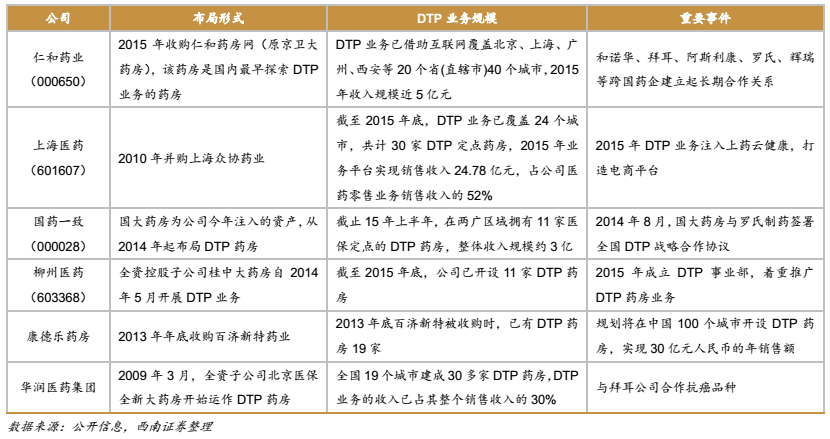
DTP Pharmacy Market Overview
Since pharmacies primarily obtain special insurance qualification by participating in programs administered by government departments such as the National Healthcare Security Administration and the National Health and Family Planning Commission,tendering and bidding processes, while special insurance licenses are mostly issued on a single-store basis; therefore, domestic special insurance pharmacies are currently sparsely distributed. Moreover, geographical location also affects the establishment of DTP pharmacies,Patients with critical illnesses generally seek treatment at large Grade 3A hospitals in major cities. Only by establishing specialty drug pharmacies near these hospitals can companies capture prescriptions flowing out from them. However, geographic resources around Grade 3A hospitals are extremely scarce; even if available, they have long been carved up by large pharmaceutical companies, leaving few opportunities for latecomers.
Although the development prospects for DTP pharmacies are highly promising, driven by both market conditions and policy support, policy implementation is not an overnight process, and numerous urgent issues remain to be addressed at every stage.
For medical institutions, it will take time to dismantle the system of subsidizing healthcare with drug profits. Medical service fees have long been kept at low levels, making significant short-term increases unlikely. Government subsidies are insufficient to bridge the profitability gap for hospitals; therefore, the outflow of prescriptions will not be fully liberalized at this stage. Furthermore, neither zero-markup drug pricing nor diagnosis-related group (DRG) payment can fundamentally resolve the issues facing the physician community.The Issue of Gray Income; for pharmaceutical companies, how to prevent the "bad money drives out good" phenomenon in retail channels is also a critical consideration; meanwhile, retail pharmacies must enhance their pharmaceutical care capabilities and medication expertise to effectively capture prescription drug sales from outpatient prescription outflow.
Amidst the interplay of diverse stakeholder interests, where should DTP pharmacies focus their efforts at each stage? How can they embark on a path of sustainable development? These questions require enterprises to pioneer new ground and learn through trial and error. While the direction is invariably correct, the true challenge lies in doing the right thing at the right time.
Special Acknowledgments:
Jianke CEO: Xie Fangmin
Head of Business Model Innovation and Digital Marketing, AstraZeneca:Wang Hao
Southwest Securities Research Report: "Special Report on DTP Pharmacies in Pharmaceutical Distribution"