Coyote Bio CEO Li Xiang: Bringing Molecular Diagnostics into Every Household
In 2000, the Human Genome Project was officially launched. At that time, it took the combined efforts of the entire world and several years to complete the genomic sequencing of a single individual, marking the era of first-generation sequencing. The entire project cost a total of $3 billion, yet it only yielded the genome sequence of one person, remaining far from practical clinical application.
Today, fifteen years later, next-generation sequencing (NGS) technology has emerged as a groundbreaking innovation, enabling human genome sequencing for just $1,000. The advent of this technology has not only allowed more people to benefit from genomic sequencing but also brought it into the everyday lives of ordinary individuals.
Jonathan Rothberg is one of the inventors of this technology; his dreams and family were the driving forces behind his pursuit of next-generation sequencing research.
Rosenberg’s 17-year-old daughter has mild tuberous sclerosis complex (TSC), also known as Bourneville disease. This rare genetic disorder can lead to benign tumors in the heart, kidneys, skin, lungs, bones, eyes, brain, and other organs. In the United States, only 50,000 cases of this condition have been identified.
After his second son, Noah, was born in 1999 and experienced breathing difficulties, he sought a method for rapid gene scanning. Although Noah was later found to be in no serious danger, Rosenberg hoped such an approach could identify the root causes of disease and accelerate pharmaceutical companies’ drug development efforts. “All motivation is ultimately personal,” Rosenberg said. “We all want to help those we love. If it were purely for academic reasons, I might have started an artificial intelligence company instead.”
It is precisely the presence of such internal drive that has fueled the rapid development of next-generation sequencing (NGS) technology.
Maternal Love: The Origin of Li Xiang’s Commitment to Molecular Diagnostics
Like Rosenberg, Li Xiang, CEO of Coyote Bioscience and a top graduate of the Department of Physics at Peking University and the Department of Biophysics at the University of California, decided to devote himself to molecular diagnostics due to family reasons.
Li Xiang’s child accidentally contracted pneumonia at just one and a half months old. For the first three days of the illness, the baby had a persistent low-grade fever, leaving Li Xiang extremely anxious and overwhelmed. By the time she brought her child to the hospital, the infant was already experiencing difficulty breathing. Fortunately, the treatment was effective, and the child was out of danger. Whenever Li Xiang looks back on this incident, she can’t help but feel a lingering sense of fear: “As a young mother with no experience, if it were to happen again, I might truly be unable to save my child’s life.”
Since then, Li Xiang has been constantly questioning himself: if molecular diagnostics had enabled his child to be tested at a nearby community hospital or even at home, could such a dangerous incident have been avoided?
“Due to the effects of pneumonia, my child received numerous courses of antibiotics and corticosteroids during our repeated hospital visits. Although the illness was cured, it inevitably left some sequelae. ‘Every time he falls ill again, I reflect on this experience, which has become the fundamental inner drive motivating me to promote the accessibility and home-based adoption of molecular diagnostics. I hope that all children, especially vulnerable newborns, can grow up healthy.’ These are the heartfelt words of Li Xiang, a mother.”
Driven by this long-held aspiration, Li Xiang founded Coyote Bioscience Co., Ltd. in December 2009, establishing the company’s development philosophy as “Letting genetic technology transform lives and ensuring that everyone benefits from molecular diagnostics.”
After seven years of development, Coyote has established the world’s only rapid point-of-care nucleic acid testing platform requiring just a single drop of blood, and has filed more than 20 international PCT patents, positioning itself at the forefront of the molecular diagnostics field.
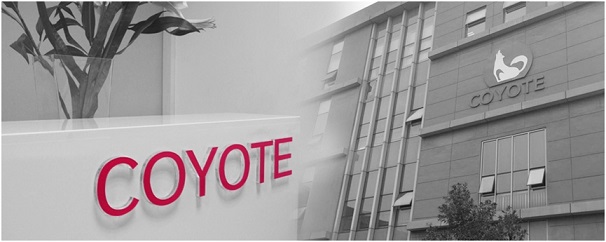
Applications of Molecular Diagnostics in Disease Control and Quarantine
As China’s first biotechnology company dedicated to the research and development of handheld, general-purpose quantitative fluorescence PCR instruments, Coyote has redefined quantitative fluorescence PCR technology with its pioneering “One-Click, One-Step Mini8 Real-Time Quantitative Fluorescence PCR Detection System,” which enables convenient and rapid detection and analysis.
As Coyote’s flagship product, the Mini8 Plus Real-Time Fluorescence Quantitative PCR System is the world’s first portable real-time fluorescence quantitative PCR instrument. Leveraging cutting-edge optoelectronic technology and an innovative portable design, it significantly reduces experimental time and costs. Moreover, it is the only real-time fluorescence quantitative PCR instrument on the market that supports vehicular installation and mobile operation.
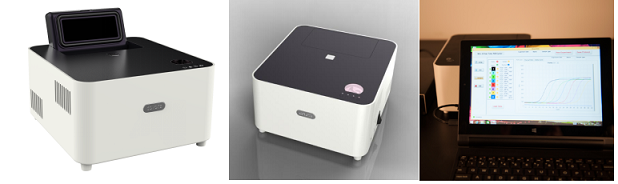
Mini8 Plus Real-Time Fluorescence Quantitative PCR System
During the 2014 Ebola outbreak, Coyote’s portable nucleic acid diagnostic kits were deployed by the Chinese government to Sierra Leone, Africa, for on-site testing. Owing to their outstanding performance, Coyote became the only molecular diagnostics manufacturer listed in the World Health Organization (WHO) official directory and the first Chinese supplier of nucleic acid testing equipment to be included.
In 2015, the National Health and Family Planning Commission mandated the nationwide implementation of nucleic acid testing (NAT) in blood stations. Diagnostic technology became the core driver of this reform, as molecular diagnostics enable definitive diagnosis and shorten the window period for all major infectious diseases, including hepatitis B and hepatitis C. Waiting until antibodies are produced before testing means the infection has already progressed to its early stages. Therefore, the adoption of nucleic acid testing was imperative.
For emerging infectious diseases such as H7N9, the virus’s capacity for mutation means that if it evolves into a more severe strain, it could have a significant impact on public safety. If molecular diagnostics can be used to distinguish between severe and non-severe cases, healthcare institutions will be better equipped with effective treatment strategies during critical periods.
Certainly. In addition to its widespread use in disease control, quarantine, and inspection, Li Xiang’s long-held aspiration is for the next generation of instruments to extend beyond hospital departments into chain pharmacies and clinics, and ultimately into households.
Civilian Applications of Molecular Diagnostics
The global diagnostic industry currently generates annual revenue of only $58.8 billion, compared with $1 trillion for the pharmaceutical industry—a stark disparity. This reflects a pattern in which people tend to avoid hospitals for minor ailments and seek care only when seriously ill, often incurring high medical costs. Precision medicine aims to address this very issue.
In addition to its applications in major epidemics and national security, molecular diagnostics also has more civilian-oriented use cases.
Currently, the misuse of antibiotics in hospitals has become widespread; many cases of viral influenza do not require antibiotic treatment at all. By employing simple and rapid molecular diagnostics to differentiate between viral and bacterial infections, identify drug-resistant bacteria, and determine the appropriate antibiotic regimen, rapid diagnostic technologies can bring about a qualitative leap in patients’ medical experience.
Furthermore, liquid biopsy for tumors can be used for blood-based prognostic monitoring of cancer; if detected through early screening, tumors may even be eliminated without the need for surgery. In terms of personalized medication, the principle that “different patients require different drugs” is a core tenet of precision medicine. Personalized, customized pharmacotherapy can help patients reduce treatment costs and even avoid misdiagnosis.
In addition to the aforementioned applications, Li Xiang’s long-term research has also revealed that molecular diagnostics hold significant promise for assessing neonatal immunodeficiency and evaluating how the gut microbiome reflects human health status.
Li Xiang stated, “The human microbiota comprises probiotics and pathogenic bacteria, with opportunistic pathogens occupying an intermediate niche. Elucidating the pathogenic mechanisms of these opportunistic pathogens represents a promising avenue for future research. Furthermore, the human gut metagenome varies with health status and has been linked to obesity, metabolism, mood, and depression. Utilizing gut metagenomic profiling to monitor health indicators would be highly significant.”
Next-Generation Sequencing Technology Has Not Yet Been Widely Adopted in China
Although next-generation sequencing (NGS) technology has a broad range of applications, demand far outstrips supply. Currently, there are only 409 PCR laboratories and 200 NGS instruments across China, indicating that this technology is not yet widely adopted.
The underlying reason is the asynchronous pace of development between the two fields. Both molecular biology techniques and semiconductor electronics originated in the 1950s. Although electronic technology has profoundly influenced daily life, the advancement of molecular biology relies not only on electronics but also on disciplines such as biology and optics. Developing an instrument supported by this series of interdisciplinary fields—even if miniaturized—entails extremely complex manufacturing processes and craftsmanship. This complexity is precisely why decentralizing molecular diagnostics remains challenging at present.
Undeniably, Grade IIIA hospitals hold an absolute core market position in China. Nearly all molecular diagnostics are performed in the clinical laboratories of these hospitals, with only a small fraction conducted by third-party clinical testing centers and laboratories. Nevertheless, decentralization remains the future trend for diagnostic technologies if they are to truly benefit the public.
Between Dreams and Mockery, Li Xiang Chooses to Keep Moving Forward
Li Xiang’s dream is to bring molecular testing into every household. However, due to limitations in application scenarios and demand, Li Xiang’s path of innovation has not been smooth sailing.
“The greatest mockery lies in differing understandings and perceptions. When we set out to develop a decentralized product, many people believed that molecular testing could already be performed at third-party clinical laboratories and hospital laboratory departments, arguing that our proposed use case did not align with the current needs of hospitals,” Li Xiang admitted frankly.
However, she believed that community health centers, clinics, and home-based care would inevitably see growing demand in the future. Therefore, adhering to her consistent vision, Coyote continuously collaborated with community hospitals and clinics, achieving notable results. This strategic direction was further validated by the Chinese government’s vigorous promotion of tiered diagnosis and treatment starting in 2015.
When Steve Jobs first launched the iPhone with its 3.5-inch screen, he was met with ridicule and scorn from all traditional mobile phone manufacturers. They believed that phones should have physical keys and conform to the established form factor, dismissing Jobs and the iPhone as mere attention-seeking clowns. However, success often lies in the hands of those with greater foresight. At that time, people had no clear concept of smartphones, but that did not mean there was no demand. Subsequent events proved Jobs right.
Li Xiang chose molecular diagnostics precisely because her personal experiences revealed the future industry demand for precision medicine. Moreover, this is a career driven by maternal love, and nothing is more worthy of pursuit than love.
Legend Star, established in 2008, currently manages two angel investment funds with a total capital of approximately RMB 1.5 billion. In 2015, it was ranked among the top three best angel investment institutions in China by Zero2IPO Group and CVSource, respectively. As the early-stage investment and incubation arm of Legend Holdings, Legend Star leverages over 30 years of entrepreneurial experience and resource accumulation from Legend to provide founders with distinctive services combining angel investment and in-depth incubation, serving as a “Super Angel” by their side.
This article is intended for the guest speakers at the MED TED themed speech event of the second session of Xiangyi Hui, a sub-forum of the Legend Star WILL Conference.