

Academician Qimin Zhan: Precision Medicine Is an Inevitable Trend in Medical Technology Development
On July 9, 2016, the Legend Stars WILL Conference was held in Beijing. Academician Zhan Qimin, a member of the Chinese Academy of Engineering and Dean of the Peking University Health Science Center, delivered a keynote speech on the development of bioscience and the application of precision medicine.
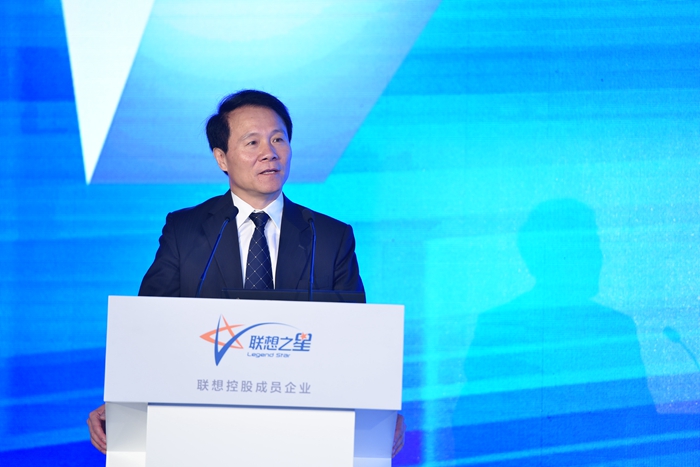
Academician Zhan Qimin, Director of the Health Science Center at Peking University and Director of the State Key Laboratory of Molecular Oncology at the Chinese Academy of Medical Sciences
2016 marked the decisive year of China’s 13th Five-Year Plan. As China aims to build a moderately prosperous society in all respects by 2020, the realization of this goal is closely linked to the health status of its population. With continuous socioeconomic development, health has become both the most fundamental and the highest aspiration of people’s lives, serving as a powerful driver for market economy growth.
Challenges Facing Population Health in China
Currently, China’s population health faces eight major challenges:
First, environmental degradation factors persist, and the deterioration of living conditions has yet to be curbed.
Second, the rapid aging of the population has led to a substantial increase in the incidence of related diseases.
Third, rapid industrialization and urbanization have led to a significant increase in the incidence of modern diseases.
Fourth, the onset of critical illnesses is occurring at younger ages, and their incidence rates remain persistently high.
Fifth, traditional infectious diseases continue to spread unchecked, while emerging infectious diseases occur frequently.
Sixth, the incompleteness of national population health and disease data hinders scientific decision-making by the government.
Seventh, there is insufficient innovation in the application of disease diagnosis and treatment technologies, and the level of standardization is low.
Eighth, inadequate safety assurance for food, drugs, and medical devices, with regulatory technical means requiring improvement.
Among these, major diseases are the primary cause of human resource loss and economic damage in China. There are approximately 4.3 million new cases of malignant tumors annually, with about 2.8 million deaths per year. The number of hypertensive patients in China is around 270 million, and cardiovascular and cerebrovascular diseases cause approximately 3.5 million deaths each year. In addition, the number of diabetic patients has exceeded 100 million, and there are 110 million patients with chronic kidney disease. Furthermore, sudden infectious diseases such as SARS, avian influenza, and hand, foot, and mouth disease also pose threats to human health. Major diseases are not only the main reason for the loss of human resources and economic losses in our country but also a critical issue that must be addressed to achieve the goal of building a moderately prosperous society. Improving the current situation requires not only the continuous efforts of medical professionals but also technological support from innovative enterprises.
Health and hygiene work serves as a critical support for creating a favorable environment for economic development, a foundational condition for building a socialist harmonious society, a key sector for expanding domestic demand and driving economic growth, and an important lever for adjusting the economic structure and transforming the mode of economic growth. Health and hygiene work is both a significant social undertaking and a strategic investment of major importance.
Currently, the "three 95%s" are constraining the development of China’s healthcare sector. First, 95% of the early-stage intellectual property rights for clinical prescriptions of Western medicines in China originate from abroad. Second, 95% of large-scale medical equipment in hospitals is imported from overseas. These two factors are primary drivers of high healthcare costs. The final 95% refers to clinical practice guidelines and standards for disease treatment; China contributes only about 5%, with the remaining 95% derived from foreign sources.
Meanwhile, the uneven distribution of medical resources remains a significant challenge. Telemedicine, mobile health, the Internet of Things (IoT), and the establishment of medical consortia are all viable pathways to address this issue. The health industry contributes approximately 6% to China’s GDP, whereas in developed countries, its contribution ranges from 15% to 25%. In most of these nations, the figure has reached at least 15%, with some approaching 25%. Medicine is crucial to the development of "Healthy China," and achieving this vision first requires building China into a leading power in medicine.
The level of diagnosis and treatment for major diseases, the capacity of public medical services, and the ability to respond to public health emergencies in China are determined by three aspects:Medical research findings, disease prevention strategies, and clinical treatment outcomes.
The advancement of healthcare depends on medical technological innovation, improvements in medical standards, and the overall rise in scientific and technological capabilities. The emergence of any new medical technology, equipment, or pharmaceutical product is a testament to the progress of medical science and technology. Today, beyond the medical community itself, governments, the public, and the media all place significant emphasis on medical science and technology.
Currently, seven major fields in medicine are developing rapidly: genomics has been extensively applied to health, agriculture, animal husbandry, and forestry; proteomics research techniques and methods are poised for significant breakthroughs; stem cell and regenerative medicine have entered the stages of clinical application and industrialization; and vaccines and antibodies will become priority areas for major breakthroughs in biopharmaceuticals. Biotherapies—including gene therapy, immunotherapy, and cell therapy—along with personalized diagnosis and treatment technologies, have become important directions in the development of modern medical technology. Medical devices are emerging as a new industry progressing hand in hand with pharmaceuticals. Bioinformatics technology is evolving in two directions: the generation of massive amounts of data and its widespread application.
The Organisation for Economic Co-operation and Development’s report, Bioeconomy 2030, states that by 2030, the output value of biotechnology is projected to account for 35% of industrial output, 50% of agricultural output, and 80% of the output value related to pharmaceuticals, diagnostics, and medical treatments. Some global corporate giants, including traditional industrial leaders, are also entering the biotechnology sector.
In 2015, the United States outlined three key elements of innovation and several strategic initiatives in its *National Strategy for Innovation*. Among these, two areas held particular prominence: first, Precision Medicine, and second, the BRAIN Initiative. Precision Medicine serves as a critical hub that integrates multiple cutting-edge technologies and enterprises.
Precision medicine integrates clinical information, disease cohorts, and biobanks with omics research, molecular imaging, clinical pharmacology, big data, and clinical outcome assessments to develop personalized treatment plans supported by big data. This approach can enhance therapeutic efficacy, reduce side effects, and lower costs. Under current diagnostic and treatment paradigms, patients with the same histological type and clinical stage receive identical treatment regimens; however, only 30%–50% of these patients achieve optimal therapeutic outcomes, while 50%–70% may experience partial or no response. Precision medicine aims to achieve superior therapeutic outcomes through personalized treatment.
Precision medicine encompasses precise risk prediction, accurate disease diagnosis, precise disease classification, targeted drug application, efficacy evaluation, and precise prognosis assessment, gradually improving in response to public needs and market development demands. China has established the following four major goals for the development of precision medicine:
First, establish an internationally leading precision medicine research platform and support system, with independent mastery of core key technologies.
Second, develop a batch of domestically produced medical drugs, medical equipment, and medical devices.
Third, establish a set of guidelines, standards, and norms for disease prevention and clinical diagnosis and treatment that are tailored to China’s needs and internationally recognized.
Fourth, drive the development of the biopharmaceutical, medical device, and health services industries. The ultimate goal is to advance the construction of “Healthy China.”
So, what is the relationship between precision medicine and translational medicine? Precision medicine represents the goal and requirement of medical development, while translational medicine constitutes the model and mechanism of medical development.
In advancing precision medicine, three major issues require attention:
First, elucidate the onset and progression of the disease to clarify its essential nature.
Second, implement early diagnosis based on disease biomarkers.
Third, achieving precision therapy through targeted therapeutic agents.
In addition, big data serves as a critical supporting platform for the development of precision medicine, encompassing data collection, storage, analysis, utilization, sharing, and security.
Academician Zhan Qimin stated that scientists should leverage China’s resource advantages, respond to public needs, adopt an integrated model of industry, academia, and research, and advance the nation’s technological development under government guidance. The development of China’s medical technology and healthcare sector will enable us to achieve leapfrog progress.