

Lenovo Star Partner Lu Gang: Entrepreneurs Should Strategically Position Themselves at Critical Junctures
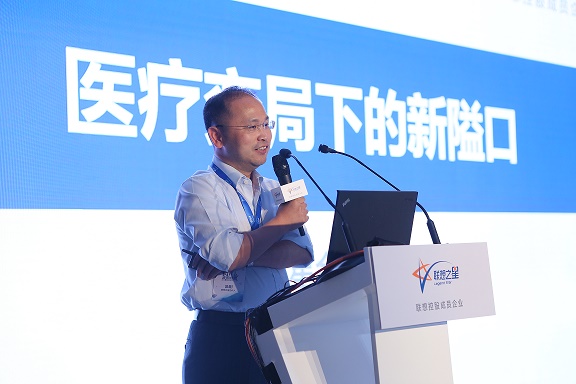
Lu Gang, Partner at Legendstar
"The Art of War" emphasizes the importance of timing, geographical advantage, and human harmony. Timing refers to market trends, while geographical advantage naturally corresponds to strategic chokepoints. In the context of entrepreneurship or investment, identifying areas with a higher likelihood of success is precisely what we mean by "strategic chokepoints."
There is a certain correlation between market trends and the capital market. The intensity of these trends—whether strong or weak—is primarily driven by the supply of capital. When the momentum ceases, concerns about a “winter” emerge, accompanied by widespread pessimism. In reality, the entire market enters an adjustment phase, characterized by a relatively downward trajectory. While there are bubbles in the healthcare sector, with some sub-segments exhibiting particularly high valuations, the overall healthcare market remains relatively rational.
Medical capital has shown a unidirectional growth trend. It remained relatively flat from 2006 to 2009, then surged suddenly between 2009 and 2010. Another upward spike occurred in 2013 and 2014. Many new funds emerged during this period, as numerous seasoned investors left their original healthcare companies to launch startups and establish new healthcare-focused specialized funds. Driven by the emergence of new opportunities, investment peaked between 2015 and 2016, before rapidly entering a phase of bubble deflation.
Angel investment is small and weak compared to venture capital (VC). To generate returns at an early stage, angel investors must rely on strategic positioning. Where should they position themselves? At critical chokepoints. This requires advance layout. The same principle applies to entrepreneurs: they must strategically position themselves at these critical chokepoints.
The Macro Environment Creates Opportunities for Startups
Labeling has turned usury into P2P lending and statistical analysis into big data. Most egregious of all, market disruptors are hailed as pioneers of disruptive innovation. The healthcare sector, however, remains relatively rigorous. We are contemplating the true relationship between these labels and the future: Where lie the critical chokepoints of this market? What are the emerging trends in innovation? And where do the opportunities truly reside?
In the healthcare sector, multiple forces are driving the industry and steering its transformation. Key changes such as the growing elderly population, the upgrade in healthcare consumption, and breakthroughs led by biotechnology represent significant growth opportunities. Over the past two decades, the overarching themes in healthcare have been “defensive” or “growth-oriented.” When other sectors underperform, healthcare often serves as a defensive haven. Coupled with population aging and upgraded healthcare consumption, large companies find it easier to identify opportunities within this space.
Healthcare reform is shaking up the interest-based ecosystem. Although legacy mechanisms remain entrenched, we are observing many new developments and signals. Mobile internet is addressing information asymmetry, thereby creating new opportunities for transformation. These transformative opportunities have disrupted established transactional relationships, giving rise to a wave of new companies. As transformative opportunities converge with growth-oriented prospects, healthcare investment has entered an era of significant upheaval. As the saying goes, “heroes emerge in turbulent times,” meaning that small companies will encounter abundant opportunities in early-stage entrepreneurship and early-stage investment.
The “Big Four” and the “Four Major Shortcomings” in Healthcare
The healthcare services ecosystem is quite complex, which we refer to as the “Big Four.”
“Tertiary Grade A” hospitals are, in effect, a siphon: top physicians, high-quality data resources, and even portions of health insurance funds are all drawn into these institutions, making it nearly impossible to secure an appointment. Meanwhile, primary care facilities and secondary hospitals remain virtually deserted.
Second is the “Senior Chief Physician.” Currently, physicians at the chief physician level are predominantly concentrated in tertiary Grade A hospitals, making them scarce in other healthcare institutions. This has led to a supply-demand imbalance for these senior specialists.
Then there is the “major pharmaceuticals and medical devices” sector. Under the de facto commercial relationship of “funding healthcare through drug sales,” this sector has also become one not driven by product innovation; instead, relationship-based capabilities and operations in “gray areas” have emerged as critical core competencies.
Finally, there is the “broad social security” system, in which medical insurance accounts for more than 90% of the share, making it difficult to bear the heavy burden; behind this lies a relatively strong chain.
"The 'Four Major Shortcomings' urgently need to be empowered; once their capabilities are strengthened, they will become a crucial force in breaking through bottlenecks."
First, there is a lack of information flow, leading to information asymmetry, also known as information silos.
Second, a shortage of physicians serving as the core workforce;
Third, behind the practice of subsidizing healthcare with drug profits lies the absence of a sound incentive mechanism;
Fourth, there is a lack of commercial insurance strength, lacking the payment power to change the industry landscape.
How to Find New Choke Points?
Last year, we rebranded “mobile healthcare” as “New Healthcare Services.” However, mobile internet approaches alone struggle to address many of the pain points in healthcare delivery. Within the concept of New Healthcare Services, there is also an emphasis on “innovation-driven technological support.” For instance, infrastructure can be extended to primary care settings through diagnostic tools or data terminals at the grassroots level. These frontline facilities need to resolve information asymmetry, which requires leveraging technologies such as mobile internet, smart healthcare, and big data.
What Do Entrepreneurs Fear Most?Entrepreneurs fear two things most: first, rigid thinking that remains stuck in past scenarios; and second, excessive optimism about the future. Regarding the future of the capital market, I can state with certainty that companies should choose to list on China’s capital markets. Over the next five years, China’s capital markets will offer transformative opportunities.
"Two years ago, I summarized a key insight: China's economic structure is undergoing adjustment, and two sectors are poised to benefit significantly, both closely aligned with the Chinese Dream. One is the defense industry, and the other is the healthcare sector."
Because both industries are at the forefront of applying cutting-edge technologies. Such advanced technologies will drive economic and structural adjustments in various countries. Following the U.S. Strategic Defense Initiative (commonly known as the "Star Wars" program), waves of high-tech companies emerged. China also possesses this foundation, so its capital markets will inevitably create entry points and opportunities for these companies. The synergy between primary and secondary markets will accelerate this process.
New Services: Digging Deeper. “Deeper” signifies engagement with the grassroots level. This is a protracted struggle, broadly summarized into three phases. The first phase is the period of connectivity and empowerment, during which the influence of physicians and patients—the two most direct decision-making entities in healthcare services—will be enhanced. This is achieved through data digitization and information transparency. Meanwhile, empowerment driven by the new healthcare reform mechanisms plays a crucial role.
The second phase is the transaction and bonding period. Many mobile health startups lack a clear profitability model because sufficient empowerment has not yet been provided in the earlier stages. Once empowered, they should gradually expand from low-barrier, light-decision domains to high-barrier, heavy-decision domains.
The second layer involves improved efficiency of social insurance and the gradual expansion of commercial insurance. These companies facilitate certain transactions, and over time, the transaction channels will be strengthened, eventually evolving into interconnected links.
With this process in place, the industry enters the third phase: the formation of a new ecosystem. Its hallmark features are a significant improvement in allocation efficiency and a substantial reduction in market distortions. This shift is driven by greater information transparency, stronger purchasing power, and increasingly sophisticated payers. Business models are becoming more stable. While doctor-patient conflicts are difficult to reverse under the current system, as the new ecosystem takes shape, social equity and commercial viability will gradually reach a new equilibrium.