

Yu Ying: Future Clinics Will Rely on GPs and Family Doctors, Not Government Assignment
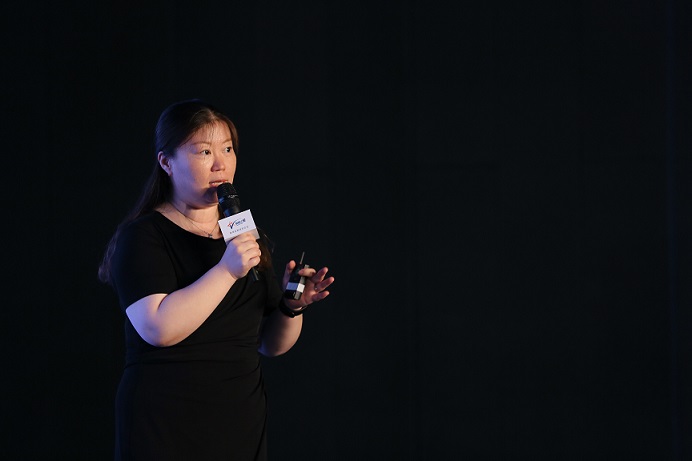
Yu Ying, CEO of Amcare Clinic Center and “Superwoman of the Emergency Department”
As a student who has received formal education in traditional medicine, I have always believed that healthcare is a technology-driven industry. Certain aspects of it can be optimized, reformed, and innovated in terms of business models through internet technologies. However, genuine medical care cannot be delivered without physicians or without a supporting platform.
China has begun to implement a family doctor contract system, aiming for a 30% coverage rate by 2017 and 100% by 2020. Primary community healthcare should become more dynamic. Upon hearing this news, I sensed a business opportunity. Because inIn China’s medical community, general practitioners are the poorest and most overworked; they receive very low incomes and have no access to informal or off-the-book earnings.
Putian-affiliated medical institutions. I believe this should be viewed in two parts. First, under a fully administrative system, the Putian group propelled Chinese healthcare into commercialization—a significant step that cannot be denied.
On the other hand, public medical institutions lack market competition mechanisms, rendering the tiered diagnosis and treatment system virtually ineffective. The state aims to establish a tiered diagnosis and treatment framework to ensure the full utilization of medical resources. Many physicians are striving to make their income open, transparent, and above-board, yet some gray income remains unavoidable. Only when such gray income is eliminated, allowing public hospitals to restore their public-welfare nature and enabling the healthcare sector to regain its market-oriented attributes, will healthcare reform truly come to life.
If a country’s healthcare system is to be strictly characterized by absolute social public welfare or government-provided benefits, its efficiency may be compromised. In such circumstances, market-oriented mechanisms serve as a necessary complement; both the public-welfare and market-oriented attributes are indispensable in healthcare. Any approach that emphasizes exclusively either public welfare or marketization inevitably misleads physicians, healthcare reform efforts, and patients alike.
What kind of services do we truly need? The answer is quite simple: primary healthcare requires family doctors who provide accessible, convenient, safe, and nearby care, coupled with lifelong health information continuity. Patients’ health records and medical histories must be readily accessible anytime and anywhere, as they constitute personal health assets. Even when patients suffer from serious illnesses and must seek treatment at large public hospitals, they still hope to receive reasonable advice and guidance from their family doctors. Furthermore, throughout this process, physicians must respect two fundamental patient rights: the right to informed consent and the right to privacy.
In many developed countries, clinics measuring 200 square meters, 100 square meters, or even just a few dozen square meters—such as the 50–60 square meter clinics commonly found in Taiwan—are fully capable of providing high-quality primary care services to local residents. However, this model is not feasible in China. A clinic in China is required to have a clinical laboratory, nursing staff, a treatment room, and a procedure room, among many other mandatory facilities and resources.
Existing regulations have failed to keep pace with the wave of the “Internet Plus” era. When Premier Li Keqiang spoke about “Internet Plus” in Zhongguancun, those of us in the healthcare sector were still entrenched in traditional mindsets. For instance, regarding pharmacy operations: how large does a pharmacy need to be for a small clinic? Should we offer one-hour home delivery? What about online pharmacies? Why can’t we simply provide a link that directs patients to an online pharmacy for medication delivery? Could our clinics operate with just a small over-the-counter (OTC) counter—or even eliminate the OTC counter entirely, given that there is a pharmacy next door where patients could pick up their medications? Unfortunately, this is not permitted; administrative regulations mandate that clinics must maintain an on-site pharmacy.
Although there appear to be many barriers to entry, the industry actually contains numerous hidden opportunities, which is precisely what makes it viable.
Throughout the operation of the clinic, tasks such as site selection, department layout, and maintaining good relations with the Health Bureau, as well as with nearby neighborhood committees, communities, fire departments, urban management authorities, and waste collection services, are not particularly challenging. The real difficulty lies in securing qualified physicians. Our current system has failed to play a constructive role. Firstly, regarding clinical treatment standards and care pathways, while some hospitals are actively working on their development, these initiatives require substantial investment with returns only visible in the future; thus, they can only be achieved through long-term vision.
I have stated more than once that China’s medical education system is highly distorted, operating on a scale from 60 to 100 points. After graduating from medical school and obtaining their physician license through examinations, individuals advance along a career path to become specialists, associate professors, full professors, and ultimately renowned experts. Given China’s vast population and the enormous number of patients, our experts have become exceptionally proficient.
Indeed, foreign surgeons cannot outperform us in surgical procedures, which is why they had to invent robotic surgical assistants. These systems enable standardized and precise operations. Through them, many experts have accumulated vast amounts of data and medical records. This forms the foundation that allows physicians to practice independently outside of hospitals, sustain their own clinics, and engage in freelance medical practice beyond merely serving as individual practitioners.
"In the current era, physicians are no longer expected to be merely clinicians; they must be knowledgeable, well-rounded professionals capable of empathizing with patients. This represents a new challenge for family doctors and general practitioners, driven by evolving patient demands."
"So we invest in chain clinics; as long as there's funding, it works. Right now, it's all about staking out territory."
1. In today’s society, where information is so readily accessible, traditional textbook-style health education has lost its appeal. What we physicians lack is precisely the ability to deliver health education from the patient’s perspective.
2. Standardized Training for Family Physicians. Currently, all general practitioners undergo a three-year standardized residency training program, during which they rotate through various specialties. However, upon commencing practice in community health settings, they essentially revert to the role of basic internal medicine physicians from day one, leading to a gradual erosion of their foundational clinical skills.
3. Establish a scientific referral system. I hope to see more physicians form specialist groups, as these will serve as the referral infrastructure supporting us, which is particularly beneficial for general practice clinics and general practitioners. Additionally, flexible workstation models should be established. Although the Chinese government appears to enforce strict regulations, it actually provides ample opportunities for medical service delivery.
Every link in the health chain is crucial. If we focus excessively on genetics, oncology, and major surgeries while failing to secure the foundational aspects of healthcare—such as primary care entry points and basic health safeguards—you will find that medical costs continue to exceed budgets. Conversely, if we prioritize only grassroots prevention while neglecting technological advancements, we risk lacking effective treatment options when severe illnesses eventually arise. These components are inseparable elements of a cohesive healthcare system.
Many people assume that since Yu Ying operates a clinic in Beijing, she is destined to build a chain of clinics. Given the long and arduous path toward establishing a clinic chain, how should one navigate the future? With so many platforms emerging to support specialist physicians, Yu Ying prefers to focus on general practitioners and family doctors, by developing support and assistance programs for clinic operators.Yu Ying statedTo embark on a new entrepreneurial journey in Beijing by building an auxiliary platform for general practitioners, helping doctors quickly find their path out of uncertainty and realize their professional value as soon as possible. The vision is for clinics to rely on general practitioners and family doctors, rather than on government assignments.