

Liu Chuanzhi and Zhou Qiren Advise Entrepreneurs: How to Navigate an Uncertain Future
In Beijing, Legend Star hosted the WILL Conference. More than 800 innovators and entrepreneurs gathered to engage in discussions about the future world. The journey to explore the unknown and pursue innovation is fraught with uncertainty. At a crossroads, when entrepreneurs were plagued by anxiety and confusion, Mr. Liu Chuanzhi, Chairman of Legend Holdings, and Professor Zhou Qiren, an economics professor at the National School of Development at Peking University, illuminated the path forward for these entrepreneurs with their wisdom and stories.
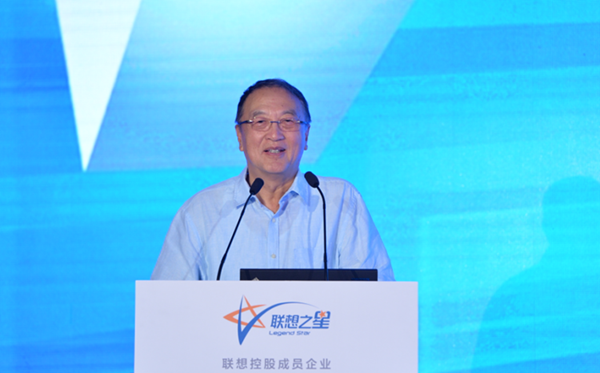
Liu Chuanzhi, Chairman of Legend Holdings
When confronting the “uncertainties” of the future world, Mr. Liu Chuanzhi hopes that entrepreneurs can break through confusion with the power of innovation. He encourages them to engage with one another, offering mutual encouragement, serving as mirrors for each other, and sharing resources. They should remain pragmatic—pragmatic above all—and seek truth—truth above all—not for the sake of slogans, but to build successful businesses.
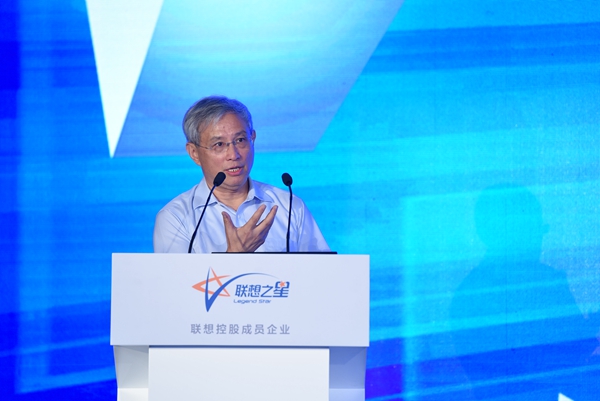
Zhou Qiren, Professor of Economics at the National School of Development, Peking University
Professor Zhou Qiren drew on his years of overseas fieldwork to share his observations and reflections, urging people to have the courage to believe in the future, overcome cultural anxiety, and foster the rise of a pragmatic, clearly optimistic worldview in China.
Mr. Liu Chuanzhi’s keynote address centered on the uncertainties of the future. In his view, how Chinese enterprises confront these future uncertainties is a thorny issue that troubles every entrepreneur. Brexit and the dramatic shifts in the U.S. presidential election have introduced significant uncertainty into the global landscape. For nations and peoples to stand firmly among the community of nations, what ultimately matters is economic strength. Economic strength, in turn, hinges on corporate strength, which fundamentally rests on enterprises’ innovation capabilities and the entrepreneurial spirit of the younger generation. Therefore, entrepreneurship and innovation are no longer mere slogans; they are an essential and promising path toward strengthening the nation and enriching its people.
What will the world look like as artificial intelligence, bioengineering, and other hardware advancements converge with the internet? It remains uncertain who will emerge as leaders and who will lag behind. Entrepreneurs and business leaders alike stand at a pivotal turning point in this era. We must carefully assess our surrounding environment, including the global political landscape, the political and business climate, as well as all changes brought about by technological innovation, business model innovation, and the emergence of competitors within our industries. The critical issue is not these changes themselves, but rather how we respond to them—a question that everyone must seriously consider.
When discussing the confusion faced by entrepreneurs, Mr. Liu Chuanzhi’s thoughts returned to Lenovo’s founding period in 1984. At that time, there was a complete lack of understanding about what constituted an enterprise or how a market economy functioned. With no textbooks to study and no predecessors to learn from, they had to “cross the river by feeling the stones.” In contrast, today’s entrepreneurs have access to guidance and resource support from thousands of learning institutions and investment firms.
However, theory alone is clearly insufficient. Entrepreneurs must gain hands-on market experience before coming together to listen to insights shared by mentors, educators, and successful entrepreneurs. Crucially, entrepreneurs need to convene regularly to engage in repeated deliberation, exchange, and communication. Such interactions among entrepreneurs serve to mutually inspire, act as mirrors for self-reflection, and facilitate resource sharing, ultimately transforming their ventures into successful businesses through a pragmatic and results-oriented approach.
Zhihu CEO Zhou Yuan, Face++ Founder Yin Qi, and Burning Rock Biotech CEO Hans Yusheng—three outstanding entrepreneurs—shared their visions for the future of entrepreneurship and sparked a crucial discussion on-site: How can excellent entrepreneurs and business leaders establish a new, healthy government-business relationship in the future?
As a successful entrepreneur and pioneer in the startup ecosystem, Liu Chuanzhi advises entrepreneurs that transforming competitive opportunities into chances to seek support and policy incentives from leadership is a critical issue for all startups. It is essential to effectively communicate one’s genuine achievements. Lenovo advocates the principle of “doing ten and speaking nine,” avoiding exaggeration. You must ensure that this message is clearly understood; when communicating, carefully consider your target audience and the channels through which you can influence them. For instance, the chairman of Bybo Dental Hospital, part of Lenovo Holdings’ portfolio, possesses the ability to effectively publicize his accomplishments. The head of Lenovo’s Public Relations Extension Department is specifically researching this topic, as are some internet companies. This is a significant matter worthy of collective discussion: under the principle of “doing ten and speaking nine,” how can one effectively communicate their achievements?
At the invitation of Liu Chuanzhi, Mr. Cui Shuqiang, Secretary of the Haidian District Committee of the Communist Party of China in Beijing, also offered his views.
In his eyes, Lenovo and Chairman Liu are role models for enterprises in Zhongguancun.Secretary CuiI once discussed an issue with many new entrepreneurs in Zhongguancun and found that many of them, especially young founders, may not devote sufficient energy to cultivating proper government-business relations. In this regard, Chairman Liu serves as a role model for all. As a leading figure among Zhongguancun enterprises,Chairman LiuOne key reason for its enduring status as a standard-bearer among China’s tech innovation enterprises is its ability to effectively manage government-business relations within the context of China’s national conditions. This is a crucial lesson for many young entrepreneurs. If members of Legend Star wish to secure a place in China’s future tech enterprise landscape, they must study how to properly navigate government-business relations under the new circumstances.
As Chairman Liu stated, Lenovo’s approach is to “deliver ten while claiming nine.” However, some enterprises may need to “claim ten and deliver eleven” at different stages, making proactive communication essential. Many entrepreneurs are not adept at publicity, government relations, or public affairs. For instance, Face++ (Beijing Megvii Technology) was provided with a dedicated kiosk in the office building of the Haidian District Committee and Government to advertise its presence in Haidian and Zhongguancun. Yet, their promotional efforts remain inadequate. The government has offered Face++ an excellent opportunity: anyone entering the building to conduct business can immediately see their attractiveness score and experience Face++’s products. Despite these favorable conditions, we have never witnessed Face++’s leadership or staff promoting their products and technologies or outlining the company’s future strategic layout and direction on-site. When enterprises reach a certain scale—even if their current valuation approaches or exceeds RMB 10 billion—substantial concrete efforts are still required to truly become a enterprise valued at tens or even hundreds of billions.
For a long time, economics was regarded as a “dismal science,” with a rather pessimistic outlook on the future. In the face of future uncertainties, the stories shared by Professor Zhou Qiren, a renowned economist, were highly insightful. In particular, the Chinese-style “definite pessimism” inspired by Peter Thiel’s book Zero to One—Thiel being the founder of PayPal and the first external investor in Facebook—as well as the Israeli perspective on the future, left a deep impression on the attendees.
“Zero to One” offers an excellent perspective on innovation by further decomposing uncertainty into a two-by-two matrix. Uncertainty can be viewed either pessimistically or optimistically: the pessimistic view holds that, because the future is uncertain, all perspectives and opinions remain unclear; the optimistic view sees uncertainty as potentially beneficial, possibly yielding pleasant surprises.
Meanwhile, Zero to One categorizes uncertainty into four quadrants: definite optimism, indefinite optimism, definite pessimism, and indefinite pessimism. The United States before the 1980s exemplified definite optimism; the great American Dream led people to believe that anything could be attempted and resolved. The contemporary United States represents indefinite optimism, with its citizens believing in their own intelligence and holding hope for the future. Europe embodies indefinite pessimism, characterized by a muddling-through attitude, procrastination, and mere drift. Only one country exhibits “definite pessimism”: China. Despite transforming from a poor nation into the world’s second-largest economy and enjoying global confidence, the Chinese people themselves dissent from this optimistic view, believing they will not dominate the world.
This perspective stems from the fact that the older generation in China experienced famine in their youth. They are all aware that “winter” will come and that misfortune is inevitable, viewing current prosperity as merely a matter of luck. Having endured excessive suffering, warfare, and adversity in the past, this mindset has become deeply ingrained inDNAInside. Winter will come, but few people say that spring will come after winter passes; they only believe that winter will come. Chinese people have a clear understanding of the future and are the most typical definite pessimists about the future.
“While the viewpoints in *Zero to One* are open to debate, they are equally worthy of our reflection. We are constantly on guard against adverse outcomes, with individuals across all strata bracing themselves for the future. So, how should we view the future given where we stand today?”
Israel's Land Area12000square kilometers, larger than the area of Beijing16000smaller than a square kilometer, with extremely scarce natural resources. In Mark Twain’s eyes, Israel was second to none in its desolate scenery: the mountains were barren, the colors monotonous, and the terrain unattractive. Everything appeared harsh and exposed, lacking any sense of depth or perspective; here, distance did not breed beauty. It was a suffocating, hopeless, and dreary land. Yet, relying solely on its limited60Tens of thousands of mu of arable land, with annual rainfall of less than50mm, Israel has become the “kitchen of Europe,” with its drip irrigation technology leading the world and large-scale exports of both freshwater and desalination technologies.
On what basis? On people. On what basis do people succeed? On education. Education in Israel is fundamentally different from the education emphasized in China.
First, Their faith is more powerful than ours. So many people have believed in the Bible for generations. The stories in it may seem strange, but they believe nonetheless. They believe that the future will be bright; they believe that no matter what hardships and dangers lie ahead, the future of the Jewish people will be bright.
Second, Their educational methods differ significantly from ours. They are deeply religious, yet their faith is not built through rote memorization, recitation, or dogma. Israeli children study the Bible in small groups of two or three, engaging in debate and discussion; they are encouraged to challenge teachers’ interpretations and even question divine pronouncements. Their system emphasizes exploring the unknown rather than merely memorizing established knowledge—a gap where we lag considerably. Professionals in the education sector should reflect deeply on this disparity.
Professor Zhou also shared a memorable anecdote. Jewish mothers place the utmost importance on educating their children. When children return from school, they do not ask what they have learned or what scores they achieved on exams; instead, they ask, “Did you ask any questions today? Did you ask good questions?” At that time, all the parents visiting Israel for study tours began to reflect on this approach, as they had never previously asked their children such questions, focusing solely on exam performance. This mindset, cultivated from an early age among Israelis, has generated significant productivity. Consequently, upon returning home, every member of the delegation made it a point to ask their children, “Did you ask any questions today?” Of course, the influence of these thirty-odd participants alone was insufficient; it requires widespread adoption of this principle, treating knowledge as the essence of life. With no other natural resources, the Jewish people have built their nation relying solely on human knowledge.
Anxiety pervades the general public, with widespread concerns that the current growth model is unsustainable, cost advantages are eroding, growth rates are slowing, high-speed expansion is no longer viable, the demographic dividend has disappeared, and institutional reforms have stalled despite prolonged efforts. There is also cultural anxiety. Innovators must not only address innovation challenges but also confront worldview issues, among which the most difficult is how to think about the future.
Is the future pessimistic? Optimistic? Uncertain? No matter what the future holds, we must still live our lives with steadiness and purpose. Regarding the future,Entrepreneurs should inspire one another, serve as mirrors for each other, and share resources. Everyone’sIdeas are more important than resources. People must dare to think, and after thinking, they must take action. The prerequisite is to have the courage to believe in the future. Without faith in the future, many of our ideas become self-constrained, leaving numerous intellectual riches unexplored. Therefore, entrepreneurs need to be pragmatic, pragmatic, and ever more pragmatic; they must seek truth, seek truth, and seek truth again, striving to foster a pragmatic yet clearly optimistic worldview in China.