

Five Key Application Scenarios of AI in Mental Health: Investment Opportunities and Emerging Solutions
Recently, YiXinLi hosted the First China Mental Health Industry Development Summit, with participants from the industry, investment, and academic sectors. Zhang Chen, a senior researcher at VCBeat Institute, was invited as a guest speaker and delivered a presentation titled “Key Scenarios for the Integration of Artificial Intelligence and Mental Health》keynote speech,Exploring Potential Investment Opportunities at the Intersection of Emerging Technologies and Psychology. The following is the shared content:

VCBeat recently compiled information on more than 70 healthcare artificial intelligence companies worldwide through public and non-public channels. These companies are distributed across North America, the UK, Europe, Israel, India, Singapore, South Korea, and China. We have categorized these 70+ companies into a total of 10 groups, including (1) Insights/Risk Management, (2) Emergency Room and Hospital Monitoring, (3) Biotechnology, (4) Health and Lifestyle Management, (5) Nutrition, (6) Wearable Devices, (7) Virtual Care Assistants, (8) Drug Discovery, (9) Medical Imaging, and (10) Mental Health. At present,Startups at the intersection of artificial intelligence and mental health remain a niche segment, both in terms of project volume and financing amounts. Nevertheless, we believe significant investment opportunities lie hidden within this space.
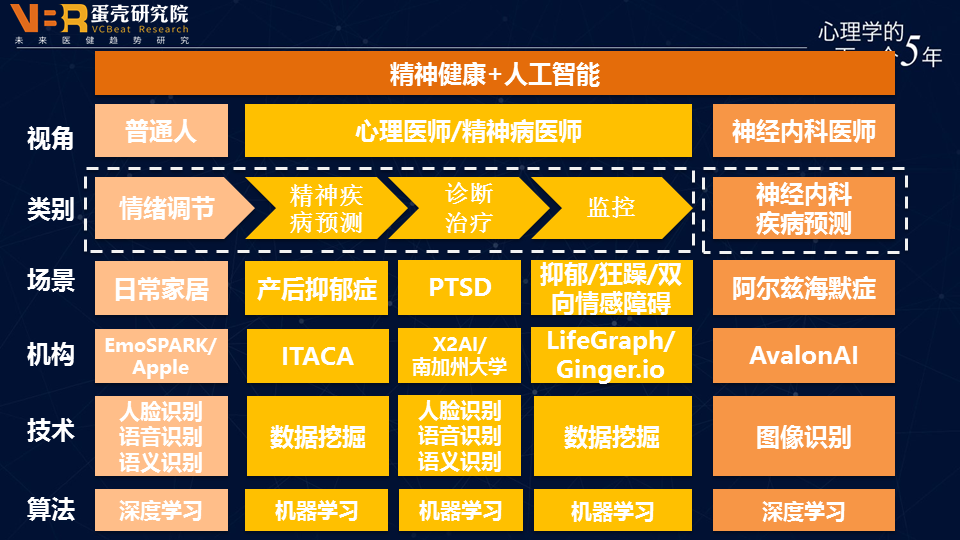
We categorize mental health and artificial intelligence into three major classes based on perspective.The first perspective is that of the general public, where artificial intelligence assists users in emotional regulation. The second perspective is that of psychologists and psychiatrists, involving the prediction, diagnosis, treatment, and monitoring of mental disorders by artificial intelligence. The third perspective is that of neurologists, primarily focusing on the use of artificial intelligence to predict certain neurological conditions, such as Alzheimer’s disease.
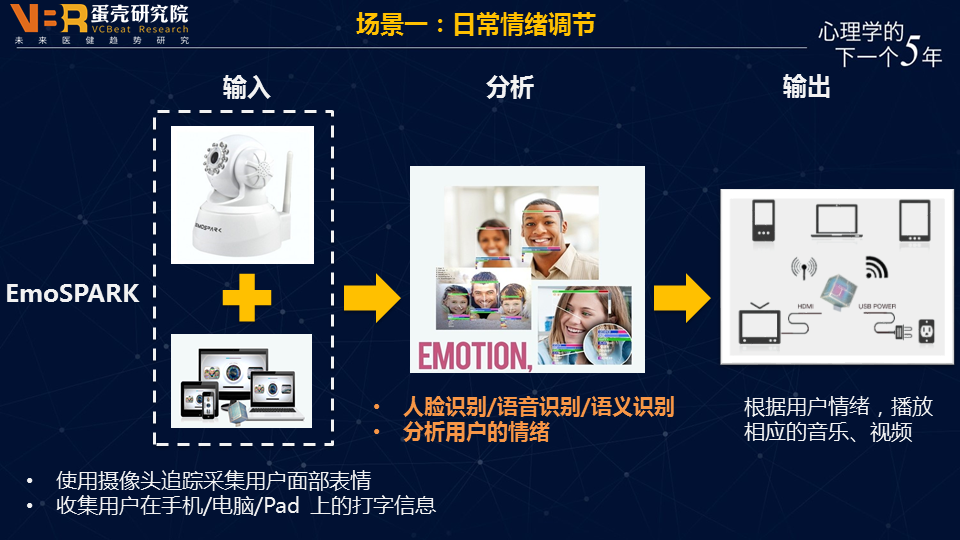
Let’s begin with the first scenario. EmoSPARK is a lightweight smart-home product that features a cube-shaped speaker and a 360-degree rotatable camera, and it can connect to users’ iPhones and other devices. On one hand, it continuously captures changes in users’ facial expressions via the camera; on the other, it analyzes information entered by users on terminal devices such as smartphones.Artificial intelligence analyzes user emotions through facial recognition, semantic analysis, and speech recognition, and recommends mood-regulating music and videos.
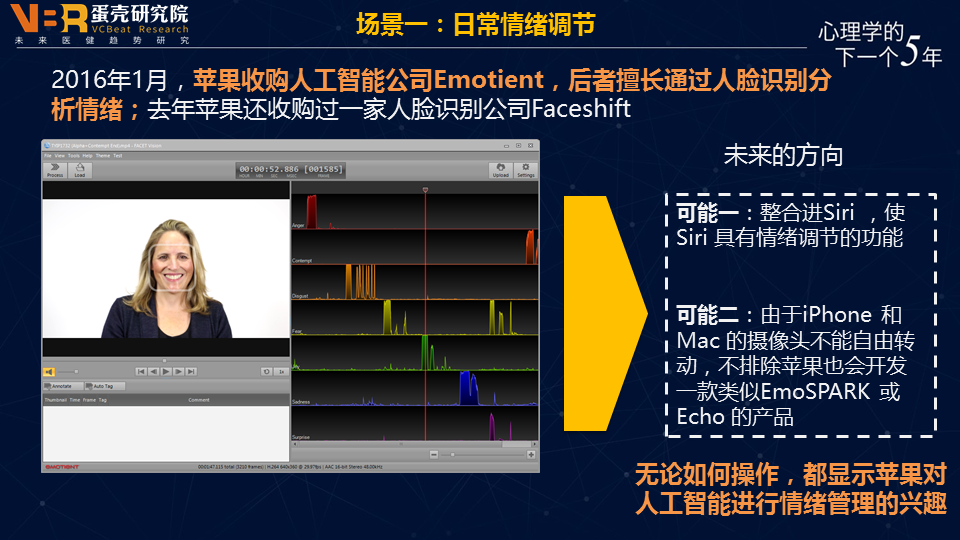
Besides startups, tech giants like Apple may also be interested in using artificial intelligence to regulate user emotions.This January, Apple acquired the artificial intelligence startup Emotient, which specializes in analyzing user emotions through facial recognition., they categorize human emotions into seven major types, monitor them in real time, and then derive a weighted value. In the future, Apple may launch a product similar to Amazon Echo to capture the entry point of the smart home market. Of course, issues do exist, such as user privacy. Personally, I find it quite alarming to think that a 360-degree camera is continuously capturing my facial expressions and attempting to infer my emotions.
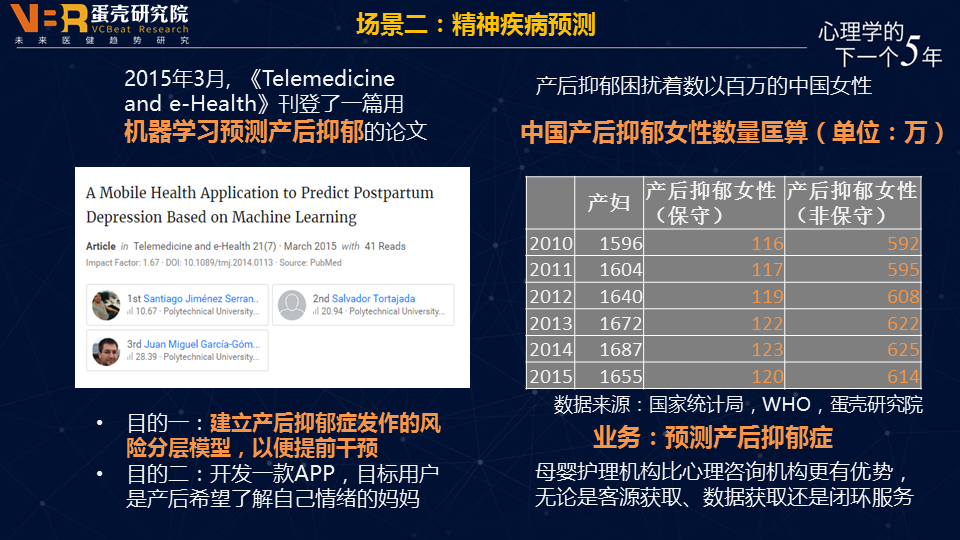
The second scenario involves using artificial intelligence to predict mental disorders. A paper published last year in *Telemedicine and e-Health* discussedMachine Learning for Predicting Postpartum DepressionThree authors collected extensive maternal data from seven Spanish hospitals with the aim of: (1) establishing a risk stratification model for postpartum depression, and (2) developing a mobile app targeted at new mothers seeking to better understand their emotional well-being. Interestingly, we have not yet seen any startups leveraging artificial intelligence to predict postpartum depression. This may be related to market size; we estimate that the annual number of postpartum depression cases in China ranges from 1.2 million to 6.2 million, corresponding to a market size on the order of billions of RMB. For investment institutions, the market pool may be too small. For psychological counseling agencies, there is a lack of effective customer acquisition channels. Currently, we have engaged with numerous maternal and infant care organizations, which have expressed strong interest in integrating postpartum depression support into their service systems and are willing to collaborate with professional psychological counseling agencies and AI technology teams. An interesting point concerns mother-in-law and daughter-in-law relationships. Many European studies on postpartum depression do not address this dynamic, largely due to cultural differences. Throughout East Asia, where Confucian culture has a profound influence, the mother-in-law and daughter-in-law relationship carries significant weight in family life and should not be overlooked.
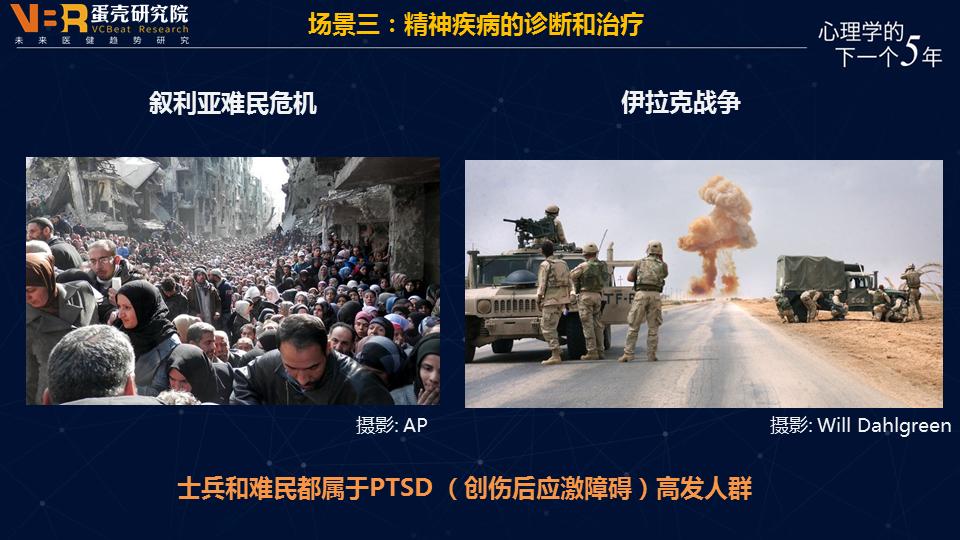
The two photographs in the figure were taken in Syria and Iraq, respectively. It is well established that both refugees and soldiers are populations at high risk for post-traumatic stress disorder (PTSD). However, psychological interventions for these groups have historically been constrained by limitations in both personnel and technology. In 2013, while I was conducting a project in Egypt, I witnessed firsthand the confrontation between the Muslim Brotherhood and the Egyptian military government. In retrospect, such an environment was not only conducive to the work of mental health professionals but also failed to ensure their personal safety.
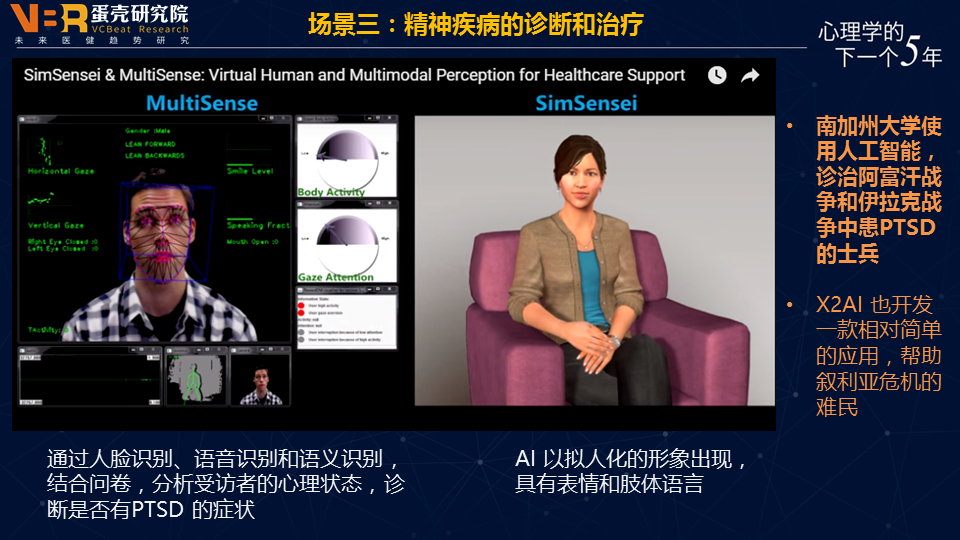
Artificial intelligence can make a difference in this field. The University of Southern California has launched an AI psychotherapist featuring an anthropomorphic avatar with facial expressions and body language.AI analyzes changes in interviewed soldiers' facial expressions, as well as their semantics and speech, and combines these with questionnaire surveys to diagnose whether they exhibit symptoms of PTSD.Soldiers demonstrate a higher-than-average level of compliance with AI-based psychotherapy. One reason for this is that military culture prizes toughness, leading many soldiers to hesitate in revealing their soft and vulnerable sides to human psychologists. However, they tend to relax significantly when they know they are being treated by an AI. A Silicon Valley startup called x2ai has also launched an AI psychological counselor tailored for Syrian refugees, which has been piloted in refugee camps in Turkey. The system’s functionality is relatively basic, currently limited to Arabic semantic recognition.
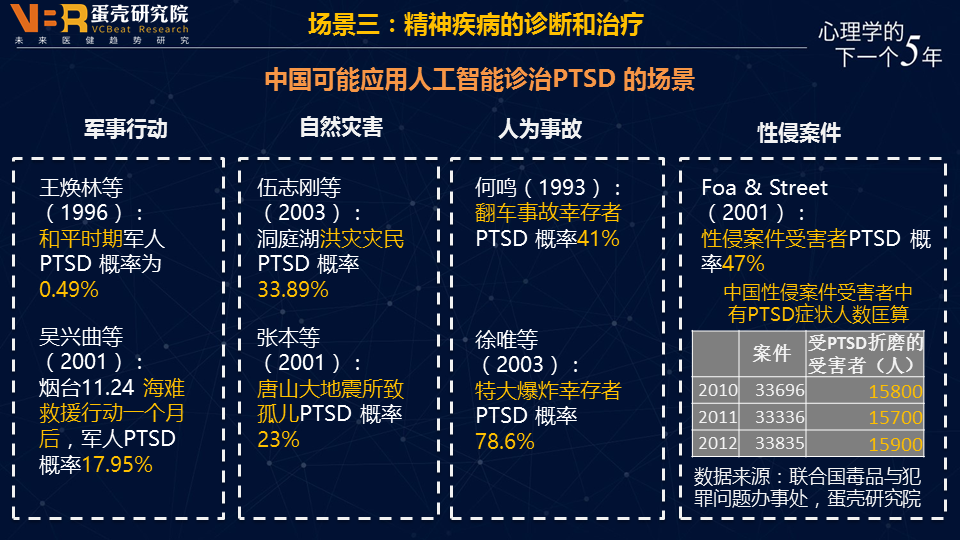
So, what are the applications of AI-based PTSD diagnosis in China? We have categorized them into four major groups: military operations, natural disasters, man-made accidents, and sexual assault cases. Let us first discuss military operations. During peacetime, the prevalence of PTSD among military personnel is less than 1%; however, once military operations occur, this rate rises sharply. Taking the rescue efforts for the Yantai “11.24” maritime disaster as an example, the prevalence of PTSD within the military rose to over 17% within one month. Next are natural disasters, such as the current flooding in Hubei and Anhui provinces. Not to mention the large number of severe car accidents, fires, and explosions that occur annually in China. The final category is sexual assault cases. We predict that there are at least 15,000 victims of sexual assault who develop PTSD each year in China. Of course, it must be pointed out that this figure is significantly underestimated, as our data is extrapolated from the number of cases officially registered by public security authorities. Due to the high proportion of acquaintance-perpetrated assaults and the influence of a culture of shame, many victims do not report these crimes.
On this page, we will take a minute to briefly discuss the issue of payers. Over the past two years of the digital health boom, startups have struggled to resolve their profitability models. There are significant differences between China’s healthcare system and that of the United States. In China, social insurance dominates overwhelmingly, while commercial insurance is still in its nascent stage. This reality makes it difficult for Chinese digital health companies to simply replicate American models. We have witnessed a wide variety of revenue models in China, including B2B, B2C, partnerships with major tech giants (BAT), collaborations with insurers, and engagements with pharmaceutical companies. However, the most prevalent model has effectively been “To VC” (relying on venture capital funding), which is certainly not a sustainable approach.We believe that one payer has long been overlooked: the military. In the United States, the United Kingdom, and Israel, the military has long been among the key funders of innovations in pharmaceuticals, medical devices, and healthcare services. In the U.S., the Defense Advanced Research Projects Agency (DARPA), under the Department of Defense, has long funded research-oriented medical projects. In Israel, some healthcare startups have emerged from incubators affiliated with the Ministry of Defense. Currently, China is experiencing a significant increase in the frequency of military operations, year-on-year growth in defense spending, and ongoing modernization of its armed forces. Military modernization includes the modernization of logistical support for personnel, where psychological intervention will play an important role, and artificial intelligence holds great promise.
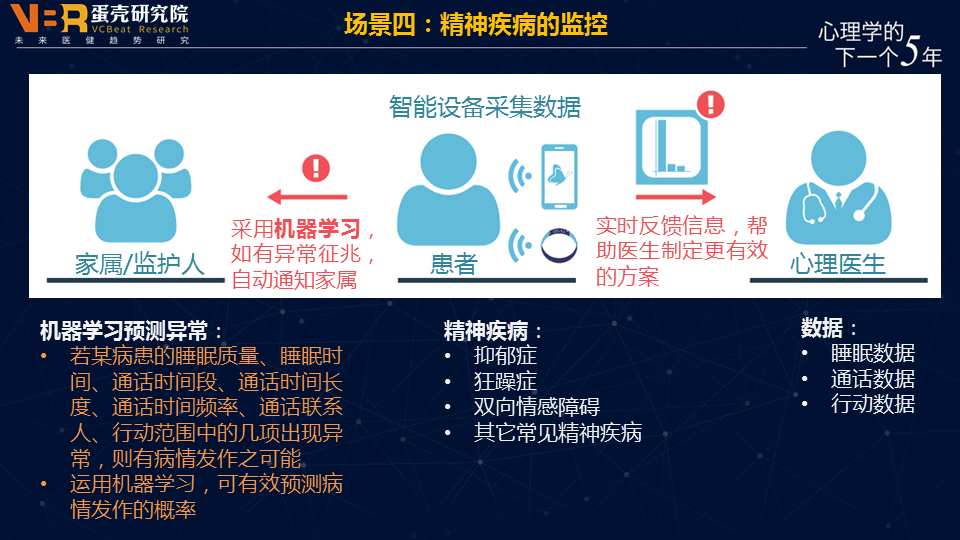
This scenario describes the use of artificial intelligence to monitor mental illness by continuously collecting various user data—such as sleep, communication, and activity metrics—24/7 via smartphones and wearable devices worn by patients. Machine learning is then employed to predict the likelihood of disease onset, enabling early notification of patients’ family members.
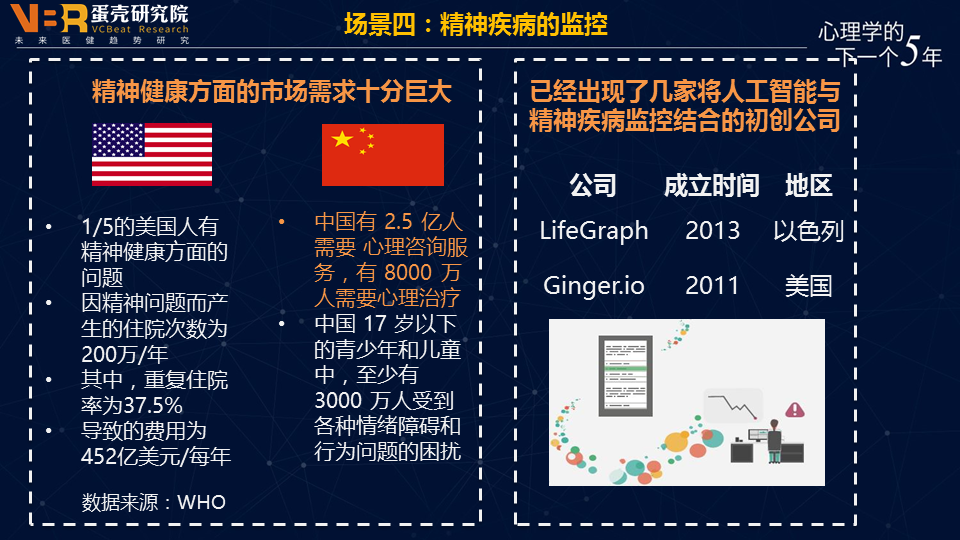
Several companies are already operating in this space; two representative examples are highlighted here. One is Ginger.io, a star startup based in San Francisco, USA, and the other is LifeGraph from Israel, which is gaining significant momentum. Currently, approximately 250 million people in China require psychological counseling services, and 80 million need psychotherapy, indicating an enormous market potential.Current "Internet + Psychology" initiatives primarily involve migrating offline services to online platforms, with a focus on diagnosis and treatment. However, pre-diagnostic prediction and post-diagnostic monitoring remain weak links., as psychologists and psychiatrists are unable to make pre-consultation predictions or ensure post-consultation health outcomes. Artificial intelligence can help current psychology startups streamline the entire process, thereby creating a more optimized business model.
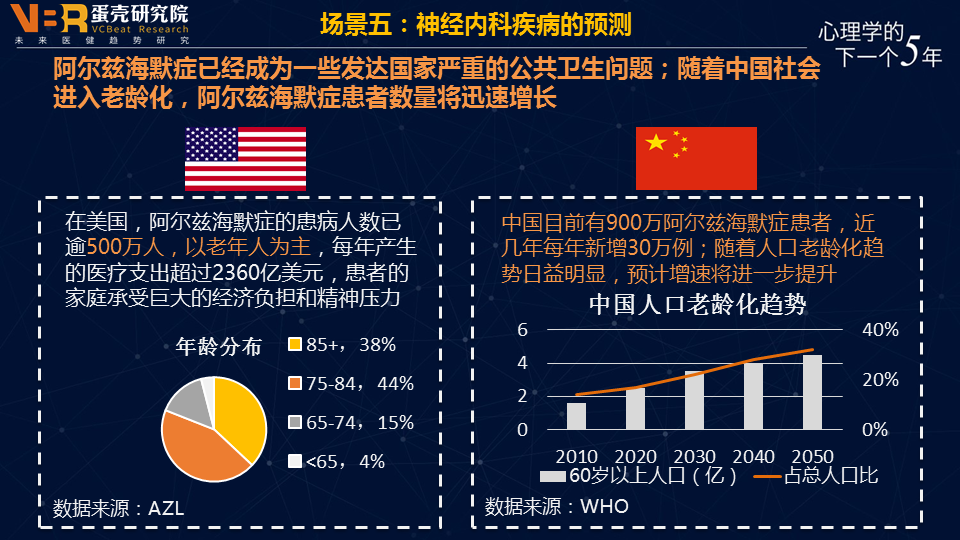
The final scenario focuses on using artificial intelligence to predict neurological disorders, with Alzheimer’s disease serving as a case in point. This condition has become a severe public health challenge in developed economies such as France and the United States. In the U.S., there are up to 5 million affected individuals, primarily among those aged 65 and older, resulting in annual healthcare expenditures exceeding $200 billion. The situation in China is equally concerning.China is now the country with the largest number of Alzheimer’s disease patients globally, totaling 9 million, with 300,000 new cases added annually in recent years. As Chinese society enters an aging phase, it is predictable that both the absolute number and the growth rate of Alzheimer’s disease cases will further increase.
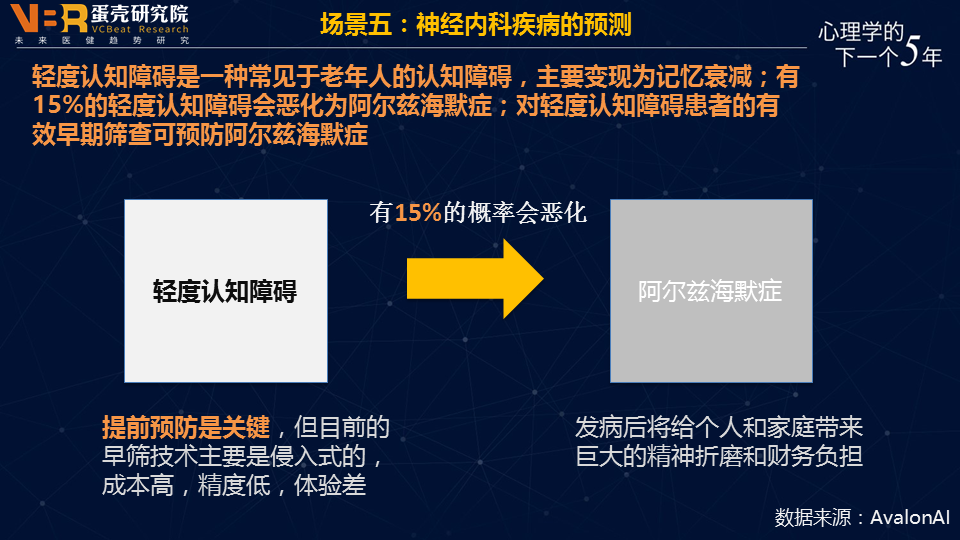
Mild Cognitive Impairment is a cognitive disorder common in the elderly, primarily manifested by memory decline.Approximately 15% of mild cognitive impairment cases eventually progress to Alzheimer's disease.Early screening can effectively prevent the progression of disease. However, current early-screening techniques, such as lumbar puncture, are invasive, costly, and lack sufficient accuracy. So, what role can artificial intelligence play?
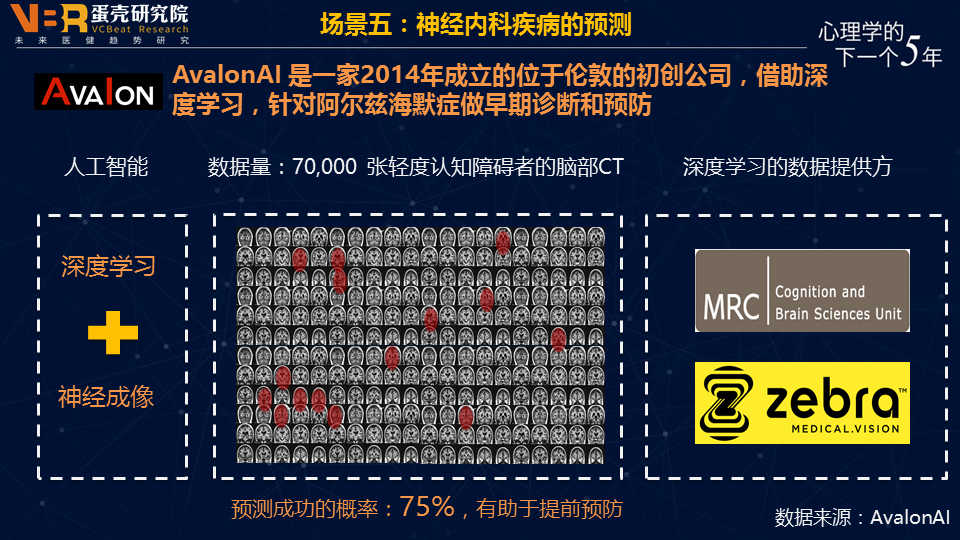
AvalonAI is a London-based startup founded in 2014.It leverages deep learning combined with neuroimaging for the early diagnosis and prevention of Alzheimer's disease.The image shows a brain CT scan of a patient with mild cognitive impairment. AI can effectively predict which cases are likely to progress to Alzheimer’s disease, currently achieving an accuracy rate of 75%. This accuracy is expected to improve further as the volume of training data increases. These 70,000 CT scans were sourced from MRC and Zebra Medical Vision, an Israeli startup specializing in artificial intelligence for medical imaging. This highlights the critical importance of data. Most domestic (Chinese) medical AI startups currently face significant challenges in acquiring medical data. Many healthcare institutions remain data silos, with management either unwilling or unable to share data externally. In this sense, AI startups that possess large volumes of high-quality medical data hold a distinct competitive advantage.
Finally, let me talk about the company name “AvalonAI.” “Avalon” is a mythical paradise in Welsh legend where elves reside—a realm of immortality and freedom from disease and pain. It is said that King Arthur entered Avalon after his death. I do not know whether humanity will ultimately achieve immortality and a life free from disease and pain, but I do know that artificial intelligence can help us move closer to this goal. That’s all for today. Thank you all.

To explore more scenarios of AI integration in healthcare, click here 《Four Major Scenarios for the Integration of Artificial Intelligence and Healthcare》