

Tonggan Medical Submits IPO Prospectus for HepAssis2®: A Safer and More Efficient Humanized Bioartificial Liver System
In early June, Fosun Group’s “Star Future InnoStar” Innovation and Entrepreneurship Competition was successfully held in Shanghai. The U.S.-based projects “CytoChip Blood Monitoring” and “Bioartificial Liver” jointly won first place. It is reported that the first-prize winners will have the opportunity to secure investment from Fosun Group at the tens of millions level.
Among these, the “Bioartificial Liver” is a physician-led startup from Wuhan, established in 2013 under the full company name Wuhan Tonggan Medical Technology Co., Ltd. (hereinafter referred to as “Tonggan Medical”). The project integrates human embryonic hepatocytes, bioreactors, and artificial liver machines into the HepAssis2® Bioartificial Liver System, with comprehensive protection covering both the system and its therapeutic methods. The company has recently completed its Series A financing round of RMB 15 million, with Fuyi Daohe as the lead investor.
The liver functions akin to a “chemical plant,” possessing capabilities for biosynthesis and metabolic detoxification. When hepatocytes have failed and these functions are nearly lost, physicians can employ exogenous hepatocytes to participate in normal hepatic activities, thereby helping patients survive an extremely critical and hazardous period. For severe liver failure, apart from liver transplantation, there are currently no therapeutic interventions with clearly established efficacy. The bioartificial liver, an extracorporeal liver support system, can promote the recovery of autologous liver function in patients with acute liver failure and buy time for patients with chronic liver failure who are awaiting liver transplantation, allowing them to wait for a suitable donor organ.
Bioartificial Liver Support System: An Effective Treatment for Liver FailureThe bioartificial liver support system is one of the effective methods for treating liver failure. Its therapeutic mechanism is based on the robust regenerative capacity of hepatocytes. By employing an extracorporeal biological device, it clears various harmful substances, replenishes essential substances, improves the internal environment, and temporarily substitutes for partial functions of the failing liver.
Research findings on the novel bioartificial liver system are expected to significantly extend patient survival times, thereby buying more critical time for hepatic therapy and liver transplantation.
A Market Worth Hundreds of Billions
Bioartificial liver systems are primarily indicated for patients with liver failure. Liver necrosis can result from various etiologies, including hepatitis, cirrhosis, poisoning, and shock. In China, approximately one million patients suffer from liver failure annually, with a mortality rate of 70–90%. Currently, there is no effective therapeutic alternative other than liver transplantation; however, the annual number of donor livers available in China is only in the thousands, meaning that merely 1% of patients receive timely and effective treatment. Consequently, more than 99% of patients must rely on artificial liver support systems. The HepAssis2 bioartificial liver project holds substantial commercial potential, with an estimated annual market value of RMB 100 billion, conservatively positioning it as a market worth hundreds of billions of yuan.
Natural Hepatocytes
Bioartificial livers require a large quantity of functional hepatocytes. Due to technical limitations and other factors, xenogeneic cells remain the most commonly used cell type internationally. Currently, bioartificial liver systems under development both domestically and abroad primarily utilize primary porcine hepatocytes or human hepatocellular carcinoma cells as the source of functional hepatocytes. However, these cell sources exhibit significant deficiencies in either safety or functionality, severely hindering the clinical application of bioartificial livers. The greatest challenge in the field of bioartificial livers is the research and development of human-derived functional hepatocytes. Obtaining novel functional hepatocytes is a critical step in advancing the clinical application of bioartificial livers.
Tonggan Medical’s cells are derived from human embryonic hepatocytes. After ten years of research, Professor Zhou Ping identified for the first time a cell line that fully meets the essential criteria for bioartificial liver cell sources—the HL2 cell line. The HL2 cell line is cultured from fetal liver cells and is frequently used as a control cell line in cell culture experiments due to its robust proliferative capacity. In 2010, Professor Zhou conducted detailed studies on these cells and explored their application in clinical trials for liver failure treatment. He found that the HL2 cell line not only exhibits favorable hepatic function but also demonstrates excellent in vitro proliferation capabilities, indicating its suitability for large-scale industrial cultivation and significant commercial value. Most critically, the HL2 cell line is non-tumorigenic and free from viral infections, making it an exceptional and unique source of human fetal hepatocytes.
Extensive experimental evidence has confirmed that these cells currently represent the only cell source worldwide that meets the three essential criteria for bioartificial liver cell sources. The humanized bioartificial liver is not only well-tolerated by patients but can also temporarily assume liver function at critical time points, thereby buying valuable time for hepatic regeneration.
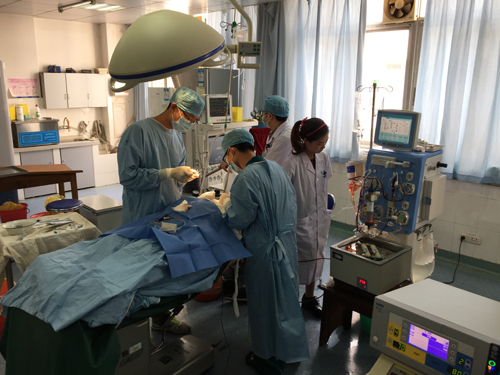
During treatment, the patient’s blood is drawn from the femoral artery, and the red blood cells are directly reinfused into the patient’s body, while the plasma continues to flow into the plasma component exchange column. Here, the plasma undergoes substance exchange with the cell culture medium in the bioreactor through a semipermeable membrane. During this exchange process, toxic substances in the patient’s plasma are removed, while certain molecules synthesized by the cells (such as albumin and coagulation factors) pass through the semipermeable membrane to replenish the patient’s plasma, which is ultimately reinfused into the patient’s body. This process utilizes an artificial liver support device to replace the patient’s liver function.
HepAssis2 bioartificial liver is an extracorporeal therapy method and device that can be promoted in most large medical institutions. Tonggan Medical has already established a Grade 10,000 cleanroom workshop of over 300 square meters and a 200-square-meter office space to ensure the continuous production of HL2 cells required for the bioartificial liver system.
Tonggan Medical’s bio-artificial liver is currently in the clinical trial phase, with product launch expected within one to three years. The team has filed for and obtained more than 20 patents. It has partnered with Zhongnan Hospital of Wuhan University and secured qualification for conducting clinical trials.
Highly Educated Professional Team
Professor Zhou Ping, the company’s principal founder, has a background in medical scientific research. He worked at the University of Chicago in the United States for ten years, participating in the early-stage research and development of the U.S. artificial liver project. He has published more than 50 SCI-indexed papers in top-tier medical journals, including Nature Medicine, and has received three international academic awards. After returning to China in 2006, he dedicated himself to the research and development of bio-artificial livers domestically. Following breakthrough achievements in 2009, relevant patents were applied for in 2010, and the company was established in 2013. Currently, the company’s core team consists of 30 members, the majority of whom hold master’s degrees or higher. The company is currently undergoing Series B financing and plans to list on the National Equities Exchange and Quotations (NEEQ) in September.