

Six Tech Visionaries Unveil the Future of MedTech at Inaugural Lenovo Star MED-TED Talk
1Li Xiang: Home-Based Applications of Molecular Diagnostics
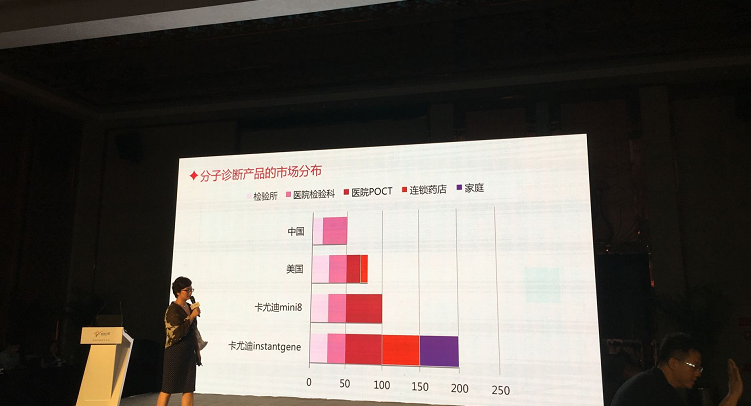
Li Xiang, CEO of Cayd Biology, Introduces the Market Landscape for Molecular Diagnostic Products
In 2000, the Human Genome Project required the combined efforts of nations worldwide to complete the genomic sequencing of a single individual using first-generation sequencing technology, at a cost of $3 billion. Fifteen years later, human genome sequencing can now be completed for just $1,000 using next-generation sequencing technology, allowing more people to benefit from this advancement.
In 2015, China’s National Health and Family Planning Commission mandated the nationwide implementation of nucleic acid testing (NAT) in blood stations. For all major infectious diseases, including HIV, hepatitis B, and hepatitis C, molecular diagnostics are required not only for confirmation but also to shorten the diagnostic window period. This means that instead of waiting for antibody production before testing, infections can be detected during the early stages. This represents a key application in the management of major infectious diseases.
Currently, there are only 409 PCR laboratories and 200 next-generation sequencers across China, indicating that this technology is not yet widespread. Why? Molecular biology techniques and semiconductor electronics both originated in the 1950s, but their rates of development have been vastly different.
Electronic technology has profoundly influenced human life. However, molecular biology techniques require not only electronics but also biochemical reactions, involving a multitude of biological processes, as well as optics and chemistry. This interdisciplinary nature means that even the smallest instrument is highly complex and not easily manufactured. This complexity explains why molecular diagnostics has yet to undergo decentralization to this day.
In China, the diagnostic industry’s annual revenue stands at merely $58.8 billion, whereas the pharmaceutical industry generates $1 trillion—a stark disparity. What does this imply? Typically, individuals avoid seeking hospital care unless their conditions become severe, resulting in a substantial financial burden from medical expenses. Precision medicine aims to address this very issue.
For instance, liquid biopsy for tumors can be used to monitor cancer via saliva samples. If early screening is achieved, it may be possible to eliminate the tumor without resorting to surgery. Additionally, personalized medication—where different individuals receive different drugs based on their specific needs—is a core tenet of precision medicine. This means that patients no longer need to undergo trial-and-error prescribing by physicians; instead, medications are tailored specifically for each individual, thereby avoiding unnecessary expenses and reducing the risk of misdiagnosis.
Viruses are prone to mutation. Once they mutate into more severe strains, they can have a significant impact on individual health, as well as on the management of infectious diseases and public safety overall. If severe and non-severe cases can be effectively differentiated, it would provide highly valuable diagnostic tools for critical care during key periods.
2Huang Xiaomin: How to Manage Diabetes Intelligently and Precisely
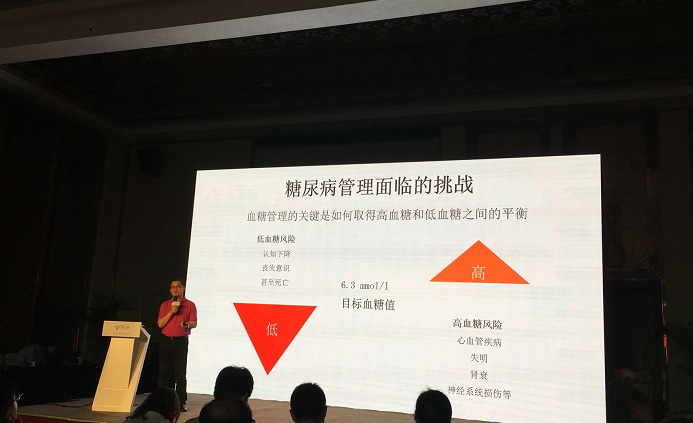
KaiLian Medical CEO Huang Xiaomin on the Challenges Facing Diabetes Management
According to the U.S. FDA’s research, thousands of traffic accidents that occur in the United States each year are related to hypoglycemia.
The most critical aspect of diabetes management is achieving a balance between hyperglycemia and hypoglycemia, which constitutes true diabetes management.
As the most critical testing method for diabetes management, why has the penetration rate of capillary blood glucose monitoring remained at only around 15% in China over the years? Very few patients perform daily tests or test more than four times a day. There are four reasons for this:
① Pain associated with blood sampling ② High frequency of blood sampling ③ Timing of blood sampling ④ Accuracy of blood glucose meters.
How Should Hypoglycemia and Hyperglycemia Alerts Be Managed?
If we can obtain continuous numerical data from patients, similar to the familiar electrocardiogram (ECG), and accurately capture blood glucose levels and fluctuation curves over a continuous 24-hour period, the amount of information would be extremely rich, revealing both hypoglycemia and hyperglycemia. Hair-thin sensors can be implanted subcutaneously to provide a blood glucose reading every three minutes for seven consecutive days, continuously plotting the curve.As a true wearable medical device, it continuously monitors your blood glucose levels 24/7. Should any abnormalities in glucose fluctuations occur, the receiver will display your current blood glucose reading and alert you to both hyperglycemia and hypoglycemia. The data can even be transmitted via smartphone for upload and storage, with notifications sent to you. By leveraging this extensive volume of data, the device helps you effectively manage your condition.
Meanwhile, it can also generate distinct profiles by analyzing different diabetic populations, including patients with type 1, type 2, latent autoimmune diabetes in adults (LADA), or other forms of diabetes; map the prevalence of diabetes across various ethnic groups; or establish a dedicated diabetes database platform.
It can even facilitate screening and diagnosis for diabetes, as many finger-prick blood tests or morning fasting blood glucose measurements may fail to definitively diagnose the condition. In cases of hypoglycemia, this approach enables screening among individuals in a sub-health state and supports comprehensive management of their lifestyle, including diet and exercise.
3Ai Qing: Why Do Doctors Misdiagnose?
The United States is a highly developed country in terms of healthcare. What are the top three causes of death? The first is cardiovascular disease, the second is cancer, and the third is medical errors. In fact, between 210,000 and 440,000 people die annually in the U.S. due to medical errors, making it the third leading cause of death among Americans, after cardiovascular disease and cancer.
This data is sourced from the 2013 U.S. Report on Patient Safety and Survey Research. In China, according to statements by leading domestic experts, the misdiagnosis rate in inpatient wards can reach 30%. For outpatient settings, the misdiagnosis rate is even higher, reaching up to 50%, and this figure pertains to developed regions within the country.
Why Do Doctors Misdiagnose?
The first reason is the limitations of current instrumental examinations.
The second reason is the physician's lack of experience.
The third reason is the rarity of the disease.
The fourth reason is that the disease is too complex for a single-specialty physician to manage.
4Deng Kan: How AI Doctors Can Improve Primary Healthcare
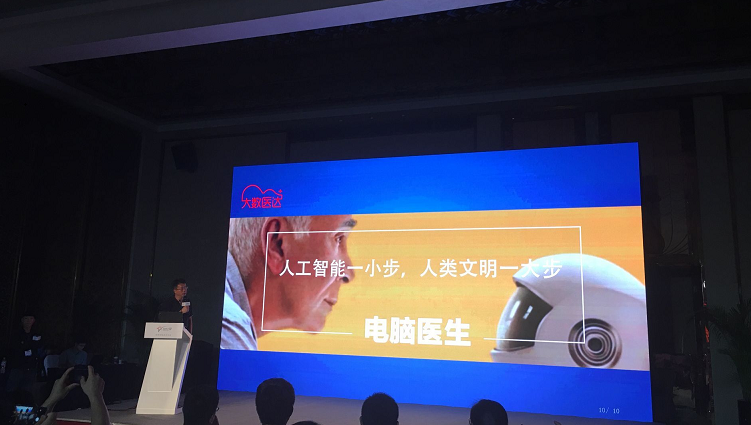
Dr. Kan Deng Introduces the Computer Doctor Project
Applying artificial intelligence to healthcare offers a significant technical advantage: immediate, tangible results. This is because the medical domain constitutes a finite set; there are only several thousand diseases in total, with fewer than 200 common conditions accounting for over 85% of clinical visits.
Four Defining Characteristics of the "Computer Doctor." First, it holds an intermediate professional title, aiming not for miraculous cures but for providing standardized care for common ailments. Second, it operates within general internal medicine and does not perform surgical procedures. Third, it addresses 200 common diseases. Fourth, it offers recommendations only and assumes no legal liability.
From a technical architecture perspective, the Computer Doctor is highly similar to AlphaGo, incorporating technologies such as the Value Network for medical judgment and the Policy Network for clinical pathway detection.
The first round involves the patient describing their symptoms, after which I may suggest potential suspected conditions. The second round determines what diagnostic tests are needed, such as X-rays or MRI scans, to confirm the exact diagnosis. The third round not only provides the diagnosis but also explains the reasoning behind the clinical judgment. The fourth round assesses whether the patient is on the correct path to recovery following medication administration.
We have collected hundreds of millions of cases of common diseases, enabling the system to learn diagnostic and therapeutic strategies in a manner akin to AlphaGo, thereby creating a comprehensive AI physician that can rapidly and significantly enhance the clinical capabilities of primary care hospitals on a large scale.
5Chen Chen: Can Levitating Artificial Hearts Replace Heart Transplants?
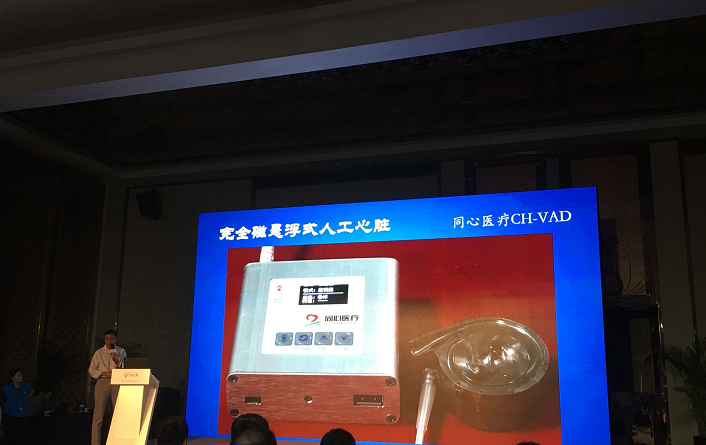
Professor Chen Chen, Chairman of Tongxin Medical, Introduces the Levitating Artificial Heart
Artificial hearts fall into two categories. The first is the total artificial heart, which involves removing the native heart and replacing it with a mechanical one. The second is the ventricular assist device, which preserves the native heart and incorporates an auxiliary pump that works in conjunction with it.
If we develop a pump that does not need to mimic the pulsatile action of the natural heart, but merely fulfills the function of circulating blood by pumping it from low pressure to high pressure, it can serve as a substitute for the heart.
Guided by this approach, three different types of continuous-flow artificial hearts have emerged to date: the earliest with mechanical bearings, followed by hydrodynamic bearings, and then magnetic levitation bearings.
Because bearings can damage blood cells and lead to a high incidence of bearing-related thrombosis, we decided to develop a bearing-free artificial heart using hydrodynamic levitation. Furthermore, we aimed to avoid using an excessively thin hydrodynamic fluid film, as such a design would still cause hemolysis.
Blood compatibility remains the most critical metric for all current artificial heart products. Similarly, we aim for our blood pump to be compact, non-infectious, and cost-effective—encompassing both product costs and medical expenses arising from side effects. Addressing these unmet needs is a challenge that our technology must resolve. Thus, our magnetically levitated artificial heart was developed.
The rotor of the magnetically levitated artificial heart has no bearings. It is housed within the pump, initially held firmly in place against both sides of the pump casing and immobile. Upon pressing a button, the rotor levitates, becoming completely suspended without contact with any surrounding surfaces. Driven by the motor, it begins to rotate. By adjusting the motor speed, the flow rate of the pump can be modulated.
The levitation is stable; although there are no bearings, magnetic levitation can withstand the motion and impacts generated by normal human movement. After adjustment is complete, the controller is removed, leaving the patient with only a battery and an implanted blood pump, connected via a percutaneous lead.
In terms of infection prevention and reliability, our cable measures only 3.4 mm in diameter, compared to the 5.7 mm diameter of the HeartMate 3 competitor’s cable. Furthermore, their cable contains six conductors, whereas ours has only four—a design for which we have just obtained patent approval in the United States.
Reducing the number of cable wires from six to four significantly lowers the risk of infection and greatly enhances system reliability. This artificial heart features the fewest and thinnest wires among percutaneous cables worldwide, further underscoring its superior reliability.
Blood compatibility is the primary challenge for artificial hearts. The greatest advantage of our competitor’s HeartMate 3 also lies in its blood compatibility. To date, we have conducted nearly 30 animal experiments, performing necropsies to examine thrombus formation within the pumps. The results have been highly promising, with no thrombi observed. This is attributed to our belief that our flow field design is superior from a hemodynamic perspective.
6Bao Jie: Applications of Quantum Spectroscopy in Medicine
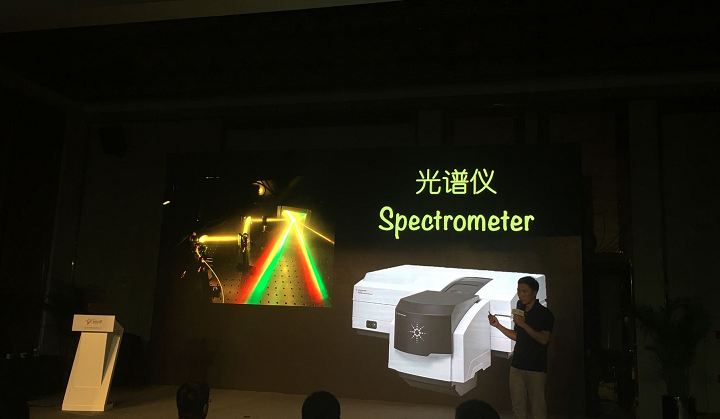
Professor Bao Jie, Department of Electronic Engineering, Tsinghua UniversityIntroducing the Spectrometer
Human blood is rich in hemoglobin, which absorbs oxygen in the lungs and transports it via the bloodstream to tissues throughout the body for cellular consumption. Hemoglobin exists in two states—oxyhemoglobin and deoxyhemoglobin—corresponding to two distinct chemical forms, thereby exhibiting different spectral characteristics, such as blue and red.
By measuring these spectra, we can determine the ratio of oxyhemoglobin to deoxyhemoglobin in the human body. This ratio indicates blood oxygen levels; furthermore, monitoring changes in blood oxygen levels over time allows for the assessment of heart rate, respiration, disease presence, overall health status, and potential health risks. Using similar principles, scientists employ spectroscopy to measure blood glucose levels.
Spectrometers, as large-scale instruments, are notorious for their high cost and bulkiness, which significantly limits their scope of application. Approximately five years ago, I proposed a technology known as quantum dot spectroscopy, specifically designed to miniaturize and sensorize these large spectral instruments. The most distinctive feature of this technology is its ability to integrate with camera sensors, such as those found in mobile phones, thereby transforming spectral equipment into miniaturized sensors.
Because light itself consists of finely differentiated colors, we can integrate many different materials using common methods into a smartphone camera that everyone is familiar with. This allows us to transform large-scale spectral instruments into sensors as small as a pinhole, offering the convenience and affordability of a smartphone camera while maintaining the professional performance of large-scale instruments.