

10 Internet Healthcare Startups Poised to Transform the Future of Medicine
Although the healthcare industry has long been on the path toward transformative change, it was only recently, with the emergence of a wave of entrepreneurs who boldly entered the internet healthcare sector armed with seemingly viable ideas, that we truly recognized the imminent magnitude of this disruption. Now, every week sees numerous startups venturing into the healthcare space, announcing the completion of multiple funding rounds totaling tens of millions of dollars, while some large healthcare groups have unexpectedly become partners in these ventures after recognizing the value of their underlying platforms.
“Health IT & CIO” interviewed the core members of these startups, and VCBeat compiled and edited the content, aiming to provide entrepreneurs with insights through the behind-the-scenes stories of these healthcare startups.
Headquartered in Chicago, Zest Health is a consumer-centric digital health company dedicated to empowering individuals with effective and cost-efficient healthcare decision-making. In 2013, the company launched its personalized healthcare service app, “Zest’s Smart Concierge,” which provides users with tailored information to support their medical decisions. Its business philosophy treats healthcare as a consumer service, fostering a model in which consumers better meet their needs through services provided by vendors, thereby creating mutual benefits for both parties.
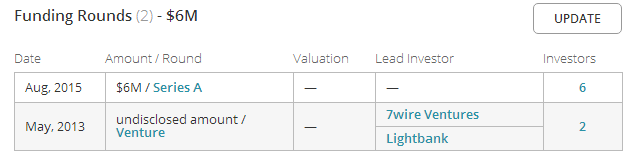
Zest HealthFinancing Overview
Zest Health’s app development team, composed of registered nurses, benefits specialists, and technical support staff, plans to continue raising funds to develop new features and expand its team.
Ellis, the head of Zest Health, attributes part of their success to the company’s mental agility. When a company is singularly dedicated to excelling at one thing, it may fail to apply a holistic mindset to extend its products or services across the entire industry, thereby limiting its growth. In contrast, companies with a long-term perspective acquire startups or their ideas to achieve interoperability among internally developed technologies and solutions, integrating them into a more robust entity.
DispatchHealth: Targeting Industry Pain Points to Deliver At-Home Physician Services
DispatchHealth was founded in 2013 by a team of healthcare professionals with extensive experience in industry innovation, aiming to help patients and clinicians achieve optimal care experiences. The company currently has 25 employees. Its founders have more than 20 years of frontline medical service experience and personally witnessed the time-consuming and inefficient nature of the current healthcare system, which led to the creation of DispatchHealth. The company primarily leverages mobile tools such as iPads to tap into the healthcare market outside hospital walls, providing consumers with house-call physician services. In early August, the company completed its seed financing round, securing $3.6 million in investment.
DispatchHealth, with its unique perspective, focuses on the following pain points in the industry: 37% of emergency department visits are unnecessary; unnecessary visits cost a total of $4.4 billion annually; avoidable admissions to intensive care units cost more than $4 billion annually; studies have found that the expansion of Medicaid coverage has led to a 40% increase in emergency department visits;The current shortage of primary care physicians stands at 50,000;A 911 ambulance costing 3.8 million is unnecessary.
DispatchHealth addresses these industry pain points through efforts in three areas:
1) Provide high-quality, convenient in-home treatment services that achieve superior outcomes;
2) Eliminate unnecessary emergency department visits, thereby reducing medical costs;
3) It can increase the frequency of medical visits for at-risk patients, thereby avoiding unnecessary episodic acute care;
DispatchHealth’s first consumer app is expected to launch in November, and the company has already signed a partnership agreement with a community organization in the Denver metropolitan area that serves more than 1,000 residents.
CarecloudThe company is headquartered in Miami, Florida, and employs approximately 240 people. It provides cloud-based, comprehensive electronic health record (EHR) and financial management services in compliance with ICD-10. (ICD-10 is theInternational Statistical Classification of Diseases and Related Health Problems, 10th Revision)
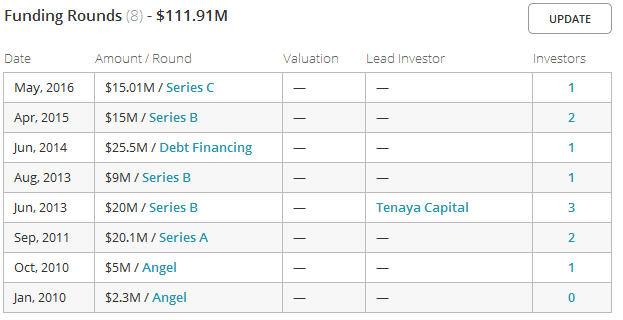
CarecloudFinancing Overview
Carecloud believes that its status as a startup provides it with a distinct advantage. Unencumbered by large, legacy codebases and outdated technologies, the company can rapidly innovate and develop user-centric solutions that enable better, more efficient workflows in medical practices. Even as it enters an expansion phase with numerous institutions already using its services, Carecloud remains committed to maintaining its innovative spirit.
CareCloud believes that customer success is the key to its own success. Therefore, it is actively seeking passionate employees who can adapt to the fast-paced work environment of a rapidly growing company and are truly committed to delivering world-class customer experiences in pursuit of excellence.
Chicago-based Procured Health previously secured $1.1 million in seed funding, bringing its total financing to $15.1 million after completing its Series B round in June 2016.
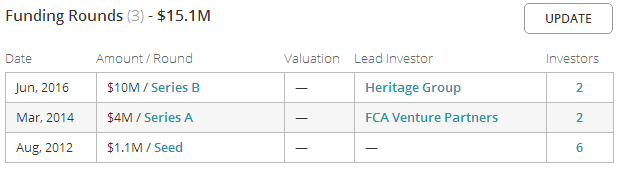
Procured HealthFinancing Overview
The company has developed a solution to address equipment procurement issues in the management of clinical expenditures, ultimately aiming to enable clinicians to deliver high-quality treatment services to patients. Hani Elias, Founder and CEO of Procured Health, stated that the company’s origins can be traced back to his experience as a consultant at a medical device company, where he observed both the efforts in the United States to maximize product value and the substantial waste incurred by hospitals on medical equipment.
Hospitals spend approximately $150 billion annually on medical products, with an additional $25 billion in overspending. This gap represents significant waste, the root cause of which is information asymmetry. Historically, information in the healthcare industry has been sourced from sales representatives, who have thus positioned themselves as the primary information providers for physicians by offering solutions to this problem.
Procured Health primarily provides data and product landscape insights to support decision-making for equipment selection in acute care hospitals. Last August, the company launched its latest web-based platform, Pipeline Pro. The underlying concept is to leverage hospitals’ historical spending records and expenditure data to identify areas where clinical best practices are not being fully realized.
Everseat, a company based in Baltimore, has developed an app designed to transform the traditional appointment scheduling process between physicians and patients, effectively managing appointment times to improve healthcare services.
In an interview, Mr. Tarsy, Vice President of Everseat, discussed how the company leverages mobile technology to address this issue, highlighting its feasibility and uniqueness. He noted that even the busiest physicians have gaps in their appointment schedules, often due to last-minute patient cancellations. These idle intervals represent a waste of time for both patients and doctors. However, by quickly and conveniently identifying nearby patients in need of care during these openings, physicians can improve their work efficiency, while patients gain the opportunity for priority access to medical services.
Noting this urgent problem, the founders of Everseat established the company to leverage smartphones and cloud-based software as a solution for more efficient matching of supply and demand between patients and healthcare providers.
Everseat secured over $2 million in venture capital funding in April 2015, bringing its total financing to more than $3 million to date.
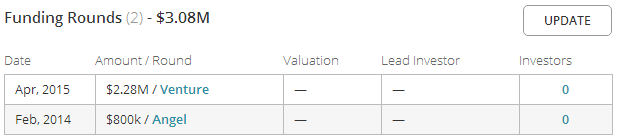
EverseatFinancing
Most hospital radiology departments have achieved nearly 100% digitization. Therefore, Boston-based Candescent Health has focused on improving workflows in radiology, one of the most critical departments in hospitals. According to its CEO, Seidelmann, this is crucial for the transformation of radiology, as it is a vast industry involving numerous patients and disease types. Moreover, radiology significantly impacts patient diagnosis and treatment outcomes, as well as hospitals’ financial performance.
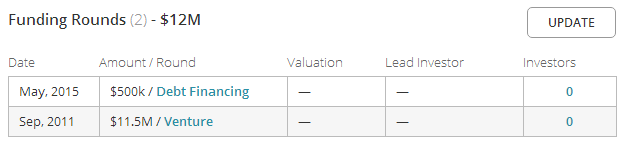
Candescent HealthFinancing
Seidelmann believes that the healthcare industry holds significant potential for growth but lacks effective tools and information to support its development. In October 2015, Candescent entered into a collaborative agreement with Cleveland Clinic to create a cloud-based, efficient, nationwide radiology network by raising quality standards, optimizing workflows, and leveraging its proprietary RadPerform platform. This initiative aims to facilitate the successful transformation of traditional hospital radiology departments and achieve genuine change.
In future development, they will be committed to helping radiologists quantitatively increase patient throughput in emergency departments, thereby achieving a value-maximized healthcare environment characterized by short hospital stays and low treatment costs.
Currently, a problem exists in the widespread implementation of electronic health records (EHRs): physicians must sacrifice their valuable time on repetitive, mundane tasks, such as basic data entry and medical record management. In 2011, Healthfinch began addressing this issue. To date, Healthfinch has raised over $10 million in total funding.
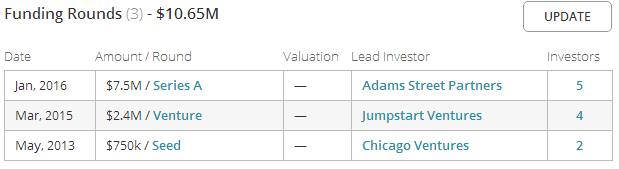
HealthfinchFinancing Overview
Dr. Jonathan Baran, the company’s founder and CEO, earned his Ph.D. from the University of Wisconsin–Madison, and his entrepreneurial inspiration stemmed from the project he conducted during his doctoral studies.
Healthfinch builds a technology platform on top of leading EHR systems to automate routine clinical tasks.
As an entrepreneur with an engineering background and no clinical experience, Baran faced a series of challenges during the startup process. Since electronic health record (EHR) systems were still in their early stages, EHR data integration posed a significant hurdle. Furthermore, because most of his employees did not come from the healthcare industry, there was greater room for innovation across industry boundaries. Typically, people tend to view issues solely from the patient’s perspective, whereas those with an engineering and technical background can approach them from a macro perspective centered on fundamental human needs. Currently, Healthfinch’s technology platform is being used by several health systems and 1,800 physicians, who have provided positive feedback.
Chris Moses is a co-founder and CEO of Smart Scheduling, and was formerly a neuroscience student at the Massachusetts Institute of Technology. A conversation with a physician during a marathon in 2012 laid the groundwork for his later establishment of Smart Scheduling. The doctor explained that when patients cancel appointments or fail to show up, physicians’ income decreases; worse still, such no-shows can prevent patients who genuinely need care from securing appointments. In his view, this is an urgent issue that needs to be addressed in the healthcare industry.
In 2014, Smart Scheduling partnered with its investor, the electronic health record (EHR) company athenahealth, to launch this project. They developed a predictive model tested against athenahealth’s historical EHR data to identify patients likely to miss or cancel appointments, enabling proactive schedule adjustments. The algorithm now achieves a prediction accuracy of 79%. To date, the company has raised $1.1 million in funding, employs eight staff members, and its solution is used across 12 countries, by 25 organizations, and by 600 physicians.
During the entrepreneurial journey, Chris Mosess also encountered some difficult challenges. For instance, they were initially unaware that they needed to comply with HIPAA.The Health Insurance Portability and Accountability Act (HIPAA), however, has undergone a series of standardized and managed processes, and nowSmart Scheduling is HIPAA-compliant.
CrowdMed, based in San Francisco, offers patients with rare or difficult-to-diagnose conditions affordable access to large-scale expert consultations—a rare and valuable opportunity for patients. Founder and CEO Jared Heyman was inspired to create CrowdMed after his sister spent three years and incurred six-figure medical expenses before receiving an accurate diagnosis under challenging diagnostic circumstances. Drawing from this experience, he believes that the collective wisdom of a group of experts surpasses that of even the single most brilliant individual expert. Consequently, he aims to develop CrowdMed into a highly accessible, large-scale platform. The company currently has six employees and has raised $3 million in funding, all sourced from Silicon Valley venture capital firms.
CrowdMed’s business model is driven by the synergy of technology and human expertise to deliver solutions. Patients register on its website, upload test results, and answer in-depth questions online. CrowdMed aggregates collective insights from experts, which are reviewed and consolidated into a unified answer to ensure diagnostic accuracy. To date, the platform has resolved 1,300 medical cases with an accuracy rate exceeding 60%. It is estimated that CrowdMed has saved patients 40% in treatment costs. In its future development, the company plans to initiate collaborations with hospitals.
Lucro, backed by Martin Venture Capital, empowers healthcare leaders to effectively identify, compare, collaborate on, and evaluate solutions within the broader industry ecosystem. It also enables solution providers to more efficiently meet customer demands for technology, products, and services.
Regarding the founding of Lucro Marketplace, founder and CEO Bruce Brandes holds three key views on the healthcare market. First, there is excessive external sales spending and insufficient internal investment. Second, healthcare entrepreneurs primarily seek funding to expand their sales teams. Third, there is significant information asymmetry within the healthcare industry. Therefore, Bruce Brandes aims to reverse this situation through a new approach. The core functions of Lucro Marketplace are divided into four areas: discovery, management, collaboration, and optimization.
Although still in its early stages, it has made significant progress. Currently, they have established a user network comprising more than 1,000 hospitals. Lucro’s network can automatically identify problems and seek solutions, screen and integrate options, and standardize the management of solutions for healthcare institution systems. In the coming months, the company aims to build a community-based platform that enables healthcare professionals to reference and implement practices with high efficiency. At present, they do not charge any fees to buyers or sellers within the healthcare industry, firmly believing that once the community-based platform is established, numerous revenue streams will emerge.
Original source: beckershospitalreview.com