

How Internet Technology Empowers Population Health Management: Insights from Yitong Information and CEO Yu Jun
Recently, the 3rd International Conference on Telemedicine and Mobile Health Technology Services was held at the International Conference Center of PLA General Hospital (301 Hospital) in Beijing. More than 300 attendees, including representatives from domestic and international internet and healthcare industries, executives from pharmaceutical and financial insurance sectors, and industry experts, participated in the conference to discuss and exchange experiences on telemedicine, mobile health, chronic disease management, and tiered diagnosis and treatment.
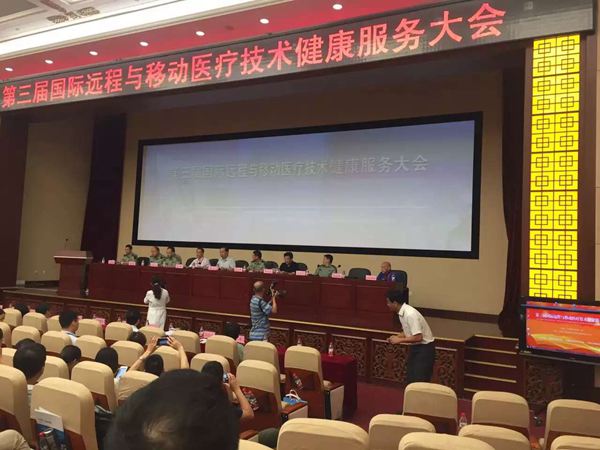
Shanghai Yitong Information Technology Co., Ltd. was invited to attend the conference. During the keynote address, General Manager Yu Jun provided a detailed exposition on how internet technologies can facilitate population health management.
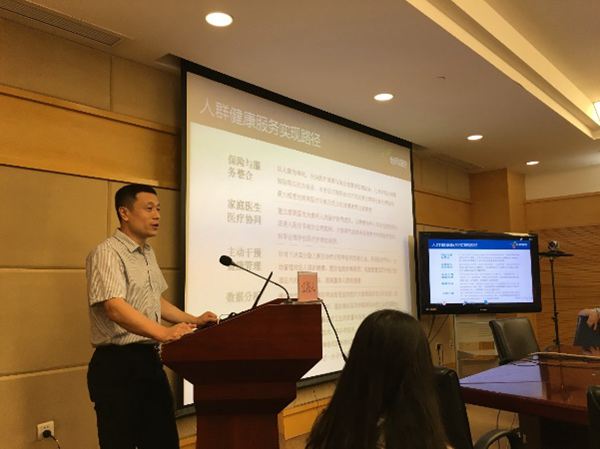
Population Health Management is a new healthcare service model that leverages diverse interventions targeting individuals, organizations, and cultures to influence the entire course of disease onset, progression, and evolution for each individual within a specific population, thereby enabling them to access higher-quality health assurance services. It provides comprehensive solutions that positively impact healthcare accessibility, affordability, quality, and outcomes, ultimately improving the overall health status of the entire population.
Innovation in Population Health Services
Adopting innovative information technologies, big data, mobile communications, and other technological and service processes;
Accountability for the quality, outcomes, and effectiveness of medical care represents a value-based, rather than volume-based, assurance model;
Organically integrate the interests of healthcare providers and payers.
Target Population Analysis for Population Health Management
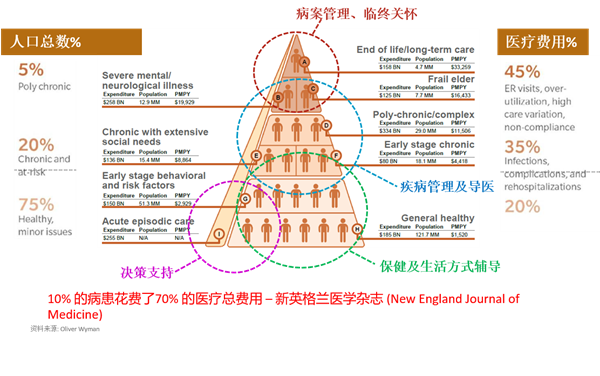
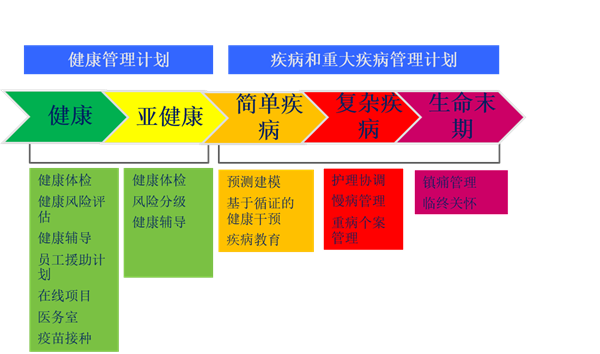
Integration of Insurance and Services:On a population basis, social medical insurance is integrated with commercial health insurance, with the social security system purchasing administrative services from commercial health insurers. In the future, innovative payment models such as outcome-based reimbursement may also be introduced to maximize healthcare value and improve public health outcomes and satisfaction.
Family Physician Medical Collaboration:Establish family physician-led collaborative care teams to center on patients, triage them to appropriate healthcare institutions at the right time, and coordinate multidisciplinary collaboration across relevant specialties within the healthcare system. Conduct scientific and rational evaluations of healthcare outcomes.
Proactive Intervention in Health Management:By leveraging technology platforms to address areas for improvement in the care of high-risk populations and throughout the diagnostic and treatment process, we proactively manage the health of these groups. We provide a comprehensive suite of services, including disease management, medical record management, and integrated care management, to enhance the overall health of the population.
Data Analysis:By conducting in-depth analysis and processing of healthcare big data encompassing clinical, insurance, and operational information, high-risk populations are identified. Meanwhile, leveraging the latest evidence-based medicine guidelines helps pinpoint areas for improvement in diagnosis and treatment processes, thereby enhancing the quality and efficiency of healthcare delivery.
Interconnectivity:Leveraging advanced health information technology, we interconnect various clinical, insurance, and management information systems. Through standardization of data structures and formats, data cleansing is performed to achieve standardized clinical terminology, transforming raw data into actionable information for further analysis.
To effectively manage population health, internet technology is indispensable. The core concept and ultimate goal of population health management services are to provide personalized health management services. By leveraging internet technology, these services place patients at the center, connecting all information related to individual health, including people, data, and management plans. Case tracking and management must meet three basic elements:
1. Support service configuration to rapidly organize business operations and implement personalized management plans.
2. Support for multi-role management (physicians, patients, family members, and care managers) and data sharing across multiple terminals (PC and mobile).
3. Support for multiple disease-specific management programs; the product must include built-in solutions for various disease-specific management protocols.
Yitong’s Cloud Platform for Chronic Disease Management is an internet-based solution built on a public cloud environment. The platform provides a suite of tools for specialized disease management, including disease data recording and analysis, specialist follow-ups, case tracking, multi-institutional information sharing, and tiered management. It seamlessly connects all aspects of out-of-hospital patient management, encompassing risk assessment, self-management, lifestyle guidance, and doctor-patient communication. By partnering with professional medical institutions, the platform leverages internet technologies to deliver an end-to-end service platform for patients.
In addition to meeting the above three basic elements, “Yijian Cloud” also features installation-free operation and supports tiered management.
Interpretation of Tiered Management
Yitong collaborates with the Children's Medical Center on a pediatric asthma stratified management program, a tiered diagnosis and treatment initiative that integrates internet technology with offline medical institutions to deliver comprehensive services.
Given the diagnostic challenges of pediatric asthma, children with suspected asthma should receive their initial consultation at tertiary hospitals, where specialists conduct the first assessment and patient stratification, implementing corresponding management plans and treatment regimens based on the evaluation results.After returning to the community, children are managed via a mobile app in accordance with customized care plans, including features such as asthma diaries, collection of growth and development data, follow-up visits and assessments, and self-directed health education.
Community physicians can assess the progression of a child’s condition based on their data and adjust the management plan accordingly. Children receive medications and undergo nebulization therapy at primary and secondary hospitals.After confirming that the condition has remained stable for more than six months, a physician at a tertiary hospital will determine whether to conclude the management plan.