

Langma Information Ranks Among China's Top 100 Internet Companies with Focus on Medical Informatization
According to VCBeat, this ranking is based on 2015 annual data from internet companies. It employs a comprehensive analytical approach, establishing eight indicators that represent business scale, social impact, profitability, growth rate, technological innovation, and corporate social responsibility. A weighted average of these metrics generates a composite score, which serves as the final score for each enterprise. With reliable data, rigorous methodology, and authoritative standing, the ranking provides a complete overview of the business landscape and industrial structure of China’s internet industry.
It is reported that Guiyang Langma Information Technology Co., Ltd. was established in 1998 and successfully listed on the ChiNext board in 2012.
As early as 2013, Longma Information initiated its strategic layout in the internet healthcare sector. In 2014, Longma Information acquired Guangzhou Qisheng Information and its subsidiary “39 Health Network,” thereby securing user bases and traffic entry points for its internet healthcare operations. Currently, the platform records over 18 million daily unique visitors and more than 160 million monthly active users. In 2015, through the restructuring and capital injection into Guiyang No. 6 People’s Hospital, Longma Information completed a critical step in its internet healthcare strategy. Leveraging physical hospitals and medical resources, the company has focused on developing tiered medical services via the Guizhou Internet Hospital and remote consultation services for complex and critical cases through the 39 Internet Hospital.
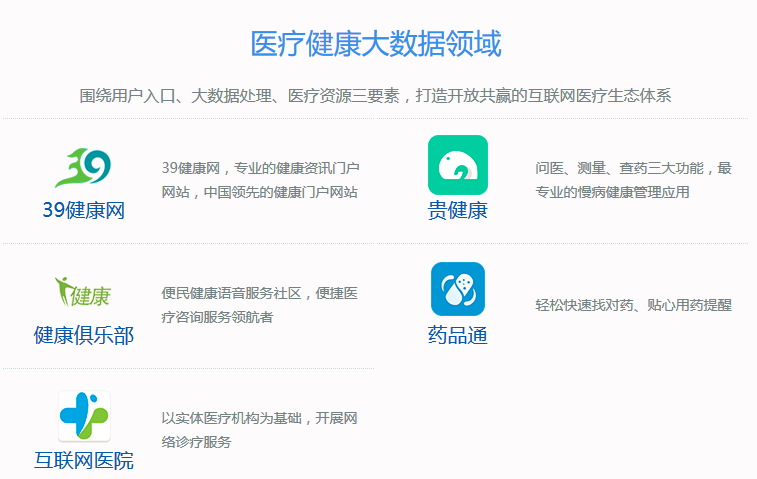
Longma Information's Medical and Health Big Data Products
39 Internet Hospital is an internet-based platform for second-opinion diagnoses of complex and critical conditions. It facilitates multi-party remote consultations among patients with complex and critical illnesses, primary care physicians at grassroots institutions, and top-tier medical specialists. Patients no longer need to travel long distances; they can access leading experts in Beijing, Shanghai, and Guangzhou directly from their local hospitals.
The specific practice of remote diagnosis and treatment at 39 Internet Hospital is as follows: Nationally renowned experts and their teams from Beijing, Shanghai, Guangzhou, and other regions, along with specialists from provincial-level top-tier (Grade A tertiary) hospitals, have signed multi-site practice agreements with Guiyang No. 6 People’s Hospital to provide remote consultation guidance to primary care physicians at municipal and lower-level hospitals. When encountering difficult or critical cases that are challenging to diagnose, lower-level physicians may initiate a request for remote consultation with senior experts, subject to patient consent. Following the consultation, the lower-level physician formulates the diagnosis and treatment plan. The remote consultation rooms are equipped with functions such as two-way referral, remote consultation, vertical coordination between different levels of care, and mentorship programs, thereby facilitating clear division of labor between senior and junior physicians during the diagnostic and treatment process, ensuring continuity of patient care, and supporting follow-up visits.
In addition to providing consultation guidance, senior experts are also obligated to train junior physicians, striving to enhance their professional practice standards. 39 Internet Hospital prioritizes fostering a sense of belonging, responsibility, trust, and security among physicians practicing on its platform, thereby encouraging them to participate in “Internet + Healthcare” initiatives with confidence and enthusiasm.
Within two months of its launch, 39 Internet Hospital has received over 100 cases of difficult and critical illnesses, covering 20 different medical conditions from 16 provinces and municipalities. 39 Internet Hospital has provided an innovative model for implementing the national tiered diagnosis and treatment policy and serving grassroots healthcare. Currently, “39 Internet Hospital” has completed an angel round of financing worth RMB 50 million, with a post-investment valuation reaching RMB 500 million.
Currently, Longmaster Information’s decentralized medical services are primarily deployed within Guizhou Province through the “Guizhou Internet Hospital.” Centered on tertiary and secondary hospitals, the Guizhou Internet Hospital designates community (township) hospitals, village health and family planning service rooms, and physical pharmacies as accessible care points. This approach enables grassroots healthcare institutions to serve as natural extensions of the internet hospital, establishing a multi-tiered healthcare delivery structure comprising “hospitals + community service centers + village health and family planning service rooms.”
The specific approach to decentralized medical services involves deploying telemedicine video equipment in convenient pharmacies, community service centers, and township health clinics. Alternatively, users can directly access the “Gui Jiankang” APP, where general practitioners from the medical consortium provide initial consultations for common and frequently occurring diseases, as well as chronic disease health counseling, via remote video. If telemedicine cannot resolve the issue, assistance is provided for appointment registration, clinical visits, and laboratory or diagnostic testing.
VCBeat has learned that the Guizhou Internet Hospital and the “Gui Jiankang” APP are public healthcare cloud service platforms jointly developed by Longmaster Information in collaboration with the Guizhou Provincial Health and Family Planning Commission and the Guizhou Provincial Food and Drug Administration. These platforms integrate medical resources from multiple hospitals and physicians across the province, offering services such as video consultations, drug information queries, chronic disease management, appointment scheduling, and access to personal medical records and health archives, thereby providing users with convenient, accessible healthcare services tailored for grassroots communities.
Currently, the average daily consultation volume at Guizhou Internet Hospital has reached 1,500 visits, with the annual consultation volume expected to rival that of Grade A tertiary hospitals. Meanwhile, leveraging self-developed wearable and miniature medical devices, Longma Information’s primary care physician workstation can collect patients’ daily data, assess their rehabilitation progress, and assist physicians in diagnosis and treatment, thereby adding new dimensions to the services offered by Guizhou Internet Hospital.
In addition to decentralized healthcare, Longmaster Information closely integrates wearable and micro devices with medical resources and services, facilitating the effective acquisition of medical data and holding significant value.
According to VCBeat, Laya Technology, a subsidiary of Longmaster Information, launched the world’s first implantable medical electronic monitoring module in April 2015. When integrated into a smartphone, this module enables direct monitoring of health-related physiological parameters, including blood glucose, blood lipids, cholesterol, and uric acid, thereby providing a highly effective hardware input channel for collecting big data on chronic disease management. Based on this monitoring module, a single blood sample allows for the simultaneous measurement of four indicators—blood glucose, total cholesterol, uric acid, and triglycerides (referred to as the “4-in-1 product”). The measurement results from medical devices equipped with this module deviate by no more than 8% from those obtained using large-scale clinical biochemistry analyzers deployed in hospitals. This level of accuracy is well within the national standard, which permits a deviation of up to 20% between medical testing devices and clinical biochemistry analyzers, demonstrating exceptionally high precision.
In addition, Longma Information is developing two upgraded wearable and micro-devices. One builds upon the original four-in-one product by adding measurements for high-density lipoprotein (HDL) cholesterol and low-density lipoprotein (LDL) cholesterol, thereby better supporting healthcare institutions in the precise management of patients with chronic diseases and achieving a medical-grade product that surpasses foreign brands. The other is a globally pioneering product that detects cardiac markers via fingertip blood samples to quantitatively assess cardiac fatigue, effectively preventing chronic heart failure.
In terms of progress, Longma Information’s wearable and miniature devices have been successfully embedded into smartphones, paving the way for the world’s first “smartphone with integrated medical devices.” Meanwhile, these wearable and miniature devices have been deployed in the grassroots medical services of Guizhou Internet Hospital. By integrating with Longma Information’s community hospital chronic disease follow-up system, they will enable high-quality care for chronic disease patients in Guiyang and across Guizhou Province.
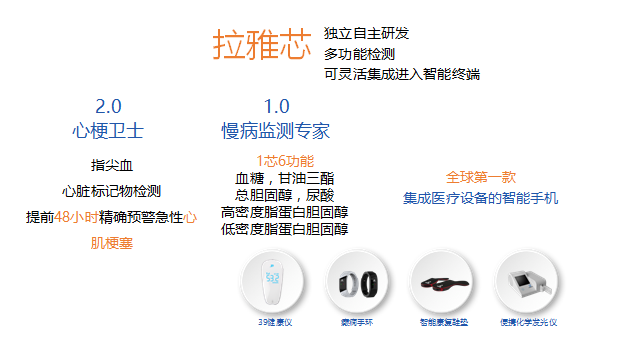
Longma Information Wearable Chronic Disease Monitoring Device
VCBeat will continue to closely follow Longmaster Information, as well as industry developments in China’s healthcare informatization and big data sectors.

Source: Xinhua News Agency