Qingying Medical Co-Founder Ai Qing Files IPO Prospectus: Building a Doctor-Centric Platform to Reduce Misdiagnosis Rates
Ai Qing, Co-founder of Qingyi Medical, holds a Master’s degree in Neurology and a Ph.D. in Diagnostic Radiology from Capital Medical University. He has five years of clinical experience as a neurologist and three years as a radiologist. Passionate about iOS development, Ai has created six iOS applications. One of his apps, an atlas of normal brain MRI scans, has been on the market for one year and has sold over 1,000 copies in the United States. This article is edited from Ai Qing’s keynote speech at the Legend Stars WILL Conference.
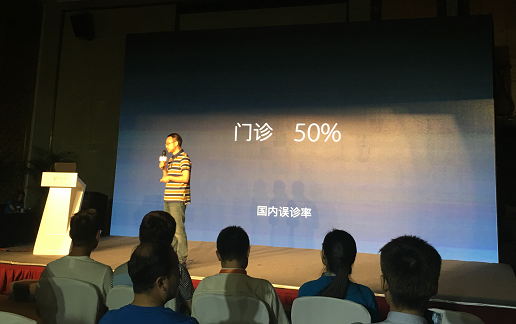
Ai Qing, Co-founder of Light Medicine, Explains Misdiagnosis Rate Data
The purpose of diagnosis is to determine the nature of a disease and subsequently select targeted treatment to promote clinical improvement. Incorrect, untimely, or incomplete diagnoses are considered erroneous and are referred to in the medical field as misdiagnosis. For both physicians and patients, the greatest concern during the diagnostic and therapeutic process is medical malpractice resulting from misdiagnosis. In 2013, the top three causes of death in the United States were cardiovascular disease, cancer, and medical errors, with approximately 210,000 to 440,000 Americans dying annually due to medical errors. Currently, the misdiagnosis rate in hospital wards in China’s developed regions is approximately 30%, while the outpatient misdiagnosis rate is around 50%; the misdiagnosis rate in other grassroots areas may be even higher.
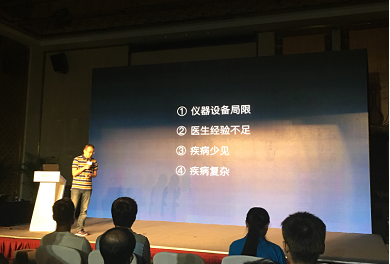
Ai Qing, Co-founder of Qingyi Medical, Explains the Four Major Causes of Misdiagnosis
The main reasons for the high misdiagnosis rate are as follows:
Low Precision of Hospital Instruments
Ai Qing, co-founder of Lightness Medicine, previously worked in the neurology department of a hospital. He has personally experienced some cases of misdiagnosis, and there was onceA 60-year-old middle-aged male was hospitalized due to dizziness. Prior to admission, he underwent a head CT scan, head MRI, and comprehensive cerebrovascular imaging, which revealed no evidence of thrombosis.andBleeding, onlyHairMid-vascular regionExistenceStenosis. One week after treatment,No significant improvement in symptoms, patientWhen turning overOccasionallyDizzinessandAccompanied by vomiting,The doctor conducted a follow-up examination for the patient.Head CT,Still not foundAbnormality. When Ai Qing published this caseTo the Neurology Vertical ForumLater, a netizen claimed that it might beOccult CerebellumExistenceAbnormality,Therefore, Ai Qing decided to take another X-ray of the patient for diagnosis. During this diagnostic procedure, heFound inPatient'sOccult CerebellumConfirmedMinimal oozing of blood. The reason why the bleeding was not detected in time during the first instance was that the sensitivity of magnetic resonance imaging (MRI) was not high enough to detect minimal amounts of bleedingNoSensitive.
There was once aA 30-year-old female patient was diagnosed with intracranial malignant melanoma at an affiliated hospital in Beijing. The diagnosis was made by a radiologist and a neurologist, and the patient had already fallen into a coma. After her family transferred her to a hospital specializing in the treatment of this condition, a second diagnostic evaluation was conducted. The findings from the second hospital were entirely different from those of the first. The diagnosis at the second hospital was made by chief physicians from the Department of Medical Imaging and the Department of Clinical Medicine. Upon confirmed diagnosis, it was found that the patient suffered from venous thrombosis, whose clinical presentation closely mimics that of melanoma. Differences in physicians’ professional expertise and experience constitute one of the causes of misdiagnosis.
A 40-year-old male patient experienced a rapid decline in bilateral visual acuity from normal to near blindness within just one and a half years. Despite seeking medical attention at multiple top-tier (Grade III Class A) hospitals in Beijing, no definitive diagnosis could be established, with physicians initially suspecting a genetic disorder. Ultimately, the Chinese People's Liberation Army General Hospital (301 Hospital) confirmed the diagnosis of arteriovenous fistula, a relatively rare condition with an estimated prevalence of 5%–10% in the general population.
The etiology of many diseases is not singular, and medications used during treatment may trigger new adverse reactions. For instance, in elderly patients with complex health conditions, antibiotic use can impair hepatic detoxification, leading to cerebral edema and subsequent coma. Single-specialty physicians are unable to adequately assess such complex clinical scenarios.
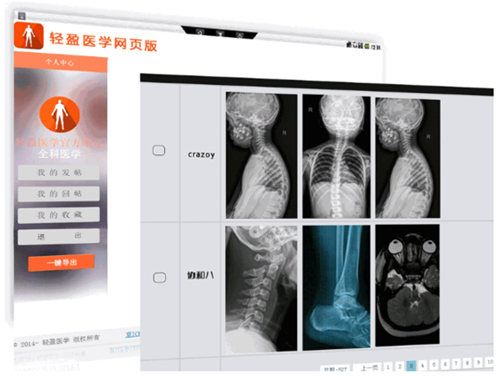
Qingying Medicine Web Version
One phenomenon associated with misdiagnosis is the discrepancy in diagnostic outcomes across different hospitals, which indicates that broad and efficient professional communication among physicians is one of the ways to reduce misdiagnosis rates.
What Qingying Medical is doing is building a platform for physicians to exchange ideas and broaden their perspectives. On the Qingying Medical platform, doctors from different hospitals, specialties, and professional ranks engage in active communication and discuss clinical cases. Qingying Medical aims to provide convenience for physicians, help them solve difficulties encountered during diagnosis and treatment, improve the precision of disease diagnosis and therapy, address the issue of high misdiagnosis rates, and ensure that patients receive accurate and timely treatment. Currently, there are approximately 300,000 registered physicians on the platform.
It is reported that Beijing Qingying Wuxian Technology Co., Ltd.Founded inIn May 2014, the company’s flagship product was Qingying Medical.
Qingying Medical is a mobile healthcare community that provides clinical case sharing and exchange for physicians across all specialties, offering them a multi-center clinical trial collaboration platform.and canAssist physicians in managing medical records and conducting follow-ups for outpatient and inpatient patients.. The platform offers four core features: literature search, disease knowledge retrieval, community discussions, and chat.
Ai Qing stated that the platform targets a highly educated and professional elite demographic, with Qingying Medicine aiming to leverage this community of elite physicians to address the current high rate of misdiagnosis. In addition to providing a communication platform for doctors, another distinctive feature of Qingying Medicine is its medical imaging module. Physicians can upload images to the community, where the platform standardizes them for easier interpretation. Currently, over 100,000 clinical case images uploaded by users as part of user-generated content (UGC) are available in the community.
Unlike other physician-community mobile applications, Qingying Medicine distinguishes itself by aggregating high-value physician resources and providing services to support their professional development, collaborative practice, and personal brand building. Once physicians endorse the platform, the company monetizes this value through its business model.
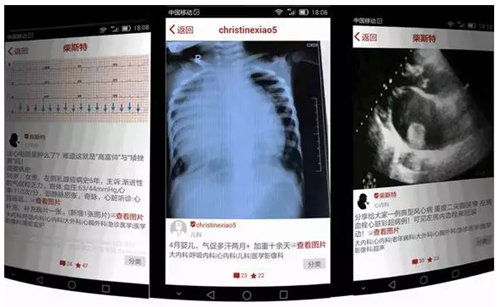
Light Medical Community Map
In May 2014, Qingying Medicine secured angel-round financing. In September 2015, the company completed its Series A financing round, raising tens of millions of RMB from investors including Chende Capital, Shangshi Capital, and Yilian Capital. The reason Qingying Medicine secured two rounds of funding within a relatively short period lies in the project’s accurate identification of user pain points and its rapid dissemination among the physician community.
In May 2014, the company was established and secured angel-round financing.
In September 2015, the project completed its Series A financing round.
In October 2015, the number of users reached 300,000.
Ai Qing stated that doctors are a group with relatively low internet penetration, and the rapid user growth is attributed to the platform providing them with tangible value.
Next, Qingying Medical will continue to enhance platform features, providing physicians with an improved experience for learning and professional exchange.
Legend Star, established in 2008, currently manages two angel investment funds with a total capital of approximately RMB 1.5 billion. In 2015, it was ranked among the top three best angel investment institutions in China by Zero2IPO Group and CVSource. As the early-stage investment and incubation arm of Legend Holdings, Legend Star leverages over 30 years of entrepreneurial experience and resource accumulation from the Legend ecosystem to provide entrepreneurs with distinctive services combining angel investment and in-depth incubation, serving as a “super angel” for founders.
This article is primarily intended for the guest speakers of the second session of XiangYiHui MED TED, a sub-forum of the Legend Stars WILL Conference.