

Top 10 Feared Medical 'Black Tech' Innovations: Ethical Concerns and Product Insights
Since ancient times, humans have regarded the unknown with fear. Consequently, while technological advancements have driven social progress, they have also been met with apprehension. When the telephone was introduced to Sweden in the late 19th century, people feared that electricity would leak out if the phone lines were accidentally severed. As a result, many elderly individuals refused to touch telephones altogether to avoid the risk of electric shock. This illustrates how such fears are amplified when human health is at stake.
Shortly after Wilhelm Conrad Röntgen announced his discovery of X-rays, people feared that this high-energy radiation could read their minds and penetrate both body and soul—so much so that some manufacturers even produced X-ray-proof underwear. Today, technologies such as artificial intelligence, robotics, nanotechnology, virtual reality, and genome sequencing are sparking similar fears. History often repeats itself in strikingly similar ways; from ancient times to the present, such fears have always stemmed from human ignorance in certain technological domains.
Next, VCBeat will clear up the confusion surrounding digital health technology by addressing the bioethical issues it raises, helping people use these technologies with confidence and ease.

Research on artificial intelligence and its applications is advancing at a breathtaking pace. IBM Watson is dedicated to building a cloud-based shared hub for medical data, leveraging underutilized information to support higher-quality diagnosis and care services. It can read millions of documents within seconds and then recommend optimal treatment plans. Atomwise aims to use supercomputers to predict drug efficacy in advance, thereby reducing the cost of drug development. Google DeepMind Health is employed to mine data from medical records, accelerating the delivery of healthcare services and enhancing the patient care experience. This project is still in its initial stages and currently has one partner: Moorfields Eye Hospital NHS Foundation Trust. The two parties are working together to improve outcomes in ophthalmic diagnosis and treatment.
The deepening of artificial intelligence research has brought many conveniences to enhancing human well-being, while also sparking numerous concerns. The most typical one is the fear that sophisticated and intricate AI technologies will eventually surpass the human brain, dominate human destiny, and strip humanity of its free will and capacity for thought. Stephen Hawking even stated, “The development of full artificial intelligence could spell the end of the human race.”
I find this perspective overly pessimistic, yet I concur with the view that we must make necessary preparations to ensure the reasonable utilization of artificial intelligence (AI) technology. This includes establishing ethical standards to impose appropriate constraints on its development and slowing the pace of research to allow time for devising strategies to address potential negative impacts. Google has already taken the lead in formulating such regulations. If we can acclimate ourselves to AI technology and identify aspects beneficial to our own interests, it would be highly advantageous for both patients and healthcare practitioners. Cognitoys serves as a prime example, leveraging AI to help develop young children’s cognitive abilities in a gentle and engaging manner.
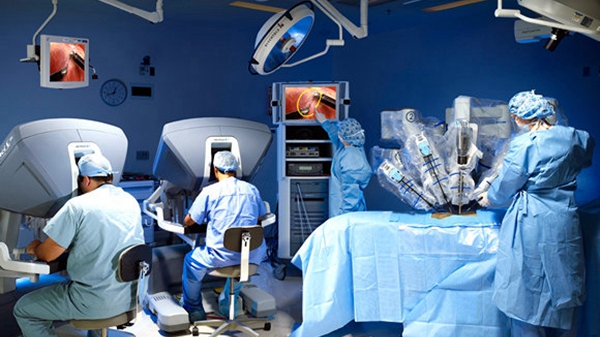
Significant efforts have been made to optimize surgical outcomes, improve the accuracy and success rates of procedures, and shorten recovery times, yielding tangible results. Throughda VinciSurgical systems enable surgeons to achieve a clearer field of view during procedures, thereby enhancing operational accuracy and control. Last year12In [Month], Johnson & Johnson joined forces with Google to createVerbThe company’s primary objective is to develop an “Integrated Surgical Solution Platform” that combines cutting-edge robotics technology with top-tier medical equipment for surgical professionals.
Surgical robots offer numerous advantages, such as low cost and high efficiency. Nevertheless, many people remain concerned that these robots could one day malfunction and cause harm. In reality, if we plan comprehensively and exercise caution in all matters, such dystopian scenarios will not come to pass. Therefore, I continually emphasize the importance of strengthening human control, given that all currently available surgical robots operate under human supervision. Furthermore, many procedures are inherently complex, or the economic cost of implementing the required technology is prohibitively high, making it difficult for machines to replace humans in performing these tasks. We must always bear in mind that in the field of surgery, the sole mission of technology is to assist the lead surgeon in performing operations more effectively.
Proteus Health has patients wear a patch-shaped sensor device on their bodies, enabling the analysis of each individual patient’s medical habits through this “patch.” The sensor transmits data to the smartphones of both patients and physicians, facilitating better management of the care process and ultimately improving health outcomes. In this example, although medical data is collected and utilized, such collection and use are conducted in a manner and for purposes that benefit the patient.
Another example is Oscar Health, a startup committed to transforming the complex landscape of health insurance. Its core philosophy is that individuals who take proactive steps to prevent disease should be rewarded. Customers receive a complimentary Misfit activity tracker, and they earn a $1 reward for meeting their daily step goals.
If we view these cases from another perspective, it appears that patients’ insurance coverage is obtained at the expense of their personal medical data, including sleep data, data collected by health trackers, blood pressure readings, electrocardiogram (ECG) results, and measurements obtained through small medical devices. By leveraging this data, insurers can arbitrarily adjust premiums or notify customers that their premiums will soon increase due to unhealthy lifestyle habits. If you do not adhere to a diet plan tailored specifically for you, but instead prefer eating steak or are too lazy to exercise, your premiums will rise. In short, every action you take and every decision you make will impact your insurance premiums.
Moreover, the flow of data appears to be perpetually unidirectional: patients transmit their data to healthcare companies but receive no information in return. This is undoubtedly inequitable. How can we assess whether a startup producing wearable devices is trustworthy and will properly safeguard our personal data?
Regarding this issue, my recommendation is as follows: Do not place your trust in a medical product company unless it has obtained approval from government agencies such as the Food and Drug Administration (FDA) and its production and operational practices comply with established regulations, such as the Health Insurance Portability and Accountability Act (HIPAA). This approach helps ensure that our personal information is not disclosed to unauthorized parties; in the event of misuse, the responsible entities will certainly face sanctions. Companies should establish publicly accessible and transparent profiles online, along with customer-oriented online communication channels. The more we know about a company, the lower the risk of our personal information being misused.
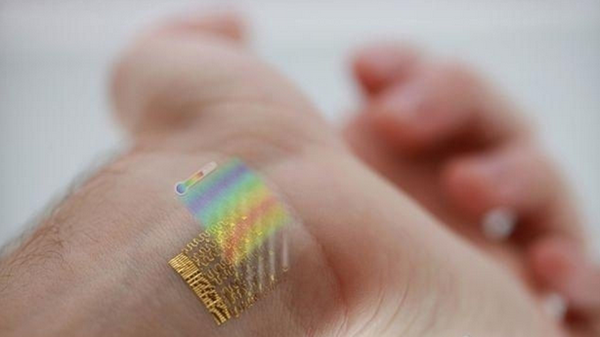
Many people believe that micro-cameras and microchips will dominate the healthcare industry in the future. Patients can swallow micro-cameras and pill-based microchips to monitor medication adherence. Biometric tattoos, such as VivaLNK’s eSkin Tattoo, can transmit drug information in a secure manner. Radio-frequency identification (RFID) chips can be implanted under the skin for identification purposes.
However, some people worry that such devices might carry harmful substances, such as viruses, into our bodies and then launch attacks from within, akin to the small device used on the protagonist Neo in the movie The Matrix. Clearly, this fear stems from our innate aversion to anything that interferes with the natural functioning of our bodies; we dislike the idea of a tiny device operating autonomously inside us.
To alleviate such fears, healthcare professionals must establish appropriate ethical standards to help society address, at a macro level, the emergence of two new technologies: sensors and chips. Under these ethical guidelines, only micro-medical device suppliers that can demonstrate the sufficient safety of their sensors and chips will be granted legal production qualifications.
Virtual reality technology is transforming the landscape of the healthcare industry. Brennan Spiegel and his team at Cedars-Sinai Medical Center in Los Angeles have introduced patients to the world of virtual reality to help them alleviate stress and reduce pain. By leveraging a 360-degree panoramic camera placed in patients’ homes, schools, or at special events such as birthday parties and soccer matches, along with a smartphone and a pair of VR goggles, VisitU enables young patients who require hospitalization to enjoy immersive experiences and continue engaging with life.
Despite its many benefits, many people remain skeptical about virtual reality (VR) technology. Admittedly, wearing an Oculus Rift headset may cause some discomfort, but the severity of this issue is a far cry from the widely feared notion that “VR technology detaches people from reality.” Time magazine once reported a case in which a young South Korean father became so addicted to an online game at an internet café that his two-year-old child starved to death at home. Another horrifying incident also occurred in South Korea: in 2005, a 22-year-old man died from cardiac arrest after playing the then-popular game StarCraft continuously for 50 hours. Such cases have led many to believe that VR technology can also lead to addiction or compulsive use, with serious consequences.
Such concerns are well-founded. Therefore, I recommend that the introduction of virtual reality technology proceed gradually and in a step-by-step manner, without haste. As for Google Cardboard—currently the simplest and most affordable VR device—let us wait and see what kind of virtual reality experience it will deliver.
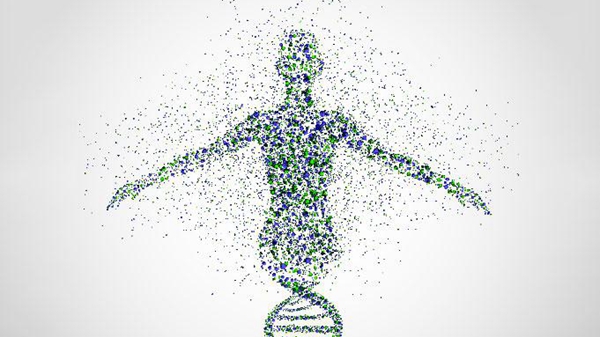
Gene sequencing technology can save lives. As early as 2013, geneticist Stephen Kingsmore and his team saved a male infant through rapid gene sequencing. To date, this technology has become more affordable and is more widely applied than ever before. Currently, several large-scale projects are leveraging artificial intelligence to mine human genetic data, helping patients analyze the risks carried within their genes.
When it comes to profound questions of life and death, people often think of molecular biology and genetic science. Where does life come from? How is life formed? Such inquiries frequently lead to serious discussions in bioethics. Many believe that some medical researchers and the healthcare industry itself are overstepping their bounds by attempting to play “God” or the “Creator” through actions such as genome sequencing and gene editing. Stranger Visions gives concrete artistic expression to this fear: by analyzing materials from which DNA can be extracted—such as saliva on cigarette butts collected in public spaces—artists have created corresponding human figurines. This artistic practice highlights the possibility that genetic analysis could enable scientists to obtain comprehensive information about an individual’s body, a prospect that many find deeply unsettling. It is natural to feel apprehensive; the idea that one’s entire physical being and life story can be fully understood from a single drop of blood or a sample of saliva is indeed eerie. Moreover, advances in genetics may grant even greater power, such as identifying disease-causing factors embedded in our genes and determining whether specific lifestyle habits might trigger certain illnesses. Most people reject this possibility, as they do not wish to learn about latent genetic predispositions to disease or potential health trajectories. They prefer not to know their fate in advance or attempt to alter it, believing that destiny is predetermined—even though, in reality, it is not.
I believe that, provided they are employed with reasonable prudence and in strict adherence to bioethical principles, genomic and genetic tools will play a remarkable role in the prevention and cure of diseases. The most effective way to alleviate public apprehension toward genomics is through popular science communication and education. What we ought to do is follow the example of the Personalized Medicine Coalition by providing a general overview of the benefits and risks associated with genome sequencing and genetics. It is hoped that more institutions will engage in such initiatives in the future.
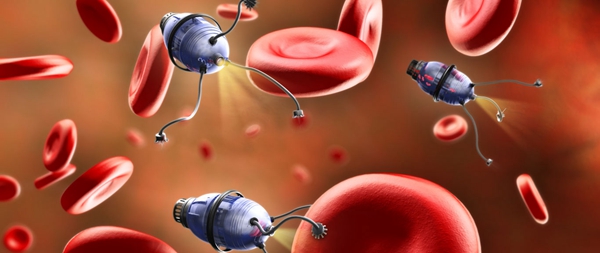
A team of researchers from the Max Planck Institute in Germany has recently been conducting experiments on a miniature robot with a diameter of less than one millimeter. This robot can flow freely through bodily fluids and deliver drugs or other medical sustained-release agents to specific parts of the human body with high precision. Scientists designed this scallop-shaped, sub-millimeter mini-robot to enable it to navigate effortlessly through non-Newtonian fluids, such as human blood, the lymphatic system, or the mucus on the surface of the eyeball.
Nanorobots are extremely small; even if someone were to place one in your drinking glass and you ingested it, you would not detect its presence. Some people worry that such miniature devices could enable comprehensive surveillance—with tiny robots circulating within bodily fluids, no secret would remain hidden. Others are concerned that criminals or terrorists might exploit these nanorobots for illegal activities, such as delivering toxins or lethal agents into the human body.
On this issue, I believe we should initiate public discussions on the ethical implications of nanorobots at an early stage and establish a bioethics expert panel to assess the potential security threats posed by nanorobots. Healthcare professionals and the general public must work in concert to leave no room for malicious actors seeking to exploit digital health technologies to harm others.
Medical robots are no longer confined to science fiction films and the distant future; they are already present in today’s healthcare industry. Xenex robots use ultraviolet light to disinfect medical equipment; two hospitals in Belgium have “hired” Pepper robots to serve as receptionists. In these same hospitals, TUG robots assist in transporting hard-to-carry medications and medical supplies; the bear-shaped RoBear robot can lift patients from their beds and place them into wheelchairs, or help them stand and exercise to prevent bedsores caused by prolonged bed rest; Veebot robots can rapidly collect blood samples in under a minute; furthermore, scientists have already begun developing sex robots.
Many tasks that were once exclusively performed by humans are now being handled by robots, triggering anxiety among medical practitioners, healthcare workers, and the general public alike. It is no small feat to enable robots to perform tasks such as drawing blood samples or lifting patients from beds. What if they accidentally injure a patient or suddenly go out of control? As with surgical robots, human oversight remains key to alleviating these concerns. To reiterate an old adage: technology serves only as an aid; humans remain in command.
However, with the advancement of robotics, we should embrace the integration of robots into our daily lives. To this end, we must learn to leverage their capabilities. This does not mean treating them as life partners akin to inflatable dolls; rather, we should harness robotic technologies to enhance convenience in our lives. As familiarity breeds comfort, repeated experiences such as having blood drawn by robots will eventually lead us to perceive them no differently than human nurses.
In recent years, community laboratories have become increasingly prevalent, such as The Citizen Science Lab in Pittsburgh, which aims to spark interest in the life sciences among citizens of all ages, from young children to the elderly. In these laboratories, individuals are free to engage in creative activities, such as drug design and gene editing.
Meanwhile, some argue that DIY biotechnology poses significant safety risks, such as being exploited by criminals and terrorists to produce harmful substances for their clandestine and malicious purposes. Others contend that the right and responsibility to conduct medical research using scientific methods and tools should belong exclusively to scientists. If this privilege were extended to the general public, the consequences could be severe.
As for the solution, it is the same as I mentioned in the previous cases: establishing standards and implementing oversight. Gene editing using CRISPR technology will become mainstream within the next one to two years. In this context, new regulations must be introduced as soon as possible to ensure that community laboratories are not exploited by malicious actors.
The market for wearable health devices and sensors is thriving. These devices, such asScanaduandViatom Checkme, they can not only measure body temperature but also track heart rate, measure the speed and rhythm of the pulse, monitor blood oxygen saturation and systolic blood pressure, as well as track physical activity and sleep. In short, the emergence of these devices has almost completely reshaped our understanding of healthcare. At times, you may not even need to go to a hospital and wait for hours in the waiting room just for a ten-minute examination. With the right devices, you can perform professional-grade diagnostics on yourself anytime, anywhere.
However, many people distrust the accuracy of these devices and will refuse to use them unless guided by professionals. Furthermore, some individuals believe that only wearable devices and sensors used by professional healthcare personnel are safe and reliable.
Therefore, I recommend that manufacturers of such devices engage in thorough communication with customers, clearly explaining which safety assessments their products have passed in terms of quality. Of course, regulations and standards are also important. The Food and Drug Administration maintains a list of approved devices. This is a highly effective practice that other countries can draw upon.
How Will Technology Change Our Lives? Which Changes Are Undesirable? VCBeat Welcomes You to Learn and Discuss~