

New Horizon Health Files IPO Prospectus, Pioneering 'Internet + Early Cancer Screening' in China
From "Go Away Mr. Tumor" to the anti-cancer stories of those around us, the tragedies caused by cancer in reality often evoke deep sighs and make people fearful at the mere mention of the disease. Based on the results of large-scale early screening campaigns promoted in Europe and the United States over the past few decades, if prevention is initiated early and diagnosis and treatment are timely, the cure rate for cancer can be significantly improved. Colorectal cancer has consistently ranked as the second most common cancer in China in recent years. As a typical "affluence-related cancer," its incidence has been growing at an annual rate of 4.2% alongside rising GDP. In regions such as Hong Kong, Macau, Taiwan, and Singapore, colorectal cancer ranks first in incidence. Due to the lack of obvious symptoms in the early stages, it is often mistaken for other digestive disorders and overlooked. Furthermore, many Chinese people find colonoscopy, a key screening method, difficult to accept, thereby missing the optimal window for treatment and leading to tragic outcomes.
Not long ago, New Horizon Health partnered with ZhongAn Insurance to launch China’s first colorectal cancer prevention insurance product, “Chang Ming Bai Sui” (i.e., Colotect®). As China’s first at-home early screening genetic testing service, Colotect® is a novel non-invasive, painless, and non-interventional colorectal cancer screening tool. It employs differential DNA analysis technology to detect the presence of abnormal DNA, identify DNA alterations associated with colorectal cancer or precancerous lesions, and enable the early detection of advanced adenomas larger than 1 cm in diameter as well as precancerous foci. By identifying early-stage colorectal cancer gene mutations at an earlier stage, it facilitates early detection, early diagnosis, and early treatment.
Hangzhou New Horizon Health Technology Co., Ltd. (hereinafter referred to as “New Horizon Health”) is a research-driven company dedicated to early cancer screening. Established in 2013, the company officially launched its products at the end of 2015 after two years of research and development. It subsequently completed a USD 20 million Series A financing round, led by Legend Capital and participated in by SoftBank China.
Zhu Yeqing, CEO of New Horizon Health, stated that the number of users undergoing early colorectal cancer screening is projected to reach 500,000 to 1 million in 2018. The company will launch an early gastric cancer screening product this September and plans to introduce early screening products for breast cancer and cervical cancer targeting women in 2017.
Early Cancer Screening: What You Need to Know
According to the “Annual Report of Cancer Registry in China,” approximately 191,100 patients died from colorectal cancer in China in 2015, with an annual growth rate of about 4.2%, far exceeding the international average of 2%. Data released by the Union for International Cancer Control on World Cancer Day 2015 showed that early screening carries the highest weight among the three approaches to cancer control, accounting for 53%. The other two approaches are effective treatment, with a weight of 12%, and healthy lifestyle, with a weight of 35%.
Taking colorectal cancer as an example, Western countries, particularly the United States, began promoting colonoscopy as a method for early screening in the early 1990s. According to Cancer Statistics, 2015, published by the American Cancer Society (ACS), the mortality rate from colorectal cancer in the U.S. has decreased by nearly 60% over the past three decades. This demonstrates that emphasizing early screening plays a critical role in cancer prevention and control.
Currently, many methods claim to offer early screening for cancer, but in reality, most of the approaches we are familiar with serve more as diagnostic tools for cancer rather than true early detection. While some emerging technologies, such as methylation analysis, may aid in the early diagnosis of cancer, they do not necessarily detect precancerous lesions. A notable example is Theranos, which previously garnered significant attention for its purported ability to detect multiple cancers from a single drop of blood. At its peak, the company was valued at $9 billion, but its valuation evaporated after its claims were debunked.
The early screening market is highly dynamic, with greater market potential. The target population for early colorectal cancer screening consists of healthy individuals aged 40 and above, a demographic that numbers between 500 and 600 million in China.
New Horizon Health + Insurance
In 2015, the Chinese government introduced relevant policies to encourage commercial health insurance. On June 12, at the 2016 Lujiazui Forum, Xiang Junbo, Chairman of the China Insurance Regulatory Commission (CIRC), stated in his speech: “Efforts should be made to optimize insurance supply, vigorously develop commercial health insurance and high-end medical insurance, and promote the transformation of the insurance industry from mere reimbursement toward comprehensive health protection management covering pre-disease, intra-disease, and post-disease stages.” Currently, the function of commercial health insurance has shifted from basic compensation for medical expenses to integrated health management encompassing prevention, treatment, and rehabilitation.
As is well known, traditional cancer insurance policies typically provide benefits after a customer is diagnosed with cancer, aiming to cover financial losses resulting from treatment costs or inability to work. However, due to the nature of cancer, patients often present at an advanced stage by the time symptoms become apparent and they seek medical attention; even with insurance support, the likelihood of recovery remains low. New Horizon Health’s early cancer screening products and business model align closely with the development trends in the insurance industry. By integrating professional early cancer screening services, the role of insurance extends from passive, back-end compensation to proactive, front-end prevention, thereby shifting forward and expanding its position within the health management continuum. Currently, New Horizon Health’s collaborations with the insurance industry are primarily reflected in three aspects:
1. The product serves as a value-added service provided by insurance companies to their high-end clients, procured for customer retention and loyalty purposes.
2. Channel collaboration: Precisely screen and sell to target customer segments through insurance company channels.
3. Collaboration on insurance service products, such as the colorectal cancer insurance launched with ZhongAn Insurance. Integrate product services into insurance offerings to establish a closed-loop service ecosystem for insurance products.
According to Zhu Yeqing, the colorectal cancer screening service – Changweiqing® – is non-invasive. Each day, some intestinal wall cells naturally shed; in colons and rectums with cancer or precancerous lesions, abnormal cells enter the intestinal lumen alongside normal cells. Based on the principle of early screening, when feces pass through the colon and rectum, these shed cells are incorporated into the stool. By collecting stool samples containing shed cells, DNA comparison can be performed. Changweiqing® has a sensitivity of 76% and a specificity of 88%.
Novel Business Model, "Internet+": Home Sampling
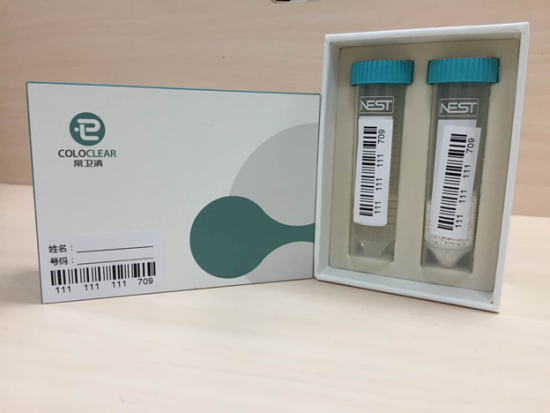
New Horizon Health’s business model extends beyond partnerships with insurance companies; all services are delivered via the internet, from sample submission to the delivery of test reports. After receiving the Colotect® sampling kit, customers can perform painless sample collection at home in accordance with the product instructions, without needing to leave their residence. The samples are then sent free of charge by courier to New Horizon’s testing center, and the test report is issued within 10 business days. The report is issued by a third-party medical laboratory certified by the National Health and Family Planning Commission.
Several characteristics of the internet have greatly facilitated New Horizon Health’s services: speed, which significantly reduces time costs and eliminates the need for multiple hospital visits; more convenient information sharing; and privacy and convenience, as the testing process does not require customers to appear in medical settings or wait in line. New Horizon Health holds an exclusive patent for its stabilizer, which maintains sample viability even after prolonged transportation, thereby eliminating the need for cold-chain logistics and enhancing convenience. This novel internet-dependent business model enables early screening to reach a broader population.
Currently, New Horizon Health holds a leading position in the cancer early screening market, while potential competitors remain largely at the laboratory stage.
# About the Team
All three founding partners of New Horizon Health graduated from Peking University as classmates and pursued different career paths after graduation. Their 30-year friendship has laid a solid foundation for their collaboration. Zhu Yeqing, CEO of New Horizon Health, served as a senior executive at a Fortune 500 multinational corporation and brings extensive experience in corporate management. Dr. Chen Yiyou, Chief Scientist of New Horizon Health, has long been engaged in translational cancer research and possesses rich entrepreneurial experience; he currently serves as the company’s Scientific Advisor. Dr. Lü Ning, CTO of New Horizon Health, previously focused on the development of molecular diagnostic products and has many years of overseas experience. As an independent team leader, he developed multiple products that obtained FDA clearance and were successfully launched in the U.S. market. He currently serves as the company’s Chief Technology Officer.