

160 Health CEO Luo Ningzheng Projects 2016 Revenue to Surpass RMB 1 Billion, Five Times That of Last Year

Shenzhen Ningyuan Technology
Integrated Internet Healthcare Service Platform
From July 15 to 16, 2016, the reMED2016 Summit on Reconstructing the Healthcare Ecosystem was held in Beijing. Prominent figures in the healthcare industry, including Bai Jianfeng, Editor-in-Chief of the Health Section of People’s Daily, and Luo Ningzheng, CEO of Jiuyi 160, were in attendance. At the summit, Luo Ningzheng delivered a keynote speech titled “Jiuyi 160’s ‘Internet+ Healthcare’ Ecosystem,” stating that Jiuyi 160’s revenue for the year was projected to exceed RMB 100 million, five times that of the previous year.
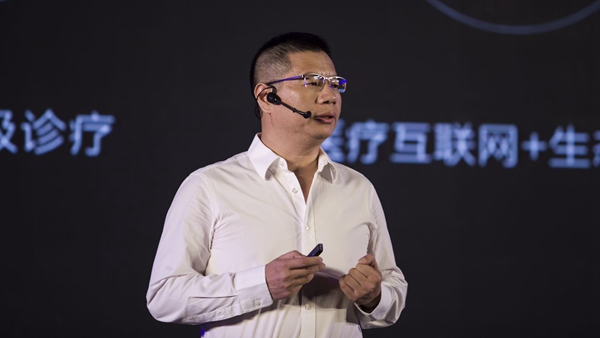
Luo Ningzheng, CEO of 160.com
Serving over 1 million patient visits daily, with more than 600,000 platform payment transactions.
Luo Ningzheng stated that the appointment registration service of Health 160 currently covers 2,000 hospitals, serving over 1 million patients daily. The Health 160 team has always firmly believed thatAppointment registration is a major pain point in healthcare access. Online appointment scheduling offers a breakthrough, but it also faces challenges.Data shows that the total daily appointment registrations across all internet-based booking platforms account for less than 2% of the total appointments within the entire healthcare service system, indicating that cultivating user habits remains a significant and long-term challenge.
“To thoroughly resolve this issue,Jiuyi160 is continuously optimizing its hospital-based affiliated products, while also expanding its services from simple appointment registration to pre-consultation prevention, in-consultation payment, and post-consultation rehabilitation.“Jiuyi160’s product line has expanded from the hospital side and the user side to include the physician side. To address issues in medical services, mobile healthcare must feature coordinated interaction among these ‘three ends’: resource allocation must be optimized on the hospital side, connections between physicians and patients must be established on the physician side, and users serve as the core of the entire service system. Therefore, Jiuyi160 builds its mobile healthcare service system and platform around a framework that spans from hospitals to users and then to physicians,” said Luo Ningzheng.
Luo Ningzheng stated that mobile healthcare faces the challenge of establishing its own business model, and it is difficult to gain significant traction without a platform.Jiuyi160 has made extensive efforts, launching in-hospital payment services in July 2015. To date, more than 100 hospitals across China have adopted the Jiuyi160 in-hospital payment system, with cumulative transactions on the platform exceeding 600,000. The platform’s revenue is projected to surpass RMB 100 million this year, five times that of last year. “This is the hallmark of Jiuyi160: building a pragmatic platform and cultivating competitive advantages,” he said.
Luo Ningzheng drew an analogy between Jiuyi 160 and ride-hailing apps. When mentioning Jiuyi 160’s key focus this year—tiered diagnosis and treatment—he stated that while ride-hailing apps address issues of time and location, the challenges involved in configuring medical service resources are far more complex.
“The primary factor is efficacy, followed by time, then cost, and finally location. Therefore, the allocation of medical resources is far more complex than in other industries. This necessitates strong patient cooperation; thus, from an internet perspective, cultivating user habits is crucial to advancing tiered diagnosis and treatment,” said Luo Ningzheng.
Luo Ningzheng also candidly stated that Shenzhen Ningyuan Technology (Jiuyi160) is currently focusing on three key initiatives. The first is the development of a knowledge base linking diseases with physicians, for which the company has dedicated substantial efforts to backend infrastructure construction. The second involves leveraging the Internet to encourage broader public participation in triage processes. The third is establishing a two-way referral system between hospitals and community health service centers, in accordance with government requirements.
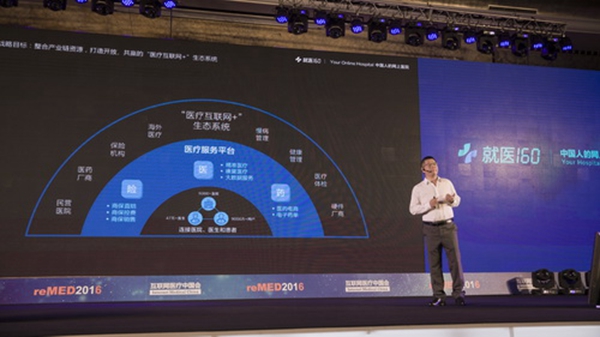
Interpreting the “Internet + Healthcare” Ecosystem
Activate Physicians: Rely on Operations, Not Subsidies
“Jiuyi 160 takes hospitals as its entry point, leveraging robust capabilities in hospital services. By optimizing resource allocation for hospitals and providing internet-based service products and tools, the platform aggregates a large patient base, ultimately connecting patients with physicians while assisting doctors with appointment scheduling management and post-consultation services. Jiuyi 160 is continuously building and refining its service ecosystem for hospitals, doctors, and patients,” said Luo Ningzheng.
He stated that while doctors often install multiple apps, they may also uninstall them at any time. The distinction between Jiuyi 160 and its industry competitors lies in its approach to attracting physicians: rather than relying on cash burn and subsidies, it focuses on building a robust operational system and accurately addressing their pain points. The key lies in meeting doctors’ needs and solving their problems—can it bring patients to doctors? Can it facilitate interaction between patients and doctors? How can an efficient doctor-patient operational system be constructed? These are critical challenges that Jiuyi 160 has encountered in its mobile healthcare journey.
“Doctors cannot be siloed or sustained solely through subsidies; instead, they must be engaged through operational systems to optimize resource allocation and jointly build an ‘Internet Plus Healthcare’ ecosystem,” said Luo Ningzheng.
This high-level summit focused on the theme of “Reconstructing the Healthcare Ecosystem,” with the conference motto “Strength, Trajectory, Direction, and Inevitability.” Discussions centered on eight key topics: reconstructing services, systems, scenarios, relationships, medicine, payment models, pharmaceuticals, and rehabilitation. The forum brought together industry thought leaders and practitioners to jointly explore methods for integrating the internet with the healthcare industry, aiming to foster industry innovation through a professional perspective and global outlook, while deconstructing the future direction of healthcare development.
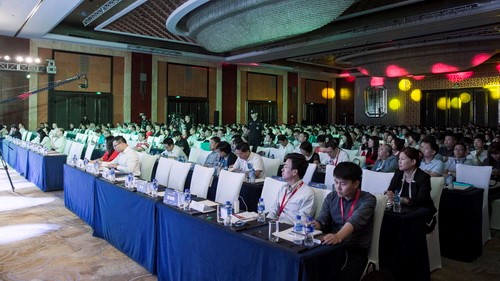
Conference Venue