

Doctor Plus Files IPO Prospectus: Building a Multidimensional Healthcare Data Platform as 'IMS + Oscar'
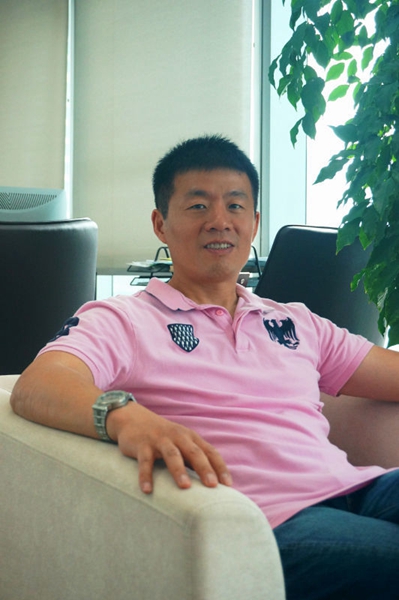
Founder & CEO, Beijing Yishengjia Hospital Management Co., Ltd.Tang Hairui
2014Tang Hairui founded in the year “Doctor+”, its positioning is as a physician tool, focusing on post-discharge doctor-patient communication. By integrating cloud-based services with mobile applications, it aims to enable accurate and professional communication between patients and physicians after clinical visits, such as facilitating post-discharge follow-ups and serving as a research tool for physicians.
The idea seemed promising. However, once the product was developed and presented to hospitals for negotiation, it became clear that gaining hospital access was far more difficult than anticipated.
The promotion of the Doctor Tools project faced obstacles, so Tang Hairui began to shift his focus to building a medical big data platform.
The physician-facing and hospital-facing platforms are undoubtedly two key entry points for acquiring medical data. However, the predicament of the physician tools project has led Tang Hairui to shift his focus to alternative data sources—with insurance companies emerging as the new primary source.
“Physician-facing and hospital-facing channels are certainly excellent sources. While medical data is highly comprehensive, it has clear limitations. Currently, the primary data source for ‘Doctor+’ remains insurance companies. In terms of dimensions, hospital data may encompass five or six dimensions, whereas insurance company data may cover only three or four. Of course, the scope of each dimension differs between the two. In summary, although hospital data is more comprehensive, commercial health insurance data offers greater structuration and higher effectiveness and usability for end users,” said Tang Hairui.
Hospitals generate vast amounts of data, but a significant limitation is the prevalence of unstructured data, such as scanned medical records and imaging files, which lack effective methods for structural processing. Furthermore, incompatibility among different Hospital Information System (HIS) vendors within hospitals poses considerable challenges to data integration.
Beyond technical factors, obtaining data from large hospitals—especially Tier 3A hospitals—is extremely difficult. Even if access is successfully secured from a few institutions, this “experience” of success is not easily replicable at scale.
In contrast, commercial health insurance data, while not as comprehensive as hospital data, does include some unstructured data from certain insurers. However, it predominantly consists of structured data, which is easier to process and does not require extensive manual cleaning. Moreover, there is a certain accumulation of historical data, and data interoperability among Hospital Information Systems (HIS) across different hospitals has already been achieved.
The most critical point is that commercial health insurance data generally includes cost data. First, there is a breakdown by categories such as examination fees and medication costs; second, there is a clear classification from the payment perspective, including out-of-pocket expenses, basic medical insurance, commercial insurance, and critical illness insurance. With such cost data, the potential for data mining services and monetization expands significantly.
First, the “Doctor+” model can provide backend services to insurance companies, such as mining and processing health data from commercial insurance. By leveraging data analytics, it enables the construction of an economic evaluation framework for clinical pathways and a Diagnosis-Related Groups (DRG) payment system, thereby offering more precise data models and actuarial pricing bases for cost containment and the future development of new insurance products.
On the front end, first, the “Doctor+” model can establish personal electronic health records (EHRs) for insured individuals of insurance companies. With comprehensive personal health data as a foundation, many related services can be subsequently layered on, including cost containment for cross-regional medical consultations and group management for family doctors. In particular, the absence of personal EHRs is a key constraint hindering the effective implementation of family doctor services. Furthermore, EHRs can support tiered diagnosis and treatment systems, providing a data foundation for the consultation and rehabilitation of patients with chronic or serious diseases.
The second front-end application is to assist insurance companies in intervening in and managing the health status and healthcare-seeking behaviors of their health insurance customers. Currently, there remains a certain gap in professional capabilities between domestic and foreign insurance companies. Industry insiders jokingly refer to Chinese insurers as “cashiers”: collecting premiums when selling policies and paying out claims when incidents occur. Throughout the entire policy term, insurers have limited influence over medical institutions’ diagnostic and treatment practices, as well as over customer health interventions. “Doctor+” can help insurers proactively intervene and control costs by analyzing medical expenditure and patient health data.
Currently, insurance companies collaborating with “Doctor+” include PICC Health, Taikang Life Insurance, and Yingda Life Insurance. Among these, “Doctor+” has initiated a strategic partnership with PICC Health Group, the largest health insurer in China, and has independently developed and operated the mobile application “PICC Health Jia” for the group. By partnering with payers, regulatory authorities, and hospitals, it has established a system based on health records that enables out-of-area medical visit reporting, underwriting and cost control, and family doctor group management for individuals covered by basic medical insurance and commercial group insurance.
According to Tang Hairui, multiple pharmaceutical companies have already purchased data analysis reports from “Doctor+.” Currently, typical enterprises providing market data analysis services to pharmaceutical companies in China, such as IMS, primarily base their report data on sample hospital data from a single city, which is then extrapolated using a linear regression model. For example, if several hospitals, including Peking Union Medical College Hospital, sell 50,000 boxes of a certain drug, the model estimates the total sales for the entire Beijing municipality at 500,000 boxes. However, these figures merely reflect changes in pharmacy department inventory and do not necessarily represent actual clinical usage, nor do they include patient diagnosis and treatment-related costs.
“The ‘Doctor+’ data can pinpoint medication dosages for each individual, and these data are linked to diagnoses, hospital departments, length of stay, costs, and other factors. With analytics based on this medical data, it is possible to determine the proportionate use of similar drugs within relevant disease diagnoses, thereby providing data support for pharmaceutical companies in marketing, competitive analysis, expansion of drug indications, formulation of market strategies, and precise patient targeting,” said Tang Hairui.
“Doctor+” has conducted relevant data analysis for a large pharmaceutical company. The company originally believed that its core drug was primarily used in neurology and neurosurgery; however, our data analysis revealed that the medication is more frequently utilized in cardiology. Consequently, our report will help the company formulate more precise market strategies.
Employee Supplementary Medical Insurance accounts are not insurance products; rather, they are a benefit offered by well-established companies, such as state-owned enterprises, to their employees. These accounts cover medical expenses once the social insurance coverage limits have been exhausted.
According to Tang Hairui, the company is in negotiations with several large enterprises regarding entrusted management agreements for employee supplementary medical insurance accounts. These enterprises boast strong cash flows and substantial scale, with employees distributed across China. The monthly transaction volume of the “Doctor+” employee supplementary medical insurance account entrusted management business is expected to exceed RMB 10 million by late 2015 or early 2016.
For the “Doctor+” model, providing TPA and comprehensive health management services to employees of large enterprises and their family members not only generates direct revenue but also enables effective cost control of corporate health-related expenditures through data analytics services.
“The reason our company is positioned as ‘IMS + Oscar’ is that, on one hand, we aim to build a multi-dimensional medical database, and on the other hand, we provide precision insurance based on this data—a business model we define as Insurance 2.0. For ‘Doctor+,’ health management is merely one of our products, which we offer incidentally while providing account management services,” stated Tang Hairui.
“Doctor+” provides daily health management services, including targeted screening of family and genetic medical histories for employees and their immediate family members across two generations. For employees requiring hospital care, “Doctor+” offers a range of additional services, such as referral assistance, access to green channels, critical illness insurance claims processing, hospitalization allowances, and rehabilitation guidance.
Tang Hairui revealed that several collaborations are imminent, with these contracts expected to help the company generate tens of millions in revenue this year. Tang also emphasized that the core business of “Doctor+” is to build a multi-dimensional data platform. As data from various sectors—including insurance companies, hospitals, pharmaceutical enterprises, and payors—flows into the company’s database, “Doctor+” aims to establish a healthcare data ecosystem.
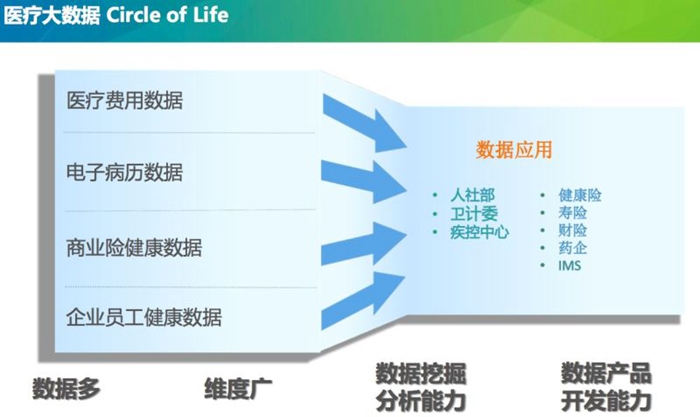
Tang Hairui pointed out that, as a data-driven enterprise, each additional dimension of data generates distinct value. Cross-industry talent reserves and robust data integration capabilities are also core advantages of “Doctor+.” For instance, the company’s core business already spans finance/insurance, healthcare, and pharmaceuticals. Moreover, its senior management team possesses deep industry expertise and extensive networks in the pharmaceutical, insurance, and big data sectors, enabling the comprehensive development of the proprietary database’s value and the creation of data products tailored to diverse industries.
According to Tang Guoping, a shareholder of “Doctor+” and a well-known investor in the healthcare industry, “Doctor+” is also targeting IBM Watson and has already begun developing its own artificial intelligence products. The company collaborates with multiple globally leading experts in the field of AI, such as Professor Liu Bing, an IEEE Fellow and Chair of the ACM Special Interest Group on Knowledge Discovery and Data Mining (SIGKDD). The company is currently developing three AI projects, including intelligent medical image recognition for diagnosis and an intelligent voice-assisted diagnostic robot for neurology.
It is worth mentioning that “Doctor+” recruited two heavyweight big data and technology experts earlier this year.
Wang Xi, a global big data expert, has been appointed as the Chief Scientist of “Doctor+”. Wang Xi graduated from the Department of Automation at Tsinghua University and subsequently earned a Master’s degree in Mathematics from the University of Oregon and a Master’s degree in Robotics from the California Institute of Technology. As an early employee of Oracle, he served as the chief architect for Oracle’s core database product, “Oracle Report.” In 1996, Wang Xi founded Viador, a big data analytics company, which went public on Nasdaq in 1999. He was responsible for establishing and leading the Big Data Center at the Tsinghua Strait Research Institute, bringing extensive experience in big data platform technologies, as well as the application, analysis, and commercialization of medical and financial big data.
Another appointee is Li Zhiming, former CTO of Shanghai Bestone, who has assumed the role of CTO at “Doctor+”. Li holds bachelor’s and master’s degrees in Mechanical Automation and Mechatronics from Southwest Jiaotong University, as well as a Ph.D. in Engineering from the China Academy of Launch Vehicle Technology. He has previously worked for telecommunications and mobile internet companies such as Huayou Century, Taiwan Mobile, and Shanghai Bestone, serving in roles including Department Director, CTO, and CIO. Additionally, Li has founded two startups of his own.
Tang Hairui stated, “Mr. Wang Xi is not only a top expert in the big data industry, but his successful entrepreneurial experiences in the big data sectors of both the United States and China will greatly facilitate the rapid future development of ‘Doctor+’ by providing professional technical guidance for our mining and processing of medical big data. His extensive resources and professional network within the industry can also identify potential M&A targets along the upstream and downstream segments of the big data industrial chain for the company. Meanwhile, Mr. Li Zhiming is a true Rocket Scientist. His experience as CTO and Chief Architect at multiple companies, particularly at Besttone, a listed company that operates China’s largest ‘Internet+’ legal platform, will be instrumental in helping ‘Doctor+’ build a robust, comprehensive health management platform driven by medical big data.”