

Big Data Enhances Treatment Outcomes for Hospitalized Patients with Substance Use Disorders
Numerous news reports have covered the deaths and devastation caused by opioid abuse. These stories have long dominated headlines, often involving high-profile celebrities. Examples include “Pop icon Prince was reported to have received emergency treatment for a drug overdose before his death,” “Philip Seymour Hoffman, 46, clearly died from a drug overdose,” and “Pop diva Whitney Houston was found dead at the Beverly Hills Hilton Hotel, with preliminary findings attributing her death to a reaction caused by the combination of drugs and alcohol.” These incidents have undoubtedly thrust drug abuse and addiction into the spotlight.
However, for millions of Americans, drug use is also spiraling fatally out of control.
Approximately 350 Americans die from drug addiction each day, with 100 of these deaths resulting from overdoses, most of which occur in individuals under the age of 25. One in every 14 hospital patients is affected by drug addiction. Furthermore, reports indicate that a newborn becomes addicted to opioids every 25 minutes in the United States.
Managing the chronic disease of drug addiction poses a significant financial challenge, with substantial economic costs associated with frequent relapses; annual expenditures are estimated at $569 billion. In fact, in the United States, the economic burden of drug addiction is twice that of any other brain-affecting disease, including Alzheimer’s disease.
Relapse and repeated treatment constitute a costly cycle for individuals with addiction, drawing increasing attention from healthcare providers. From this perspective, individuals prescribed medication for schizophrenia often discontinue their drugs once they begin to feel better and believe they no longer need them. This leads to additional treatments, repeated hospitalizations, thousands of hours of therapeutic intervention, and millions in medical expenses. As a brain disease, addiction manifests through symptoms such as denial and behavioral issues, making relapse, recurrence, and repeated treatment common, particularly during the early stages of therapy.
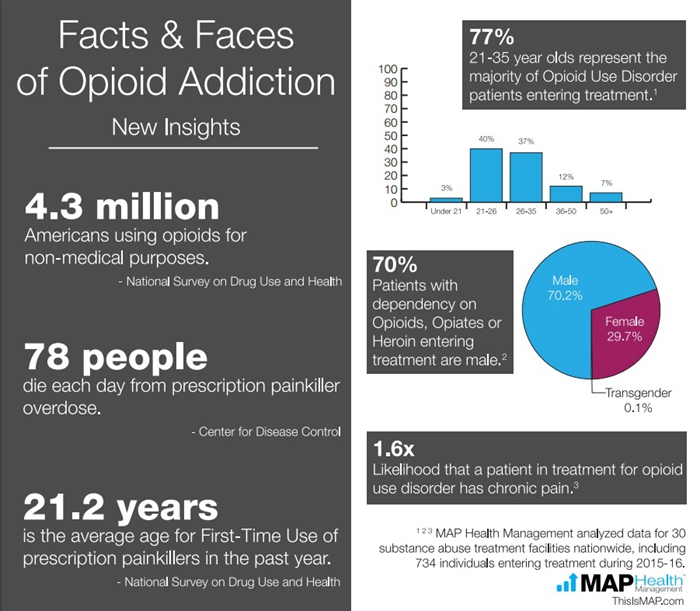
Leveraging medical big data, we reviewed the records of 2,281 patients who completed treatment for opioid use disorder at 30 different treatment facilities across the United States. The data indicate that the majority of patients in this opioid epidemic cohort were young men aged 21 to 35 years. This dataset comprises individuals who participated in post-treatment telemedicine-based recovery programs led by specialists.
Encouraging outcomes and experimental data indicate that, in the treatment of patients with chronic diseases, extending the continuity of care rather than relying solely on short-term or inpatient treatment has a significant impact on enhancing patients’ ability to maintain their own health. For substance use disorders involving individual therapeutic agents, this approach equates to long-term recovery.
Among these sample data, patients suffering from chronic pain were 1.6 times more likely to rely on opioids, opium, or heroin than other patients. This confirms the widespread perception that many middle-aged individuals are overusing and abusing opioids, with the data reflecting their propensity for dependence on these potent drugs. Individuals aged 21 to 35 have been identified as having a dependence on opioids, opium, or heroin.
Furthermore, men account for 70% of all individuals identified as dependent on opioids, opium, or heroin. As the data indicate, this epidemic is impacting America’s future. It will prevent young men, who should be leading healthy and prosperous lives, from contributing to society, and may even trap them within the criminal justice system. The data also show that this tech-savvy generation holds a positive attitude toward leveraging telemedicine services to help maintain their hard-won health.
According to widely accepted research, the risk of disease recurrence decreases after 12 to 18 months of sustained recovery.
Like other chronic diseases, substance use disorders require an extended chronic care management model rather than an acute treatment model. Although the extended treatment for continuous care of addiction patients may initially seem like a costly endeavor, it proves more cost-effective for healthcare providers and payers over time, enabling sustainable success in long-term recovery. Insurance payers are also beginning to recognize prevention and chronic care models that improve the long-term outcomes of addiction treatment, and have started implementing pilot studies and reimbursement programs to extend continuous care for this population.
The power of healthcare big data-driven processes provides successful, sustainable solutions for the development of providers, payers, and patients. Comprehensive population health behavior management, predictive analytics, risk stratification, technology-enabled case management, and informed care navigation are representative, valuable resources for improving treatment outcomes. Providing extended, continuous care to individuals after hospital discharge significantly enhances the likelihood of effectively controlling disease and maintaining long-term recovery.
In the case study, 82% of participants with a history of substance use disorders completed the extended care program and remained abstinent at the end of the 15-month treatment period. This serves as a compelling benchmark highlighting the power of connectivity, enabling patients to achieve balance in their lives during recovery. For every individual who maintains social connections during this vulnerable period, the increased likelihood of sustaining recovery translates into reduced rates of relapse and fewer readmissions to hospitals and addiction treatment facilities.
Experience with telemedicine has demonstrated overwhelming success in its ability to maintain critical connections with individuals striving for long-term recovery. These data indicate that the provision of telemedicine enables patients to transition as smoothly and effectively as possible from early to long-term recovery during various vulnerable periods, while also being cost-effective.
Improving treatment outcomes for patients with addiction is the goal of every healthcare provider. Hospital systems will face rigorous scrutiny while needing to ensure patient safety, quality, and satisfaction alongside maintaining financial viability. Continuity of care extended through technology integration will enhance treatment efficacy and boost financial revenue, thereby refining existing addiction treatment modalities.
Original source: beckershospitalreview.com