

Deloitte Report: Global Life Sciences Trends in 2016 at a Glance
By Gong Li
Illustration by Wang Jinfan
How will the global life sciences industry respond to today’s dynamic market environment—characterized by economic uncertainty, pricing pressures, growing demands for innovation and value, greater emphasis on consumer engagement, and an evolving regulatory and risk landscape? We examine the impact of current global issues on the worldwide life sciences sector, along with snapshots of regional market activities, to provide stakeholders with insights for their preparations in 2016.
(This report was released by Deloitte and translated by VCBeat. Please indicate the source when reprinting.)
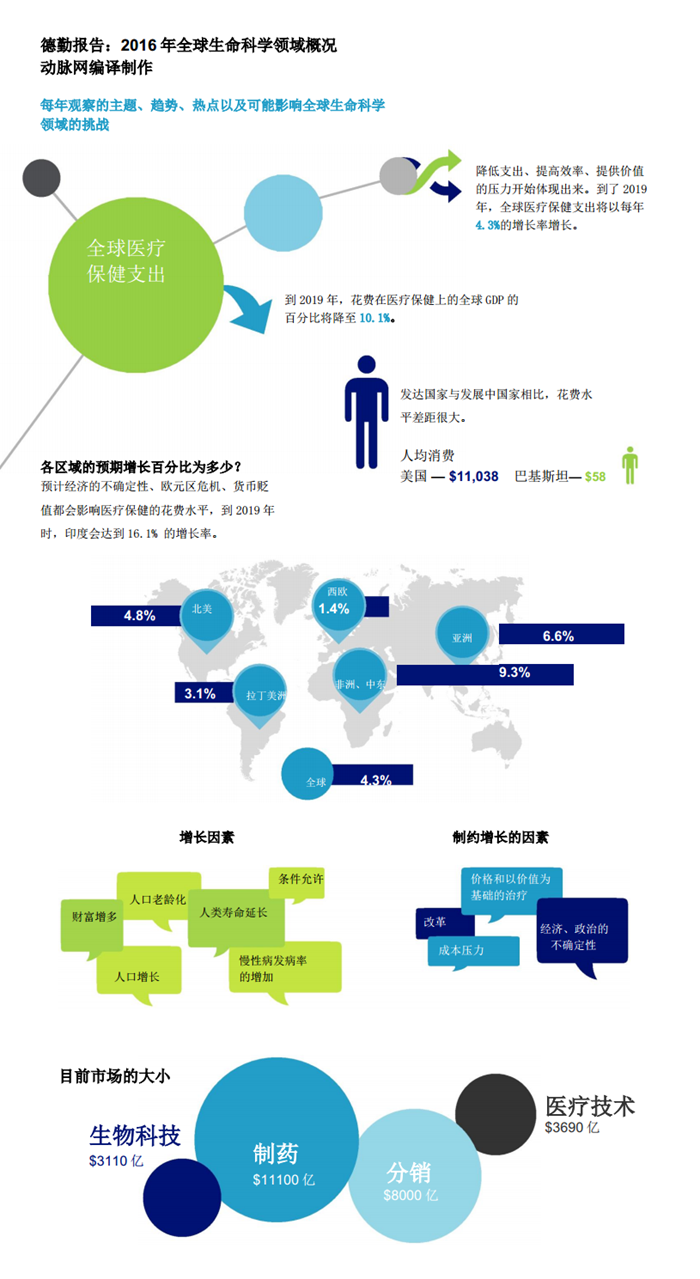
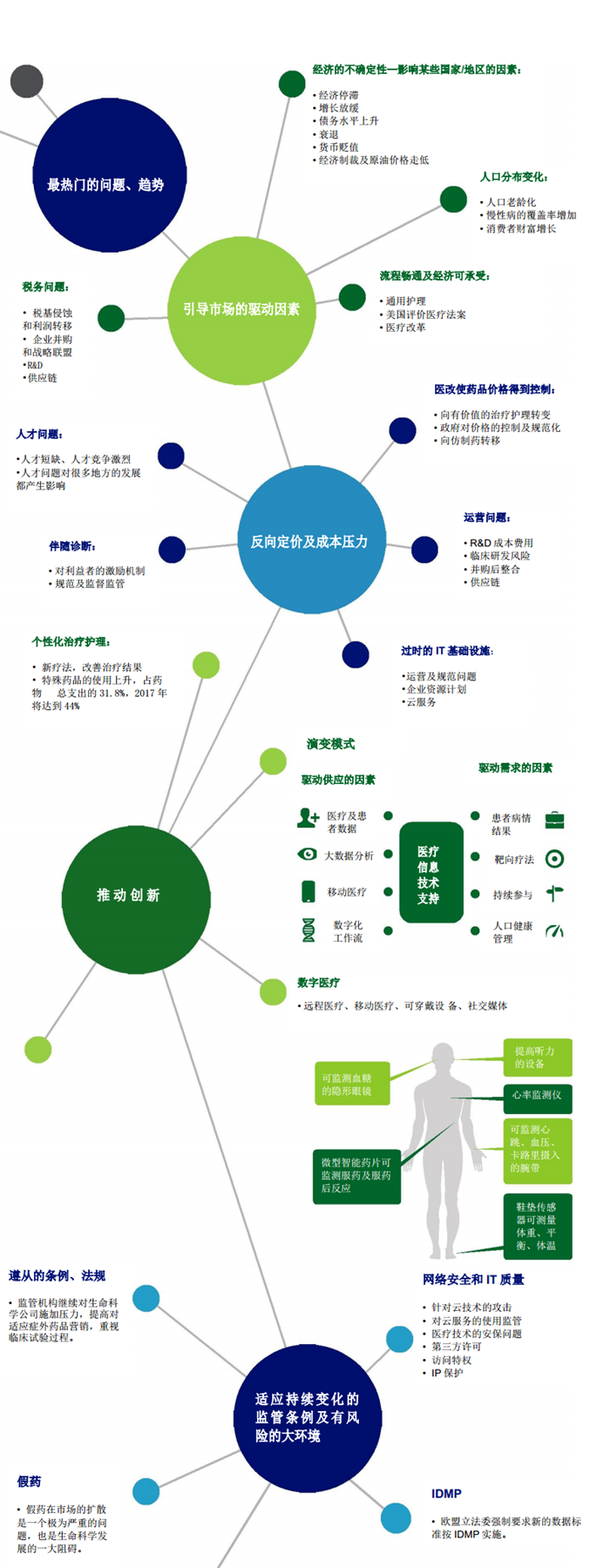
Economic volatility continues to challenge many aspects of life sciences companies’ operations. Sanctions and falling oil prices; economic stagnation; significantly slower growth and rising debt levels; currency devaluation, recession, inflation, and political uncertainty are all potential global headwinds. Meanwhile, aging populations, chronic diseases, growing consumer wealth, and other increasingly prevalent demographic shifts are expected to drive healthcare spending and demand for life sciences products in 2016 and beyond.
The trend toward universal health coverage continues, with more countries expanding or deepening the reach of public or private healthcare systems to reduce out-of-pocket expenses. As global regulations become increasingly complex and stringent, enforcement and penalties have intensified in the heavily regulated life sciences sector. Companies may benefit from adopting a risk-based approach to tax planning compliance, implementation, and monitoring.
Amid the reform-driven shift toward outcome-centric care, with payment and reimbursement systems increasingly value-based, pharmaceutical companies are likely to continue facing pressure to control costs. Nevertheless, the volume and applications of companion diagnostics will continue to grow rapidly.
Organizations of all sizes are also facing pressures stemming from production, sales, and cross-cutting development challenges: reducing early-stage R&D costs without compromising output; mitigating clinical development risks while ensuring high-quality data; streamlining asset portfolios, optimizing outsourcing strategies, implementing proactive risk prevention, and undertaking strategic restructuring; addressing talent and leadership issues; and managing supply chain risks. Companies are also grappling with the challenges posed by outdated IT infrastructure as they continuously adapt to the new realities of cloud computing, analytics, information flow, and outcome measurement.
Companies are facing a dual mandate: to innovate therapies that meet patient needs and save critically ill lives, while also achieving profitable growth. Achieving these often conflicting goals will likely require companies to transform their business and operational models, embracing disruptive technological advancements that can simultaneously reduce costs and accelerate the time-to-market for new products and services.
From product development to production and sales, life sciences companies are evolving their business models to foster greater engagement among providers and patients. Digital health technologies—such as telemedicine, mobile health, wearable devices, and social media—are driving a transformation in the life sciences sector, with data reshaping the landscape of healthcare in ways previously thought beyond the scope of these technologies. Mergers and acquisitions (M&A) are expected to remain one of the key strategic approaches in the life sciences industry.
Stakeholders in the life sciences sector are facing increasingly complex operational risks and regulatory challenges driven by multifaceted factors, including technological advancements, the expectations of clinicians and patients, and the emergence of a globally interconnected healthcare market. Key issues within the field encompass cybersecurity and IT quality, regulation and compliance, drug and device safety, counterfeit medicines, and intellectual property (IP) protection.
In 2016, life sciences companies will face not only challenges from an increasingly globalized market but also need to address region- and country-specific issues.
Original source: deloitte.com