

Digital Health Continues Its Upward Trajectory Amid Startup Winter | Digital Healthcare Industry Data Report (Part I)
|Source: FellowData WeChat Official Account, ID: FellowData
In the first half of 2016, global digital health investment and financing reached a record-breaking $3.9 billion, surpassing records set over several years. The sector’s robust performance has surprised many. In this data report, FellowData presents a comprehensive overview of the digital health industry. Data from FellowData indicates that digital health entered a period of rapid growth starting in 2014. This surge was driven not only by advancements in internet technology but also by the liberalization of national policies. Compared with previous trends, although the number of transactions declined in the first half of this year, investment capital continued to increase, indicating that digital health remains highly favored by investors.
In 2014, financing in the digital health sector broke numerous records. Entering 2015, funding for digital health surpassed that of 2014, reaching a total of $4.3 billion.
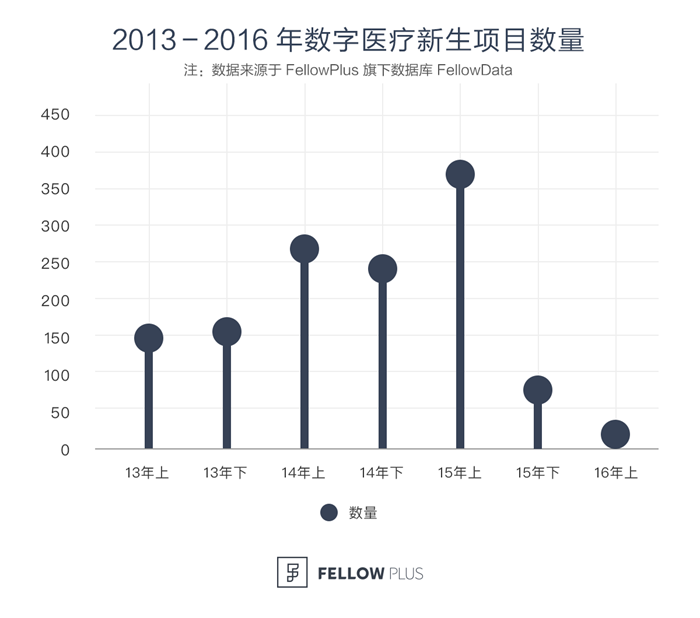
As can be clearly seen from the chart, the number of new projects in the digital health sector peaked between the first half of 2014 and the first half of 2015. Our analysis of healthcare policies at the time suggests that this surge in new projects may have been driven by liberalization policies.
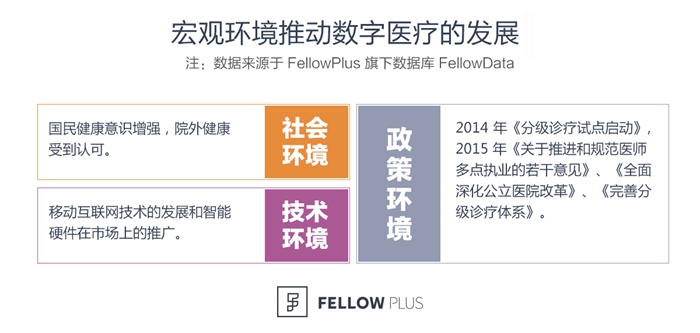
Driven by the surging demand for medical resources due to population aging in China, as well as the severe scarcity of such resources in small cities and remote areas, China has intensified the introduction of healthcare policies in recent years. From the 2014 “Launch of Pilot Programs for Tiered Diagnosis and Treatment” to the 2015 “Several Opinions on Promoting and Regulating Physicians’ Multi-Site Practice,” and accompanied by the rapid development of the internet and big data, digital healthcare entered a period of rapid growth during 2014–2015, demonstrating sustained market expansion. New hospitals and insurance providers are also exploring innovative win-win models to deliver novel patient experiences and optimize traditional business models.
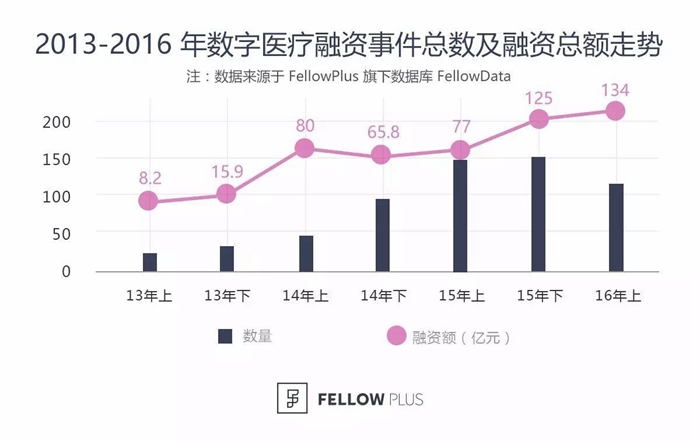
Although China’s digital healthcare sector remains in its nascent stage due to various barriers—such as policy and technological constraints—and its relatively short development history, making rapid large-scale expansion difficult in the near term, both the number of financing deals and the total amount raised have continued to rise steadily since 2013, showing no signs of abating.
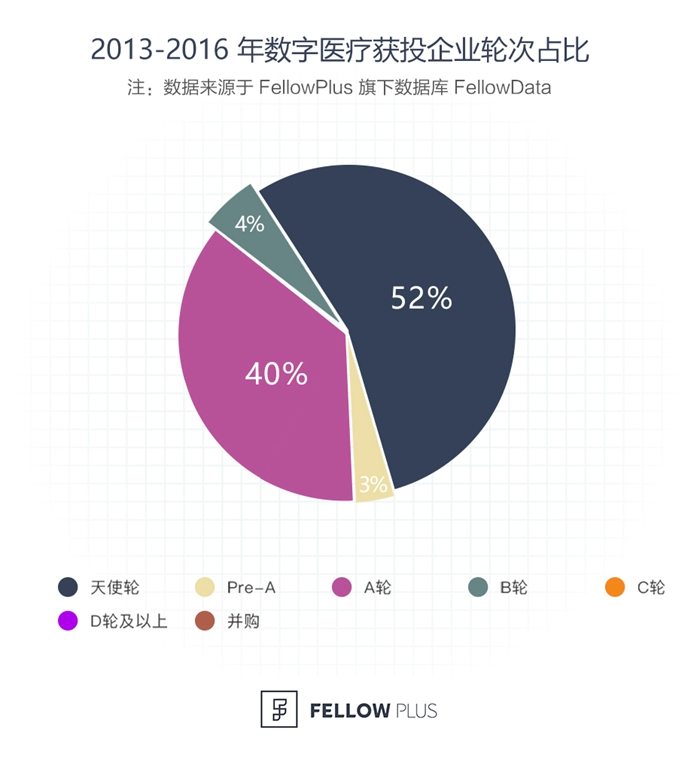
Most funding rounds also fall between the angel and Series A stages, indicating that this sector remains in a phase of rapid development despite the current market cooling. Such growth is expected to continue for a considerable period before the sector gradually matures.
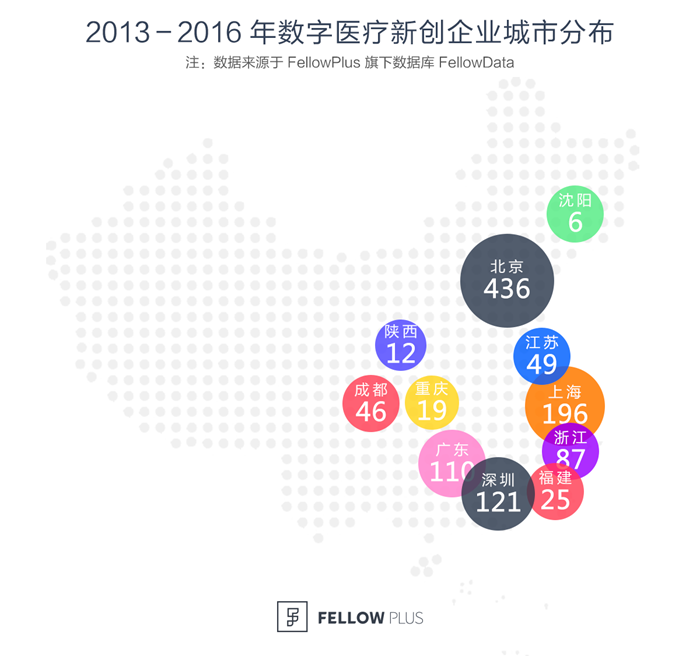
In terms of geographic distribution, enterprises headquartered in Beijing, Shanghai, Guangdong (excluding Shenzhen), Shenzhen, and Zhejiang dominate the landscape. Jiangsu, Chengdu, Fujian, and Hubei follow closely behind. The digital health sector demands robust access to both healthcare and internet resources. Due to the uneven distribution of these resources, while Beijing remains the premier choice, other cities still exhibit significant demand. Consequently, digital health companies are gradually expanding their presence across various provinces and municipalities.
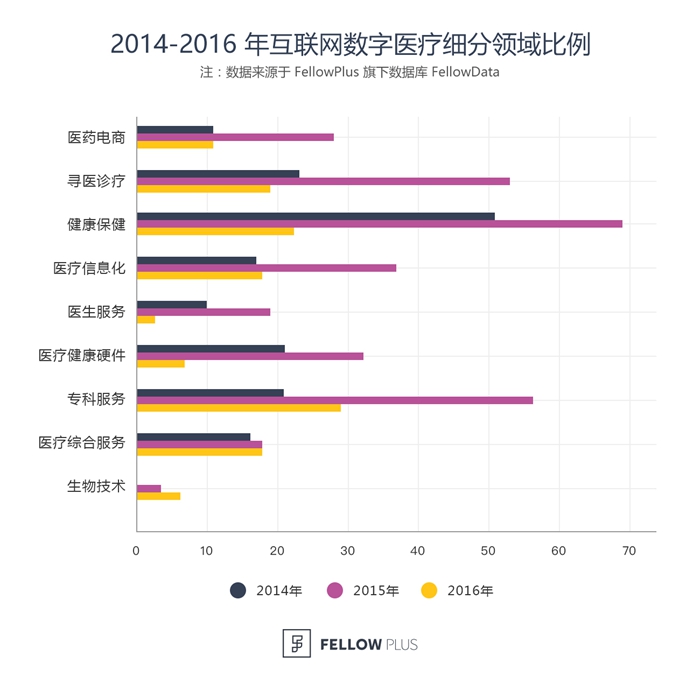
In 2014, digital healthcare began to emerge, with the spotlight firmly on online medical consultation and health management. By 2015, as this momentum remained strong, specialized medical services also entered the limelight. Projects in the online medical consultation space, such as Chunyu Yisheng, Haodf, and Weibo’s online consultation platform, gained prominence. A prevailing view in the market holds that, beyond requiring a robust internet operations team, the key to success for such ventures lies in cultivating strong “IP” (intellectual property/brand influence).
While other elements can be replicated, high-quality physicians represent a particularly scarce and irreplaceable resource in the healthcare industry. Once reputable doctors join a platform, they attract numerous other physicians and patients within their respective specialties. Looking ahead, the influence of platforms is expected to diminish, whereas the bargaining power of strong personal brands (IPs) will continue to grow. These key opinion leaders can break free from the constraints of any single platform, leveraging multiple channels to drive concurrent traffic and engagement.
Since the beginning of 2016, data from the first half of the year indicates that specialized medical services and health wellness will continue to be favored by investors. Although biotechnology appears relatively niche, its significant year-on-year growth reflects investors’ increasing attention to healthcare quality.
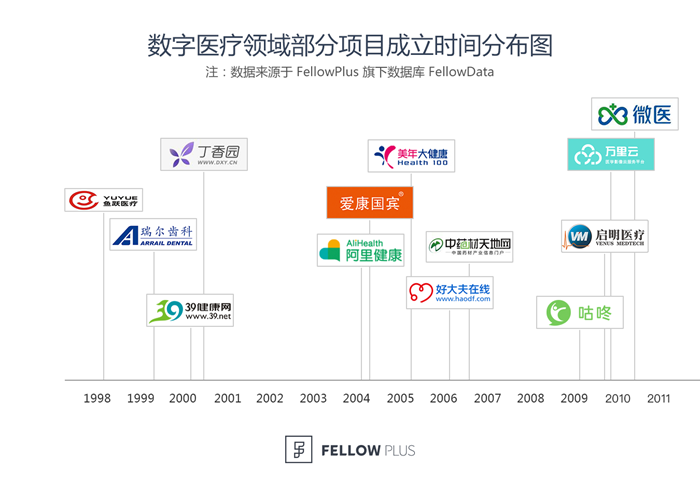
Healthcare did not emerge with the internet boom; most projects that have reached later stages entered the market as early as 2000. The healthcare sector has certainly not developed due to fleeting hype, but rather has matured through gradual exploration and accumulation over time.