

Top 10 Medical Innovations That Are Shaping the Future of Healthcare
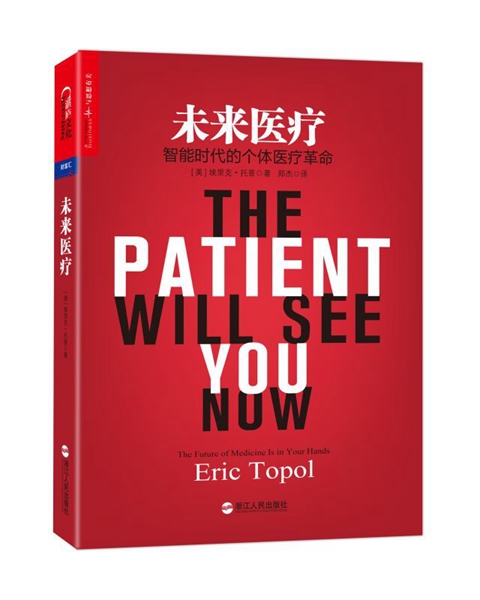
In the past, it was difficult for individuals to manage their own medical data; now, many routine physical examinations can be conducted using smart devices.As Eric Topol stated in The Patient Will See You Now,With technological advancements, individuals will become the masters of their own bodies.With the rise of smartphones, wearable devices, and artificial intelligence, healthcare is also undergoing a transformation.
Source: Zhanlu CultureWeChat Official Account(cheerspublishing)
➤➤Virtual Health Assistant
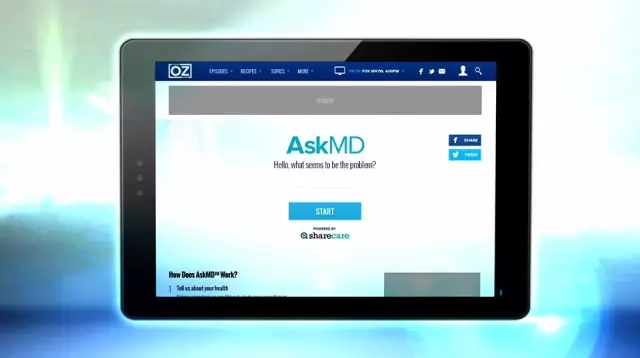
The emergence of virtual health assistants, which leverage advanced voice assistants (such as Apple’s Siri) to provide medical guidance, will drive the rise of digital healthcare. AskMD, a Siri-like software application, is a pioneer in the field of digital virtual health management. By downloading a free smartphone app, consumers can input their symptoms and access a medical pattern recognition database to receive feedback on corresponding treatment plans.
When I appeared on The Colbert Report, I found that Stephen Colbert was already quite familiar with the concept of mobile health. He said, “I have a smartphone. Does that make me a doctor? How can I get my smartphone to tell me about my condition? Is Siri a doctor?” Then he held up his smartphone, pressed it against his chest, and asked, “Siri, am I dying?” Siri replied, “I’m really not sure.”
➤➤The Rise of Remote Video Consultations
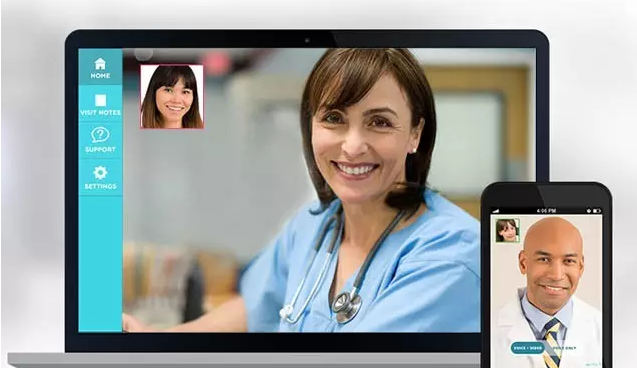
Currently, the market has seen a surge in products offering immediate telemedicine services, including Doctor on Demand, MDLive, American Well, Ringadoc, Teladoc, Health Magic, MedLion, InteractiveMD, and First Opinion. It is nearly impossible to miss this promotional frenzy: “For just $69, bring your smartphone, and a board-certified dermatologist will examine your rash,” or “For only $49, get instant online consultation with a physician.” Some companies provide consultations exclusively via phone or text message, while others facilitate communication through secure video connections.
There are also several other highly interesting telehealth video consultation projects, including those by Verizon Communications and the Mayo Clinic. The latter partners with a mobile health startup named “Better” to connect users with Mayo nurses, charging each household $50 per month for unlimited access to the service.
➤➤Medical Service Kiosks Are a Beneficial Supplement
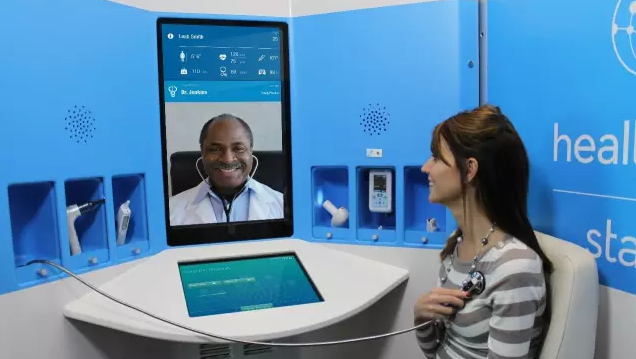
Healthspot resembles a stylish, cutting-edge hybrid of a telephone booth and an automated teller machine (ATM). These service kiosks are typically found in department stores such as Target, where a physician assistant accompanies the consumer into a private kiosk for a video consultation with a doctor. The kiosks are equipped with devices to measure blood pressure and other vital signs. Dr. Lee Schwamm, an advocate of telemedicine, has noted that the use of medical service kiosks is quite similar to using bank ATMs.
➤➤Sensors for Asthma Prevention
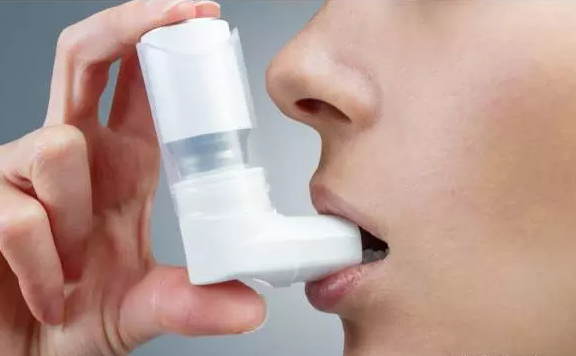
Asthma attacks are among the leading causes of death in children and pose life-threatening risks to patients, while asthma also remains a significant health concern for countless adults. Triggers for airway spasms vary from one patient to another; for some, it is air pollution, while for others, it may be cold air, exercise, pollen, or other allergens. If we could detect early changes in airway smooth muscle before the first asthma attack occurs, such episodes could be prevented.
Perception can be achieved through a suite of sensors, namely by using wearable devices to monitor air quality, pollen levels, inhaler usage, patient geolocation, respiratory volume, and nitric oxide content, while leveraging smartphone microphones or appropriate accessories to measure pulmonary function indicators. Given the close correlation between immune function and gut microbiomics, sampling and analyzing the microbiome is highly beneficial and warrants further research. Meanwhile, monitoring of respiratory rate, body temperature, blood oxygen saturation, blood pressure, and heart rate can be managed via a wrist-worn device. Subsequently, machine learning algorithms are applied to all input data to analyze individual physiological signs and identify precursors to asthma attacks. Once validated, this model can be used to alert individuals when to take medication, avoid specific environmental exposures, or take timely corrective actions.
➤➤Tracking Employees with Wearable Devices
Hitachi Business Microscope, developed by Hitachi Ltd. in Japan, is a device designed for large employers to enhance work efficiency. Equipped with infrared sensors, accelerometers, microphone sensors, and wireless communication modules, it can be embedded into employees’ ID badges. The device begins recording and transmitting data to management whenever employees interact, capturing information such as “who communicated with whom, how frequently, where the interactions took place, and the level of engagement in the communication.”

Another wearable device that can be used to track employees is smart glasses. For example, smart glasses manufactured by Vuzix are equipped with microphones, GPS, accelerometers, and data displays. Life-logging applications such as Saga integrate barometers, cameras, microphones, and smartphone location sensors to provide a “more comprehensive record of autonomous living,” enabling precise determination of your location and activities. The barometer helps identify specific locations and provides audio and visual alerts based on environmental conditions.
➤➤Micro MRI Scanner
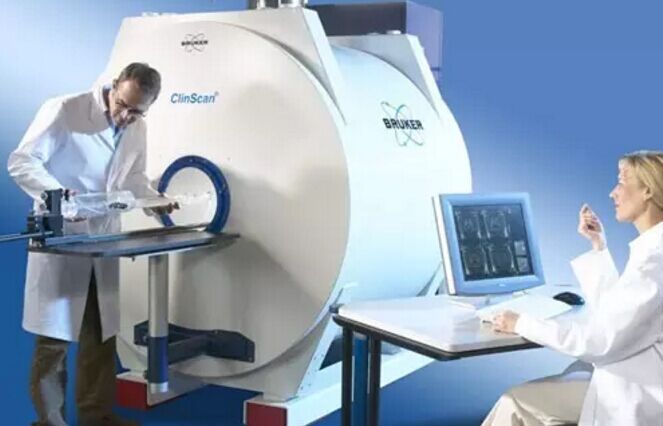
In the public’s perception, MRI (Magnetic Resonance Imaging) machines are typically envisioned as large, multi-modal devices. However, there has been surprising progress in the miniaturization of MRI technology. A pioneer in this movement is German engineer Bernhard Blümich, who invented the “MRI-MOUSE” in 1993. This device is a portable, universal surface detector standing only 30 centimeters tall. Michio Kaku, a technological optimist, praised this invention in his book Physics of the Future, stating that it “could revolutionize medicine by enabling people to undergo MRI scans at home.”
This miniature MRI scanner is shaped like a small U-shaped magnet, with the south and north poles at its two ends. Unlike traditional MRI machines, it employs an inhomogeneous weak electromagnetic field and uses computer algorithms to correct for distortions, requiring power supply comparable to that of a light bulb. Michio Kaku predicts, “Eventually, MRI scanners may become as small as a dime, so thin as to be nearly imperceptible.”
➤➤Low-Cost Origami Microscope

The “Foldscope,” invented by Manu Prakash of Stanford University, is a remarkable low-cost innovation. A Foldscope can be assembled from a single sheet of glossy paper in just 10 minutes; it is compact enough to fit into a pocket, requires no external power source, weighs less than two U.S. nickels, and can magnify objects more than 2,000-fold. This microscope requires only a 56-cent microlens, a 6-cent 3-volt button battery, a 21-cent LED light, and some tape and diffusers totaling $1. The device has been proven effective for imaging Leishmania donovani, Trypanosoma cruzi, Escherichia coli, Schistosoma haematobium, Giardia lamblia, and many other bacteria and parasites.
➤➤Visual and Auditory Devices for Assisted Communication
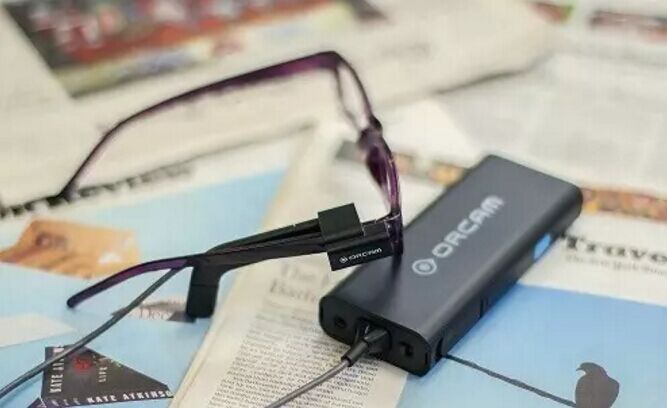
We cannot ignore the fact that astonishing artificial intelligence technologies are already driving the development of visual and auditory devices. OrCam is a camera sensor mounted on eyeglasses that transmits information via bone-conduction headphones, helping visually impaired individuals regain functional vision. Linx by GN Resound and Starkey are two hearing aids connected to smartphone applications, which “provide individuals with hearing loss with capabilities beyond normal hearing.” Similar to this future-oriented bionics, we have already seen wheelchairs designed for quadriplegic patients that can be controlled by thought. We must not miss any opportunity to transform healthcare through artificial intelligence.
➤➤Machine Learning Assists the Elderly and Children
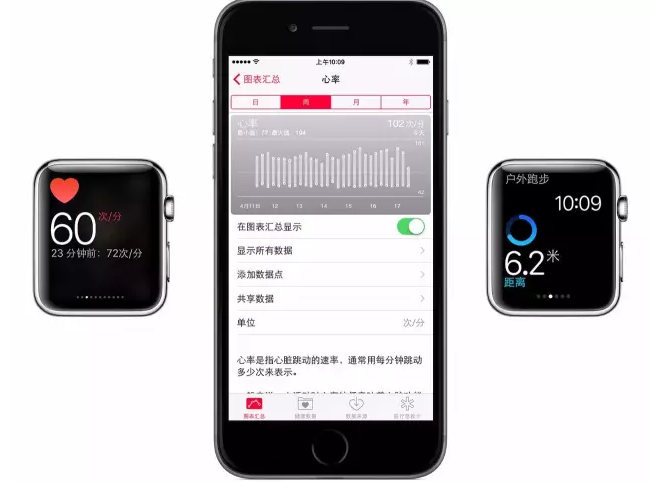
The Artemis project, headquartered at the University of Ontario, has collected data from thousands of premature infants. The risk of severe infection in preterm infants approaches 25%, with 10% of neonates dying as a result; however, it remains difficult to predict which infants are susceptible and when infections will occur. Heart rate sensors can be used to map trends in heart rate variability. Currently, heart rate monitoring data from newborns around the world can be transmitted in real time via the cloud to researchers at the Artemis project base for analysis, enabling continuous updates to probabilistic and statistical models. Similarly, certain programs can identify which frail elderly individuals are more prone to falls and monitor when such falls occur. By installing various sensors on floors or within “smart carpets,” it is possible to detect trends toward gait instability and imminent fall risk. To prevent falls among the elderly, the application of machine learning in this area may prove highly valuable.
➤➤Audio and Image Recognition Technologies Lead the Way in Disease Prediction
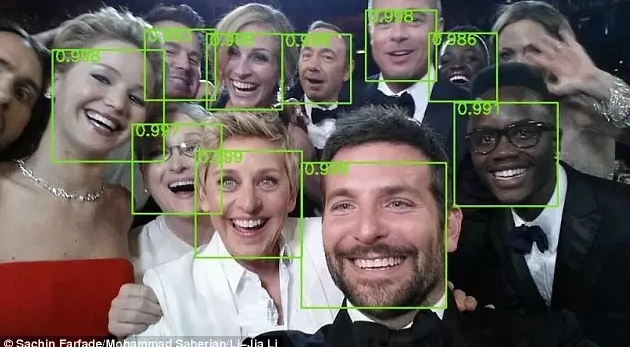
I have attended many international conferences and forums equipped with simultaneous interpretation, but one experience left a particularly deep impression on me: Richard Rashid, then a top scientist at Microsoft, delivered a speech in China where the computer not only translated his words into Chinese in real time but also simulated Rashid’s own voice. Facebook’s facial recognition project, “DeepFace,” boasts the world’s largest photo database and can determine whether two profile pictures belong to the same person with an accuracy rate of 97.25%. The implications for healthcare are becoming increasingly evident. Academic researchers have demonstrated that computers can detect facial expressions, such as pain, more accurately than humans, thereby driving remarkable advances in computer-based facial recognition capabilities.