

Fosun Pharma to Acquire 86.08% Stake in India's Gland Pharma for $1.26 Billion
As early as May this year, reports emerged that Fosun Pharma was participating in a bid for approximately 96% of the equity in Indian pharmaceutical company Gland Pharma. This matter is now nearing its conclusion. According to Fosun Pharma’s announcement on the evening of the 28th, VCBeat (WeChat ID: vcbeat) reported that Fosun Pharma plans to acquire approximately 86.08% of Gland Pharma’s equity through its controlling subsidiary for no more than $1.261 billion. This amount includes contingent consideration of up to $50 million, payable by the acquirer based on the U.S. market sales performance of Enoxaparin.
Gland Pharma is the first Indian manufacturer of injectable pharmaceuticals to receive approval from the U.S. FDA, supplying 17 products to the U.S. injectables market, which accounts for 35% of the global market. This move by Fosun Pharma undoubtedly accelerates its international expansion strategy and represents the largest overseas acquisition by a Chinese pharmaceutical company to date.
Gland Pharma, established in 1978 and headquartered in Hyderabad, India, is primarily engaged in the manufacturing of injectable pharmaceutical products. The Chairman is Penmetsa Venkata Narasimha Raju, and the Chief Executive Officer is Dr. Ravi. The Ravi family are founding shareholders; together with the U.S. private equity firm KKR, they hold approximately 80% of the company’s shares. Specifically, the founders hold about 41.561% of the total issued shares, while KKR holds approximately 38.410%.
The company is the first injectable drug manufacturer in India to receive approval from the U.S. FDA, and it has obtained Good Manufacturing Practice (GMP) certifications from major regulatory markets worldwide. Its business revenue is primarily derived from the United States and Europe. Gland Pharma currently provides manufacturing services for generic injectable drugs to large pharmaceutical companies globally, mainly through co-development and in-licensing arrangements. As one of the few companies specializing in the manufacture of injectable drugs, Gland Pharma holds a leading position among its peers in the Indian market.
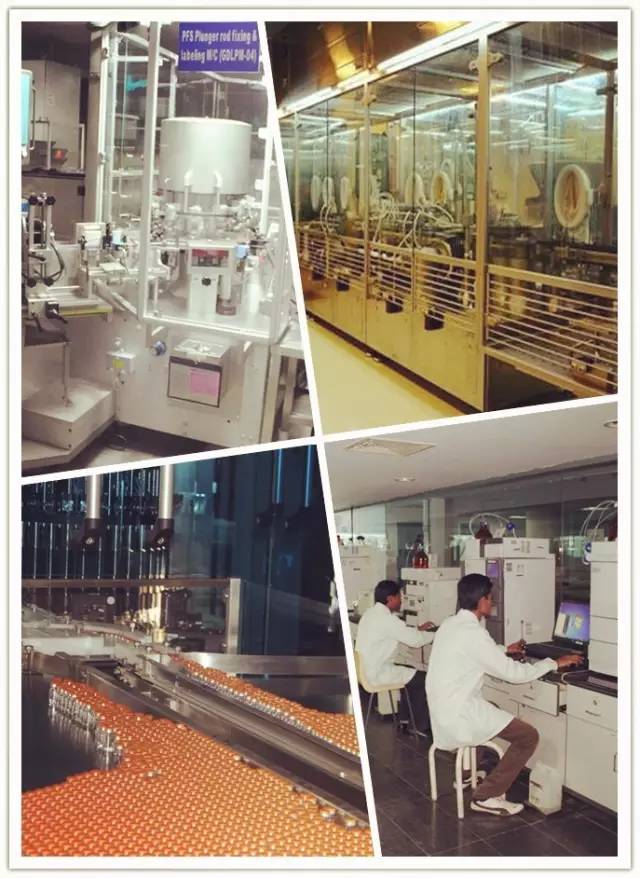
Gland Pharma Ltd.
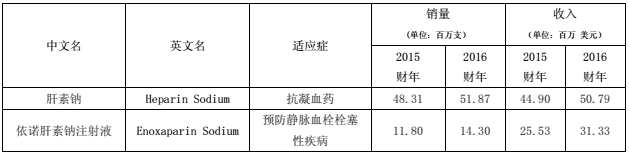
Gland PharmaCurrent Sales Performance of the Company's Main Products:

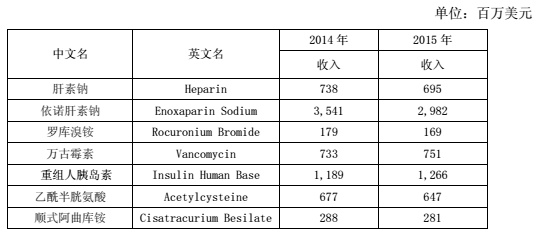
Global Sales of Similar Pharmaceuticals:
According to IMS MIDAS data (provided by IMS Health, a global leading provider of professional information and strategic consulting services for the pharmaceutical and healthcare industries), the global market sales figures for sodium heparin, enoxaparin sodium, rocuronium bromide, vancomycin, recombinant human insulin, acetylcysteine, and cisatracurium besylate in 2014 and 2015 were as follows:
According to Gland Pharma’s audited financial statements, as of March 31, 2016, the company’s total assets amounted to ₹20.8 billion, shareholders’ equity stood at ₹16.7 billion, and total liabilities were ₹4.0 billion. For the fiscal year 2016 (April 1, 2015 to March 31, 2016), Gland Pharma reported total operating revenue of ₹13.5 billion, profit before tax of ₹4.591 billion, and net profit of ₹3.136 billion.
Chen Qiyu, Chairman of Fosun Pharma, stated that the acquisition of Gland Pharma would mark a significant milestone in the internationalization of Fosun Pharma’s pharmaceutical manufacturing sector, accelerating the company’s global expansion. China and India possess strong complementarity in the pharmaceutical field. The strategic integration of resources between Chinese and Indian pharmaceutical companies, represented by Fosun Pharma and Gland Pharma, will help accelerate the internationalization of Chinese pharmaceutical enterprises in areas such as R&D innovation and generic drug exports.
As the first Indian pharmaceutical manufacturer to receive U.S. FDA approval for injectable drugs, Gland Pharma has established a comprehensive injectable manufacturing platform. It operates production lines with GMP certification compliant with major global regulatory markets, including those in the United States and Europe, and possesses the capability for drug registration and sales in regulated markets, primarily in the United States.
Upon completion of this transaction, Gland Pharma will become a key international platform for pharmaceutical manufacturing and registration for Fosun Pharma. Meanwhile, through the operational management of Gland Pharma, the Group will facilitate industrial upgrading of its pharmaceutical manufacturing business, accelerate its internationalization process, and increase its market share in the injectables market.
In an interview, Dr. Ravi Penmetsa, Vice Chairman and Managing Director of Gland Pharma, stated that the decision to partner with Fosun was driven by Fosun Group’s strong competitive advantages in active pharmaceutical ingredient (API) manufacturing. He noted that this collaboration would enable true vertical integration, creating an optimal industrial supply chain.
“Leveraging China’s Momentum to Integrate Global Resources” has long been a core strategy underpinning Fosun’s investment approach. Gland Pharma boasts strong R&D capabilities. Following the completion of this transaction, Fosun Pharma will integrate its existing biopharmaceutical innovation R&D capabilities and product portfolio with Gland Pharma’s in-house R&D strengths and the unique advantages offered by India’s generic drug policies. This synergy will enable active expansion into the Indian market and other international markets, thereby scaling up the Group’s pharmaceutical manufacturing and R&D operations.
1. Introduce Gland Pharma’s sterile injectable products to the Chinese market, leveraging the advantage of therapeutic equivalence recognized by the U.S. FDA;
2. Integrate Gland Pharma’s aseptic manufacturing processes and related technologies into Fosun’s domestic pharmaceutical enterprises to accelerate the enhancement of technical capabilities and industrial upgrading among Chinese pharmaceutical companies, thereby expediting their internationalization process;
3. Leverage Gland Pharma’s experience with generic drug policies and its global distributor network to help Fosun-affiliated pharmaceutical companies expand their business in India and globally, including in the United States;
4. Leverage Gland Pharma’s experience in generic drug manufacturing to help Fosun-affiliated pharmaceutical companies enhance product quality, thereby rapidly meeting the CFDA’s regulatory requirements for the consistency evaluation of generic drugs;
5. Collaboration with Indian pharmaceutical companies can generate greater synergies in drug manufacturing, R&D, and supply chains between China and India.
According to The Paper, global pharmaceutical companies have accelerated their mergers and acquisitions in recent years, with target companies from emerging markets increasingly drawing the attention of investment groups. This shift is primarily driven by quantitative easing and low-cost credit abroad, which have inflated valuations in mature European and American markets, thereby reducing the availability of suitable investment opportunities. In contrast, emerging markets have seen asset undervaluation and a rise in investment opportunities due to factors such as U.S. interest rate hikes, the recovery of the U.S. economy, and declining commodity prices.
India, as an emerging market, has garnered favor from major pharmaceutical companies. In November 2015, Mylan completed the acquisition of the women’s healthcare business from Mumbai-based Famy Care Ltd. for $750 million. This October, Sweden’s Recipharm AB announced plans to invest $100 million to acquire a controlling stake in Nitin Lifesciences Ltd., an Indian contract manufacturer of sterile injectable drugs. Against this backdrop, Chinese pharmaceutical companies have also been actively engaging in global markets. According to analysis by China International Capital Corporation (CICC), biopharmaceuticals have become one of the three most active sectors for China’s outbound investment and mergers and acquisitions, alongside oil and gas and consumer retail.
In this month alone, overseas mergers and acquisitions completed by Chinese pharmaceutical companies include: On July 25, Luye Pharma announced that it had signed an agreement with Switzerland’s Acino Group to acquire 100% equity interests in Acino AG and Acino Supply AG, thereby purchasing its transdermal drug delivery business for €245 million; on July 21, Zixin Pharmaceutical acquired a controlling 67% stake in the U.S. gene sequencing company Nabsys 2.0 for $42 million.
However, the record for Fosun Pharma’s highest-value overseas acquisition may soon be broken. According to a July 20 report by The Wall Street Journal, a consortium led by China Resources Group is preparing to acquire a 45% stake in GenesisCare, an Australian cancer care provider, valued at approximately AUD 1.7 billion (about USD 1.3 billion). Sources revealed that the consortium became the preferred bidder in mid-July, and both parties are expected to sign the transaction agreement later on.