

UK Digital Health Startup Big Health Secures $12 Million Series B Funding to Expand Sleepio, Its Evidence-Based Sleep and Mental Health Platform
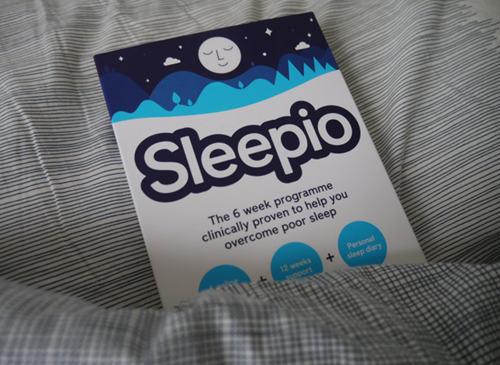
Recently, Big Health, a startup in the digital health sector, secured $12 million in its Series B funding round. The company’s product is Sleepio, a sleep health application. Unlike other apps of its kind, Sleepio targets enterprise-level users.
Big Health was founded in February 2012 and is headquartered in London, UK. Sleepio, the company’s inaugural and currently sole product, aims to improve users’ mental health by addressing sleep issues. Upon starting with Sleepio, users are required to complete an online sleep assessment. Additionally, if users wear compatible devices, their sleep data must be uploaded to Sleepio to enable the software to generate a personalized sleep improvement plan.
Sleep is a vital process for every individual, representing a biological rhythm that occupies approximately one-third of a person’s life. According to a World Health Organization survey conducted among 25,916 patients seeking primary care across 15 sites in 14 countries, 27% of respondents were found to have sleep problems. Insomnia has a significant negative impact on quality of life; however, a substantial number of patients do not receive appropriate diagnosis and treatment.
Reported insomnia prevalence rates are as high as 32% in the United States, 10–14% in the United Kingdom, 20% in Japan, 30% in France, and 38.2% in China. A survey on sleep problems among the general population in six Chinese cities found that up to 57% of adults experienced insomnia symptoms in the past 12 months, with rates of 60% in Beijing, 62% in Shanghai, and 68% in Guangzhou. The prevalence of insomnia in women is 1.4 to 2 times that in men.

In modern society, the pressures of work and daily life have led to a growing prevalence of sleep disorders. Among the numerous factors affecting sleep, psychological issues play a significant role; mental states such as anxiety, irritability, and restlessness can all lead to insomnia. Conversely, sleep has a profound impact on mental health. Sleep disorders can easily trigger irritability, anxiety, anger, and depression, and may even contribute to the development of psychological disorders and mental illnesses.
Big Health’s philosophy is to improve users’ sleep conditions based on cognitive behavioral therapy (CBT), which is the world’s leading evidence-based, non-pharmacological approach to addressing chronic insomnia. It focuses on enhancing healthy sleep behaviors while providing techniques to overcome the cognitive factors that drive the vicious cycle of poor sleep.
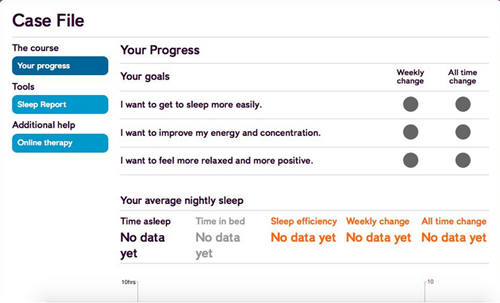
Sleepio PC Version Admin Interface Diagram
Sleepio’s approach to improving sleep is based on a six-week online course. Big Health sells the Sleepio app to corporate employers for use by their employees. For a monthly fee of $10 (or a one-time payment of $20 to access all six weeks of content), users can access the app on computers, iPhones, or Android devices. The experience is optimized for computer use, as the desktop platform offers additional features, such as the ability to replay specific sleep lessons. Existing studies have demonstrated that Sleepio effectively alleviates symptoms in patients with anxiety disorders.
Sleepio focuses on a key metric known as “sleep efficiency,” defined as the ratio of time spent asleep to time spent in bed. A Sleepio user revealed that her sleep efficiency fluctuated between 72% and 90% while participating in the Sleepio program. After completing the course, this figure stabilized between 80% and 90%, and she reported a tangible improvement in sleep quality.
The Sleepio interface features an online virtual character named “The Prof,” which helps users practice cognitive behavioral techniques to adjust their sleep schedules. In addition, the application provides various lifestyle tools, including a scheduler.
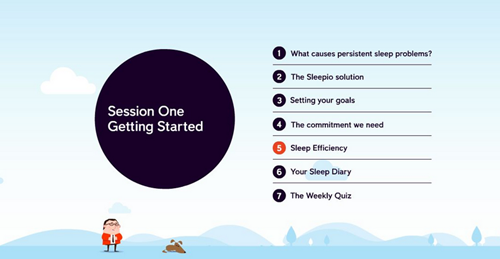
Screenshot of the Sleepio Desktop Course Interface
Colin Espie, Co-founder and Chief Medical Officer of Big Health, stated, “Big Health will establish a new paradigm for healthy living, and we are committed to exploring this path with unwavering conviction. The Sleepio program is grounded in scientific research; to date, we have published 14 academic papers and established a dedicated research channel. Big Health maintains an open mindset and welcomes independent researchers to evaluate the Sleepio software and identify any shortcomings.”
In April 2014, Big Health secured $3.3 million in funding, with investors including Esther Dyson and Peter Read; the company used this capital to expand into the U.S. market.
On July 27, 2016, Big Health secured $12 million in financing, led by Octopus Ventures, with participation from Kaiser Permanente Ventures. Additionally, Sean Duffy, CEO of Omada Health, participated as an independent investor.
Peter Hames, Co-founder and CEO of Big Health, stated, “It has been just one year since we entered the U.S. market, and over 750,000 employees have already used Sleepio. In the next phase, the company aims to help millions of people restore their mental well-being, and this latest round of financing brings us a step closer to achieving that goal. We will extensively promote the importance of mental health, with the ultimate objective of establishing a new order in digital healthcare based on evidence-based medicine and maximizing the value of medical care.”
It is reported that LinkedIn, Boston Medical Center, and Henry Ford Health System have already adopted Sleepio.

From left to right: the Sleepio teamCEO Peter Hames, Chief Medical Officer Colin Espie
Peter Hames, Co-founder and CEO of Big Health, holds a Master’s degree in Experimental Psychology from the University of Oxford. Having personally struggled with insomnia, Hames has consistently relied on Cognitive Behavioral Therapy (CBT), a non-pharmacological treatment, for management.
Colin Espie, Co-founder and Chief Medical Officer of Big Health, graduated from the University of Glasgow in the UK. He is currently a Professor at the University of Oxford, specializing in sleep health research, and earlier established the Sleep Centre at the University of Glasgow.
Sleep plays an extremely important role in human life, and as people pay increasing attention to their sleep conditions, sleep health products have become one of the emerging hotspots in the digital health sector.
On June 10, 2016, Hello, a U.S.-headquartered R&D company specializing in smart hardware for sleep, secured $30 million in financing. Its flagship product is “Sense,” a smart device designed to assist with sleep. Placed on the bedside table, it monitors users’ entire sleep cycles and detects bedroom environmental factors that may affect sleep quality.
Unlike some other smart body-measurement devices, Sense does not require wearing any accessories such as wristbands or collars on the human body. Its configuration is minimalist, consisting of three parts in total:
Sense
A monitoring device, tennis ball-sized and designed to resemble the Bird’s Nest stadium, is used to monitor the bedroom environment and other nighttime disturbances.
Sleep Pill
A button-sized smart sensor that can be clipped onto a pillow to detect the user's physiological responses during sleep.
Sense Mobile App
The application can connect two hardware devices and display monitoring information on the user's mobile phone.
Upon each awakening, users can view their sleep quality score and more detailed sleep metrics in the app.
The Pill, designed to work with Sense, features a built-in six-axis accelerometer and gyroscope that can detect even the slightest movements during a user’s sleep. This enables Sense to analyze comprehensive sleep data, including “falling asleep,” “deep sleep,” “turning over,” and “light sleep.”
Sense also features an innovative design: its smart alarm function. Unlike conventional alarm clocks, Sense leverages its built-in monitoring capabilities to track users’ sleep dynamics and, based on scientific sleep patterns, wakes them during the most optimal window within the preset time frame. For instance, if the alarm is set for 9:30 AM and the user enters a light sleep or semi-awake state by 9:15 AM, the alarm will automatically go off to prevent the user from falling back into a deep sleep cycle. This helps people overcome the common struggle of waking up feeling groggy and unrested.
In January 2014, Hello Company secured $10.5 million in Series A financing, with the investors undisclosed. In June 2015, the company raised another $40 million in Series B financing, led by Temasek Holdings. It is reported that in June 2016, Hello Company received an additional $30 million investment from Temasek Holdings.