

Cao Zeyi Speaks at Putian Medical Imaging Big Data Conference: Healthcare Entering a Better Era
The 2016 Fujian Medical Imaging Big Data Application Summit Forum and the 6th Putian Health Information Technology Exchange Conference continued to draw significant attention. On the morning of July 31, Mr. Cao Zeyi, former Vice Minister of the Ministry of Health of China, traveled from afar to deliver an impromptu, unscripted speech, highlighting that healthcare is ushering in a better era.

Also in attendance were Mr. Sun Zhonghai, Director of the Information Center of Xiamen Municipal Health and Family Planning Commission; Mr. Chen Jinxiong, Director of the Computer Center of Fuzhou General Hospital of Nanjing Military Region; Mr. Miao Datong, President of Hangzhou Qingyang Internet Hospital; Mr. Lin Hui, Executive Vice President of Guangxi Zhuang Autonomous Region People’s Hospital; Mr. Zhou Hong, Director of the Teleconsultation Center of Sichuan Provincial People’s Hospital; and Mr. Nie Haojue, Deputy General Manager of Winning Health Technology Group. They joined numerous imaging experts and corporate representatives to deliver keynote speeches and participate in a roundtable discussion themed “Construction of Internet Hospitals and Applications of Medical Imaging.”
The keynote speeches of this conference explored the industrial integration of healthcare from three perspectives—government information centers, hospitals, and internet healthcare enterprises—focusing on policy, technology, and model evolution. The main topics included:
1. Foundational requirements for advancing hospital informatization at the current stage;
2. Positioning of Informatization in Public Hospital Reform;
3. Development Models of Internet Healthcare;
4. Application Models and Value of Medical Imaging.
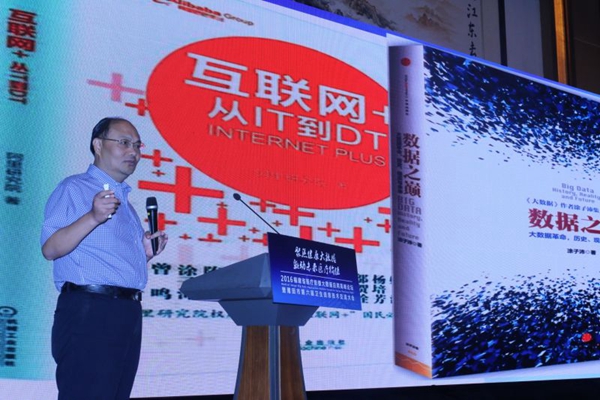
Chen Jinxiong: Doctors will still exist, but they will certainly not practice medicine in the same way as they do today.
In the era of big data and artificial intelligence, we need corresponding philosophical reflections. Hospital operations must evolve in an integrated manner, encompassing the integration of health and diagnosis/treatment, online and offline services, out-of-hospital and in-hospital care, and human physicians with AI-driven systems. The roles of health management, digital platforms, out-of-hospital care, and robotics in healthcare will continue to grow. Eventually, the impact of intelligent healthcare will surpass that of human physicians. While doctors will still exist, their role will undoubtedly differ significantly from what it is today.

Miao Datong: Speculations on How Big Data Is Accelerating the Future of Healthcare.
Leveraging the growing volume of private and public healthcare data, big data technologies help individuals and organizations store and manage large-scale medical datasets while extracting value from high-volume, highly complex data. This will drive the continuous emergence of related medical technologies and products, potentially ushering in a new golden age for the healthcare industry. Applications of big data technology in the healthcare sector will encompass the following areas: clinical data comparison; drug research and development; clinical decision support; real-time statistical analysis; analysis of essential medicine utilization in clinical practice; remote patient data analysis; demographic analysis; health insurance fund data analysis; patient visit behavior analysis; and new service models.
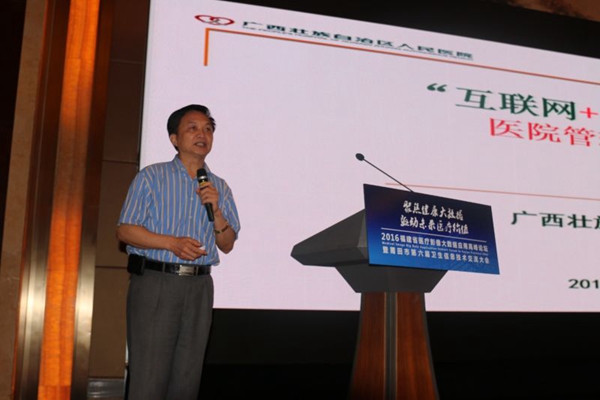
Lin Hui: The development of extended services in smart pharmacies facilitates the implementation of zero-markup drug pricing.
By leveraging hospital IoT platform technology, full traceability of pharmaceuticals is achieved throughout the distribution process. Furthermore, under software system control, a series of smart devices are employed at each stage to enhance safety. Pharmaceutical distributors extend their services to cover the period prior to clinical use and consumption within hospitals, thereby improving medication management standards and effectively reducing inventory and management costs.

Zhou Hong: Sustained Efforts Are Needed in Top-Level Design
In the process of leveraging the power of “Internet Plus” to drive healthcare reform and break through the challenges of tiered diagnosis and treatment, we need to summarize the persistent issues that have arisen during development.
1. Lack of top-level design and legal regulations;
2. Inadequate government administration and social governance systems;
3. Lack of interoperability standards;
4. Makes information difficult to share;
5. Shortage of Technology and Talent.
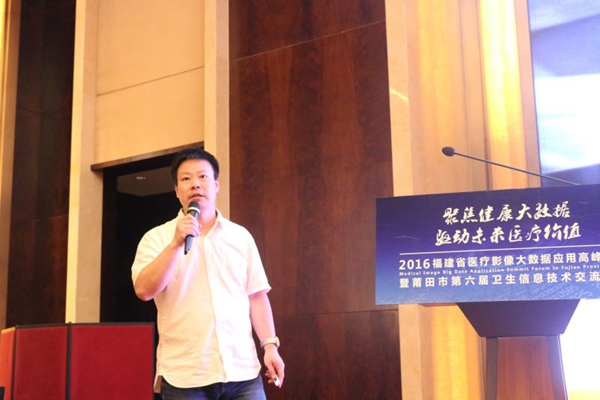
Nie Haojue: Big data analytics is a technology that rapidly, accurately, and in real time provides valuable information to end managers for analysis.
The development of hospital big data has currently undergone three stages:
Phase I: Focus on the correctness and accuracy of information generation, as well as the implementation of automated processes;
Phase II: Focus on information acquisition technologies, inter-information correlations, and multi-perspective utilization of information;
Phase III: Focus on the Construction and Application of Clinical Knowledge Bases.
Healthcare institutions at all levels operate their own information systems; however, they face bottlenecks such as insufficient coordinated planning, inadequate channels for data integration and sharing, and weak independent innovation capabilities within the industry. There is an urgent need to pool resources from all stakeholders, adapt to the new normal, explore new models, foster new business formats, and establish new mechanisms. Hospitals must strengthen their informatization initiatives. Meanwhile, enterprises in the big data sector need to address critical technical challenges—including data security, off-site disaster recovery, high-efficiency batch processing, high-concurrency user access, and resource management and scheduling—to provide a reliable and advanced foundational platform for precision medicine data centers.
This conference aims to promote the development of big data, the establishment of medical service platforms, and the advancement of intelligent healthcare, which holds significant importance for driving progress in medicine in China. It marks a transition from “concept” to “value.” Medical big data is closely linked to people’s lives and health, impacting social well-being. By leveraging informatics to influence medical practice and ultimately achieve population health, its value will gradually become evident. As a co-organizer of this conference, Hangzhou Lianzhong has been dedicated to the field of imaging-based medical big data platforms for many years. Its “Global Imaging” solution, covering everything from storage to medical data transmission and collaboration, has become increasingly mature.