

WeWenzhen: Making Healthcare Accessible Through Video-Based Telemedicine
In recent years, online consultation, as an early-developed niche within internet healthcare, has seen the emergence of numerous startups with varying market positionings. In the United States, the online medical consultation model is more mature, enabling the complete end-to-end process of routine primary care visits that do not require in-person examinations—from health inquiries and disease diagnosis to the issuance of electronic prescriptions—to be conducted entirely online.
To ensure more thorough doctor-patient communication and higher diagnostic reliability during consultations, many online medical consultation service providers in the United States offer video consultation services, such as Teladoc, MDlive (which holds a significant market share), and HealthTap. What, then, is the current state of video consultations in China?
VCBeat conducted an exclusive interview with “Wei Wenzhen,” the first platform in China to implement video consultation features, to explore the ins and outs of video-based medical consultations.
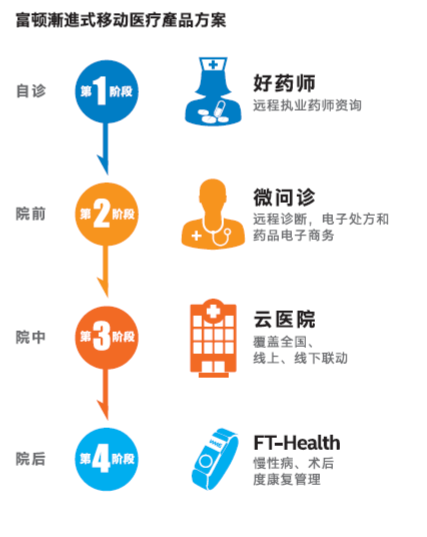
WeiWenzhen is an internet-based pharmaceutical and medical platform established in early 2014 by Sichuan JunYi F&T Technology Co., Ltd. Leveraging an extensive network of offline pharmacies and its own team of physicians and pharmacists, it provides a 24/7 live video and audio healthcare service platform. Its services cover self-diagnosis for minor and chronic conditions, pre-hospital consultation, triage, and appointment registration, online access to medical reports during hospitalization, as well as post-operative care, rehabilitation, and chronic disease management after discharge.
Weiwenzhen’s current operations have expanded to more than ten provinces and municipalities, including Sichuan, Shandong, Guizhou, Xinjiang, Hubei, Chongqing, Shanxi, Shaanxi, Liaoning, Henan, Yunnan, Gansu, and Ningxia. Its network covers over 200,000 pharmacies, accounting for more than 45% of the total number of pharmacies in China. The Weiwenzhen app has nearly 5 million downloads, with daily active users (DAU) exceeding 60,000–80,000, monthly active users (MAU) surpassing 300,000, and approximately 20,000 transactions processed per day.
Founded just two years ago, Wei Wenzhen has expanded its workforce from 10 to 400 employees. As an industry leader in video consultations, what is the key to its success?
At its inception, mobile health applications both domestically and internationally predominantly relied on text-based or voice-based asynchronous communication. This type of remote consultation model suffered from low response efficiency and a high misdiagnosis rate, which consistently hindered the establishment of user trust in physicians.
To address issues such as delays and inaccuracies inherent in text-and-image or voice-based consultations, Wei Wenzhen has decisively abandoned the traditional telemedicine model reliant on asynchronous messaging. Instead, it has pioneered a more direct doctor-patient video consultation model, establishing it as the core component of its service. The product is primarily deployed across multiple channels—including mobile apps, broadcast TV set-top boxes, pharmacies, community health centers, rural areas, and other third-party platforms—to deliver personalized medical services.
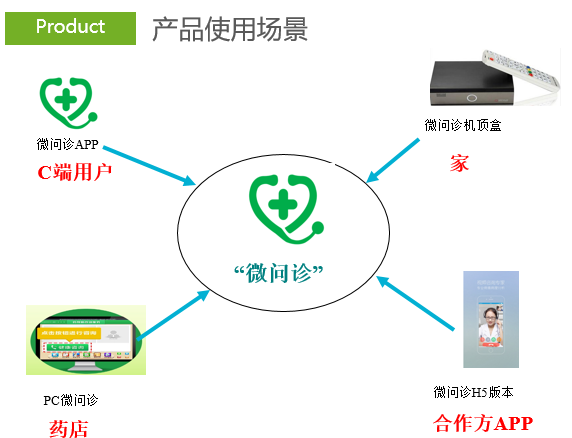
“The original intention behind founding Wei Wenzhen was to leverage the convenience and cost-effectiveness of mobile healthcare to deliver personalized medical services to the general public through various online and offline channels, making access to healthcare no longer a challenge,” said Mr. Zhou Congjun.
Healthcare service scenarios in China are continuously expanding, from hospitals and outpatient clinics to pharmacies, communities, and homes. In the future, healthcare may become accessible anytime and anywhere, no longer constrained by specific settings. Currently, apart from hospitals, pharmacies, communities, and homes remain untapped blue-ocean markets.
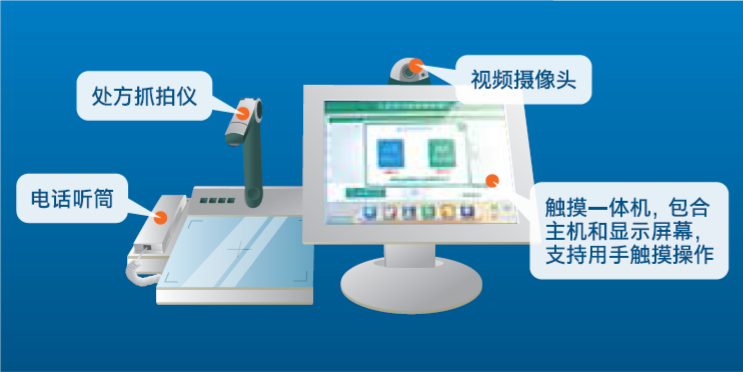
Weivisit establishes direct partnerships with pharmacies by deploying Weivisit kiosks on-site. Guided by pharmacy staff, patients can use these kiosks to consult with physicians “face-to-face” via video conferencing. Additionally, the Weivisit kiosks offer remote prescription review and electronic prescription circulation services, thereby enhancing the user experience.
Meanwhile, Wei Wenzhen has established its own physician team, laying the foundation for a 24/7 free consultation platform. This enables the majority of minor illness consultations and chronic disease management to be handled within daily life scenarios, thereby promoting the development of tiered diagnosis and treatment.
This July, WeiWenZhen made two strategic moves into overseas markets, marking a strong start to its global expansion and becoming the first Chinese mobile healthcare brand to export its services abroad.
Step 1: Partner with U.S.-based Cybermed to establish a joint venture startup, taking the lead in replicating the micro-consultation model within American communities and jointly developing and promoting Cdoc, a telemedicine management platform. This platform provides an online-to-offline closed-loop solution encompassing patients, physicians, pharmacies, testing laboratories, and insurance companies, serving the U.S. market. (Weiwenzhen Successfully Enters U.S. Communities; Overseas Arm Cdoc Established in July)
Step 2: A strategic cooperation agreement has been reached with the Southeast Asia Telecom Group to build an online remote video medical service platform in Cambodia based on a 4G network. Building upon the “Wei Wenzhen” (Micro Consultation) platform and taking into account Cambodia’s current healthcare landscape, the “Online-Dr” online remote video medical system has been launched to serve the local population in Cambodia. The system development for this project has been completed, and it is currently in the server deployment and pre-launch testing phase, with official operations expected to commence in August.Weiyiwen Enters the Telecommunications Sector to Support the Development of Remote Medical Services in Southeast Asian Countries)
“We currently have the highest volume of video consultation services nationwide,” said Mr. Zhou Congjun. “In addition to continuing to enhance our online and offline service channel capabilities, the company’s current product roadmap is focused on further expanding the scope of our services, with the aim of establishing a comprehensive service ecosystem. For offline terminals, we provide not only remote consultation services but also electronic prescription services and membership management services. For online users, in addition to remote consultations, we offer e-commerce pharmaceutical sales, home medication delivery, personal health record management, and private physician services.”
It is understood that Weiwenzhen and Intel will maintain a long-term partnership in product technology. By leveraging Intel architecture-based PCs, tablets, smartphones, and wearable medical devices, Weiwenzhen aims to break through the temporal and spatial limitations of traditional healthcare models, promote the implementation of its “lightweight” solution, accelerate the development of mobile health, and expedite the transition toward smart healthcare.
According to VCBeat, WeiWenzhen has completed two rounds of financing, raising a total of over RMB 120 million, with Shenzhen Tiantu Capital as the lead investor. The company is currently launching a new round of financing.