

Perficient Releases Top 10 Must-Read Trends in Connected Health for 2016 (Part I)
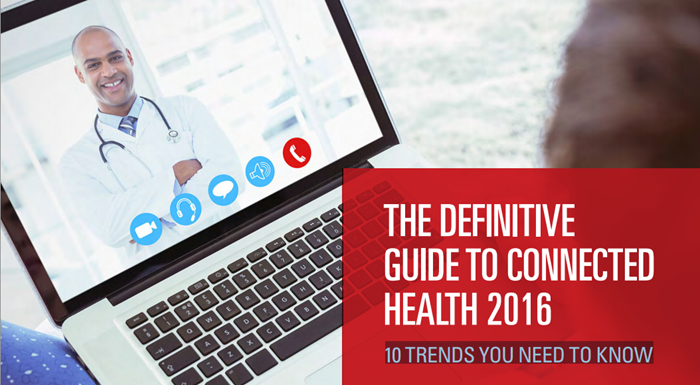
Perficient recently released a report on the Top 10 Trends in Connected Healthcare Development for 2016, which was compiled by VCBeat (WeChat: vcbeat).Understanding these trends not only helps healthcare institutions survive in this user-centric era but also significantly benefits their sustainable development. Given the length of the full article, we will publish it in two parts; this is Part I.
In Cincinnati, Ohio, there is a man who takes the SuperBus to Chicago twice a month. Unlike other passengers drawn by the free Wi-Fi and charging ports on board, his purpose for taking the 12-hour round-trip journey is to consult with a specialist capable of treating his condition.
In rural Pennsylvania, a middle-aged woman was diagnosed with grade IV glioblastoma and told by her doctors that she had only three to six months to live. She hoped to spend her final days surrounded by family, but because the nearest hospital was an hour’s drive away, her relatives had to take turns providing round-the-clock care during her final battle against the disease.
In California, a young freelancer bears the immense financial burden of supporting his family. His household is enrolled in a high-deductible health insurance plan, but he finds it difficult to carve out time from his busy schedule to sit in waiting rooms for preventive care or to consult with physicians on proper diabetes management.
These three real-world cases bring us to the core of connected healthcare, a model that leverages science and technology to deliver remote healthcare services.
In recent years, investment in the connected healthcare sector has continued to grow, with innovations in health care technology providing millions of patients with novel treatment options. As health plans and healthcare institutions deepen their collaboration, reimbursement systems are becoming increasingly mature, driving the rising popularity of telemedicine services. Consequently, this growth trend is expected to continue throughout the year.
To better leverage telemedicine, we must understand the following two key points:
One is the digital transformation of healthcare institutions, enabling patients and physicians to jointly participate in the treatment process.
Second, the core of “healthcare everywhere” is digital transformation. In fact, whether healthcare organizations are adequately prepared for “healthcare everywhere” can be directly observed from their maturity curve in digital transformation. This requires assessment across seven dimensions: 1) patient/member insights; 2) strategy; 3) design process; 4) technology; 5) metrics; 6) operations; and 7) culture.
By examining seven dimensions, one can assess whether healthcare institutions are adequately prepared and determine their ability to formulate plans and strategies for future development.
Application of Interoperability and Data Exchange Standards
Digital transformation facilitates the application of digital technologies in healthcare processes. For instance, electronic health records (EHRs) and electronic information exchange technologies undoubtedly benefit from the adoption of interoperability and data exchange standards. The data collection devices required for telemedicine are closely linked to bidirectional communication standards. In the future, interoperability will aggregate real-time, critical medical data into a unified network, driving innovation in the healthcare sector and providing new approaches for healthcare institutions to deliver medical services.
Telehealth technologies have addressed medical challenges arising from geographical distances across the globe and are expected to curb the growth of healthcare costs in the future. As illustrated by the three cases mentioned above, telemedicine enables patients in Cincinnati to remotely share medical data with physicians in Chicago, while virtual consultations provide them with the opportunity to consult doctors without the need for long-distance travel. Remote patient monitoring has been proven highly effective in cancer treatment and in facilitating healthcare access for patients in remote areas. Furthermore, telemedicine can assist busy fathers in managing chronic diabetes and provide preventive care to maintain their health. In light of this, we believe that the most significant transformation in the healthcare industry in 2016 will be driven by telemedicine.
Case Sharing
Kaiser Permanente Medical Centers in Northern California are among the largest non-profit health plan providers in the United States. They aim to simplify patient access to medical services through automated service processes, thereby reducing the workload for nurses and other staff members. By enabling patients to use online consultations, they can adopt self-service symptom checkers to send test reports to nurses and physicians. These reports clearly identify cases that require follow-up visits for definitive diagnosis, a approach that is more efficient than traditional nurse-patient telephone communications. Currently, over 90% of patients have expressed a preference for online consultations and intend to continue using this service. The first step in automating service processes is projected to save $500,000 in healthcare costs annually.
With the emergence of meaningful technologies, there is still considerable room for improvement in patient-centric health technology. After all, the most critical aspect of implementing a patient information portal system is integrating these meaningful technologies with the use of electronic health records.
Research indicates that medical technicians often mistakenly assume patients are highly enthusiastic about participating in the management of their health information. When considering which technologies consistently generate great enthusiasm among us, we do not typically adopt the perspective of system developers. So why do these technologies succeed in engaging us? Because they are designed with us in mind. Developers take into account public perceptions by integrating patterns of technological innovation into people’s daily lives. Consequently, scientific and technological advancements stem from everyday life experiences, and the resulting technologies, in turn, reshape people’s lifestyle habits. In other words, the success of these technologies is driven by market forces.
Therefore, we need to shift our focus toward a market-driven approach centered on enhancing patient engagement. The two most notable aspects are: 1) bending the cost curve; 2) improving performance-based incentive outcomes.
In these two areas, we can leverage applied science and technology to incentivize and drive healthcare consumption behaviors, thereby achieving market-driven objectives.
We have also found that the core elements of enhancing patient engagement are increasingly shifting toward design thinking in healthcare. What is design thinking? It involves overturning the traditional approach to developing technological solutions by introducing new perspectives within established paradigms, thereby giving rise to innovative solutions.
Before rolling out new technologies to patient populations, institutions must strategically consider how to provide solutions for patients who lack enthusiasm for engagement. Some healthcare organizations, such as Florida Blue and Marshfield Clinic, have long been successfully market-driven. They base their solutions on user surveys, leveraging the findings to understand patients’ true needs rather than imposing the notion that “this is what you need.”
Such strategic solutions will enhance patient agency, enabling patients to bend the cost curve in their own interest, as conditions permit them to do so.
Case Sharing
The healthcare system prescribed a remedy for an “ailing” website—the client’s public-facing site was difficult to navigate, unappealing, and outdated. Consequently, a new digital ecosystem, including a revamped website, was developed. The new website features enhanced search capabilities, with search engine optimization (SEO)-friendly URLs and flexible navigation. Dynamic and engaging, the site delivers a seamless, optimal browsing experience across desktops, tablets, and mobile devices.
The website has achieved the following six points:
1. Enhance brand awareness and user loyalty, while stimulating patient engagement;
2. Enhance the capabilities of the publishing workflow to enable content authors to participate and reduce reliance on technical users;
3. The company can effectively attract mobile phone users and deliver information to users of various devices;
4. Provide an upgraded, interactive user experience;
5. Serve as a communication tool to engage existing users and attract potential users across the entire community;
6. Serve as a “digital gateway” to attract potential users.
We turn our attention to existing, long-term patient health management programs that are destined for success. Outcome-based care is one such program, encompassing longitudinal, patient-centered care plans, and it will leave a profound mark on the future development of patient information portal systems.
Longitudinal healthcare programs, which prioritize treatment outcomes as the fundamental metric, are designed to engage all members of the care team, including patients. According to Chilmark Research, long-term care programs remain viable only in theory. In current practice, however, the implementation of these programs still relies heavily on written correspondence and telephone communication. Consequently, patients have limited opportunities to meaningfully participate in such programs.
The nursing care plan has a core objective: to obtain data covering the entire care continuum, ultimately breaking through the limitations of traditional brick-and-mortar providers, and observing and recording daily care activities. This approach provides a comprehensive view of patients’ health status, as well as strategies for long-term health improvement and maintenance. Furthermore, there are two distinct pathways to implementing this care plan, which ultimately converge: interoperability-enabled digital care plans and patient engagement through portals.
Patient-centered digital care plans are still evolving and improving, and it will take several more years to fully realize them. However, we can look to healthcare systems that have already succeeded in transforming care models by successfully integrating patient information and increasing investment in users’ digital engagement. For example, New York Health & Hospitals has made substantial investments to leverage patient data, while the Hospital Corporation of America (HCA) has overcome numerous challenges to create a patient portal serving diverse populations across China.
Interoperability and Digital Care Plans
Integrating data into healthcare portals is an inevitable trend, yet it remains a challenging endeavor due to the increased complexity of data systems resulting from industry mergers and acquisitions in recent years. Nevertheless, the healthcare sector will continue to intensify its efforts in developing digital care initiatives over the coming years, enabling healthcare providers to achieve information-driven synergy with patients throughout the care continuum.
Outcome-based care holds promise for empowering patients to become the most vital members of the care team. The challenge lies in patients’ inability to independently engage in longitudinal healthcare planning. We are integrating digital patient engagement into the new wave of outcome-based care, enabling electronic care plans within patient portals to function seamlessly and ultimately deepen the patient experience.
Case Sharing
The upgraded nursing portal delivers a seamless, personalized experience. A large healthcare service organization needed to establish a nursing portal to meet daily operational needs while enhancing the overall patient user experience. The final solution was designed to convey personalized patient experiences, integrate data from various healthcare systems, and enable patients to manage their health conditions anytime, anywhere. Built on RESTful APIs (a mature set of API design principles for internet applications), the solution improved the project’s response speed and enhanced the overall user experience in searching for physicians, scheduling appointments, and paying bills. In addition to prioritizing patient needs, the nursing portal also complies with the U.S. federal government’s “Meaningful Use” policy requirements for retaining, retrieving, and transmitting patients’ electronic health records.
Health insurance became a widely debated topic in 2015, with the most prominent issue being healthcare industry consolidation driven by a series of mergers among major institutions. Aetna acquired Humana, Anthem acquired Cigna, and UnitedHealth Group also pursued its own consolidation strategies. However, consolidation in the healthcare sector was not limited to industry giants; small and medium-sized healthcare institutions also joined the wave of mergers and acquisitions.
We aim to understand how mergers among large healthcare institutions will impact user experience and to hypothesize about the effects of such consolidation from the perspective of health plan costs. Some argue that mergers among industry giants will strengthen insurers’ bargaining power, thereby driving up the cost of health plans. Others contend that the cost savings resulting from consolidation will indeed reduce health plan expenses. A smaller group is focused on barriers to entry in the healthcare sector and the possibility of a “Geico for healthcare” model entering the health insurance market. However, we are more concerned with changes occurring beyond the transactional processes of health insurance. So, what impact will mergers among healthcare giants actually have on user experience?
It can be hypothesized that due to the slowdown or stagnation in investment in user experience, investors will remain on the sidelines in the short term until the merged healthcare systems begin to operate effectively. Consequently, large health insurance companies are ceding opportunities to new entrants in the industry. If industry giants require more time for system integration following mergers and acquisitions, more competitors will enter the health insurance sector. Should these new enterprises deliver superior user experiences, we will witness dramatic shifts within the industry.
Given the homogeneity of medical insurance products, healthcare institutions should adopt differentiated strategies. Since the ultimate decision rests with customers, it is crucial to retain them while helping them make informed choices from a medical cost perspective. The following strategies are provided for reference:
Health Strategy
Health strategies are an increasingly popular approach to differentiation. For example, Humana’s Humana Vitality health program aims to develop and apply digital tools to support user health. To deepen its health strategy, Humana recently announced a partnership with Weight Watchers and Kurbo Health to launch a weight-loss program.
User 360 Strategy
Drawing on experience from the retail industry, insurance companies leverage health plan data and integrate it into a unified customer database to consolidate customer information across all touchpoints. This enables them to identify and prioritize the most valuable members within their loyalty programs, attract customers through personalized services, launch predictive analytics initiatives to drive cross-selling and up-selling, and ultimately provide closed-loop analytics for continuous service optimization.
Telemedicine
From the perspective of telemedicine, some interesting phenomena have emerged in the health insurance industry. Healthcare institutions have encountered challenges with reimbursement. To increase revenue from urgent care and reduce care costs, health insurers have introduced telemedicine services for urgent care and emergency departments. Last year, health insurance companies, including UnitedHealthcare and Horizon Blue Cross Blue Shield, significantly increased their investments in telemedicine.
Regardless of the strategy employed to enhance user experience, the most critical point is that user experience will become the industry’s focal point in 2016.
Case Sharing
Major Healthcare Initiative — Patient Portal Upgrade to Meet the Demands of Industry Reform
Driven by reforms in the healthcare industry and shifting customer expectations, the largest healthcare provider in the Southeast needed to upgrade its patient portal. Through our comprehensive services—including design, system architecture, and delivery—users now receive personalized, continuous care. Key features include single sign-on (SSO), analytics, surveys, social media integration, robust e-commerce capabilities, enhanced issue resolution, and increased engagement. Key outcomes include a threefold increase in visitor traffic, 100% uptime, a 17% reduction in cart abandonment, and an 11% mobile sales conversion rate.
The capacity to evaluate service quality is continuously strengthening. At the core of telemedicine is the vision of “making healthcare ubiquitous,” achieved through wearable devices, smartphone technology, environmental sensors, and biometrics, which enable real-time, continuous tracking via widely adopted products. These technologies demonstrate the advantages of leveraging information-based solutions for disease treatment. As the volume of collected healthcare data continues to grow, utilizing existing data for objective preliminary predictions will have a significant impact on the healthcare sector.
For example, a 2014 study by the Mayo Clinic showed that cardiac rehabilitation patients who used mobile apps to record their weight and blood pressure had significantly lower rates of cardiovascular events and 90-day readmissions. The survey found that while the readmission rate for patients undergoing rehabilitation alone was as high as 60%, it was only 20% for app users. Telemedicine has provided many low-cost treatment opportunities for vulnerable populations.
Unsurprisingly, the U.S. National Institutes of Health has included telemedicine among its recent fourteen major objectives. Before continuing our discussion on how leading healthcare institutions remotely connect with patient populations via mobile phones, let us first examine the following industry applications:
Medication Reminder Mobile App
App providers collaborate with healthcare institutions to formulate strategies: while implementing e-care, they prioritize the innovative development of mobile applications for medication reminders. The use of sensors for collecting medical data (such as breath analysis and urine samples) will further promote this trend.
Interactive Therapy
Thanks to advances in speech recognition and artificial intelligence, interactive interfaces on mobile devices are becoming increasingly sophisticated. These advancements will have a significant impact on high-tech digital healthcare, such as using interactive systems to provide educational guidance to outpatients.
Mobile Predictive Analytics
Healthcare plans have long adopted predictive analytics, a approach that is gaining momentum across healthcare institutions. The integration of visual data services with telemedicine will have a profound impact.
Vertical Digital Healthcare Initiative
The introduction of digital care plans in medical nursing and the connection of patient populations through patient portals will both be realized in the coming years. Imagine how effortless it will become to secure patient treatment adherence when mobile communication technologies can be applied to synchronize with patients’ daily lives. Even simple SMS notification features can have a significant impact on outcomes-based care. However, there are still four obstacles to overcome:
I. Data Integrity
Mobile healthcare currently relies primarily on self-reported data, posing challenges to data validity. To overcome this challenge, it is essential to closely monitor the developments in biometric apps over the coming years.
II. Applicability
When early mobile health and telemedicine entered the healthcare industry, many institutions overlooked the patient experience during the implementation of the “healthcare everywhere” policy. To win patient loyalty and obtain effective data, it is essential to ensure that patients receive notifications even while traveling. Dr. Cynthia Deyling of Cleveland Clinic stated, “At times, hospital readmissions are appropriate and necessary for clinical care. Like other hospitals and health systems, Cleveland Clinic is committed to reducing avoidable hospital readmissions by enhancing patient guidance, tracking, communication, and care coordination.”
III. Integration
Recently, the integration of medical devices and electronic health records has rapidly advanced in the field of telemedicine. However, as this development progresses, situations are becoming increasingly complex, accompanied by more intricate challenges related to integration and interoperability.
IV. Data Security
With the rise of mobile health and internet usage, vigilance regarding cybersecurity must be heightened. The development of telemedicine still has a long way to go. However, one point deserves attention: to achieve true high efficiency, future telemedicine applications must be patient-centric, go beyond the “Meaningful Use” policy, and improve the current user interfaces of mobile apps.
Case Study
Presbyterian Healthcare Services: Transforming the Patient Journey with Personalized and Digital Experiences
Presbyterian Healthcare Services is a non-profit private healthcare organization aiming to launch an initiative called “One PHS” for its patients. In its digital transformation, it has taken the lead in all aspects of patient experience, including responsive websites, mobile applications, patient experience programs, health plan purchasing tools, and integrated portals. Through platform enablement and user experience (UX) strategies such as integrated UX design, the “One PHS” initiative is being progressively implemented.