

Emerging Trends and Investment Opportunities in Oncology Molecular Diagnostics: A Focus on NGS and Liquid Biopsy
By Cao Feng, Partner at Huayi Capital
The 2016 report from the American Society of Clinical Oncology (ASCO) highlighted the growing challenge of cancer, projecting that the number of newly diagnosed cancer patients worldwide will reach 22 million by 2030. In China, the incidence of cancer is rising sharply, driven by population aging along with factors such as air pollution, food safety concerns, smoking, and dietary patterns.
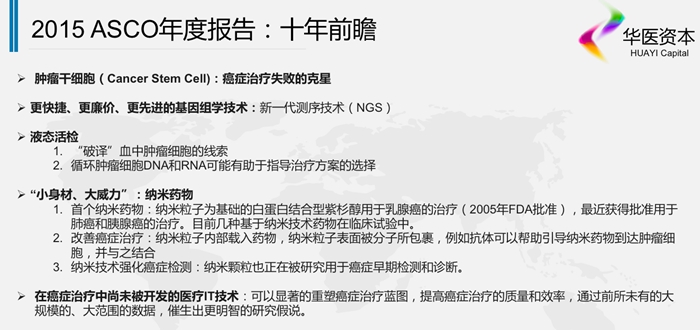
With the advancement of molecular biology, particularly the significant improvement in gene sequencing efficiency, molecular diagnosis of tumors has gradually become an important direction in the development of tumor diagnosis. The American Society of Clinical Oncology (ASCO) annual report provides a forward-looking perspective on developments over the next decade, identifying five key areas crucial for future cancer prevention and treatment: research and intervention targeting cancer stem cells, faster, cheaper, and more advanced genomics technologies, liquid biopsy, nanomedicine, and healthcare IT technology. Among these, two are closely related to molecular diagnosis of tumors: genomics and liquid biopsy. Genomics, especially next-generation sequencing technology, along with liquid biopsy, have currently become hotspots in tumor diagnostics and represent important directions for future development.
1Third-generation sequencing will be the general trend, but second-generation sequencing will remain the mainstream in commercial applications in the coming years.
Gene sequencing technology, since1975First-generation of the yearSangerWith technological advancements to date, sequencing technologies have progressed to the third generation, while second-generation gene sequencing has become the mainstream commercial technology in the current market. The sequencing market has evolved from2007Year-on-Year2016Annual growth rate of the next-generation sequencing market reaches50%, is expected to remain in place for a considerable period in the future20%An increase of approximately.
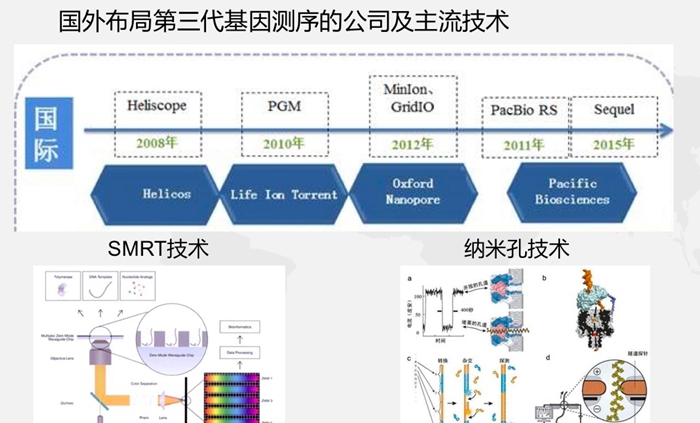
Third-generation sequencing is poised to become the dominant trend in the future; however, second- and third-generation sequencing technologies are expected to coexist over the next 5–10 years, with second-generation sequencing remaining the mainstream choice for commercial applications in the sequencing market. Compared with second-generation sequencing, third-generation sequencing offers significant potential advantages, yet its drawbacks continue to hinder widespread commercial adoption. Currently, the leading international companies in third-generation sequencing are Oxford Nanopore Technologies and Pacific Biosciences, with nanopore and SMRT (Single-Molecule Real-Time) technologies being the predominant platforms. The most pressing challenge facing third-generation sequencing at present is its high error rate, which ranges from 15% to 40%, representing the most critical factor limiting its broader application.
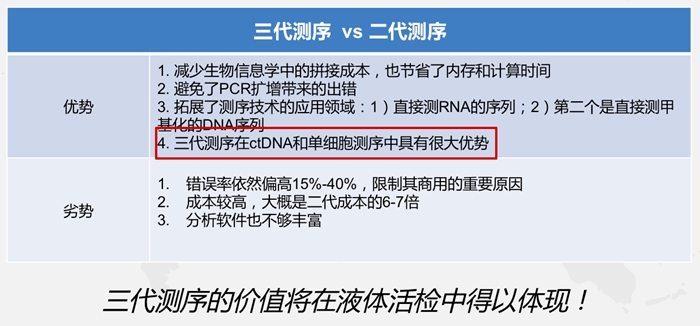
The primary future application value of third-generation sequencing will be predominantly reflected in the field of liquid biopsy. In liquid biopsy, forctDNAIn terms of, due toctDNAThe content is very low, and third-generation sequencing technology has high sensitivity, capable of1ngThe following monitoring is performed; whereas forCTC, third-generation sequencing holds promise for directly analyzing raw data at the single-cell levelDNASequencing, in situ sequencing with cell lysis.
2China’s Current Gene Sequencing Industry Landscape: Upstream Oligopoly, Midstream Consolidation, and Downstream Market Education Pending
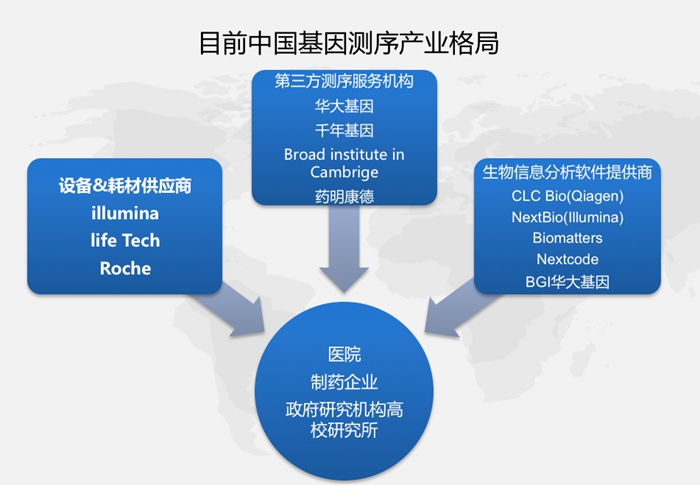
From the perspective of China’s current industrial landscape, the upstream sector for instruments, reagents, and consumables is dominated by a monopoly held by four major international players. Domestic manufacturers are actively seeking breakthroughs; for instance, sequencing platforms produced by BGI Genomics, Berry Genomics, and Daan Gene have already received approval from the China Food and Drug Administration (CFDA). Meanwhile, domestic companies have also made progress in reagents and consumables, with advancements primarily concentrated among the aforementioned three firms. The midstream sequencing services sector, characterized by low entry barriers, is currently fragmented and uneven in quality. There is a general lack of capability in interpreting sequencing data. The industry is undergoing a consolidation phase, during which a number of companies are expected to fail, while a cohort of high-quality enterprises will gradually emerge and establish their own brands.
According to incomplete statistics, there are as many as 159 gene sequencing companies across eight major cities. It is worth emphasizing that the analysis and interpretation of sequencing data will be the key for sequencing companies to break through in the near future. Core technical capabilities lie in establishing comprehensive database models and interpreting analytical results in conjunction with clinical insights. It is expected that only sequencing companies with superior analytical and interpretive capabilities (or firms specializing in gene sequencing data analysis and interpretation) will be able to generate substantial profits. Gene sequencing companies that can perform sequencing but lack interpretive capabilities may still find a niche if they have a well-established market presence and form strategic partnerships with professional data analysis and interpretation firms; however, their profit margins will be significantly squeezed.
From a downstream perspective, the oncology market is substantial, with an estimated size of RMB 12 billion. However, the downstream market remains in need of education. Whether among physicians, patients, or general consumers, genetic sequencing remains a relatively ambiguous concept, and its value for treatment and other applications is even less clearly understood.
3Investment Logic of the Chinese Gene Sequencing Market
Investment in sequencing companies, both domestically and internationally, remains a hot topic. In 2015, the total financing amount for just ten foreign companies reached $500 million, while the financing for ten domestic companies exceeded RMB 500 million. According to incomplete statistics, there are as many as 159 companies specializing in sequencing services. From an investment perspective, determining whether a company has investment value and can stand out among the numerous gene sequencing service providers is a challenging issue. For investors, focusing on third-generation sequencing technology is a prevailing trend. Although current third-generation technologies suffer from low accuracy, low throughput, high costs, and immature analysis software, their potential value in liquid biopsy is significant. Once third-generation sequencing can reduce error rates and lower costs, its future commercial potential will be enormous.
Furthermore, sequencing or data analysis companies that possess robust database models and integrate clinical interpretation and analysis should be prioritized. Companies specializing in niche areas, such as LinEnrich with its quantitative health gut microbiome technology, also warrant appropriate attention. As previously mentioned, if a company has already established its market presence and achieved comprehensive customer coverage, it becomes an attractive investment target—particularly if it can form strategic partnerships with or acquire firms offering superior data analysis and interpretation capabilities.
1Circulating Tumor Cells (CTCs)
CTCs are the earliest liquid biopsy biomarkers and are also considered the truly “complete” liquid biopsy biomarkers. However, due to the technical challenges in detection, there is considerable controversy, and progress has been relatively slow.
Circulating tumor cells (CTCs) are intact tumor cells derived from primary or metastatic tumors, isolated from anticoagulated peripheral whole blood. As the enrichment process targets viable cells, long-term storage is generally not recommended. For clinical applications, CTCs can be categorized into four types based on detection parameters: enumeration of individual CTCs, CTC subtyping (cytomorphological and structural analysis), analysis of CTC protein biomarkers, and genetic profiling of CTCs. These applications can be used for disease assessment, prognostic evaluation, and guidance of personalized treatment; however, their potential for early tumor diagnosis remains unclear.
CTC enrichment methods, efficiency, or purity remain to be improved; precise characterization of cells is far from mature.
For clinical applications of circulating tumor cells (CTCs), two steps must be achieved: the first is the effective enrichment and purification of viable CTCs, and the second is the further analysis of the enriched cells. Since there are only 1–10 CTCs per milliliter of blood, high efficiency in cell enrichment is required. With technological advancements, methods have evolved from initial physical approaches to nanomagnetic bead-based microfluidics (CTC-Chip), then to non-magnetic nanomagnetic bead-based microfluidics (HP-Chip). In 2013, third-generation inertial focusing technology (CTC-iChip) emerged, and more recently, high-throughput vortex chip technology (Vortex HT) has been introduced. Vortex HT achieves a capture efficiency of 83%, which is slightly lower than that of asymmetric flow field-flow fractionation systems and CTC-iChip; however, it results in less white blood cell contamination in experimental outcomes and requires a relatively smaller sample volume. Based on current technological progress and commercial translation status, second-generation and later CTC technologies are still in their early stages, with no unified standards. Many companies employ different technical routes for cell capture, making it difficult at present to determine which cell capture technology will become the industry standard.
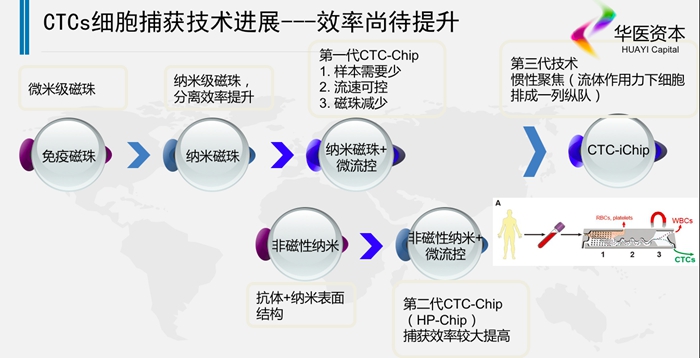
It is worth noting that CellSearch by Johnson & Johnson remains the only FDA-approved platform for circulating tumor cells (CTCs). However, its utility is limited by its reliance on antibody-based capture, which restricts it to mere enumeration and precludes the isolation of viable cells for downstream genomic profiling and treatment guidance. In contrast, detailed molecular characterization of CTCs—such as assessing the expression of drug-targetable genes and detecting mutations associated with drug resistance—would significantly unlock their potential in guiding clinical therapy. Consequently, the clinical application of CellSearch has been substantially constrained, leading Johnson & Johnson to discontinue its sales in China in early 2016.
The maturation of third-generation sequencing is expected to significantly drive the commercial application of CTCs.
How to Achieve Precise Characterization of CTCs: From a Genetic PerspectiveGiven that the DNA content of a single circulating tumor cell (CTC) is only 6.6 pg, improving capture efficiency and purity, along with advancing single-cell sequencing, represent two critical directions. Therefore, further enhancing CTC enrichment efficiency and employing novel technologies for single-cell genomic sequencing are of paramount importance. Third-generation sequencing emerges as the most promising technology capable of enabling single-cell sequencing of CTCs.
Currently, the internationally leading companies in CTC technology include Biocept, Janssen Diagnostics, Qiagen, Epic Sciences, and CytoTrack, while no domestic company has yet demonstrated particularly outstanding technological capabilities.
2Circulating Tumor DNA (ctDNA)
ctDNA refers to fragmented tumor DNA, primarily derived from plasma isolated from anticoagulated peripheral blood. It typically consists of DNA fragments released by apoptotic or necrotic tumor cells. The extracted and purified nucleic acids can be stored and are generally used for analyses related to DNA mutations and DNA modifications such as methylation, thereby supporting personalized therapy. The potential of ctDNA in early tumor diagnosis is relatively well-established.
Clinical validation is progressing rapidly, and the technology has become relatively mature; the maturation of third-generation sequencing will boost the development of ctDNA.
Although ctDNA research started later than that of CTCs, it has advanced rapidly in recent years. In particular, the integration of next-generation sequencing technologies and large-scale clinical validation has made the commercial application of ctDNA feasible. At the 2016 ASCO Annual Meeting, the largest-ever clinical study on ctDNA was presented, enrolling a total of 15,191 patients. The results revealed a concordance rate of 92%–99% between genetic testing performed on blood samples and the mutation profiles of major cancers published by previous global cancer genome sequencing initiatives.
The technology for ctDNA detection is advancing rapidly. Currently, the mainstream detection platforms are next-generation sequencing (NGS) and ddPCR. A relatively newer approach is CAPP-Seq, which primarily combines targeted capture with NGS and is widely adopted by companies both domestically and internationally. Representative foreign companies in the field of ctDNA detection include Genomic Health, Guardant Health, Personal Genome Diagnostics, and Pathway Genomics, while leading Chinese companies include Berry Genomics, Nanjing Geneseeq, and Burning Rock Biotech. Due to its high sensitivity, third-generation sequencing can perform sequencing with less than 1 ng of DNA and is believed to be an important direction for the future application of ctDNA.
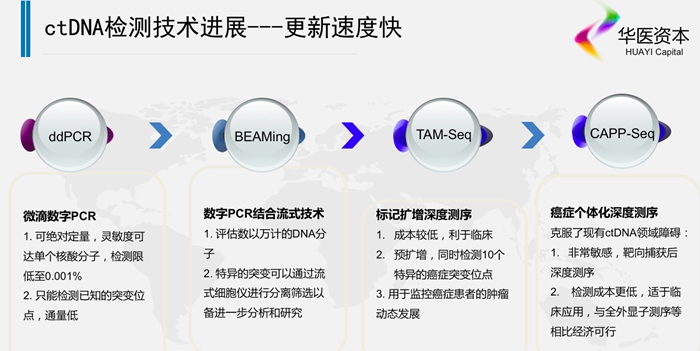
It is precisely due to the relative maturity of commercialization that, in2016Year6Month, U.S. health insurance agenciesPalmettoRecently announced that somatic mutations have beenctDNAAnalysis and testing are included in its insurance coverage.
Based on the current situation, ctDNA still faces some challenges in clinical applications.
However, ctDNA analysis still faces several challenges. For instance, highly sensitive targeted detection methods may fail to identify novel mutations that emerge during tumor evolution. Meanwhile, the sensitivity of high-throughput next-generation sequencing (NGS) approaches is significantly lower than that of targeted assays, currently limiting their application to advanced-stage cancers in clinical settings. The complex origins of ctDNA result in substantial variability across different diseases and among individual cancer patients. This uncertainty regarding its underlying mechanisms warrants more cautious interpretation of ctDNA data. Furthermore, changes in ctDNA levels may not reflect in real time certain signaling pathway alterations within tumor cells that are independent of genomic variations, such as those involving transcriptional regulation, post-translational protein modifications, or epigenetic regulation.
3CTC vs. ctDNA: Which Is Superior?
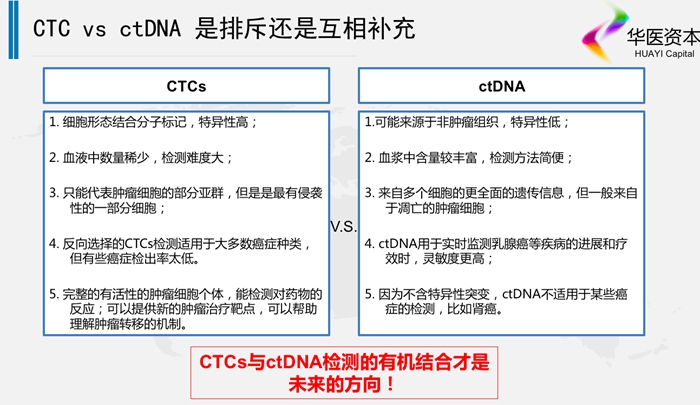
Finally, there has been ongoing debate regarding the relative merits of circulating tumor cells (CTCs) and circulating tumor DNA (ctDNA). Due to their high specificity, CTCs are intact, viable individual tumor cells that can be used to assess drug responses, identify novel therapeutic targets, and help elucidate the mechanisms of tumor metastasis. However, CTC detection is technically challenging and represents only a subset of tumor cell populations. Although negative enrichment-based CTC detection is applicable to most cancer types, the detection rate remains too low for certain cancers. In contrast, ctDNA is more abundant and easier to detect. When used for real-time monitoring of disease progression and treatment efficacy in conditions such as breast cancer, ctDNA offers higher sensitivity. Nevertheless, it suffers from lower specificity and lacks specific mutations, making ctDNA unsuitable for detecting certain cancers, such as renal cell carcinoma. In summary, CTCs and ctDNA are complementary; their integrated application represents the future direction.
4Investment Rationale for Liquid Biopsy
Second-generation and higher-generation CTC enrichment technologies are still in their early stages, lacking unified standards. Many companies employ different technical approaches for cell capture, making it difficult at present to determine which cell capture technology will become the industry standard. A wait-and-see approach is recommended. Currently, immunofluorescence detection of CTC tumor markers is the more widely adopted technique abroad. It is anticipated that the implementation of single-cell sequencing will significantly drive the development of CTC technologies in the future. Therefore, waiting for and closely monitoring third-generation sequencing technologies represents a prudent strategy at this time.
Given the relative maturity of ctDNA and the abundance of clinical evidence, active investment participation is advisable. Current detection platforms generally rely on next-generation sequencing (NGS) and digital PCR (dPCR). Targeted capture combined with NGS represents one key direction, while third-generation sequencing also constitutes an important strategic avenue.
This article was written by Cao Feng, a partner at Huayi Capital, and does not represent the views of VCBeat. The article was edited and published by VCBeat (WeChat ID: vcbeat). If you have more insights and perspectives on the development and investment in tumor molecular diagnostics, we welcome you to share them with us.
Partner at Huayi Capital, Cao Feng
Joint Ph.D. in Public Health (Fudan University and the University of North Carolina at Chapel Hill), Physician, Minor in Health Economics
Held senior executive positions at Fortune 500 companies, including Sanofi (France), Eli Lilly (USA), GE Healthcare (USA), Allergan (USA), and Eisai (Japan). With nearly 20 years of experience in the healthcare industry, has worked across medical services, clinical research, regulatory affairs, medical affairs, sales, and marketing. Expertise spans pharmaceuticals, medical devices, and medical aesthetics. Co-founded a CRO company, served as the exclusive China distributor for a U.S.-based manufacturer of cardiac consumables, and was one of the founders of a mobile healthcare platform for physicians.
Possesses extensive expertise in the pharmaceutical sector and proven experience in brand management and marketing, having successfully overseen the marketing strategies for 10 brands. Current research focuses primarily on the market translation of emerging medical technologies both domestically and internationally.