

Internet Hospitals: The Offline Pathway of Internet Healthcare
By Wu Chong
The development of internet healthcare in China has unfolded in three stages: “Connected Healthcare,” where the internet links all key elements of the healthcare industry; “High-Quality Healthcare,” where the internet enhances medical care quality; and “Controllable Healthcare,” featuring cloud-based intelligent management of health insurance data. In 2016, the internet healthcare industry was steadily advancing through its second stage, with typical models including internet hospitals, general/specialty clinics, and third-party medical service centers.
The move of internet healthcare into offline settings is not merely about monetizing online traffic in the physical world; rather, it involves more deeply breaking down hospital barriers, reshaping diagnosis and treatment workflows, and improving medical efficiency and quality. This article reviews current examples of offline exploration by internet healthcare providers and compares them with traditional medical models. Below are the highlights compiled by VCBeat (WeChat Official Account: vcbeat).
Typical representatives of internet hospitals are WeDoctor Wuzhen Internet Hospital and The First Affiliated Hospital, Zhejiang University School of Medicine (FAHZU) Internet Hospital. The former represents an internet healthcare company expanding into offline services, while the latter signifies a public tertiary hospital moving its services online, reflecting two distinct models for integrating online and offline healthcare.
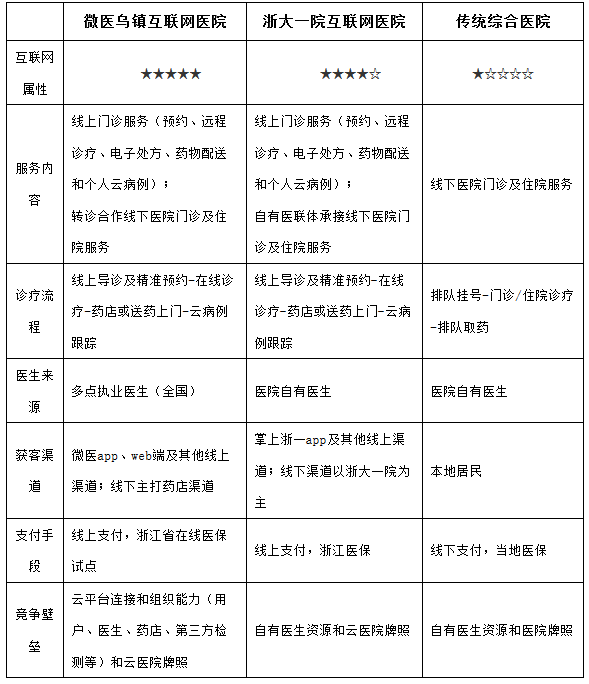
Table 1 Comparison of Characteristics of Internet Hospitals
Compared with traditional general hospitals, the core service of internet hospitals is online outpatient consultation, characterized by electronic prescriptions and personal cloud-based medical records. The main difference between WeDoctor and The First Affiliated Hospital, Zhejiang University School of Medicine lies in the scope of partner hospitals for offline referrals; The First Affiliated Hospital, Zhejiang University School of Medicine shows a stronger tendency toward referrals within its own hospital system and medical consortium.
The diagnostic and treatment processes of internet hospitals thus exhibit the following characteristics:
1) Online triage and precise appointment scheduling to facilitate tiered diagnosis and treatment, optimizing resource allocation;
2) Online consultations alleviate geographic restrictions on customer service and the hassle of hospital queues;
3) Online circulation of electronic prescriptions to facilitate the separation of prescribing and dispensing, linking with pharmacies or pharmaceutical distribution companies to enable convenient home delivery of medications;
4) Personal cloud-based medical records enable full-cycle disease management and online circulation of electronic health records (EHRs), facilitating referrals. Compared with traditional hospitals, the entire outpatient process has been completely reengineered, greatly enhancing patient access to care.
In terms of physician sourcing, WeDoctor can attract physicians across China to provide online consultations through multi-site practice arrangements, whereas The First Affiliated Hospital of Zhejiang University School of Medicine and traditional general hospitals rely more heavily on their own full-time staff. If WeDoctor can efficiently organize nationwide physician resources on a large scale to precisely match patients’ diagnostic and treatment needs in accordance with the characteristics of online care—which is the core objective of internet hospital platforms—it can deliver maximum value to patients in tiered diagnosis and treatment as well as precision medicine.
In terms of customer acquisition channels and payment methods, internet hospitals are inherently more reliant on the internet. The key turning point lies in the integration of online medical insurance payments (similar to how private hospitals can only ensure patient volume after being included in the medical insurance network). This is currently still in the pilot phase, with challenges primarily centered around medical insurance accounting and cost control. However, features underlying internet healthcare—such as the separation of prescribing from dispensing, cloud-based electronic medical records, and full digitization of the diagnosis and treatment process—hold more definite value for the next stage of intelligent medical insurance accounting and cost containment.
In terms of competitive barriers, licenses are currently basic resources. Compared with the in-house physician resources of The First Affiliated Hospital, Zhejiang University School of Medicine, and traditional hospitals, WeDoctor’s barrier is built more on its cloud platform’s connectivity and organizational capabilities, which also constitute its greatest challenge.
Returning to the three major indicators of healthcare system value, we examine the value proposition of internet hospitals. This assessment focuses on the “systemic value” of broader healthcare models, rather than the “individual value” of single hospitals.
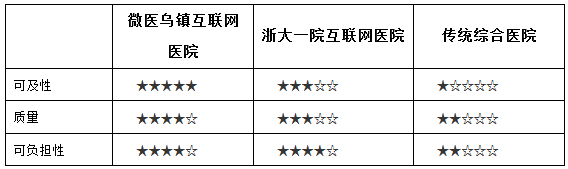
Table 2 Comparison of the Value of Internet Hospital Medical Systems
Internet hospitals have significantly expanded access to healthcare, as ubiquitous mobile internet overcomes geographical and temporal constraints. Looking ahead, integration with various smart devices will enable the decentralization of more monitoring indicators and diagnostic procedures that are currently confined to hospital settings, thereby further enhancing the accessibility of medical services provided by internet hospitals.
Internet hospitals contribute to quality improvement primarily through systemic value, such as the restructuring of resources and processes around patients rather than hospitals, exemplified by cloud-based medical records, tiered diagnosis and treatment, and precision medicine. For China’s current healthcare system, internet hospitals also offer more immediate practical benefits, such as unlocking physicians’ value through multi-site practice and separating pharmaceutical sales from medical services to curb overtreatment driven by the reliance on drug revenues for hospital funding.
Affordability considers how to meet the society’s rising medical demands at a lower cost from the perspectives of health insurance and overall social healthcare expenditure. Internet hospitals can enhance healthcare affordability at the societal level by improving triage efficiency, reducing wasteful and excessive medical care, and enabling intelligent management of health insurance.
Overall, the internet hospital model, which has evolved from the downward expansion of internet healthcare, represents a transformative change that significantly enhances the value of the existing healthcare system. Elements conducive to improving the overall value of the healthcare system—such as physicians’ free practice, cloud-based medical data, and the separation of prescribing from dispensing—which could not be organically realized within the previously closed system of public hospitals, are continuously breaking through barriers.
Emerging internet companies are extending their services from online to offline, while traditional public tertiary hospitals are proactively expanding from offline to online. Although there is competition, these trends represent two sides of the same coin. Differentiated services and the establishment of core competitive barriers remain long-term central themes for internet healthcare enterprises as they explore the development of offline internet hospitals.
This article is authored by Wu Chong, an investment manager at Lian Fund, and does not represent the views of VCBeat (WeChat Official Account: vcbeat). Edited by VCBeat, this article is published exclusively here; please cite the source when reposting. If you have further insights or perspectives on internet healthcare, we welcome you to share them with us.