

Perficient: Top 10 Must-Read Trends in Digital Health 2016 (Part II)
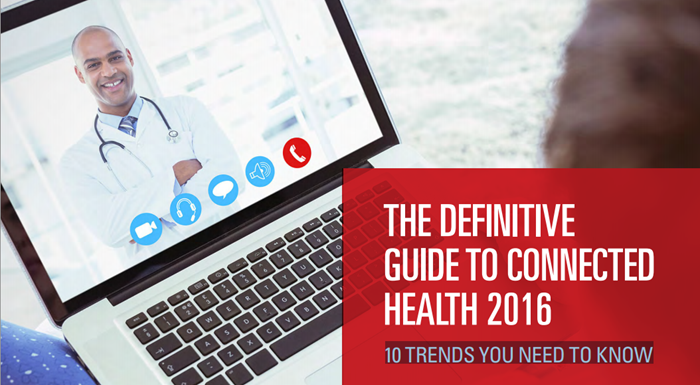
Perficient recently released its report on the Top 10 Trends in Internet Healthcare Development for 2016, which has been compiled and edited by VCBeat (WeChat ID: vcbeat). Understanding these trends will not only help healthcare organizations survive in this user-centric era but also significantly benefit their sustainable development. Given the length of the full text, we will cover it in two parts. This article is Part II. [Read Part I: Perficient: Top 10 Must-Read Trends in the 2016 Internet Healthcare Guide (Part I)]】
The healthcare industry has long held control over certain critical national data, as2016As patients gain access to more medical data, the balance of power and consumer preferences within the healthcare industry are beginning to shift.
Benefiting from the “Meaningful Use” policy, patients theoretically have the right to access their own medical data. Amid reforms in the healthcare market, including changes in laws and regulations, it has been more explicitly stated that patients should have greater ownership of their medical data. At the core of this transformation is the Affordable Care Act; with its enactment, the balance of power in the healthcare industry has shifted. Under the traditional healthcare model, healthcare institutions held dominance and control over data. However, the Affordable Care Act has changed this status quo, with patients gradually gaining the upper hand.
Healthcare institutions should encourage and incentivize patients to manage and maintain their health status, rather than focusing solely on disease. Health plans should also implement cost-saving incentive programs. If patients fail to respond to the call for reform, both the evaluation criteria for healthcare service quality and revenue streams will be threatened, which is a key factor driving the direction of reform. In response to this call for reform, patients will raise their expectations for closer relationships with healthcare institutions and health plans, while also increasing their expectations regarding data ownership.
How to Respond to New Customers in Healthcare? It is understood that patients’ demand for data has already translated into action. In early 2016, the U.S. Department of Health and Human Services issued new regulations after receiving a large number of complaints from patients who sought to exercise their right to access their medical records but were met with disappointing outcomes. These new regulations stipulate that healthcare institutions cannot require patients to provide a reason for accessing their medical records, nor are they allowed to deny access on the grounds that patients might be dissatisfied with the report results.
However, there are more proactive approaches to empower patient populations with the data they need to manage their health. In response to evolving trends, we have observed that digital experiences are becoming increasingly mature as customer-centric health management tools, products, and services continue to improve. Fortunately, we can draw some interesting insights from a telemedicine study designed by New York University and published in 2015 in the Journal of Internet Medical Research.
This study surveyed more than 1,600 mobile phone users, assessing them across four dimensions: sociodemographic characteristics, history of using mobile health apps, reasons for using mobile health apps, and the overall health status of users. The study found that although health apps have a broad user base, a large number of patients still have not installed these mobile apps. What has reduced the appeal of mobile apps? The answer is that these health apps fail to meet patients’ needs. So, what are patients’ needs? The study found that what patients truly desire is:
Improving Communication with Healthcare Providers
57% of respondents expressed interest in the app’s appointment scheduling and direct physician contact features. Over 60% of respondents hoped to use the app to access their medical records.
Better Health Management Tools
In addition to the need for “full control over one’s own medical records,” respondents also expressed demand for “tools that can record symptoms during disease episodes to share with physicians” and “tools that can display changes in health status over time using charts.” Although there are many ways to meet these needs, some challenges remain difficult to overcome.
Book a Doctor
Physicians utilize a wide variety of systems, with even different clinics within the same hospital adopting disparate appointment scheduling platforms. This fragmentation makes it more challenging to create a unified digital platform for online appointments. Although many third-party organizations have attempted to address this issue, significant challenges remain. Nevertheless, numerous healthcare providers have successfully integrated electronic appointment forms with call centers as an interim solution within the patient journey.
Stay Attentive to Your Health
The challenge with this objective lies in the fact that the currently collected source data does not facilitate its achievement. Under current circumstances, we typically expect patients to assume the role of manual ETL (Extract, Transform, Load) within their data systems. While such a role is feasible, its implementation requires robust databases and data lakes, as well as consolidated files from hospitals and clinics.
Having understood these data-related challenges, the advantages of health plans undoubtedly meet customers’ data needs. At the core, health plans possess the most comprehensive patient data. As health plans become increasingly patient-centric, patients are likely to be more inclined to propose data-driven solutions.
Case Sharing
Kaiser Permanente is one of the largest nonprofit healthcare plans in the United States, providing medical services to over nine million members. We helped Kaiser Permanente transform how its members and caregivers seek, receive, and pay for care. Committed to developing an architecture that delivers portal and mobile services to patients and their partners, we added new features to the portal, including access to medical records, online pharmacy services, appointment scheduling, caregiver interaction, an enhanced shopping experience, and additional self-service capabilities. Through a cohesive, omnichannel user experience, Kaiser Permanente’s “My Health Manager” enables users to access the healthcare services they need, anytime and anywhere.
In 2016, patient data will become more complex, and its development will encounter several turning points. As investments in healthcare data increase in both quality and quantity, the capacity to leverage data insights for driving transformation will correspondingly expand.
We recognize that the advantages of applying data to manage health are countless. However, as healthcare continues to draw lessons from the retail industry, data services—enabled by the integration of data with marketing platforms—are poised to become a means of attracting loyal customers and incentivizing cost savings.
A retail strategy long overlooked by the healthcare industry is leveraging data insights to incentivize consumers to change their behavior. Every time a loyalty card is swiped, customers are reminded of the significant advantages the healthcare sector holds over the retail sector. All else being equal, internet healthcare is essentially a stream of valuable information that can achieve strategic objectives through mining and analysis. Healthcare institutions are increasingly recognizing that understanding customer data is central to fostering customer loyalty and improving patients’ medical decision-making capabilities. The consolidation of customer data sources enhances patient user experience, while consumer insights help predict the trajectory of patients’ digital experiences. These developmental trends include:
Integrate the user experience across all touchpoints;
Identify and target ideal user behaviors, and apply data to incentivize these behaviors;
Attract individual consumers from multiple channels by leveraging personalized services;
Leverage predictive analytics to anticipate the patient journey;
Leverage closed-loop analysis and continuous optimization.
Given current healthcare strategies, medical institutions will soon recognize that understanding patient data is central to fostering patient loyalty and encouraging individuals to make health-beneficial, cost-conscious decisions.
“The End of the ‘Meaningful Use’ Era Has Had a Profound Impact on Numerous Industry Trends in 2016 and Beyond. One Such Trend Is the Greater Emphasis on Clinical Experience. Andy Slavitt, Administrator of the Centers for Medicare & Medicaid Services, Made Statements Replete with the Following Viewpoints:”
“The frustration is real. If physicians fail to deliver adequate care, patients will not consider the clinical treatment process; instead, they will direct their criticism at the creators of the initiative, accusing them of failing to understand patients.”
“We are committed to creating a flexible program that caters to both the individual needs of healthcare providers and the needs of the general public.”
“We need to propose new fields for advancing science and healthcare services science, and we should learn as teams rather than independently.”
“We should cultivate healthcare providers’ ability to set goals, based on which technology companies can deliver customized services.”
Slavitt put forward a view that we are gradually coming to recognize: if we fail to enable healthcare providers to adopt scientific and technological advances, we will inevitably lose patients as clients. Technology developers must understand that successful solutions are not simply a matter of meeting commercial needs or fulfilling “Meaningful Use” requirements.
We observe that many healthcare institutions struggle to deliver medical services under fragmented care models and organizational silos. Consequently, healthcare enterprises will continue to have strong demand for collaboration tools that efficiently unite physician groups. The key to capturing clinical engagement lies in establishing a single gateway into clinicians’ digital workflows as an enterprise portal that fosters habit formation and prioritizes user-centric design.
As clinical experiences continue to evolve, enterprise collaboration technologies can help employees interact, build relationships, make decisions, and synchronize real-time work. These measures can drive innovation in the healthcare industry and improve corporate success rates.
In the context of enterprise connectivity, healthcare and education both adopt flexible models that transcend geographical boundaries. Crucially, they prioritize not only commercial requirements but also stakeholder needs, while delivering clinical experiences that facilitate effective two-way communication within enterprises.
Case Sharing
Large Medical Centers: Implementing Standardization and Strengthening Inter-Organizational Collaboration
The medical center has a vision: to create a scalable, enterprise-grade solution that strengthens team collaboration by facilitating file sharing, social summaries, and team interactions. We have designed a strategic blueprint encompassing integrated communications and ongoing enablement programs. Additionally, we provided guidance on the planning, design, implementation, and configuration of the solution, delivering tools to the medical center that enhance employee collaboration within the organization.
The development trends of internet healthcare are becoming increasingly intertwined with technological solutions. For instance, digital vertical care plans rely on business intelligence and interoperability, enabling patients to implement their care plans in a timely manner. However, much like pharmacological treatments can cause side effects, internet healthcare solutions may also have adverse effects that require prompt attention. Data security, for example, is a notable side effect associated with the Internet of Things (IoT) and mobile health.
First, you need to understand two definitions:
Mobile Health: Using mobile and wireless devices to improve healthcare outcomes, medical services, and health research;
IoT: An environment that integrates everyday objects with the Internet and enables their identification by other devices.
Recently, the U.S. Federal Bureau of Investigation (FBI) issued a warning to healthcare institutions regarding Internet of Things (IoT) and mobile health network threats in the medical industry. Suspicious devices include highly concerning cardiac pacemakers and insulin dispensers, as well as less obvious ones such as air conditioner remote controls and Wi-Fi cameras.
The FBI has explicitly highlighted the risks associated with unprotected devices used for remote medication dispensing. The vulnerabilities of these devices include: the ability to operate them by developing generic plug-and-play protocols; the use of default passwords to send malicious emails and spam, as well as to steal personal and financial information; and overloading the devices to render them irreparable.
As the digitalization of healthcare services deepens, medical institutions need to develop strategies to control data inflow from Internet of Things (IoT) gateways with low security factors. With the continuous operation of mobile health platforms, medical institutions must place sufficient emphasis on safeguarding the security of their digital platforms. Relying solely on encryption technology is far from sufficient; it is also essential to strengthen application security and provide clinicians with necessary training on protecting data on digital devices.
Over the past year, terms such as “digital diagnosis and treatment” and “outpatient hospital” have gained prominence. The momentum behind the development of digital therapeutics has brought us to10Scenario in the coming years: “Doctors will fully utilize digital therapeutics to treat depression, insomnia, kidney stones, and lower back pain.”AthenaHealthofCEOhas stated:“From now on, the lion’s routine check-ups will be managed online—I am certain of this.”
The popularity of internet-based healthcare indicates that an increasing number of medical services are being delivered outside traditional physical healthcare facilities. This shift helps reduce care costs, improve the quality of medical services, and provide patients with a more comfortable treatment environment, thereby avoiding the need for patients to completely alter their original lifestyles due to illness.
A healthcare system can adopt numerous strategies to enhance highly personalized services through digital devices; the following three low-cost strategies are applicable to any digital health project.
Telephone Therapy
We begin our discussion with telephone-based therapy, demonstrating that highly personalized medical care is not necessarily complex or expensive. By delivering healthcare via telephone or through virtual consultations on patient portals, physical therapy providers can assist those patient populations in most urgent need of treatment. Wake Forest University conducted a study involving 141 patients aged 60 and older from suburban areas of North Carolina who suffered from generalized anxiety disorder. Between January 2011 and October 2013, researchers conducted up to 11 telephone sessions with the patients. One group received cognitive behavioral therapy (CBT) targeting cognitive anxiety symptoms, relaxation techniques, problem-solving, and coping skills. The other group received relatively low-intensity telephone therapy, during which experts merely discussed the patients’ feelings without providing any techniques or advice. The study found that both groups experienced reductions in anxiety and depression symptoms, but the improvement was significantly greater among patients who received cognitive behavioral therapy.
The challenges of telephone-based therapy lie in the fact that reimbursement issues persist even under digital healthcare conditions, and insurance payers enforce stringent review criteria for such services. Nevertheless, the trend toward telephone-based therapy is expected to continue, as evidence from studies indicates that it serves as a highly effective alternative to pharmacological treatments for anxiety and depression—medications that can cause sedation and loss of consciousness in older adults, thereby increasing the risk of injury.
SMS Sending Project
Text messaging offers an effective option that significantly reduces diabetic patients’ reliance on outpatient services. It enhances maternal health education during pregnancy and the first year of the newborn’s life, improves the success rates of smoking cessation programs, and substantially lowers readmission rates following cardiac surgery. Most importantly, text messaging initiatives bridge socioeconomic divides, yielding greater benefits for low-income populations.
Leveraging Social Media as a Medical Tool
Not long ago, it was rare for healthcare institutions to maintain a social media presence, but the landscape has since changed. Social media has gradually evolved from a mere public relations tool into a vital resource for public health engagement. Institutions such as Marshfield Clinic, Forest Health, Cedars-Sinai, and others have recognized that social media platforms are more effective in attracting patients and disseminating health education information.
We believe that the development of connected healthcare can transform healthcare services by addressing inefficiencies in workflow management, chronic disease management, and treatment adherence. It reduces the cost of delivering high-quality care for chronic conditions, offering a more efficient, convenient, and cost-effective approach to healthcare delivery. Telemedicine solutions are designed to maximize the utilization of medical resources and provide patients with greater and more flexible access to healthcare services.
This concludes the ten major trends in the connected healthcare industry in 2016 as outlined in this report. It is our hope that this analysis has clarified the industry’s development direction for healthcare providers and patients, while also offering insightful perspectives for investors within the sector. Furthermore, it is evident that the advancement of mobile internet technology has had a profound impact on healthcare services.