

After Securing $517M Series C Funding, Meier Plans Doctor IP Initiative and Market Expansion
On the afternoon of August 2, Gengmei APP, the world’s largest medical aesthetics and health service platform, held a strategic press conference in Beijing to announce its Series C financing. The investors in this round include CHJ Group, Suning Universal, Tencent, China Securities Co., Ltd., Fosun Pharma, and other listed companies and top-tier investment institutions, with a total funding amount of RMB 345 million.
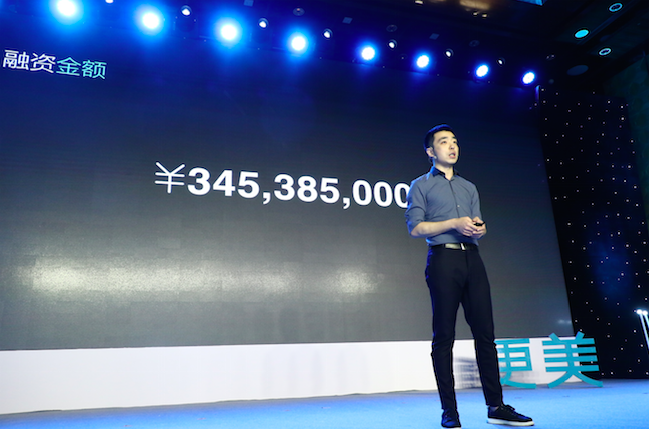
Gengmei CEO Liu Di
Liu Di, CEO of Gengmei, stated that in terms of financing amount, Gengmei has firmly secured the top position in the industry. “For internet companies, those in the lead are most afraid of being overtaken by later innovators or new business models. However, what we are seeing now are mostly imitators, so we are not worried at all.”
Bridging Healthcare, the Internet, and Consumer Markets
At this press conference, Gengmei announced all investors from the first and second closings of its Series C financing round, including several well-known listed companies and top-tier domestic investment firms.
In addition to securing the largest financing round in the industry’s history for Gengmei, the entry of new shareholders is more importantly poised to help Gengmei integrate multiple segments across the upstream and downstream of the medical industry chain. By leveraging robust internet traffic resources, Gengmei aims to further capture a significant share of the broad health consumer market. Following the completion of its Series C financing, Gengmei will deeply integrate these resources to create a matrix effect, accelerating its strategic corporate development. The company looks forward to collaborating with its diverse shareholders to jointly enhance efficiency within the medical aesthetics industry.
Gengmei had previously announced the first batch of investors in its Series C funding round, including CHJ Jewellery, a light-luxury fashion group targeting mid-to-high-end female consumers; Suning Universal, which has acquired multiple domestic and international medical aesthetic institutions; and Tencent, the largest internet traffic portal.
Among the investors in the second tranche of Gengmei’s Series C financing, CITIC has maintained a strategic presence in the broader healthcare industry, investing extensively in hospitals and pharmaceutical companies. Over the 17 years since its listing, Fosun Pharma has invested in numerous enterprises across sectors including pharmaceutical manufacturing and R&D, pharmaceutical distribution and retail, medical services, as well as medical diagnostics and medical devices. Gengmei stated that the addition of these two new shareholders would significantly bolster its expansion within both the healthcare industry and the capital markets.
It is worth noting that China Securities, a subsidiary of China Securities Co., Ltd. (CSC), is the highest-rated AA-class securities firm in China, and it can assist Gengmei in further capital operations in the capital and A-share markets in the future. Liu Di stated that going public has always been on Gengmei’s development timeline, and accepting investment from CSC was also considered with this in mind.
How to Spend RMB 345 Million?
According to VCBeat (WeChat ID: vcbeat), following the completion of its Series C financing, Gengmei will not only launch medical aesthetics financial services such as installment payments and insurance but also intensify its efforts on the industry side. Liu Di, Founder and CEO of Gengmei, announced the launch of a new strategic initiative—the “100 Physicians IP Program.” This program aims to provide comprehensive support through virtual hospitals, funding, and resources to help outstanding plastic surgeons build their personal brands, thereby enabling Chinese consumers to more easily find high-quality plastic surgeons.
Furthermore, Gengmei also plans to accelerate its expansion into the medical aesthetics market through mergers and acquisitions. “The internet-based medical aesthetics market is about to enter a phase of consolidation,” Liu Di predicted, noting that larger companies have already validated their business models, leaving limited opportunities for smaller firms and startups.
Currently, Gengmei’s revenue model is primarily divided into two segments. The B2C business mainly generates revenue through commission fees from referring customers to offline medical aesthetic institutions; as Gengmei’s referral capabilities strengthen, its share of these referral commissions is gradually increasing. The B2B business currently achieves profitability primarily by helping small and medium-sized offline medical aesthetic institutions develop their e-commerce operations.
Liu Di stated that Gengmei has always positioned itself as a platform company and therefore will not engage in the specific operations of medical aesthetics. Gengmei’s vision is to become the largest consumer healthcare service platform. In addition to medical aesthetics, Gengmei has expanded its business into other niche sectors, such as dentistry and anti-aging.
How Does the Gengmei Doctor IP Plan Intend to Proceed?
In recent years, China’s medical aesthetics market has been growing rapidly at an annual rate of over 20%, yet high-quality physician resources have remained in short supply. At the press conference, Liu Di stated, “Market information asymmetry means consumers struggle to find quality physicians and services, while the vast majority of excellent doctors remain unknown to consumers due to the lack of a clear personal brand. This information gap has long trapped China’s medical aesthetics industry in a quagmire of poor reputation.”
Liu Di believes that medical aesthetics is, at its core, a physician-centric industry. The key to improving the current state of the medical aesthetics sector lies in helping physicians integrate their technical expertise, reputation, service quality, and personal charisma into a differentiated personal brand that earns patient trust.
At the strategic press conference for its Series C financing, Liu Di introduced the concept of “physician IP-ization” in the medical aesthetics industry for the first time, aiming to help outstanding plastic surgeons comprehensively build their personal brands through internet-based approaches and maximize physician value.
Liu Di stated that a “doctor IP” refers to a physician’s personal brand characterized by robust professional expertise and personal charisma, capable of attracting users over the long term through technical proficiency, case studies, and service attitude, thereby fostering secondary word-of-mouth dissemination and ultimately realizing multifaceted commercial value for the individual physician, their affiliated institution, and the hosting platform.
In building “Physician IPs,” Gengmei has been making steady progress. At its inception, Liu Di led the team in inviting experts from the top 30 plastic surgery departments of public Grade A tertiary hospitals across China to join the Gengmei platform, ensuring the authority and safety of the platform’s physician resources. Over the past three years, leveraging its robust new media matrix and vertical medical aesthetics community, Gengmei has assisted numerous outstanding physicians in publishing their own popular science columns, thereby earning the trust of tens of millions of consumers. In early 2016, Gengmei launched the “Gengmei Renowned Physicians Group” initiative, breaking away from the stereotypical image of physicians as rigid and uninteresting, and crafting a youthful, fashionable brand image for top plastic surgeons from leading Grade A tertiary hospitals, helping younger consumers better understand these seasoned physicians’ expertise and philosophies.
At the press conference, Liu Di provided a vivid explanation of “doctor IP”: “Each doctor’s IP is like the doorplate of an aerial hospital, enabling every user to find their way with ease.”
It is reported that Gengmei plans to create over 100 IPs of renowned medical aesthetic doctors in the near future, focusing on three key areas: foundational support, customer operations, and brand management. To achieve this goal, Gengmei provides a comprehensive service matrix for onboarded physicians, covering branding, e-commerce, appointment scheduling, facilities, after-sales service, traffic acquisition, financial services, and manufacturer partnerships. Gengmei collectively refers to these services as the “Air Hospital.”
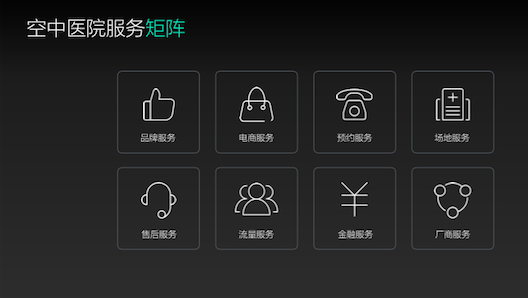
At the press conference, Liu Di explained the concept of the “Airborne Hospital” in more accessible terms: Benchmarking against a traditional brick-and-mortar hospital, you can think of it as a scenario where a doctor only needs to bring their surgical expertise to perform operations, while all other operational and management tasks are handled by Gengmei through the integration of online and offline resources.
It is understood that Gengmei will also launch a series of IP-supporting initiatives centered around the “Airborne Hospital,” including an industry database, ambulatory surgery centers, business assistants, cloud-based customer service, full-cycle user management, precision user matching, manufacturer partnerships, customized physician branding, and a Medical Aesthetics Academy.

Liu Di likened Gengmei’s physician IP model to the Star Alliance, where each user is equivalent to a Star Alliance member. By choosing renowned physicians under Gengmei’s IP, users can access standardized, quality-assured services provided by doctors contracted with Gengmei. Currently, Gengmei has contracted with a number of ambulatory surgery centers in Beijing and Shanghai. If patients require surgical procedures, their physicians can perform them directly at these facilities. “The clinics, physicians, and Gengmei maintain only a collaborative relationship; all three parties remain independent,” said Liu Di.
At the press conference, Gengmei announced some of the plastic surgeons selected for its “100 Physician IP” program, hailing from renowned institutions such as Beijing Tongren Hospital.