Global Internet Healthcare Policy Trends and Product Insights: Industry Insiders' Essential Brief

Recent turbulence in the internet healthcare sector has been relentless. First, the CEO of a medical escort and consultation platform fled abroad, followed by news of massive layoffs at Jiuyi 160, the first internet healthcare company to list on the New Third Board late last year. These events have sparked widespread anxiety, suggesting that internet healthcare is not only facing a capital winter but also entering a brutal entrepreneurial winter where nine out of ten startups fail.
After the breakout year of 2014 and the restructuring and advancement in 2015, has 2016 entered a winter period?
In fact, such incidents occur almost daily. Natural selection and the survival of the fittest are the norm in nature, let alone in the fiercely competitive business arena. If you happen to come across such news, please remember,All you need to do is fulfill your duties and do what you can.
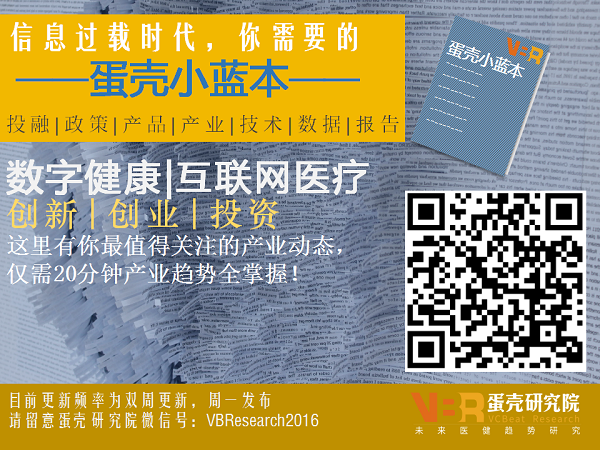
Now, back to the main topic: [VCBeat Blue Book] by VCBeat.Aims to scan the latest global developments in the digital health industry, enabling readers to grasp industry-wide trends within 20 minutes.Below are excerpts from the [July Policy] content.
Domestic
↓↓↓
Shenzhen Implements “Group Purchasing” for Drugs in Public Hospitals and Establishes an Internet Plus Pharmaceutical Platform
Shenzhen Plans to Advance Drug Procurement Reform, Curb Artificially High Drug Prices, and Explore Group Purchasing ModelsAt a policy briefing held yesterday on the “Implementation Plan for Pilot Reform of Group Drug Procurement in Shenzhen’s Public Hospitals,” Li Chuang, head of the Shenzhen Healthcare Reform Office, stated that Shenzhen aims to pilot a “group purchasing” model to reduce total drug procurement expenditures across all public hospitals in the city by more than 30%. The overall target is to bring the proportion of drug revenue to total operational revenue down to below 27% by next year.
NDRC Issues Document to Advance Reform of Medical Service Pricing
Recently, with the approval of the State Council, the National Development and Reform Commission (NDRC), in conjunction with the National Health and Family Planning Commission, the Ministry of Human Resources and Social Security, and the Ministry of Finance, issued the “Notice on Printing and Distributing the Opinions on Promoting the Reform of Medical Service Prices.” The notice requires that efforts be closely aligned with the objectives of deepening the reform of the medical and healthcare system, actively and steadily advancing the reform of medical service prices, adhering to a combination of price adjustments and market-based pricing, strengthening policy coordination, and gradually establishing a price formation mechanism characterized by classified management, dynamic adjustment, and multi-party participation.
MOHRSS Issues Guiding Opinions on Promoting the “Three-Medical Linkage” Reform
To thoroughly implement the series of decisions and arrangements made by the CPC Central Committee and the State Council on healthcare system reform, to carry out the key tasks of healthcare reform in 2016, to strengthen the coordinated linkage among medical services, health insurance, and pharmaceuticals (hereinafter referred to as “Three-Medical Linkage”), and to further clarify the role and responsibilities of human resources and social security departments in healthcare reform, the Ministry of Human Resources and Social Security issued the Guiding Opinions on Actively Promoting the Linked Reform of Medical Services, Health Insurance, and Pharmaceuticals (hereinafter referred to as the “Opinions”). The Opinions deploy tasks for human resources and social security departments to promote the Three-Medical Linkage reform and effectively carry out work related to healthcare system reform.
In 2020, Beijing Will Unify the Medical Insurance System for Urban and Rural Residents
One of the key municipal special plans under Beijing’s 13th Five-Year Plan, the “Beijing Municipal Plan for Integrated Urban-Rural Development During the 13th Five-Year Plan Period,” was recently released. It proposes to achieve city-level pooled management of old-age insurance for urban and rural residents by 2020 and establish a unified basic medical insurance system for urban and rural residents.
State Administration for Industry and Commerce: Medical and Drug Advertisements Must Not Be Published on the Internet Without Prior Review
According to the website of the State Administration for Industry and Commerce (SAIC), the SAIC today announced the Interim Measures for the Administration of Internet Advertising, which will come into effect on September 1, 2016. The Measures stipulate that advertisements for special commodities or services subject to review by advertising examination authorities—such as those for medical treatments, pharmaceuticals, and health foods—shall not be published without prior examination.
CFDA Halts Pilot Program for Online Drug Sales via Third-Party Platforms
On July 29, Tmall Pharmacy issued a notice to merchants on its platform, announcing the suspension of online drug trading services effective August 1. In addition to Tmall Pharmacy, Yihaodian, which also holds qualifications for operating a third-party B2C pharmaceutical sales platform, received a notice in June from the Shanghai Food and Drug Administration requiring it to halt the pilot program for online retail of drugs via third-party platforms.
Public Hospitals’ Abolition of Staffing Quotas Becomes Final, Affecting Over 8 Million Healthcare Workers Nationwide
On July 22, the Ministry of Human Resources and Social Security held a press conference for the second quarter of 2016. Li Zhong, spokesperson for the Ministry, clearly stated that when introducing the next steps in the reform of the personnel system in public institutions, the ministry would study and formulate measures to ensure a smooth transition in personnel management for universities and public hospitals after they are removed from the bianzhi (staffing quota) system. The ministry would also cooperate with relevant departments to advance the reform of business-oriented public institutions and pilot reforms of the bianzhi management system in select Grade A tertiary public hospitals.
Hebei Issues “Guiding Opinions on Further Deepening the Comprehensive Reform of Public Hospitals”
The opinions released on July 14 explicitly stated: Optimize the order of pharmaceutical purchase and sales, compress circulation links, implement the “two-invoice system” from manufacturers to distributors and from distributors to medical institutions, and establish a dean responsibility system for the procurement of drugs and consumables. A corporate blacklist system shall be implemented, and manufacturers found not complying with the “two-invoice system” shall have their sales qualifications within the province revoked.
Highlights of Shandong’s Five-Year Plan for the Healthcare Service System
The newly issued "Shandong Province Healthcare Service System Plan (2016–2020)" stipulates that diagnostic tests and laboratory examinations conducted by medical institutions at Level II and above shall be accessible to all medical institutions. It promotes the implementation of centralized testing and mutual recognition of test results in regions with favorable conditions. Based on geographical distribution, cities with appropriate capabilities are encouraged and supported to establish regional medical imaging centers, fostering a service model characterized by "examinations at primary healthcare institutions and diagnosis at hospitals," thereby enhancing the capacity for medical imaging and diagnostic testing at the grassroots level. In accordance with a unified and standardized framework, diagnostic tests and laboratory examinations from Level II and above medical institutions will be open to all medical facilities, advancing centralized testing and mutual recognition of results in eligible areas. Advanced-level medical centers shall be established following the principles of coordinated planning, capability enhancement, and radiating influence, with regional medical centers at various levels strategically planned and set up across the province.
Guizhou Province Adjusts and Improves Pricing for Telemedicine Services at Public Medical Institutions
Guizhou Province Adjusts and Improves Pricing for Telemedicine Services at Public Medical Institutions. Specifically, the maximum fee for each remote consultation at national-level public hospitals shall not exceed RMB 1,200 per hour, while at the provincial level, it shall not exceed RMB 320 per hour. When serving as invitees in telemedicine consultations, Guiyang First People’s Hospital, Guiyang Second People’s Hospital, Guiyang Maternal and Child Health Care Hospital, and Zunyi First People’s Hospital shall apply the provincial-level pricing standards for telemedicine services.
Jiangxi Province Lifts Restrictions on For-Profit Medical Institutions
On July 19, to accelerate the healthy development of privately run medical institutions in our province and continuously meet the public’s diverse and multi-level demands for healthcare services, the General Office of the Provincial People’s Government recently issued implementation opinions to speed up the development of private healthcare. Restrictions on the number and spatial distribution of for-profit medical institutions have been lifted, and social capital is encouraged to invest in the healthcare service sector through various models, including establishing new facilities, participating in restructuring, entrusting management, and operating public hospitals under private management.
Jilin Aggressively Promotes Tiered Diagnosis and Treatment; Reimbursement Rate for Patients Bypassing Levels Drops to 20%
Recently, the "Key Points for Deepening the Reform of the Medical and Health Care System in Jilin Province in 2016" was officially issued. The "Key Points" stated that for diseases that can be diagnosed and treated at primary medical institutions, if patients voluntarily seek diagnosis and treatment at higher-level hospitals, the reimbursement rate will be reduced to 20%.
Six Key Highlights of Guangdong’s Healthcare Reform: Detailed Rules for Physicians’ Multi-Site Practice to Be Introduced
The Guangdong Provincial Government recently released the “Key Points for Deepening Healthcare System Reform in Guangdong Province in 2016,” outlining 43 reform tasks across eleven categories. This signifies the comprehensive rollout of comprehensive reforms in urban public hospitals and the implementation of tiered diagnosis and treatment in Guangdong, with expected breakthroughs in key reform areas such as adjustments to medical service prices, health insurance cost containment, prescription outflow, and multi-site practice by physicians.
Abroad
↓↓↓
What Does the FDA’s Newly Released Draft Guidance on Precision Medicine Say?
The Precision Medicine Initiative (PMI) is a large-scale project aimed at advancing biomedical development by leveraging advanced genomics, informatics, and health information technology to provide personalized medical services to patients. In December 2015, President Obama signed legislation and allocated $200 million specifically for the Precision Medicine Initiative. Since February 2016, the United States has sequentially announced a series of commitments from government agencies, academic institutions, and various public and private organizations, continuously accelerating the advancement of the Precision Medicine Initiative. Yesterday, the U.S. FDA released two draft guidance documents intended to further accelerate the implementation of the Precision Medicine Initiative.
Obama Publishes Article in JAMA, Reviewing the Course of U.S. Healthcare Reform During His Presidency
Recently, an article authored by Barack Obama appeared in the online publication list of JAMA, a premier medical journal. Titled “Progress and Next Steps for US Health Care Reform,” the piece was accompanied by an editorial from the JAMA editorial board affirming its authenticity as the President’s original work. As one of the four leading international medical journals, JAMA is committed to advancing the fields of medical science, medical technology, and public health. In this article, Obama employs rigorous logic and comprehensive data (citing 68 references) to demonstrate that the Affordable Care Act (ACA), which he championed, is highly necessary, has achieved significant success, and holds considerable promise for the future.
To obtain the Blue Book, please click "Read the original text”, complete the questionnaire and attach a screenshot of your WeChat Moments post sharing this article to receive the second edition of “VCBeat Blue Book”!
【20-Minute Overview of Global Digital Health Industry Trends】