

Pokémon Go Goes Global: Augmented Reality Poised to Revolutionize Healthcare Applications
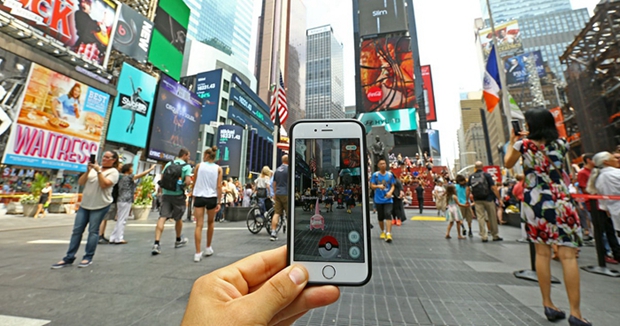
Pokémon Go has conquered the world. Since its launch, the average daily time spent on the game by iOS users has quickly surpassed that of Facebook, Snapchat, or Twitter. Tom Curry, a player based in New Zealand, quit his job to become a full-time Pokémon catcher. In Manhattan’s Central Park, hordes of Pokémon Go players nearly caused a stampede while attempting to catch a rare virtual creature.
Rafael Grossmann, the first surgeon to perform an operation with the aid of Google Glass, stated that Pokémon Go represents the ultimate gamification of “activity”-based applications, noting that even the game’s developers had neither anticipated nor planned for augmented reality (AR) to exert such a profound impact on people.
The widespread attention garnered by Pokémon Go is attributable to its augmented reality (AR) application and the heightened player engagement it fosters. The game transmits views of current or indirectly related real-world scenes to players via smart devices, with these views enhanced by computer-generated sensory inputs, such as audio, video, graphics, or GPS data. In the future, AR will become a built-in feature integrated into smart glasses, headsets, or digital contact lenses.
AR differs from VR (Virtual Reality), which creates a 3D world that completely isolates users from reality. However, AR is unique in two aspects: first, users remain connected to the real world; second, AR delivers information to the visual system at the fastest possible speed. These distinctive features make AR a driving force in the future of healthcare.
According to VCBeat (WeChat ID: vcbeat), AR applications in the healthcare sector will become very common within the next three to five years. Technical challenges are clearly temporary and pose no fundamental obstacle, while cost issues are expected to dissipate in the future. The most significant barriers will stem from education, cultural shifts, and public acceptance.
1AR Can Save Lives by Displaying Nearby Defibrillators
What Would You Do If Someone Suddenly Collapsed Beside You? In that moment, a flood of thoughts may rush through your mind, but whether you call an ambulance or reach out to a doctor or others for help, you will undoubtedly use your mobile phone.
My recommendation is to download the Layar augmented reality browser, integrated with the AED4EU app, onto your smartphone and link it to essential emergency contact numbers. This will enable you to access greater assistance in similar situations in the future.
AED4EU was created by Lucien Engelen from the Radboud University Medical Center in Nijmegen, Netherlands. Users can add the locations of automated external defibrillators (AEDs) and access this database through the AED4EU app. Additionally, using the Layar browser, you can see the exact locations of the nearest AEDs on your mobile phone screen and find them within one minute to provide help to those in need.
2Google Glass to Address Breastfeeding Concerns
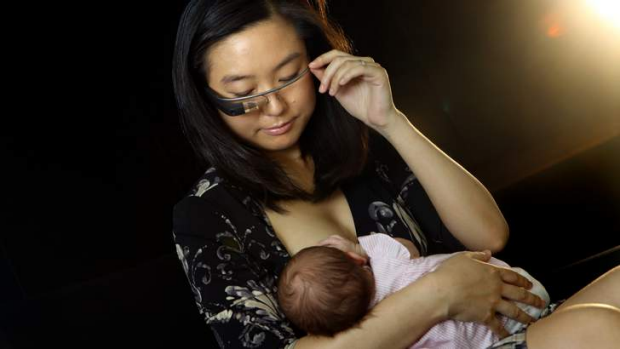
Although Google Glass has the potential to revolutionize the medical field, I must admit that I never considered the possibility of using this new technology to help new mothers with breastfeeding.
In 2014, Small World, an innovative company based in Melbourne, conducted a Google Glass trial in collaboration with the Australian Breastfeeding Association. This initiative enabled telephone counselors to view live breastfeeding sessions through the mothers’ Google Glass devices while they nursed at home. As a result, mothers could receive expert assistance at any time without even needing to put their infants down. By sharing the patient’s perspective, the level of consultation reached new heights.
3Patients Better Describe Symptoms via AR
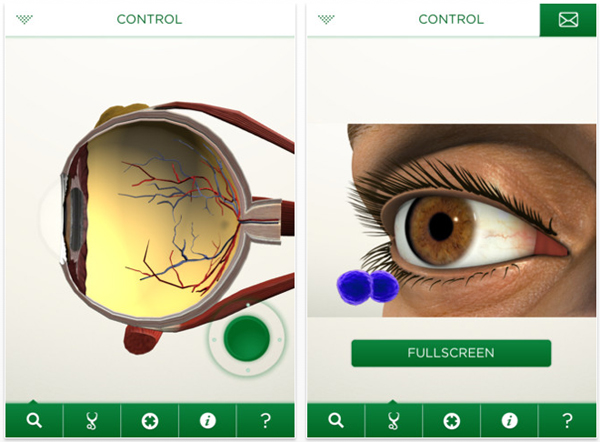
Patients often struggle to accurately describe their symptoms to physicians. Meanwhile, individuals frequently find themselves either overreacting to the medical environment or, conversely, underestimating certain health issues. In response to this challenge, augmented reality (AR) may emerge as a patient education solution within the field of ophthalmology.
EyeDecide is a medical application of its kind that utilizes the camera to simulate the impact of specific conditions on an individual’s vision. By using applications like EyeDecide, physicians can demonstrate simulated visual impairments associated with particular diseases. For instance, the app can illustrate the effects of cataracts or age-related macular degeneration, thereby helping patients understand their symptoms and actual clinical status. If patients can experience how their long-term lifestyle choices affect their health, it will motivate them to make positive changes.
4Nurses Use AR to Locate Veins More Easily
Startup AccuVein is leveraging AR technology to simplify nurses’ workflows. According to Vinny Luciano, a marketing specialist at AccuVein, 40% of intravenous (IV) insertions miss the vein on the first attempt. This issue is even more pronounced when dealing with pediatric and elderly patients.
Leveraging AR technology, AccuVein uses a handheld scanner that projects onto the skin to clearly visualize vein locations in patients’ bodies for nurses and doctors. According to Luciano’s estimates, more than 10 million patients have used this technology, which increases the likelihood of successful venipuncture on the first attempt by 3.5 times, effectively assisting healthcare professionals and enhancing their skills.
5Motivating Runners Through Zombies
Imagine you are walking through a dark, dilapidated alley when you suddenly hear groans and slow footsteps from a strange creature. At that moment, even the laziest person would realize that a “real zombie” is trailing them and break into a run. This is the original idea behind the Zombies, Run! app.
This game highlights two facts: fear can be stimulating, and it becomes more enjoyable when gamified. This app is ideal for those who find running a boring exercise. If you not only hear but also see virtual zombies appearing on the screen of your smartphone or other devices, you will focus solely on increasing your speed and endurance, and time will seem to fly by.
6Pharmaceutical companies can provide more information on innovative drugs.
Are you curious about how drugs work in the body? Even if you are interested, I bet you will lose all your enthusiasm after reading through the boring and difficult-to-understand drug instructions. Now, AR technology is set to change this situation.
With the aid of AR, patients can visualize a 3D representation of how medications work, rather than merely consulting the lengthy instructions on prescription bottles. R&D personnel in laboratories can conduct experiments using AR devices, while factory workers can begin tasks immediately without prior hands-on training, as AR systems provide real-time guidance on what to do and how to do it.
7AR Can Assist Surgeons in the Operating Room
Both physicians and patients recognize that precision is paramount when it comes to surgery. Today, augmented reality (AR) helps surgeons enhance surgical efficiency. Whether performing minimally invasive procedures or localizing liver tumors, AR medical applications provide seamless support in saving lives and treating patients.
Medsights Tech has developed software to test the feasibility of using AR technology for precise 3D reconstruction of tumors. The complex image reconstruction technology provides surgeons with X-ray views in near real-time, without any radiation exposure.
Rafael Grossmann, mentioned earlier, was the first team member to use medical VR for live surgeries. According to him, HoloAnatomy is leveraging holographic lenses to present realistic anatomical data models. This application of AR technology is elegant and highly intuitive, offering clear advantages over traditional methods.
8Google's Digital Contact Lenses Will Change the Way We See the World
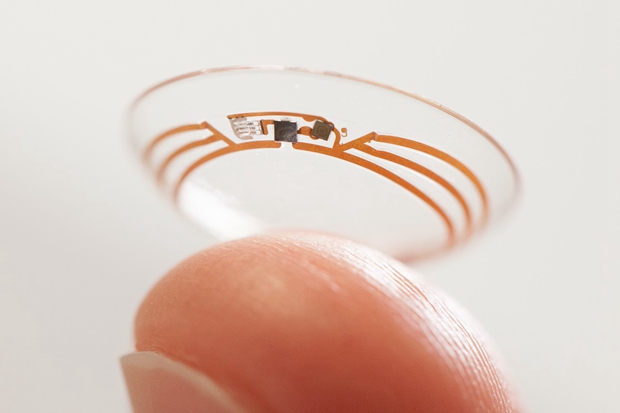
The era of digital contact lenses and retinal implants is rapidly approaching, holding immense potential to transform the medical field. Retinal implants could restore vision to the blind or endow humans with enhanced capabilities. Meanwhile, digital contact lenses are not only reshaping how we perceive the world but also revolutionizing diabetes care.
Google aims to produce digital, multi-sensor contact lenses capable of measuring blood glucose levels. On the other hand, diabetes care is merely a secondary function; more importantly, these digital contact lenses will enable augmented reality features, such as turning e-book pages by blinking.
Current AR devices have not yet reached perfection, but we must acknowledge that this milestone is imminent. Therefore, the most effective approach for us—and our children—is to adapt to this developing trend. I believe that augmented reality (AR) is an integral part of the future; if you remain skeptical, just look at the fervent players chasing Pokémon on the streets.
Original Source: medicalfuturist.com