

Everseat: Revolutionizing Healthcare Access—No More Waiting, Just Appointments!
Many readers have likely experienced the following when seeking medical care: after extensive research and careful selection of a preferred hospital and physician, they face the arduous task of scheduling an appointment. Due to tightly packed schedules, appointments are often available only weeks or even months in advance. Patients have no choice but to wait. When the day finally arrives, they encounter another long wait at the hospital. If an appointment is missed for any reason, although it can be rescheduled, the overall care cycle is significantly prolonged, substantially diminishing patient experience and satisfaction. Furthermore, the added administrative burden negatively impacts the revenue of healthcare institutions. Clearly, traditional appointment systems fail to meet the needs of modern patients.
Against this backdrop, the emergence of Everseat has been a welcome development for both patients and healthcare providers long plagued by inefficient appointment scheduling. Headquartered in Baltimore, this healthcare startup’s flagship product is a mobile application also named Everseat. Designed to transform traditional patient-provider appointment practices, the app helps healthcare institutions, medical professionals, and patients manage appointment schedules more effectively, thereby enhancing the efficiency and experience of healthcare services.
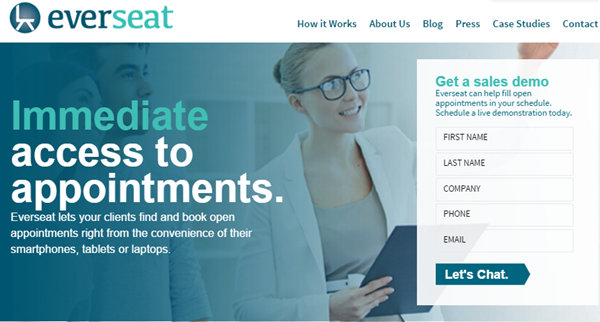
Everseat Official Website
When asked about the company’s founding background, Andy Tarsy, Senior Vice President of Everseat, stated: “In today’s era, nearly all services required for daily life can be accessed via smartphones. However, in the healthcare sector, the process for scheduling appointments remains much as it was decades ago: calling a physician’s office to book an appointment and then waiting on hold. Regardless of how tightly schedules are packed, physicians and other healthcare providers inevitably experience gaps in their availability, often due to uncontrollable factors such as last-minute cancellations. When a scheduled patient fails to show up, all parties incur losses. This traditional appointment system not only undermines the revenue of healthcare institutions but also prevents many patients who genuinely need care from receiving timely assistance. There may be numerous patients seeking care within a 10–20 mile radius who would readily seize any available appointment slot. Research conducted by certain organizations has indicated that outdated, traditional scheduling methods are among the primary culprits behind poor patient experiences and low satisfaction ratings. Thus, we thought perhaps we could do something to create genuine value for hospitals, physicians, and patients alike.”

Everseat President Jeff Peres
The healthcare sector is distinct in that it is subject to stricter regulation and greater complexity than other industries. Consequently, there is a broad consensus within the industry that innovation in healthcare is more challenging and proceeds at a slower pace compared to other sectors.
For startups in the medical technology sector, leveraging “interoperability” as a key driver is essential for rapid and healthy growth. Although Everseat is a small-scale company, its products and services can meet the needs of any hospital, professional group, or community health center, as its cloud-based system can integrate with nearly all practice management systems.
One might ask: How does interoperability between different technology platforms in the healthcare sector help startups develop effective partnerships, add value, and solve problems? Many articles have provided excellent explanations on this topic, and interested readers can gain further insights through related readings. In summary, interoperability is a critical subject that healthcare startups must master.
Unprecedented ingenuity is emerging in the healthcare sector. Today, everything is shifting toward digitalization and cloud-based technologies, and Everseat is actively contributing to this transition. Historically, appointment systems have been provider-centric; however, driven by pioneers and advocates like Everseat, along with increasing external pressures, patient needs are finally gaining the attention they deserve. In this transformative landscape, we have every reason to believe that healthcare institutions and professionals who recognize these trends and embrace new technologies will reap multifaceted benefits, including greater financial returns, more effective achievement of population health goals, and improved patient satisfaction and clinical outcomes.
As of November 2015, Everseat had a total of 20 employees. As a startup, every member of Everseat places great emphasis on entrepreneurial spirit. Although the team includes several industry-renowned experts, everyone is fully aware that solving problems and creating value requires the collective wisdom and efforts of all employees at all times. Despite its small size and limited headcount, Everseat’s staff are highly competent. Through their joint efforts, the company has successfully established collaborations with numerous medical research centers, large multidisciplinary groups, and private clinics.

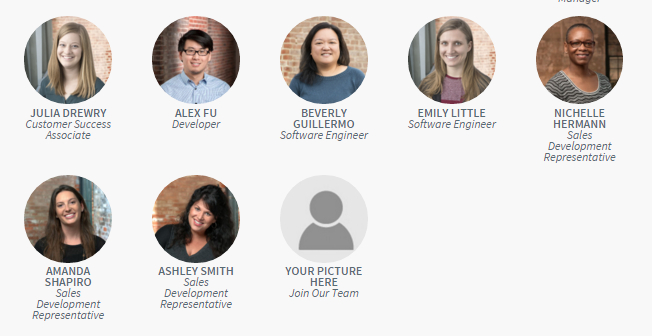
EverseatTeam
Everseat’s founding team identified the mismatch between supply and demand in medical appointment scheduling and developed a smartphone- and web-based solution. Leveraging cloud technology, the Everseat mobile app enhances appointment efficiency between healthcare providers and patients. Interested patients can use this free mobile application to view available appointment slots at various hospitals and medical institutions, select options according to their needs, and complete online bookings instantly. Additionally, the app features tagging and GPS navigation capabilities, allowing users to tag their preferred medical institutions and physicians, as well as schedule appointments for their children, spouses, parents, or pets. Users can also mark their favorite service providers and enable the “Need it” setting, so they receive notifications as soon as an appointment slot becomes available with their preferred provider.
Everseat provides rich and transparent appointment information with user-friendly operations, significantly enhancing communication efficiency between doctors and patients and strengthening the connection between physicians and patients.
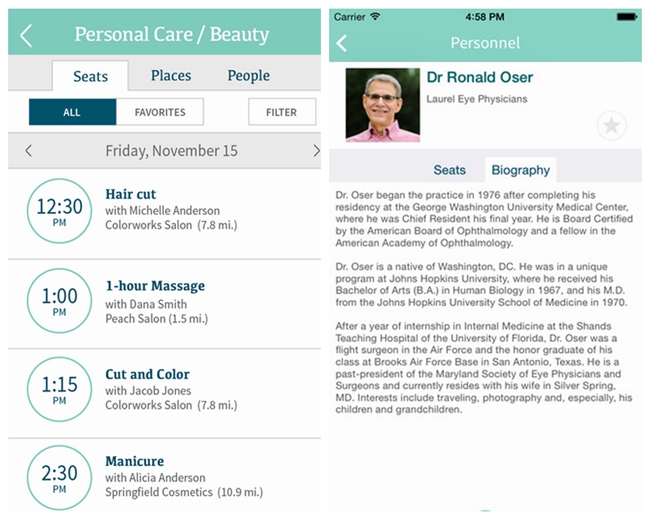
Everseat Mobile App Interface
We have selected two reviews from the App Store, offering readers a general overview of user feedback:
“Fantastic! Although I knew that many services required appointments, I never seemed to have the time to make phone calls. As a result, whenever I did call, the desired services had already been booked by others, forcing me to wait weeks or even months to see a doctor. No more! Now, whenever an appointment slot becomes available, the doctor’s office calls to notify me. If it fits my needs, I can confirm the appointment immediately, without having to wait for a spot on the waiting list or for gaps in the doctor’s schedule. Highly recommended!”
“Everseat was recommended by my dentist. Due to work requirements, I frequently travel on business, and when I don’t have time to schedule appointments by phone, Everseat is the only tool that helps me book appointments. If only I had discovered this gem earlier!”
As a mobile application, Everseat is revolutionizing traditional appointment scheduling, making the matching of supply and demand more convenient and efficient.
In an interview, Andy stated, “The issue we are striving to address affects a large number of people. Once resolved effectively, it will generate substantial momentum and influence, significantly enhancing satisfaction among both patients and healthcare providers. Although Everseat’s brand awareness is not yet high, and many people may still have never heard of it, this is not a major concern. By establishing partnerships with numerous healthcare systems, electronic health record (EHR) platform companies, and patient advocacy groups, we will build our brand step by step.”
To date, Everseat has established formal partnerships with the following five companies:
1. Cochlear
In January 2015, Cochlear, a global leader in the research, development, and manufacturing of hearing aids, signed a multi-year partnership agreement with Everseat. This move indicates that Cochlear’s clinical partners will begin using Everseat’s mobile appointment platform to streamline workflows.
Regarding this collaboration, Jeff Peres, President of Everseat, stated, “We are delighted to partner with Cochlear and its clinical partners to work together toward simplifying the patient appointment process.”
2. Athenahealth
In October 2015, Everseat announced a formal partnership with athenahealth. As a leading global healthcare services provider, athenahealth offers cloud-based services and mobile applications to medical groups and health systems. This collaboration signifies that the athenahealth network, which encompasses more than 67,000 healthcare providers, will be integrated with Everseat’s platform, providing patients with convenient appointment scheduling and instant reminders.
3. Allscripts
In February 2016, Everseat announced a partnership with Allscripts, a global leading provider of electronic health record (EHR) solutions. Following the establishment of this collaboration, Allscripts users can publish information on open appointment slots via the Everseat platform, allowing patients in need to search and book appointments through the Everseat mobile application. This enables Allscripts to meet the daily needs of healthcare institutions, physicians, and patients.
4. 4PatientCare
In April 2016, Everseat announced a partnership with 4PatientCare, a provider of “patient engagement” solutions dedicated to streamlining medical procedures. Through the Everseat platform, 4PatientCare users can publish information on available appointments, which patients in need can search and book via the Everseat mobile app. 4PatientCare is the first internet company to incorporate a “Waitlist” button into its dashboard, enabling healthcare providers to notify patients on the waitlist to come in for their appointments with just a single click.
5. Lyft
In April 2016, Everseat announced a partnership with Lyft, a rapidly growing U.S.-based ride-sharing platform. This collaboration enables patients to enjoy convenient and reliable ride-hailing services alongside seamless appointment scheduling. For some patients, arranging appropriate transportation to medical appointments can be a significant challenge. The partnership between Everseat and Lyft helps these patients arrive on time, thereby reducing appointment cancellations due to unforeseen circumstances. After booking an appointment through Everseat, patients can view transportation options and fare estimates provided by Lyft or Lyft Plus for travel from their current location to the medical facility. They can also book a ride online and check the estimated time of arrival.
Jeff Peres stated, “Our partnership with Lyft will bring us immeasurable value. We are committed to building a robust medical appointment platform. ‘Patient access’ is a highly challenging issue. Everseat will work alongside leading technology companies to make relentless efforts toward improving efficiency in the healthcare sector.”
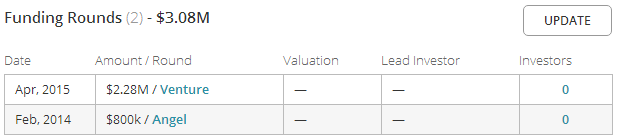
Everseat secured $800,000 in angel investment in February 2014 and raised $2.28 million in venture capital in April 2015. To date, its total funding has exceeded $3 million.
Overall, Everseat has strong growth prospects, as patients need a healthcare experience that matches the fast pace of the 21st century. Andy stated, “We exist to meet this need. Some of our physician partners have said that Everseat’s instant access to open appointments can save lives in critical moments. We hope to live up to this mission.”