

Yilianzhong Establishes Eight Subsidiaries in Seven Days to Build a Closed-Loop Healthcare IT Ecosystem
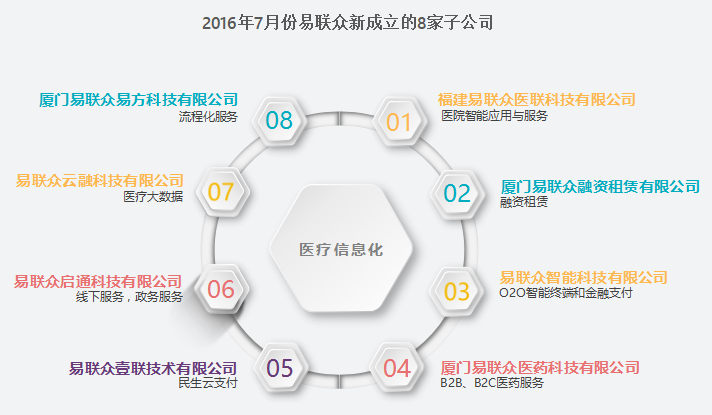
The subsidiary established by Yilianzhong in July
Under normal circumstances, the primary reasons for a company to establish multiple subsidiaries include: 1. Diversified business growth; 2. Division of business operations and geographic regions; 3. Optimization of corporate structure; 4. Capital transfer; 5. Promotion of management personnel; 6. Vertical integration.
So, what are the reasons behind Yilianzhong’s decision to establish eight subsidiaries? In my view, a clear understanding requires analysis from two dimensions: business and strategy.
1Decline in Revenue from Core Business Operations
In its core business, Yilianzhong has always been people-centric, leveraging its foundational strengths in medical insurance, regional healthcare, and pharmaceutical services. By focusing on key stakeholders such as medical insurance agencies, hospitals, communities, and pharmacies, the company has built a service ecosystem that integrates healthcare management with internet finance, covering areas such as mobile hospital services, telemedicine, and smart pharmaceuticals.
In 2015, Yilianzhong launched “Health Pass,” a novel medical payment platform in Fujian Province that leveraged real-name authentication via social security cards to establish personal prepaid accounts. By integrating products such as payment services, self-service kiosks, IC cards, and mobile apps, the company addressed key public healthcare concerns. This system was China’s first universal, real-time settlement platform for medical expenses across all medical institutions in the province, built on third-party payment infrastructure.
Currently, Yilianzhong’s social security business covers more than 50 cities across China, with a population coverage exceeding 150 million, among whom over 30 million people benefit from its social security products and services. In the healthcare sector, nearly 100 hospitals in Fujian, Guangdong, Hebei, and other provinces have become clients of Yilianzhong’s products. It is estimated that Yilianzhong serves over 30 million patient visits annually, solidifying its leading position in Fujian Province.
To gain a deeper understanding of its core business composition, I reviewed Yilianzhong’s 2015 annual report. In terms of revenue contribution, customized software & IC and system integration & hardware accounted for the largest shares, reaching 50.30% and 30.37%, respectively. Combined, these two segments represented over 80% of total revenue, undoubtedly constituting the company’s absolute core businesses. However, the revenue statement reveals that both core businesses experienced varying degrees of decline in 2015, with hardware sales showing a particularly significant drop.
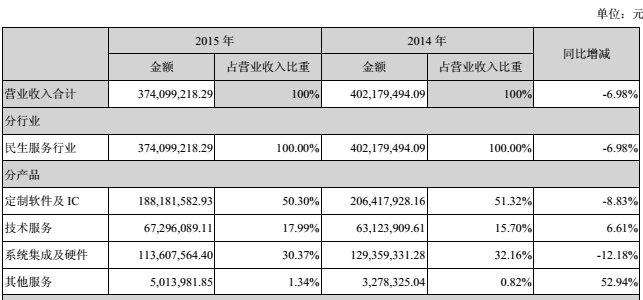
Yilianzhong’s Revenue Performance in 2014 and 2015
Delving deeper into the core business, the first segment is customized software. While Yilianzhong did not explicitly detail its composition in its annual report, relevant information can be found on its official website. This segment primarily serves enterprise-level users in sectors such as social security, healthcare, municipal administration, and public livelihood services, representing Yilianzhong’s most fundamental and core source of revenue. As the IT infrastructure provider behind the “Sanming Healthcare Reform,” a focal point of China’s 2015 healthcare reform initiatives, Yilianzhong’s capability in building healthcare informatization solutions has gained widespread recognition from both national authorities and the industry.
However, the development of products such as regional health informatization platforms and hospital information systems is often constrained by geography. For instance, Wonders Information holds absolute market dominance in Shanghai and other areas, while Langma Information is the undisputed leader in Guizhou. Yilianzhong follows a similar pattern: although it firmly controls the medical informatization market in Fujian Province, it struggles to gain a foothold in other companies’ home territories. Particularly after the market matures, growth becomes relatively sluggish. This is also why this traditional business segment does not experience significant fluctuations.
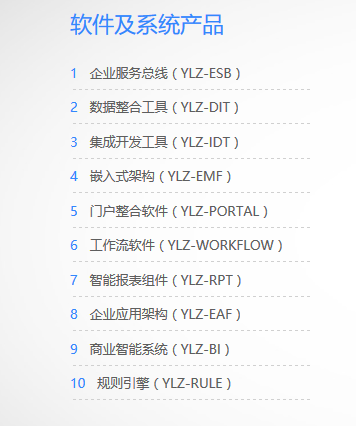
Yilianzhong Software and System Products
The IC card business and hardware business are prone to fluctuations. According to the sales data of Yilianzhong’s three main physical products, except for the information kiosk (self-service terminal), whose sales volume increased, the other two product categories experienced significant declines. According to the official explanation, the production volume of the company’s information kiosk (self-service terminal) project increased by 43.81%, and sales volume grew by 36.4%, mainly due to continued widespread deployment of this project during the year, resulting in substantial growth in business volume. Meanwhile, the production volume of the company’s IC card business decreased by 51.00%, and sales volume dropped by 54.55%, primarily because large-scale card issuance in Shanxi Province has been largely completed.
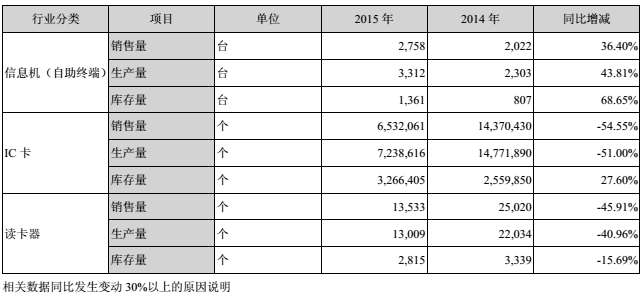
Overview of Yilianzhong’s Physical Products in 2015
Over the past two years, Yilianzhong has been promoting its “Cloud Computing Platform for Public Livelihood Information Services,” which provides financial social security cards and self-service terminals to government agencies, enterprises, and the general public. In this regard, I have retrieved the list of Yilianzhong’s top five suppliers.
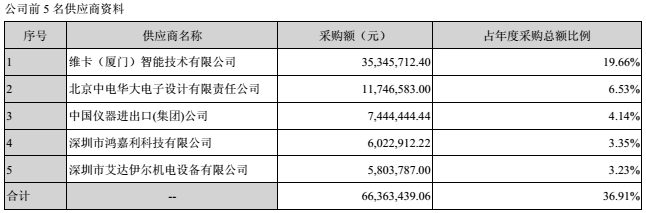
YiLianZhong Supplier Profile in 2015
Ranked first is Vika (Xiamen) Intelligent Technology Co., Ltd., which is primarily engaged in software system integration, embedded product development, and the research, development, and manufacturing of touch-control products. This company mainly produces medical self-service terminals and IC card readers for Yilianzhong.
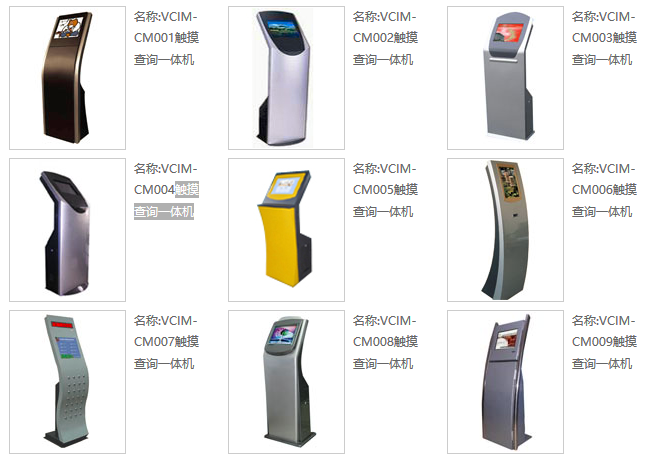
All-in-One Terminal Produced by Weika Company
Ranked second, Beijing China Huada Electronic Design Co., Ltd. is one of the well-known domestic providers of smart card chip technology. Its product portfolio encompasses various smart cards and embedded security chips, which are widely used in high-end identification documents, social security, telecommunications, financial payments, mobile payments, public transportation, fuel cards, resident health, network authentication, identity recognition, access control, and electronic ticketing. Yilianzhong’s financial social security card chips are likely produced and developed by this company.
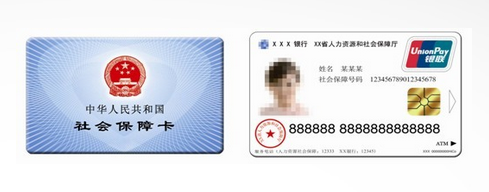
CEC Huada Provides Chip Support for Social Security Cards
In most cases, the self-service all-in-one kiosks deployed by the Ministry of Human Resources and Social Security are based on designated products, so it is rare for multiple companies to undertake such projects simultaneously. Moreover, apart from Yilianzhong, there are no comparable competing products with significant sales volume in the field of human resources and social security. Yilianzhong’s healthcare self-service all-in-one kiosk integrates applications across three domains: hospitals, medical insurance, and finance. It not only enables citizens to perform self-service tasks such as appointment registration, payment and settlement, and report printing, but can also be deployed in hospital lobbies and various departments, thereby addressing issues such as long queues for medical consultations and cumbersome procedures for medical insurance reimbursement.
Although there are many competitors in the current market for self-service kiosks in healthcare services, Yilianzhong’s self-service kiosk integrates applications across three domains—hospitals, medical insurance, and finance—giving it a certain leading advantage over these competitors.
Furthermore, the unit price of Yilianzhong’s all-in-one self-service kiosks ranges from RMB 20,000 to 30,000, with the RMB 30,000 models accounting for the vast majority, classifying them as high-priced products. According to my investigation, the procurement price for such all-in-one machines is generally around RMB 4,000, and the wholesale price is likely even lower, indicating a substantial profit margin. Moreover, Yilianzhong offers various models of its self-service kiosks, allowing for different configurations based on deployment quantity and location, which results in significant price variations across different configurations. In 2015, Yilianzhong vigorously promoted its self-service terminal equipment in more than ten provinces, including Zhejiang, Beijing, and Hebei. However, in terms of overall revenue proportion, the business volume remained relatively small, a point that can be further examined in conjunction with the table below detailing Yilianzhong’s regional revenue shares and their changes.
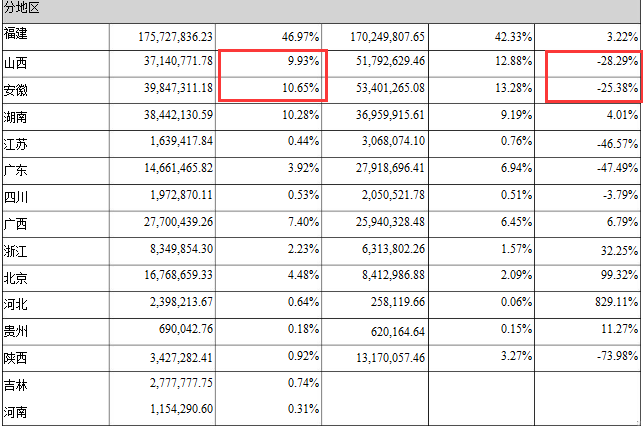
2015 Revenue and Growth of Yilianzhong by Region
The table also reveals that, aside from Fujian—the “revolutionary base” accounting for 46.97% of revenue—both Shanxi and Anhui, two strategic strongholds with a combined share exceeding 20%, have experienced significant declines in revenue, thereby lending some support to official statements.
Consequently, among Yilianzhong’s three core business segments, the software business has stabilized but is unlikely to experience explosive growth. Although the IC and hardware businesses have seen mixed performance, with some areas growing while others declined, the company’s total revenue has inevitably decreased. This downturn persists despite a reduction in operating costs, primarily due to the successive completion of social security card issuance across various regions and the pace of market penetration for self-service all-in-one kiosks.
2Other Businesses
In addition to technical services based on its IT products, Yilianzhong has also expanded into businesses including big data and financial payments through investments and mergers and acquisitions.
At the end of 2015, Yilianzhong established a Cloud Computing and Big Data Division to oversee related business operations. The company participated in project applications for the “Major Projects on Promoting Big Data Development” organized by the National Development and Reform Commission (NDRC). Meanwhile, it signed a cooperation agreement with Xiamen University titled “Research and Development of Credit Big Data Models and Algorithms,” focusing on credit big data to develop new products such as credit scoring models and related algorithms. However, as the marketization of emerging technologies and industries requires time and application scenarios remain limited, further research into technology and services is necessary to generate revenue.
In terms of financial services, leveraging its profound understanding of industry chain clients developed through long-term business collaborations, Yilianzhong planned to launch operations catering to users’ financial service needs. In 2015, it established Xiamen Yilianzhong Financial Holdings Co., Ltd. and Xiamen Yilianzhong Commercial Factoring Co., Ltd. However, given that financial operations typically involve longer cycles and higher risks, whether these ventures will generate profits remains uncertain.
As shown in the revenue composition table, although Yilianzhong’s technical services and other services have demonstrated strong growth rates, their share of total revenue remains relatively small, accounting for less than 20% combined. Other business segments account for merely 1.34%, indicating substantial room for expansion. Furthermore, the high operating costs associated with these two service categories have led to a year-on-year decline in gross profit margin. Consequently, implementing scientific cost control measures amidst rapid growth has become an urgent issue that Yilianzhong must address.
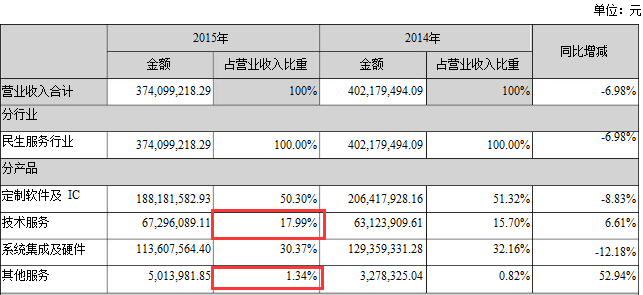
Revenue of Yilianzhong in 2014 and 2015
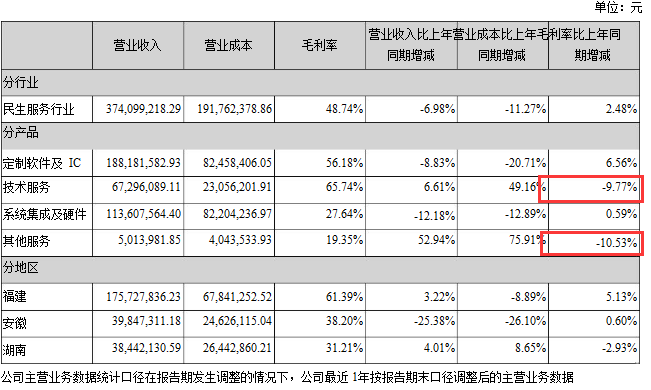
Revenue Performance of Yilianzhong in 2014 and 2015
3Establishing Eight Subsidiaries in Half a Month: Both a Strategy and a Methodology
On July 8 and July 14, 2016, Yilianzhong convened the 14th and 15th Meetings of the Third Board of Directors, respectively. Through voting by multiple directors, these meetings approved the establishment of eight subsidiaries, including Xiamen Yilianzhong Financial Leasing Co., Ltd. and Yilianzhong Intelligent Technology Co., Ltd. In addition to healthcare-related sectors such as hospital intelligent services, pharmaceutical services, and medical big data, these eight companies also cover financial payments, financial leasing, government services, and process-oriented services.
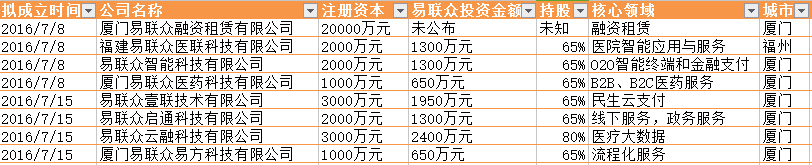
Overview of the Eight Subsidiaries Established by Yilianzhong in July 2016
Among the eight companies, except for Xiamen Yilianzhong Financial Leasing Co., Ltd., which did not publicly disclose Yilianzhong’s investment amount, the total investment in the other seven companies amounted to RMB 95.5 million. Based on its customary 65% shareholding ratio, Yilianzhong’s investment in Xiamen Yilianzhong Financial Leasing Co., Ltd. should be RMB 130 million, bringing the combined total to RMB 225.5 million. In this regard, Yilianzhong plans to apply to Industrial Bank Co., Ltd. Xiamen Branch for a comprehensive credit facility of RMB 100 million, with a term of one year. A total of seven properties are pledged as collateral, with a combined book value of RMB 23,419,084.59—indeed a substantial move.
In its 2015 annual report, Yilianzhong outlined its strategic vision for 2016 as follows: leveraging a model that integrates core businesses with the internet, the company would actively promote diversified business model innovations based on cloud computing, big data, and the internet; expand into new business areas to create new profit growth points while enlarging the market scale of traditional businesses; and enhance comprehensive competitive advantages, thereby further strengthening the competitiveness of its integrated solutions for health and family planning. By examining the operations of the eight newly established subsidiaries in light of the revenue and development challenges facing Yilianzhong’s core and other businesses, the rationale behind their establishment becomes clearly evident.
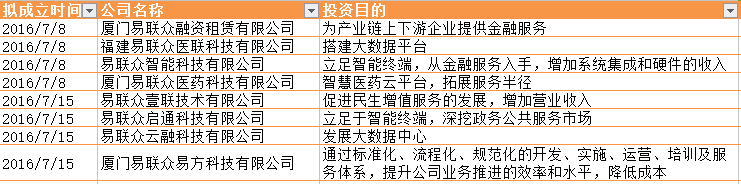
Investment Purposes of the Eight Subsidiaries Established by Yilianzhong in July 2016
1. Core Businesses (Customized Software IC Business and Hardware Business) Face Major Challenges: Slowing Market Growth and Slow Progress in Smart Terminal Adoption.
Solutions: ① Target the existing market by deeply developing government public services; ② Explore new growth markets by integrating financial services into smart terminals to boost hardware revenue.
2. Key Issues in Other Businesses (Technical Services, etc.): New technologies are not yet mature, the business reach is limited, and operational costs for new businesses are relatively high.
Solutions: ① Increase investment in technology, primarily big data and cloud computing technologies; ② Expand the service radius by developing value-added services for public welfare, smart pharmaceutical B2B2C services, and financial services leveraging the upstream and downstream segments of the industrial chain; ③ Standardize the service system to enhance the efficiency and quality of business operations and reduce operating costs through standardized, process-driven, and regulated development, implementation, operation, training, and service systems.
4Analysis and Summary
YiLianZhong, centering on its strategic goal of becoming “the most comprehensive operator of public livelihood information services, boasting the widest population coverage, the most convenient services, and the most advanced technology,” has leveraged its existing business strengths while addressing challenges encountered in its development. By focusing on healthcare services, public livelihood information services, industrial finance, and big data, and by establishing multiple subsidiaries across diverse business sectors, the company has undertaken industry consolidation and business upgrades. This represents a scientific adjustment made during a period characterized by bottlenecks in its core business and the expansion of new ventures. The decision to secure loans against its fixed assets further demonstrates the company’s boldness in executing strategic adjustments. It remains to be seen what surprises YiLianZhong will deliver in its 2016 annual report.