

Human Longevity Inc. Files IPO Prospectus: Pioneering the Link Between DNA and Disease Under Craig Venter’s Leadership

Craig Venter is a leading figure in the field of human genome research. In 2013, Dr. Craig Venter joined forces with elites in the fields of genomics and stem cell therapy to establish HLI (Human Longevity Inc.), a privately held holding company headquartered in San Diego, California.
By leveraging advancements in genomic sequencing, the human microbiome, proteomics, bioinformatics, computational methods, and cell therapy technologies, we are building the world’s most comprehensive database of human genotypes and phenotypes. Our business areas include genomic sequencing analysis, advanced clinical imaging and machine learning, and personalized health information services.
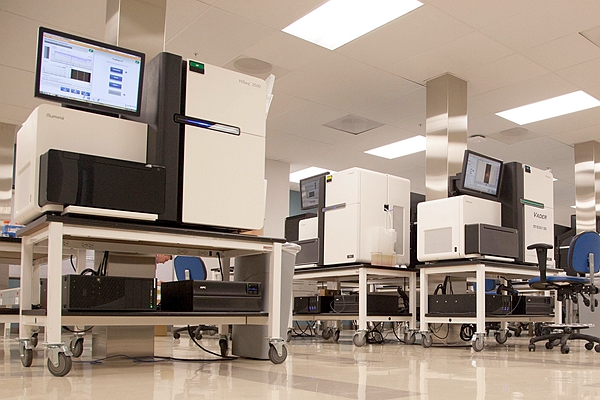
At HLI’s headquarters in San Diego, California, two machines operate around the clock, sequencing a set of human genomes every 15 minutes. The service costs $2,000 per genome, and the entire process is completed within three rooms.
In 2000, when Venter first sequenced the human genome, a supercomputer valued at $50 million ran continuously for nine months, with total costs reaching $100 million.
Venter’s goal is to sequence at least one million genomes, a target that is expected to be achievable given the advancements in science and technology over the past decade. By leveraging data generated from these genomes—including information on DNA donors’ health histories and medical test results—researchers aim to identify better methods for preventing and treating common age-related diseases, such as cancer and heart disease.
Venter, 69, has raised $300 million in investment from GE and biotechnology companies such as Celgene and Illumina, with these funds primarily used to purchase and operate sequencing instruments. Additionally, HLI collaborates with the British pharmaceutical giant AstraZeneca and Genentech, a subsidiary of Roche headquartered in San Francisco; both companies provide HLI with patient samples for sequencing.
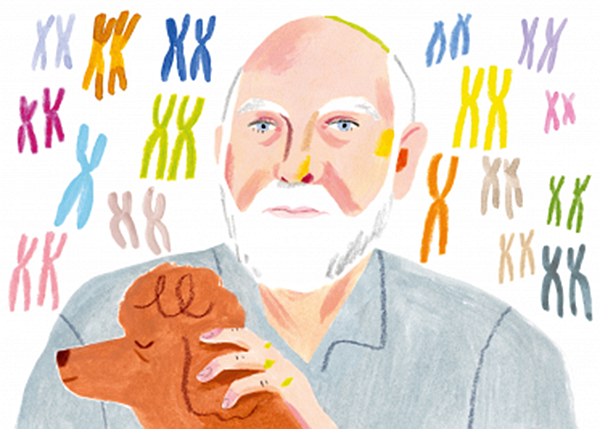
Two floors above the gene sequencing laboratory is Venter’s office, where Darwin, his red poodle, is sleeping quietly at his feet. Seated behind his desk, Venter is using his computer to sketch a diagram of an early HLI experiment in which scientists sequenced the genomes of 1,000 individuals and reconstructed their facial features based solely on genetic data.
He stated, “We can predict your facial features, height, body mass index, eye color, and hair color and texture,” and marveled at the close resemblance between the computer-generated faces and the actual photographs of the study participants.
Venter pointed out that predicting facial features from the genome is just the tip of the iceberg when it comes to gene function. “Whether it’s your face shape, a diseased aorta, or a gradually narrowing spinal canal, we hope to use measurements to apply the genetic code to predict these physical conditions.”
Our understanding of the genome is still in its infancy, limiting our ability to identify associations between DNA and disease. Even genes with well-defined characteristics do not guarantee new medical breakthroughs for researchers.
For example, Venter discovered that he carried a beneficial genetic variant in CETP (cholesteryl ester transfer protein), which had previously been shown to be associated with healthy cholesterol levels, thereby reducing the risk of heart attacks and angina. In the early 21st century, pharmaceutical companies attempted to develop drugs targeting genes responsible for high cholesterol levels to lower cholesterol, but all such efforts ended in failure.

Venter stated, “This demonstrates that simple correlations often fail. Everyone in the field of genomics understands its complexity.” Venter and his team are tackling this complexity, believing that integrating genomic information with other health data can reveal these associations.
Under AstraZeneca’s arrangement, the pharmaceutical company will share DNA samples from 500,000 anonymized patients in clinical trials with HLI, which will sequence and analyze the patients’ DNA. “Although scientific and technological advances have enabled us to read every letter of the genome, the key to understanding diseases and drug responses lies in the ability to identify genetic sequence differences among hundreds of thousands of patients,” said Ruth March, an advocate for personalized medicine and the use of biomarker technologies in pharmaceutical companies. “HLI’s technology can identify patterns in the data and base its analyses on these patterns, rather than conducting aimless studies of random genes.”
To understand the importance of each of the 20,000 genes in the human genome to health, scientists need to compare an individual’s genetic data with other information: such data reveal how environmental and behavioral factors influence their genes, while existing records show how genes respond to drugs, as evidenced by MRI scans and other medical test results.
Venter believes that only by identifying patterns in these data points can HIL gain the insights necessary for physicians to practice “precision medicine,” tailoring treatment plans to each patient’s specific genetic makeup.
Linking petabytes of genetic data to specific health conditions and cross-referencing them with the genomes of millions of individuals being collected by HLI to identify patterns is an extremely challenging computational task. Therefore, Venter hired Franz Och, the former head of machine translation at Google, who is best known for leading the development of Google Translate, a software capable of rapidly translating all the websites in the world into English.
Och stated that the challenge of this work lies in linking health conditions to the genetic code, which consists of 6.4 billion letters. We can view the genetic code as one language and MRI images as another, and so on.
For example, the hippocampus in patients with Alzheimer’s disease often shows atrophy several years before symptom onset. Machine learning–based integration of whole-genome and brain imaging data can reveal genetic variants associated with Alzheimer’s disease, potentially guiding the development of novel therapeutics and early detection devices.
Och stated, “This may explain why some individuals with known genetic risk factors do not develop the disease; there may be other protective genetic variants.”
Ken Bloom, Chairman of HLI and an advocate for oncology research, stated, “One of HLI’s primary objectives is to develop cancer vaccines tailored to patients’ genetic profiles and specific cancer types. This patient-centric approach prioritizes tumor and genomic sequencing to create vaccines that prevent cancer recurrence.” Bloom explained, “These vaccines bolster the immune system to combat cancer relapse, thereby preventing the disease from recurring.”
Venter envisions a future in which everyone can have their genome sequenced and use it for medical care.
In October 2015, he unveiled the prototype of the Health Nucleus service. Customers pay $25,000 for this service, spending a full day at the company’s La Jolla headquarters undergoing whole-genome sequencing and a comprehensive battery of medical tests, which includes a 90-minute consultation with a physician to review family medical history and blood sample collection.
Next, they will undergo some uncommon high-tech imaging tests, such as whole-body MRI scans and 4D echocardiography, which can display the complete shape of the heart through a stream of time-stamped images. After wearing a bandage-sized device on the chest to measure heart rate, they can leave.
All customers will receive a mobile app that allows them to click on their 3D avatars to learn which genes are associated with pathological changes in their heart, brain, and other vital organs. To date, 220 patients have registered accounts.
“This service has sparked numerous ethical dilemmas and social challenges,” said Arthur Caplan, a professor of bioethics at NYU Langone Medical Center, who has known Venter for many years and previously served as a consultant for Venter’s company. “Who will pay for these medical tests and personalized treatments? Is it worth the cost?” Caplan pointed out that individuals seeking genomic sequencing currently bear substantial out-of-pocket expenses, as health insurance companies generally do not cover the costs of genetic testing and counseling. Consequently, highly personalized medical approaches remain limited by their high costs, at least for now. “At present, only the wealthy can afford genomic sequencing,” Caplan stated.
Perhaps this is the current situation, but Venter has already hired actuaries to demonstrate the economic rationale for HLI’s personalized services through quantitative analysis, with the aim of forging partnerships with insurance companies. Although genomic sequencing costs $25,000 per patient, it is preferable to chemotherapy and other treatments that cost thousands of dollars yet ultimately fail to save lives. “Thus, when comparing a $25,000 expense with 40 years of life expectancy against a few thousand dollars in costs with only two years of survival,” Venter stated, “no further examples are needed to prove that disease prevention is more cost-effective and efficient than disease treatment.”
Original source: technologyreview.com