

Beta Bionics, Developer of the iLet Bionic Pancreas, Files for IPO After Pioneering $1M Crowdfunding Success

Beta Bionics is a startup founded by Ed Damiano, a biomedical engineer at Boston University in the United States. The product featured in this crowdfunding campaign is a novel pacemaker designed for patients with diabetes. A total of 775 members of the public participated, contributing an average of $1,300 per person. This strong performance has provided the company with a new starting point.
Wefunder, a crowdfunding portal, served as the launch platform for this crowdfunding campaign. Platforms similar to Wefunder, such as StartEngine and Flashfunders, have grown by leveraging new securities regulations that, since May, have allowed private companies to offer shares directly to the general public, rather than solely to accredited investors.
Beta Bionics set a precedent for crowdfunding in the technology sector, enabling the public to easily invest in high-risk startups. Currently, many companies are raising capital under new regulations, such as Legion M—the “first Hollywood studio fully owned by its fans”—a brewery in Texas, and a company dedicated to genetically modified organisms.
This new process, known as “Regulation Crowdfunding,” symbolizes the latest relaxation of securities regulations driven by the 2012 JOBS Act and signifies the modernization of investment.
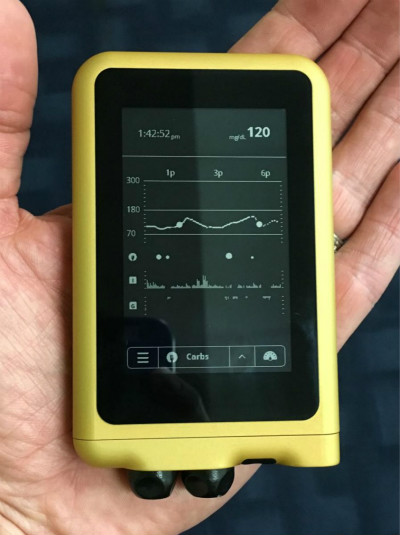
The iLet Bionic Pancreas Model Developed by Boston University
This artificial pancreas technology was developed by Damiano because his teenage son has type 1 diabetes and had to inject insulin to prevent the risk of falling into a diabetic coma. Although some diabetes patients have already adopted high-tech and convenient methods by implanting sensors to monitor blood glucose levels, the device called the iLet, developed by Beta Bionics, automatically injects insulin into the body when it detects the need, completely freeing up both hands.
Beta Bionics opted for the crowdfunding route because it is a “public benefit corporation,” meaning its mission is to deliver the greatest possible benefit to people with type 1 diabetes, even at the expense of short-term profits. In other words, the company has been seeking out investors motivated by idealism or those who themselves have type 1 diabetes, since poor management of this condition can rob individuals of years of life.
Many investors are, in fact, scientists or engaged in diabetes-related research. Gabriel Smolarz, for instance, is a Clinical Assistant Professor at Rutgers Robert Wood Johnson Medical School. Two of Smolarz’s nephews and his sister-in-law have type 1 diabetes. “In my view, this is akin to self-driving cars,” he said. “It sounds impressive and holds great potential, but it eliminates human error while also removing the need for human control.”
Michelle Faulkner works at a public relations firm on Wefunder and also invested $1,000 in equity. She said her fiancé suffered from kidney failure caused by diabetes and had a fatal heart attack two years ago at the age of 46. “He was an electrician who often worked outdoors,” Faulkner said. “Due to his work, he didn’t want to carry around bulky monitoring devices, as he found them impractical. He tried to gauge his condition based on how he felt, but that approach didn’t work. It’s not a disease you can manage by relying on intuition.”

Companies raise funds through crowdfunding.
Nicholas Tommarello, co-founder and CEO of Wefunder, estimates that private companies have raised over $5 million in financing since the new crowdfunding regulations took effect in May. However, with approximately 29% of investors contributing only the minimum amount of $100, this still represents a relatively slow start.
“Our idea is to give many ordinary individuals the opportunity to make small-scale investments, rather than engaging in large-scale investments through traditional financial means,” said Marc A. Leaf, a legal partner at Drinker Biddle & Reath and a former enforcement staff member at the Securities and Exchange Commission.
He stated that whether crowdfunding, representing public sentiment, can prove superior to professional technical investors remains to be seen. “We can question the true wisdom of the crowd,” said Leaf.

Biomedical engineer Edward Damiano developed the “artificial pancreas” after his son, David, was diagnosed with type 1 diabetes.
In the one year that companies were permitted to use regulated crowdfunding for financing, Beta Bionics raised $1 million, reaching the maximum funding cap. Leaf recently analyzed 50 companies seeking crowdfunding and stated that he believes Beta Bionics is the first company to have done so.
Of course, a key factor behind the significant increase in Beta Bionics’ financing was the endorsement from Eli Lilly, the pharmaceutical company that sells insulin. Lilly previously purchased a 5% stake for $5 million, providing brand credibility to Beta Bionics. This investment valued the startup at $100 million, significantly higher than most companies seeking to sell equity through crowdfunding.
Beta Bionics has tested its artificial pancreas in volunteers and plans to launch a larger-scale trial of the iLet in March 2017. Initially, the device was designed solely to deliver insulin, functioning as a glucose controller. Future versions will deliver both insulin and glucagon. Glucagon is another hormone required by the body when glucose levels are too low, such as between meals.
The company will compete with other artificial pancreas systems under development, including one created by Medtronic that is expected to be commercialized next year.
This is not the only risk facing Beta Bionics’ investors. To cover its research expenses, the company is also counting on securing a $15 million grant from the U.S. National Institutes of Health (NIH), but success is by no means guaranteed. The company told potential investors, “We are blazing a new trail, as anyone striving to do so must, and detours along the way are always inevitable.”