

Top 10 Disruptive Medical Technologies Poised to Save Millions in Developing Countries
There are significant differences in the social, economic, and political contexts between developed and developing countries, with the latter urgently needing innovative healthcare solutions. The following ten most innovative medical technologies help save millions of lives in the farthest corners of the globe.
Imagine two babies born at the same moment: a girl in Sweden and a boy in Mozambique. What are their chances of living long, healthy lives?
In Nordic countries, where IKEA furniture is readily available and the world’s safest cars are ubiquitous, life expectancy at birth reached 81.98 years in 2015. In stark contrast, in Mozambique—a country often mistakenly associated with South Africa in this context—where public debt stood at $11.64 billion and political instability was extreme, average life expectancy in 2015 was only 52.94 years. What a striking disparity!
If an infant falls ill, there are striking disparities in their access to timely medical care and appropriate treatment. In Sweden, there are 328 physicians available to treat every 100,000 people, whereas in Mozambique, only three physicians serve the same population size.
Due to significant differences in social, economic, and political contexts, populations in developing countries face poorer health outcomes and substantially lower life expectancy, creating an urgent need for innovative and transformative healthcare solutions.
The following ten most innovative medical technologies are helping to save the lives of millions in remote corners of the world.
13D-Printed Prosthetics
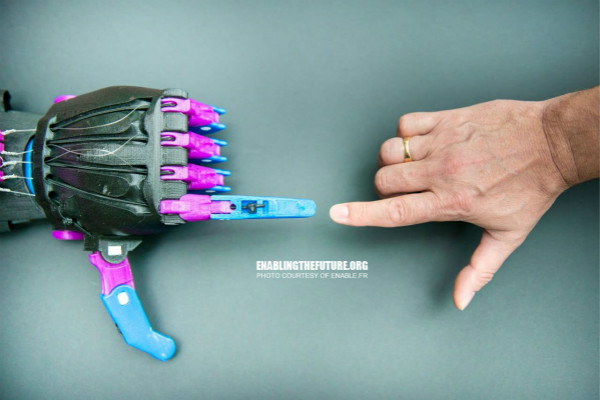
Globally, more than 30 million people require mobility aids such as prosthetics, yet 80% of amputees worldwide lack access to modern prosthetic limbs. The e-NABLING the Future project offers a solution through an innovative approach.
Jennifer Owen, the owner of the website, describes the essence of this approach: it is fundamentally a global network where enthusiastic volunteers share 3D printing designs, video tutorials, and other information on prosthetic hand fabrication. Volunteers, doctors, and anyone else on the platform can provide assistance to those in need through written communication. Successful examples have emerged from around the world: children and adults in Chile, Ghana, Indonesia, and many other countries now have access to prosthetic hands that are either superhero-themed or more traditionally shaped.
23D-Printed Field Hospital
The potential of 3D printing has also attracted the interest of non-governmental organizations in the medical field. Médecins Sans Frontières (MSF), also known as Doctors Without Borders, is exploring the use of 3D printing and virtual reality technologies to help establish field hospitals tailored to their specific environments and circumstances. In addition to traditional 2D floor plans, the team has developed 3D models and a virtual reality simulation system recently designed for deployment in the Philippines to assist communities affected by the 2013 typhoon disaster.
33D-Printed Medical Devices
In Haiti, Field Ready is dedicated to using 3D printing to produce tools required for childbirth, including umbilical cord clamps and simple devices such as oxygen concentrators. The organization also encourages the manufacture of small agricultural tools through 3D printing technology. Another startup, re3D, offers its Give-a-Bot project, which provides the cost-effective desktop 3D printer Gigabot—a “great idea” for local communities and organizations.
4Remote Patient Monitoring
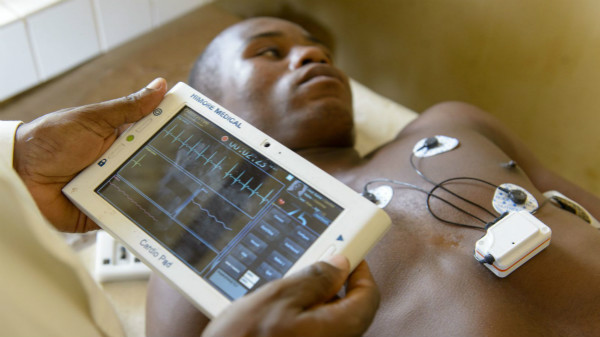
In some regions of sub-Saharan Africa, to address the challenge of a low doctor-to-patient ratio and spare patients from traveling long distances for treatment, Cameroon’s Himore Medical has developed a wireless solution called CardioPad. Through Bluetooth and mobile networks, patients with cardiovascular diseases (CVDs) can receive effective remote monitoring.
5Leveraging Solar Energy to Enhance Hearing
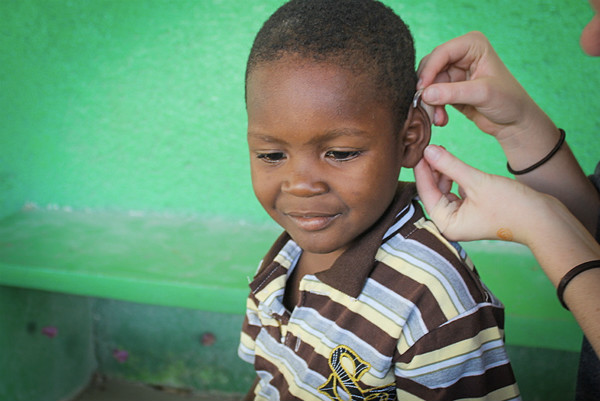
Deaftronics, based in Botswana, Africa, is addressing the challenge of hearing impairment. It has developed Solar Ear, the first solar-powered hearing aid. This technology represents a disruptive change for a country with a population of over two million but only 12 audiologists and five audiology centers.
Each Solar Ear device includes a digital hearing aid, a solar-powered charger, and four rechargeable batteries. These batteries are also compatible with 80% of the hearing aids currently available on the market. In Africa, Brazil, China, India, and Singapore, this invention has reduced the number of patients who would otherwise be required to visit healthcare centers, while also helping to save time and money.
6Ensure Access to Sanitary Pads for All Women
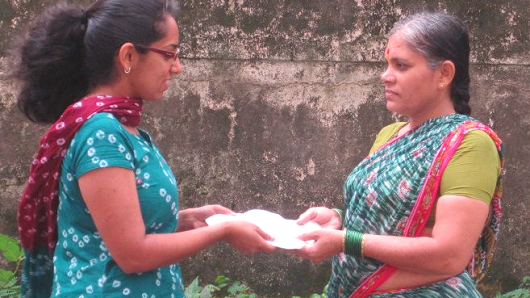
According to a 2011 survey by market research firm AC Nielsen, the shortage of sanitary pads in India has led to 23% of adolescent girls dropping out of school. A study commissioned by the Indian government also found that only 12% of women use sanitary pads, with the rest relying on makeshift alternatives.
Now, a company is helping women improve their health and stay in school. Saathi has developed fully biodegradable sanitary pads made primarily from discarded banana tree fibers. This groundbreaking innovation has garnered strong support from local farmers, as their labor contributes to the production of these pads, while the biodegradable waste does not harm the environment. In India, Saathi’s sanitary pads make it possible to repurpose 108,000 tons of such waste annually.
7MIT-Developed Test Can Identify Ebola Within 10 Minutes
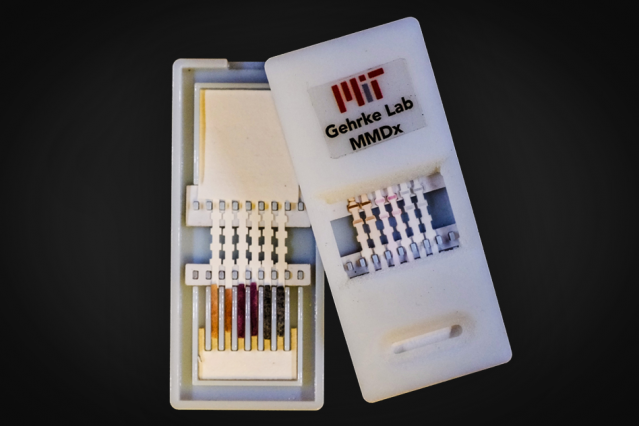
Time is of the essence in diagnosing Ebola virus. However, existing diagnostic tests require at least one to two days to yield results, severely hindering healthcare workers’ ability to rapidly determine whether patients need immediate treatment and isolation.
A new test developed by researchers at the Massachusetts Institute of Technology (MIT) is set to change this landscape: a simple paper strip, similar to a home pregnancy test, can diagnose Ebola virus and other viral hemorrhagic fevers, such as yellow fever and dengue, within 10 minutes.
8SMS Begins to Tackle the Problem of Counterfeit Drugs in Africa
Counterfeit medicines are a serious problem in developing countries, particularly in West Africa. According to estimates by the World Trade Organization (WTO), fake antimalarial drugs cause 100,000 deaths in Africa each year.
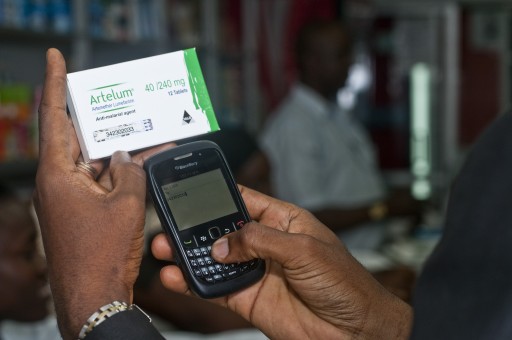
Ghanaian tech company mPedigree offers a very low-cost solution to combat counterfeit drugs. The method is simple and easy to learn. Patients purchase medication from a pharmacy, scratch off the coating to reveal a 10-digit code, and send the number free of charge via SMS using a short dialing code. Within seconds, they receive a reply confirming whether the drug is genuine or fake.
Mr. Simons, Chief Strategist at mPedigree, stated that the company launched pilot programs in Ghana and Nigeria this summer through a partnership with Hewlett-Packard. Other countries, including Kenya, Uganda, and Tanzania, have expressed their interest. Furthermore, mobile network operators have agreed to cover the cost of SMS messages.
9Water Purification Systems for Preventable Infectious Diseases
More than 700 million people worldwide consume unsafe water every day. Nearly 2.5 billion people lack access to adequate sanitation facilities. Each year, over 1 million children under the age of five die from contaminated water and poor sanitation. Contaminated natural water resources are also used as sources of drinking water, contributing to a 10% increase in the global burden of disease.
These figures are alarming and deeply unsettling. This is why researchers and innovators at the Cleveland Clinic have developed a water purification system capable of saving millions of lives. This high-performance treatment system can convert solid waste and sewage sludge into safe drinking water for tens of thousands of people.
10Effective Treatment for Neonatal Jaundice
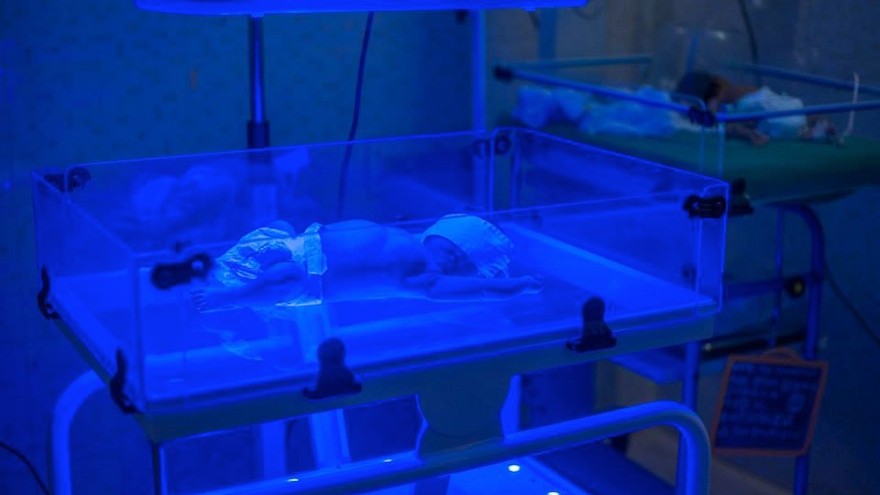
Experts from Stanford University School of Medicine and the organization D-Rev estimate that more than 6 million infants with severe jaundice do not receive appropriate treatment each year.
Research conducted by D-Rev, a medical institution operating in India and Nigeria, and Stanford University found that 95% of equipment assessments at low-income hospitals and clinics failed to meet the American Academy of Pediatrics’ standards for intensive phototherapy. Equipment maintenance represents a significant constraint on treatment delivery: approximately one-third of phototherapy units have bulbs that are burnt out or missing. Compact fluorescent lamps are commonly used in phototherapy; replacing a single bulb costs around $15 and lasts approximately four months. Each device requires an average of six bulbs, yet many hospitals struggle to procure these replacements simply because they cannot afford the cost.
D-Rev has designed and manufactured an excellent tool to address this issue. By using the medical device called Brilliance, hospitals can save over $240 annually on bulb replacement costs. Meanwhile, Brilliance is capable of withstanding a wide range of power fluctuations without compromising device performance.
The company estimates that, with the help of this device, 124,800 infants with jaundice will receive treatment, whereas they would otherwise have been unable to access effective care.
As patients and physicians, we will continue to support innovation rather than hype. Beyond financial and general backing, we need more educational programs akin to those offered by D-Lab Health, which teaches medical technology to developing countries. Such approaches will broaden the horizons of innovators, educators, and other experts.
Of course, those in the 21st century who aspire to transform medicine and healthcare in developing countries must keep these words in mind: disruptive ideas, curiosity, and courage.