

YouTu Medical's First Domestic AI-Powered Pocket Ultrasound Device Receives Medical Approval, Marking a Major Milestone
Recently, U-Tech, a company based in Chengdu High-Tech Zone, announced that its first intelligent handheld ultrasound product, Zhangsheng·mSonics MU1, has been officially put into medical application and has obtained medical device registration from Sichuan Province. Compared with traditional ultrasound equipment, this product is innovative in terms of design concept, principle, and form, bringing greater convenience and safety to clinical operations. In response, VCBeat (WeChat ID: vcbeat) has provided follow-up coverage.
Handheld ultrasound has become a globally recognized direction for development in the healthcare industry. However, large desktop ultrasound systems are far from sufficient to cover the tens of thousands of township health centers and even more village-level healthcare institutions across China. There is an urgent need within the domestic healthcare sector for a truly clinically viable handheld ultrasound device. Experts believe that handheld ultrasound enables physicians to readily access rich and rapid diagnostic information, which will fundamentally improve clinical diagnostic workflows and patient care. In light of this, handheld ultrasound was included in 2016 as a major national R&D project under the “13th Five-Year Plan” released by the Ministry of Science and Technology of China.
In fact, handheld ultrasound has a history of development abroad. Since the 1980s, the United States took the lead in developing handheld ultrasound devices for battlefield medical care. These rechargeable ultrasound diagnostic instruments, equipped with satellite-based remote image transmission capabilities, played a positive role during the U.S. military’s Operation Desert Storm. According to Song Jianning, a researcher at the Institute of Acoustics of the Chinese Academy of Sciences, this technology transitioned from military to civilian use. The first handheld medical ultrasound diagnostic device, modified and commercialized by a U.S. company, was initially applied to anesthesia catheter intervention during surgery.
Project Specialist at the Ministry of Science and Technology, Professor Yu Xing, a senior domestic ultrasound expert, stated that medical ultrasound diagnosis has long been widely embraced in clinical practice. Due to its broad applications and the large volume of patients examined, severe queuing for ultrasound examinations is common in many hospitals, particularly in large and medium-sized institutions. For bedridden critically ill patients and elderly individuals with limited mobility, handheld ultrasound devices offer significantly greater convenience. Although portable ultrasound equipment is currently available, it still weighs several kilograms and requires AC power supply, meaning its practical application remains subject to multiple constraints.
It is reported that China has tens of thousands of township health centers and even more village-level healthcare facilities. However, there is currently no particularly suitable ultrasound device that is portable while offering an optimal balance of price, size, and performance. The portability of handheld ultrasound enables physicians to use it with ease, whether in large hospitals or remote small clinics. It can be said that China’s healthcare industry urgently needs a truly clinically viable handheld ultrasound device.
Against this backdrop, the miniaturization of ultrasound has become an increasingly clear development direction widely recognized by the industry. In 2016, handheld ultrasound stepped into the “spotlight,” with handheld ultrasound imaging systems being included in the National Key R&D Program of China’s 13th Five-Year Plan, as released by the Ministry of Science and Technology.
Dr. Wu Zhe graduated with a degree in Electrical Engineering from the University of Rochester in the United States, where he studied under Professor Kevin Parker, an IEEE Fellow. His patented research on elastography was adopted by GE, and he was honored as the sole recipient of the 2004 AIUM (American Institute of Ultrasound in Medicine) New Investigator Award. In 2011, this post-70s returnee PhD, who had served as a key technical executive at global corporations and as a professor at prestigious universities while conducting medical imaging research for 13 years in the U.S., came to Chengdu to found Youtu Technology Co., Ltd.
Youtu Technology, located in the Chengdu High-Tech Incubation Park, is a modern high-tech enterprise dedicated to the research and development, production, and sales of intelligent mobile ultrasound imaging systems. Wu Zhe stated that the original intention behind founding this startup was to “slim down” large-scale ultrasound equipment, making it easier for doctors to carry ultrasound devices and addressing the need for ultrasound examinations in remote areas.
During the initial period in Chengdu, Wu Zhe visited a large number of primary healthcare institutions in the surrounding areas, arranged by the Chengdu High-Tech Zone and the Chengdu Talent Development Promotion Association. “Many primary healthcare institutions use bulky ultrasound imaging equipment weighing at least 300 to 400 jin (approximately 150–200 kg). When it comes to providing services at the grassroots level or entering communities, moving these machines becomes a major challenge.” As product development progressed and hospital visits continued, Wu Zhe’s team discovered that, in addition to the practical demand for handheld ultrasound devices in primary care settings, there was also significant demand across various departments in large hospitals. To date, departments including anesthesiology, pain management, urology, general surgery, gynecology, respiratory medicine, hematology, and oncology have all demonstrated strong willingness to adopt this technology.
Driven by real-world needs, Wu Zhe and his team resolved to develop a domestically produced, handheld smart ultrasound device for clinical use, aiming to address the “pain points” of existing medical ultrasound imaging equipment—namely, poor portability, subpar image quality, and cumbersome user experience. Subsequently, he and his team embarked on an arduous entrepreneurial journey. During this process, Wu Zhe’s name was successively included in the expert lists of Sichuan Province’s “Thousand Talents Plan” and the National “Thousand Talents Plan.”
“The smaller the device, the greater the technical challenges involved,” said Wu Zhe. After dozens of design iterations and thousands of experimental data collections, Wu and his team underwent a lengthy process of trial and error before finally overcoming these hurdles to develop the mSonics MU1. The product has currently obtained medical device registration in Sichuan Province. This July, Wu brought his new product to Nice, France, to attend the China-France Symposium for Leaders of Future Young Technology-Based Enterprises. The debut of this handheld ultrasound device attracted significant attention from the industry, market, and investors.
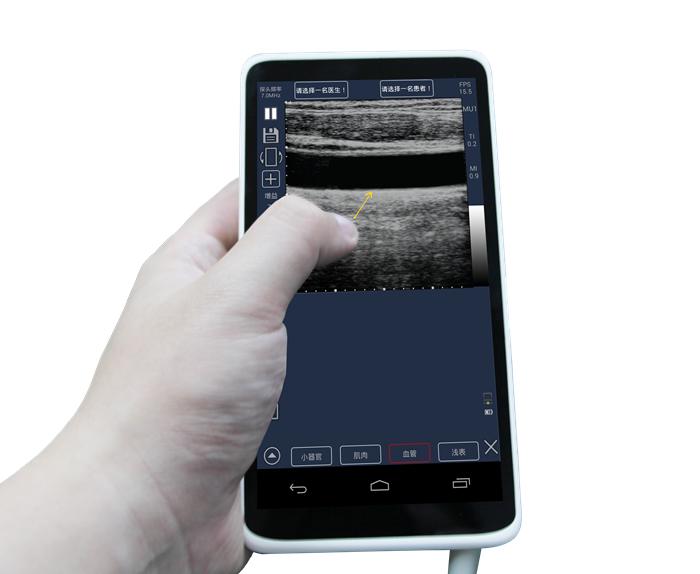
Shrinking ultrasound equipment weighing hundreds of pounds to the size of a 6-inch smartphone; offering full touchscreen operation for simple and easy use; leveraging the Android system to provide intelligent assistance for specific medical conditions; providing online learning resources to reduce the complexity of operating ultrasound devices... U-Tu TechnologyApplause·The mSonics MU1 makes ultrasound diagnosis more convenient for patients, even enabling telemedicine, and can be widely used in areas with limited transportation access, as well as on battlefields and during sudden disasters.
Wu Zhe stated that mSonics MU1 features independently developed, internationally leading core ultrasound algorithms, which, when integrated with intelligent hardware, deliver powerful computational capabilities. Among its many innovations, he cited the example of full-touch operation, which significantly simplifies the use of ultrasound equipment: while a traditional medical scan requires approximately 300 button presses by the physician, the handheld ultrasound imaging system reduces this to just around 10.
“Currently, although there are already some handheld ultrasound products available abroad, the mSonics MU1 offers advantages such as intelligent image optimization, touch-screen operation, and clearer imaging,” said Wu Zhe. The mSonics MU1, which has obtained regulatory approval, is now undergoing clinical trials and has been endorsed by clinicians at renowned hospitals.
“Starting at 8:00 AM every day, all surgical patients need to undergo anesthesia, and sometimes there is competition for ultrasound equipment.” In Beijing, an anesthesiologist at a Grade 3A hospital has become accustomed to performing ultrasound-guided injections for patients using the mSonics MU1. This skilled anesthesiologist completed two anesthetic injections within five minutes. He stated, “The Department of Anesthesiology cannot purchase too many large ultrasound systems. The mSonics MU1 is lightweight, easy to use, and more affordable than desktop ultrasound units, while providing clear imaging. Its advantages in guiding injections are significant, particularly for patients with abnormal vascular and neural tissue structures. The clear visualization interface of the mSonics MU1 brings convenience and safety to clinical practice.”
At Qianfoshan Hospital Affiliated to Shandong University, Dr. Liu Lei from the Department of Pain Medicine combined the mSonics MU1 with silver needle therapy. In his summary report, he stated, “Silver needle therapy is primarily indicated for patients with moderate to severe extra-spinal soft tissue damage-related pain who have not responded to other non-surgical treatments, demonstrating definitive efficacy. The use of a handheld intelligent mobile ultrasound device for guiding silver needle insertion enhances procedural safety and accuracy, thereby improving therapeutic outcomes.”
These applications represent only the tip of the iceberg for mSonics MU1. The challenge now facing Wu Zhe’s team is no longer the lengthy medical device registration process, but rather the insufficient supply of trial units to meet hospital demand. Wu stated that in the coming months, the team plans to manufacture several hundred additional devices for deployment in hospitals. Meanwhile, they will also bring handheld ultrasound imaging systems into communities and remote areas, enabling individuals who have difficulty accessing large hospitals to receive convenient diagnosis and medical services right at their doorstep.