

Guarding Rio: Digital Health Tools at the Olympics
The 2016 Rio Olympics have begun! Of course, in addition to the competitions in various events, the health status of athletes has also become a focus of public attention. Some technology companies have rolled out cutting-edge technologies to help monitor athletes’ physical conditions; the Zika virus remains a key target of prevention and control efforts by the Brazilian government, and discussions about EPO are rife… How should we interpret the intersection of the Olympics and healthcare? VCBeat (WeChat ID: vcbeat) has published a series of reports on this topic.
The 2016 Olympic Games are approaching with overwhelming force. Public health officials worldwide are busy addressing the challenges Rio de Janeiro faces in terms of air and water quality, vector-borne disease prevention and control, and crime rates.
In this context, medical applications have become auxiliary tools for safety and public health interventions. As a virus with two major transmission routes—mosquito-borne and sexually transmitted—the prevention and control of Zika virus has consumed significant human and material resources.
The threat posed by this virus is indeed not to be underestimated: according to reports from the Brazilian government, Rio de Janeiro ranks second nationwide in the number of Zika cases and fourth in incidence rate. In addition to the Zika virus, other health threats exist in the region. Some argue that the health hazards in Rio are significant enough to make these Olympic Games a classic case study for epidemiologists. Therefore, it is necessary to take a closer look at the “guardians” responsible for preventing and controlling the Zika virus during the Rio Olympics.
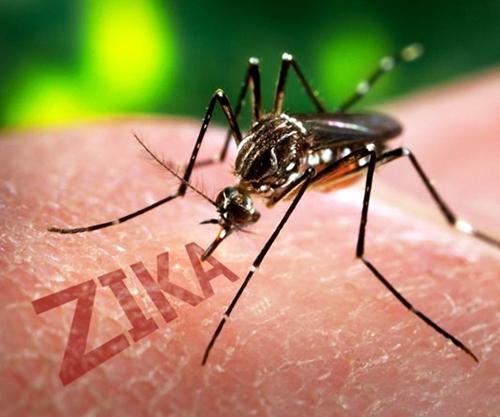
Zika Virus Can Cause Microcephaly in Newborns
In March, the World Health Organization (WHO) launched its first mobile health intervention—the WHO Zika App. Designed primarily for healthcare professionals and emergency responders, the app also provides general users with medical reference information on the Zika virus. Local Centers for Disease Control and Prevention have published lists of recommended health apps, while the Global Disease Early Warning System has introduced several comprehensive safety applications, including one that helps users locate emergency medical services.
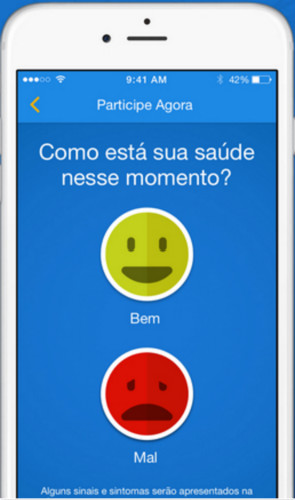
This July, the Brazilian Ministry of Health launched the “Health Guardians” (Guardiões de Saúde) app, which enables Brazilian residents, Olympic participants, and approximately 500,000 foreign tourists to assess their daily health status by reporting typical symptoms of infectious diseases. The development of “Health Guardians” builds upon a similar application introduced during the 2014 FIFA World Cup and has received support from the U.S.-based Skoll Global Threats Fund. The fund collects risk information on disease transmission through crowdsourced monitoring of mass gatherings.
In addition, IBM has announced several initiatives to combat the Zika virus. In July this year, IBM stated that it would collaborate with the Oswaldo Cruz Foundation, a research institution affiliated with the Brazilian Ministry of Health, to jointly implement a series of interconnected measures against the Zika virus. The most high-profile project currently is OpenZika, which harnesses the computing power of Android smartphones in the hands of the public through crowdsourcing. By downloading a free application, anyone can contribute their smartphone’s spare computing capacity to scientists, who will use this computational power to screen compounds and thereby identify candidate therapies for the Zika virus.
Zika virus is virtually ubiquitous. Large numbers of mosquitoes breed near water sources, which also serve as a haven for microorganisms. Local authorities are making efforts to clean up beaches and rivers in Rio de Janeiro, and individuals entering the water have been advised to take protective measures for their eyes and mouth. For waterborne diseases, a mechanism for timely symptom reporting is crucial, and connected devices will accelerate this process. The Brazilian government has distributed Kinsa smart thermometers free of charge to every Olympic athlete and their guests.
Kinsa, a digital health startup headquartered in San Francisco, was founded in 2012 with backing from the Silicon Valley venture capital firm Kleiner Perkins Caufield & Byers. The company aims to leverage technology to help track and halt the spread of diseases.
The smart thermometer released by Kinsa does more than just record body temperature; it helps users track medication intake and symptoms such as fever and nausea, and allows them to view prevalent diseases and common symptoms in their area via the app’s built-in map. “With Kinsa, athletes can share their tracked health data with coaches and physicians. In other words, when you truly need assistance, you can provide your Kinsa records to others, enabling them to facilitate a timely diagnosis,” said Nitin Khurana, Manager of Communications and Community Partnerships at Kinsa.
Furthermore, athletes and their entourage can join the “Kinsa Olympic Village Group.” Kinsa’s previous location-based feature anonymously collected data from users and reports of common symptoms to provide the group with an overall health assessment. Users can also use the app’s anonymous message board to discuss illnesses or symptoms.
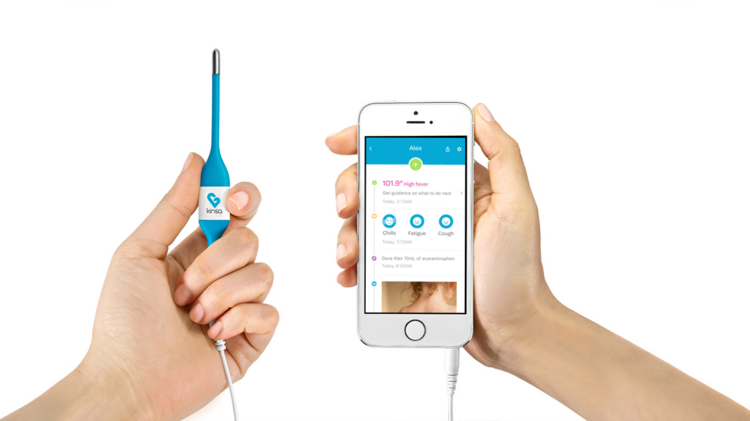
Kinsa not only records temperature but also includes symptoms, location, and medical advice on common medications.
As part of a research project aimed at reducing mosquito populations across Brazil, millions of genetically modified (GM) mosquitoes have been released. The multi-colored GM mosquitoes are produced by the biotechnology company Oxitec, which plans to curb the large-scale reproduction of virus-carrying mosquitoes by deploying this “species killer” strain. The company is targeting Aedes aegypti, the primary vector of the Zika virus.
Specifically, the company’s genetically engineered Aedes aegypti mosquitoes carry a gene that causes their offspring to die before reaching reproductive age. When these genetically modified mosquitoes are released into the wild, they mate with female mosquitoes, producing offspring that fail to survive to adulthood, ultimately leading to a significant reduction in the Aedes aegypti population.
In recent trials, genetically modified mosquitoes helped reduce mosquito larvae by 82% in areas near the city of Piracicaba, São Paulo State. Similar effectiveness of genetically modified mosquitoes has also been observed in two cities in Bahia State.
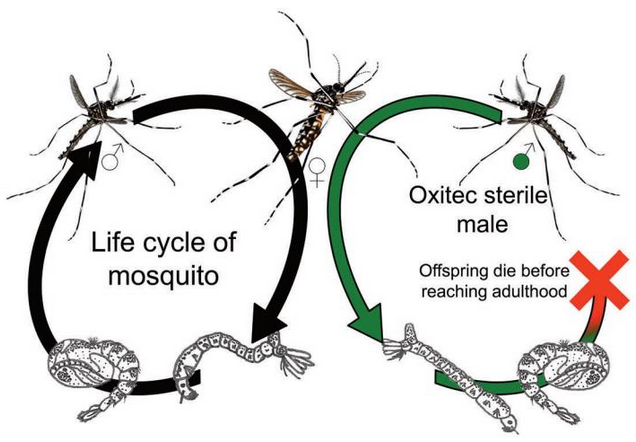
How Oxitec’s Genetically Modified Male Mosquitoes Eliminate a Target Wild Population
Of course, the Zika virus is only one of the local health threats. In addition, some digital health education campaigns by platforms such as Yes to Sex advocate for safe sexual practices. Although the app’s name suggests that people should be open to sexual encounters occurring in “international hotspots” (the term used by the organization), specifically within the Olympic Village, this free application still reminds users to take protective measures and obtain consent. Furthermore, the organization has translated the phrase “Let’s use condoms” into 93 languages.
To what extent will public health be affected during the Rio Olympics, and what role will digital health tools play? Only time will tell. As events unfold, we have found that most people can heighten their vigilance and ensure their own safety by maintaining strong safety awareness and utilizing disease prevention and control applications.
When discussing the extent to which environmental threats to human health can be controlled, Scott Black, CEO of the U.S. Olympic Committee, calmly summarized in an interview with a Los Angeles Times reporter: “At the end of the day, the world is complex, and threats are ubiquitous.”