Decoding the U.S. Healthcare Insurance System: A Minimalist Framework
By Du Xuanyuan, Xiao V
Many Chinese enterprises and forums frequently cite the Affordable Care Act (Obamacare) as evidence in their arguments, and we have seen a plethora of varied reports on the subject. However, there is a scarcity of content that provides a truly comprehensive and systematic interpretation of the U.S. healthcare system. Therefore, VCBeat (WeChat ID: vcbeat) will deconstruct the complex U.S. healthcare system using minimalist logic across four dimensions: “Background Knowledge,” “The Affordable Care Act,” “Healthcare Payment Mechanisms,” and “Development Trends.” This approach aims to facilitate rapid understanding, recognition, and practical application by our readers.
In 2013, as the Affordable Care Act faced significant implementation challenges, Bloomberg published a ranking of healthcare system efficiency across countries. Among the 47 nations surveyed, the U.S. healthcare system ranked nearly last at 45th place, characterized by high costs and subpar quality. Yet, in terms of per capita healthcare expenditure as a share of per capita GDP, the United States unsurprisingly took the top spot. On the U.S. healthcare system’s path of “inefficiency,” what role has its seemingly complex health insurance framework played? What is the essence of the Affordable Care Act, and what changes has it already brought or will it bring in the future?
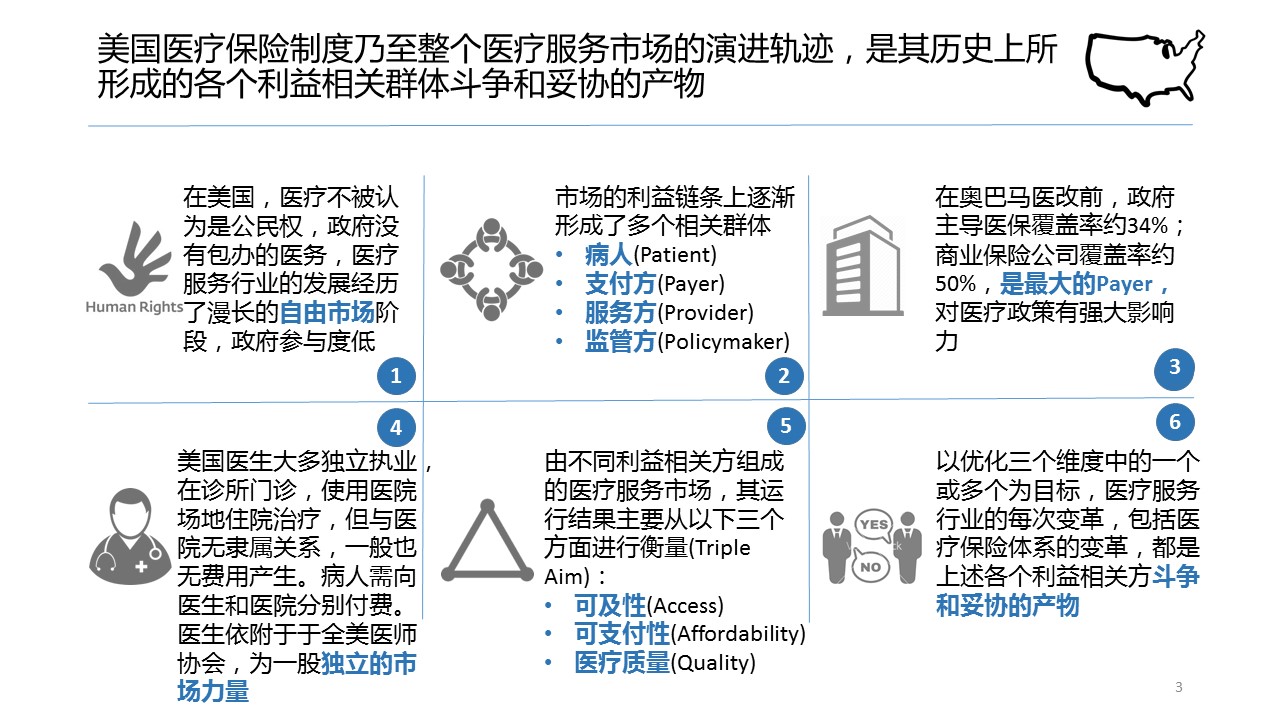
The U.S. health insurance system and healthcare services market have given rise to various interest groups during their development, and the interplay of conflict and compromise among these groups has determined the evolutionary trajectory of the U.S. health insurance system and healthcare services market.
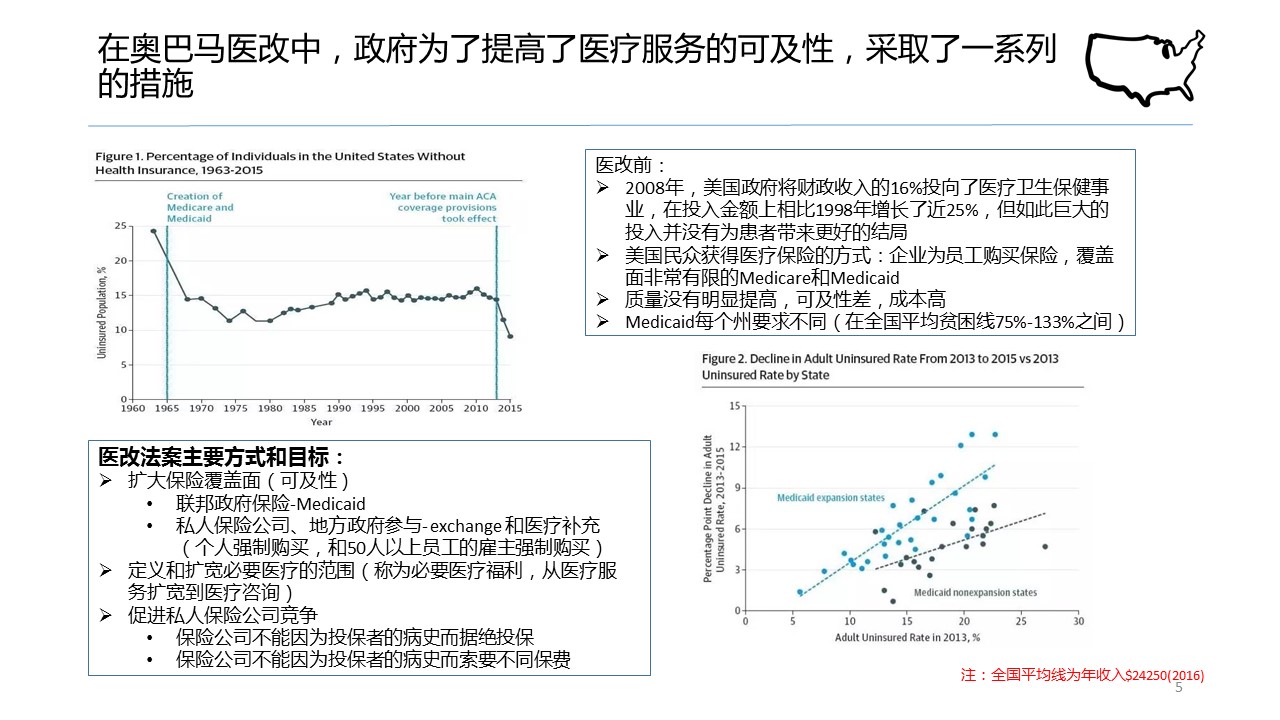
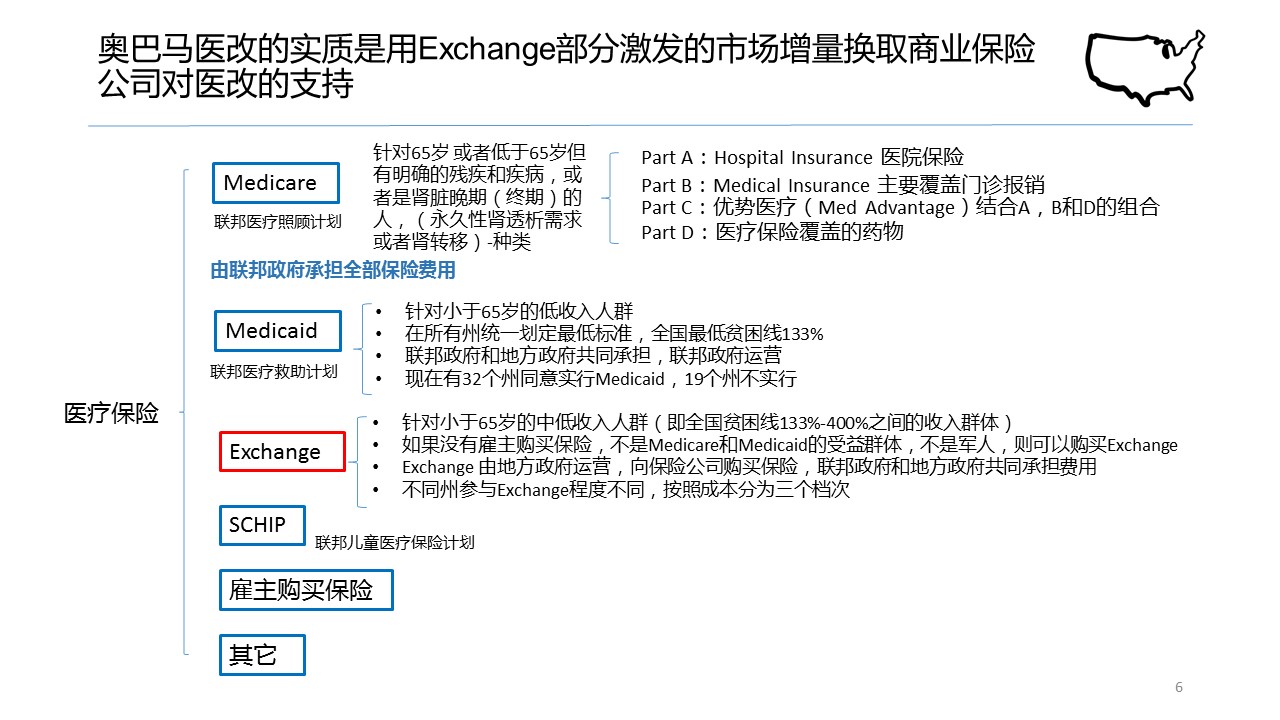
With President Obama’s ascension to office, healthcare reform centered on the “Affordable Care Act” was launched to improve access to medical services. Amidst the evolving dynamics of struggle and compromise between regulators and payers, the government introduced Health Insurance Exchanges, leveraging the market growth stimulated by these exchanges to secure commercial insurers’ support for the reform. Post-reform, health insurance coverage for the general U.S. population primarily consists of Medicare, Medicaid, Health Insurance Exchanges, the Children’s Health Insurance Program (CHIP), and employer-sponsored insurance.
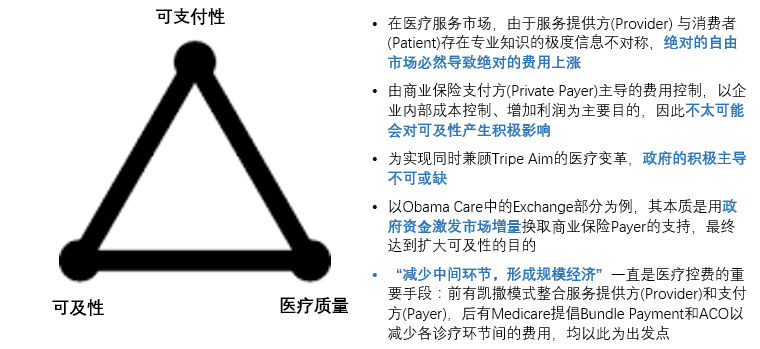
Each reform in payment methods and organizational structures represents a arduous game and painful balance among stakeholders, revolving around the ultimate goals of “accessibility, affordability, and quality of care.”
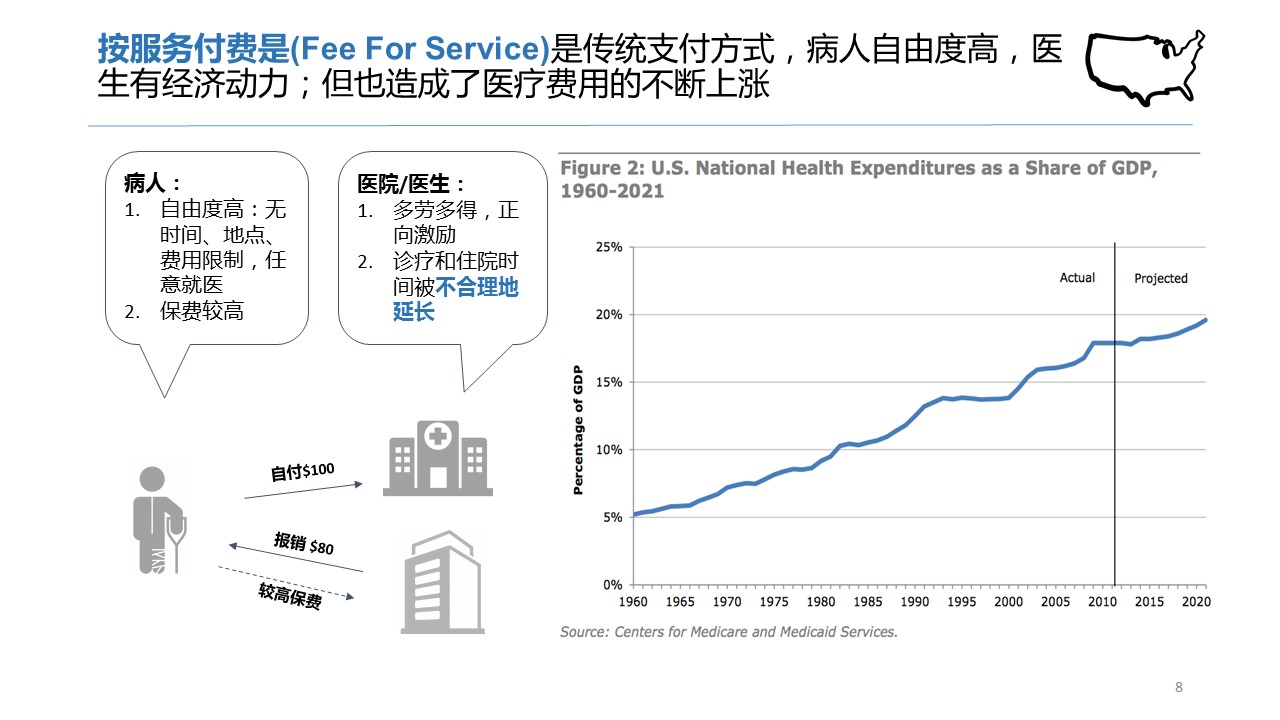
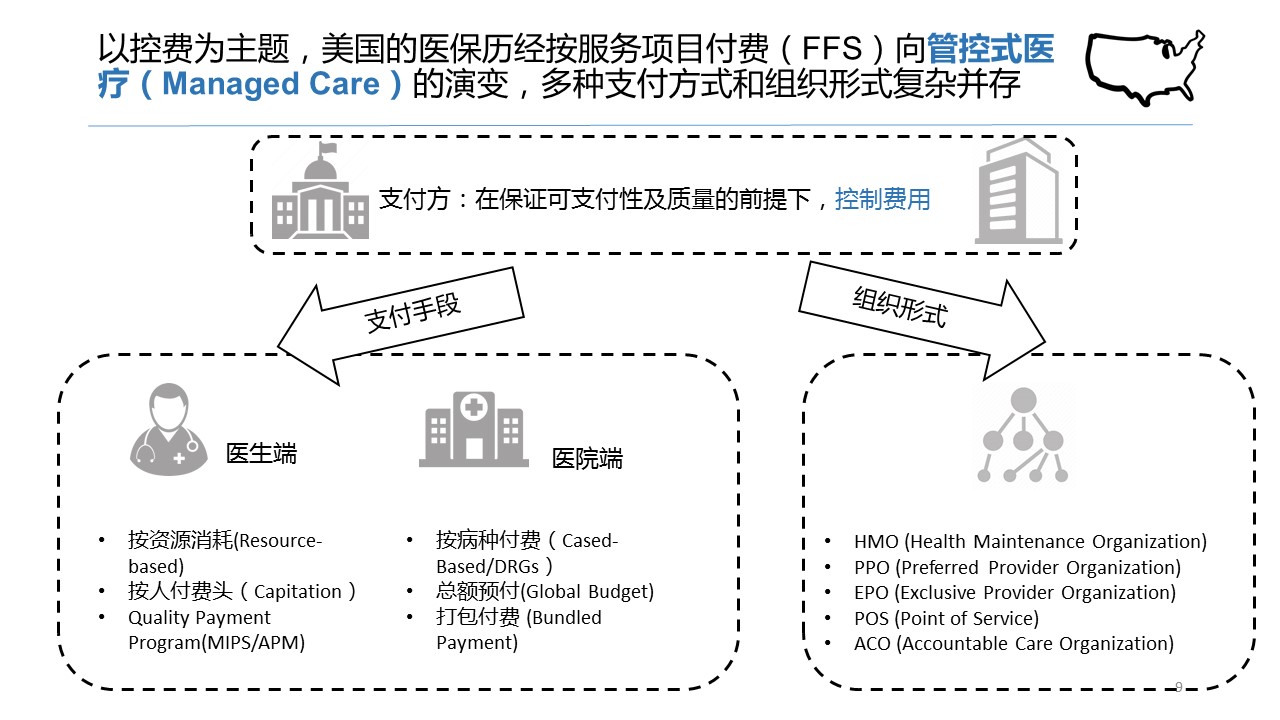
1. Fee-for-Service (FFS) is a traditional payment model that offers patients high flexibility and provides physicians with financial incentives; however, it has also led to continuous increases in healthcare costs. Driven by the pursuit of efficiency and cost containment, U.S. health insurance systems have begun exploring the transition from FFS to Managed Care, giving rise to new payment models and organizational structures.
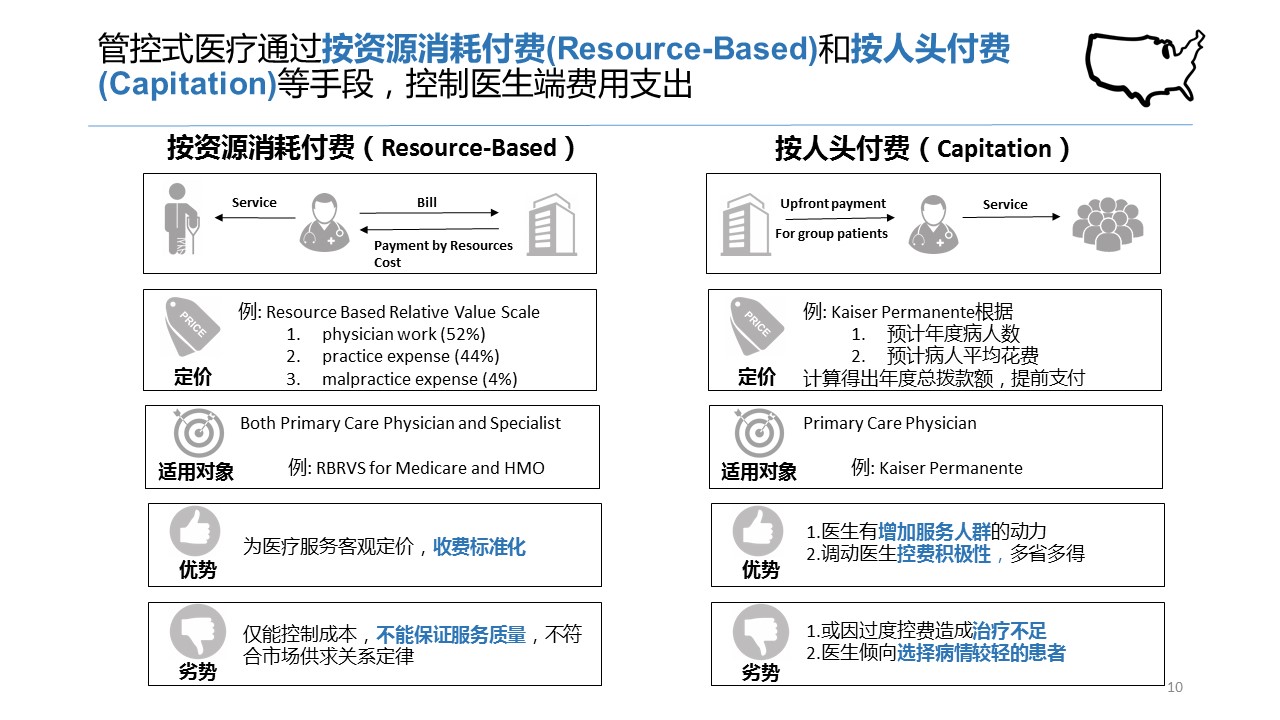
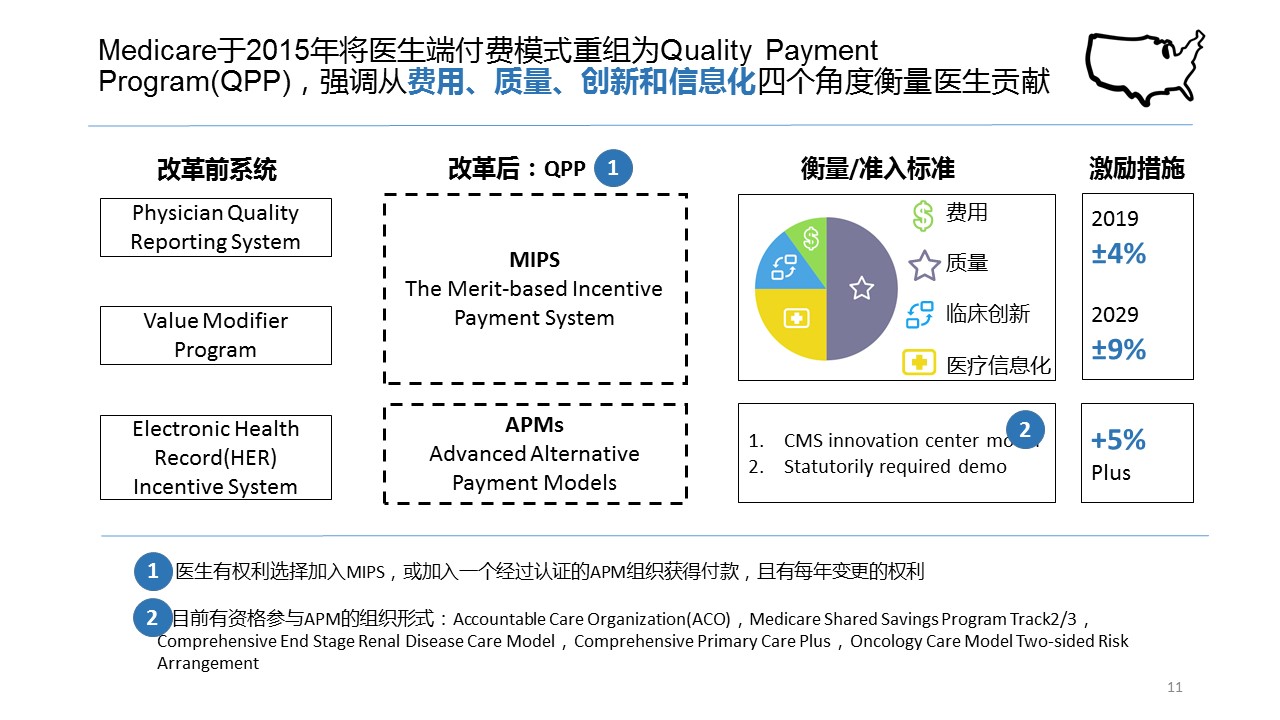
2. Managed care controls physician-side expenditures through mechanisms such as resource-based payment and capitation. In 2015, Medicare restructured its physician payment model into the Quality Payment Program (QPP), emphasizing the measurement of physician contributions from four perspectives: cost, quality, innovation, and health information technology.
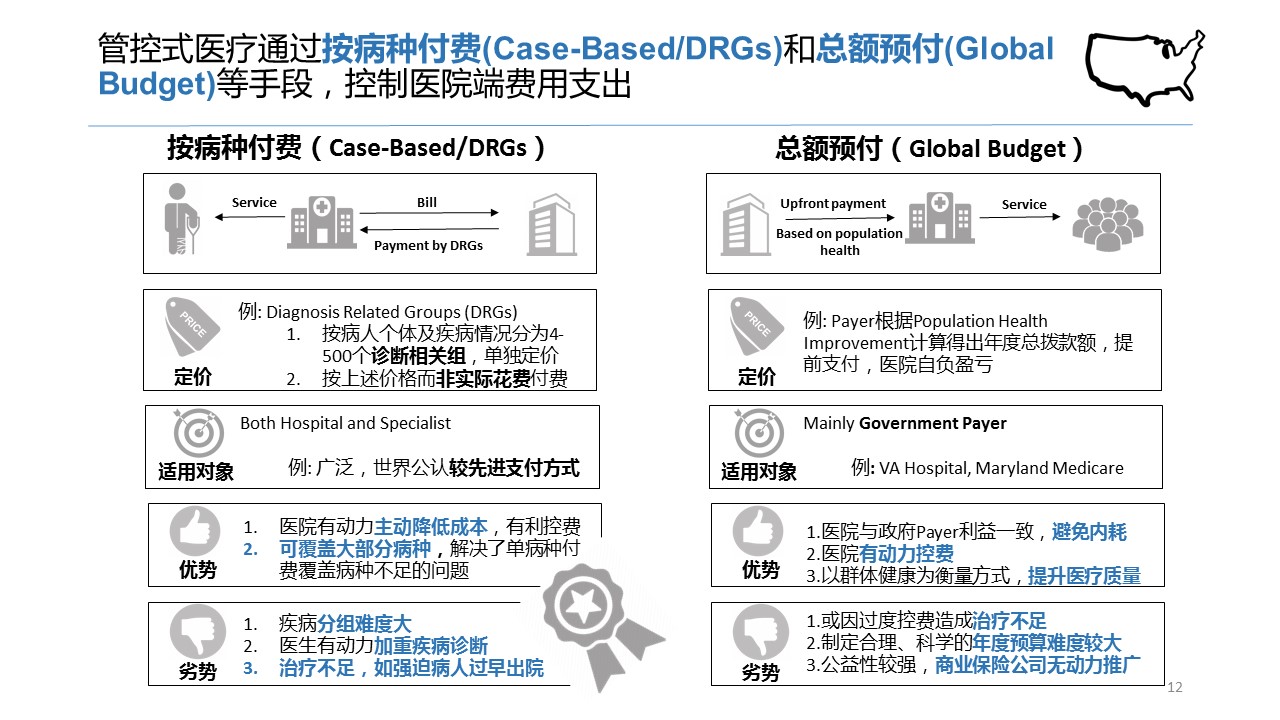
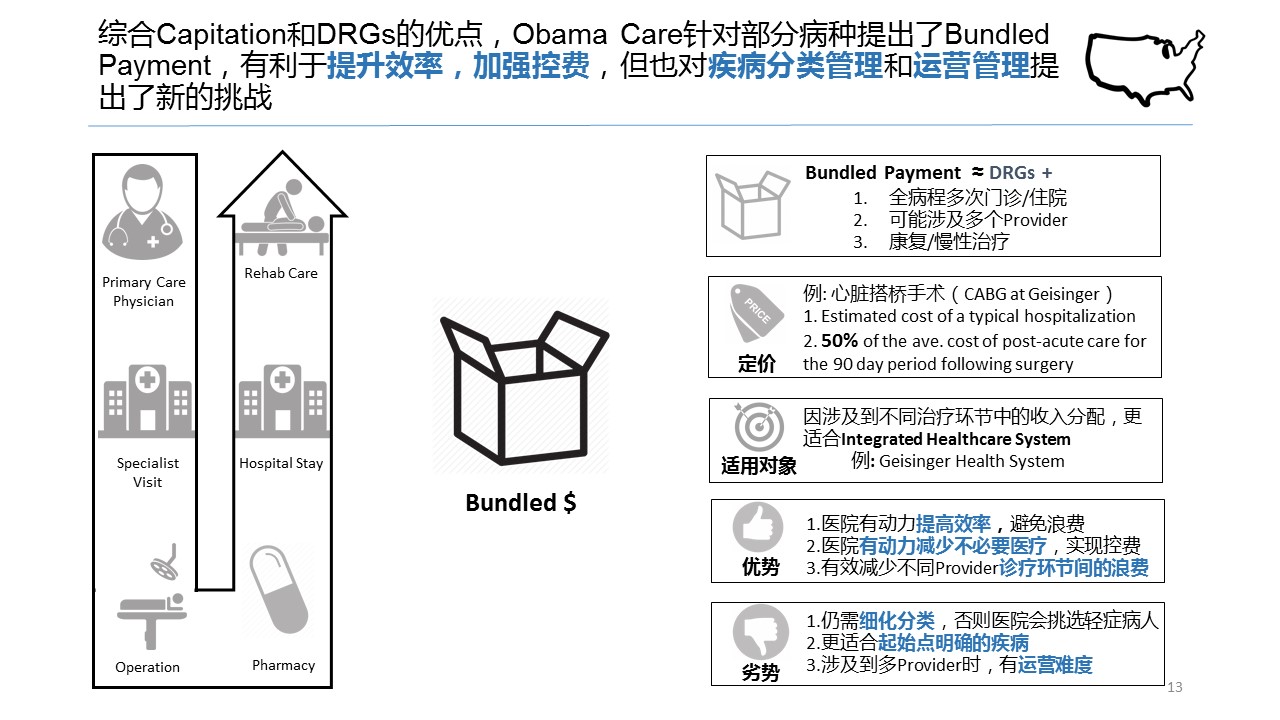
3. Managed care controls hospital-side expenditures through mechanisms such as case-based payment (DRGs) and global budgets. Combining the advantages of capitation and DRGs, the Affordable Care Act (Obamacare) introduced bundled payments for certain conditions, which helps improve efficiency and strengthen cost containment, but also poses new challenges for disease classification management and operational management.
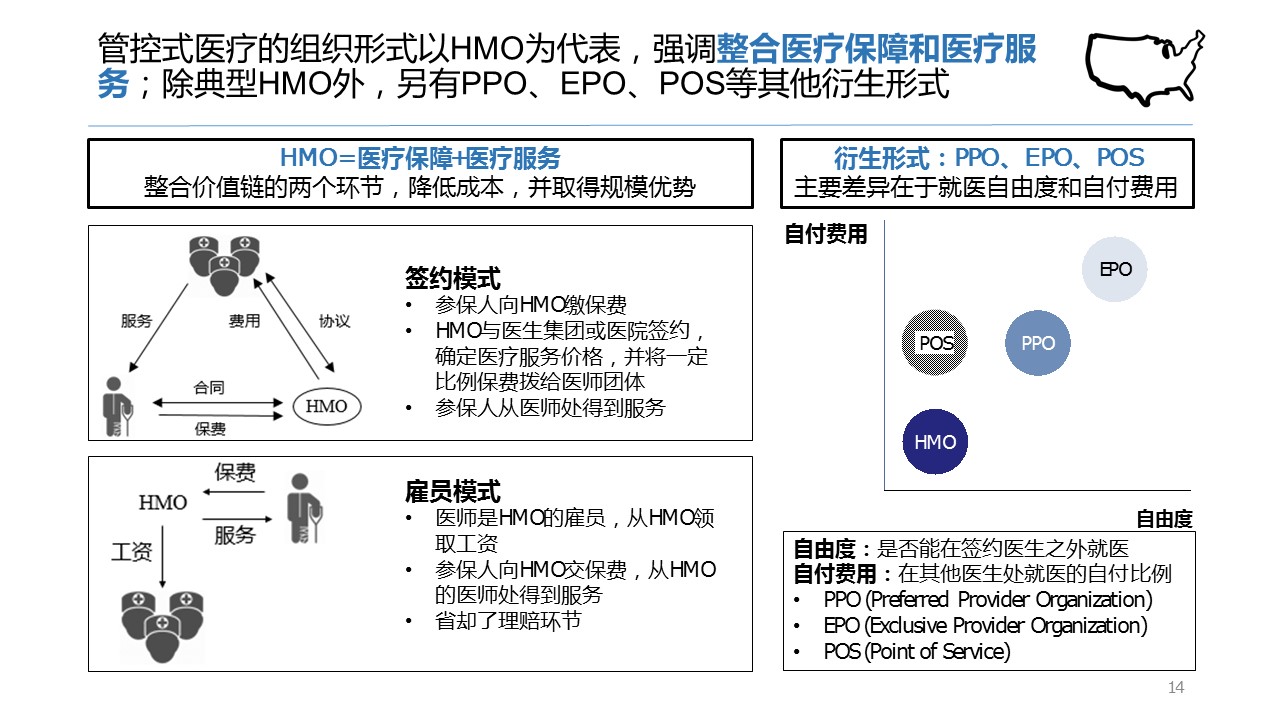
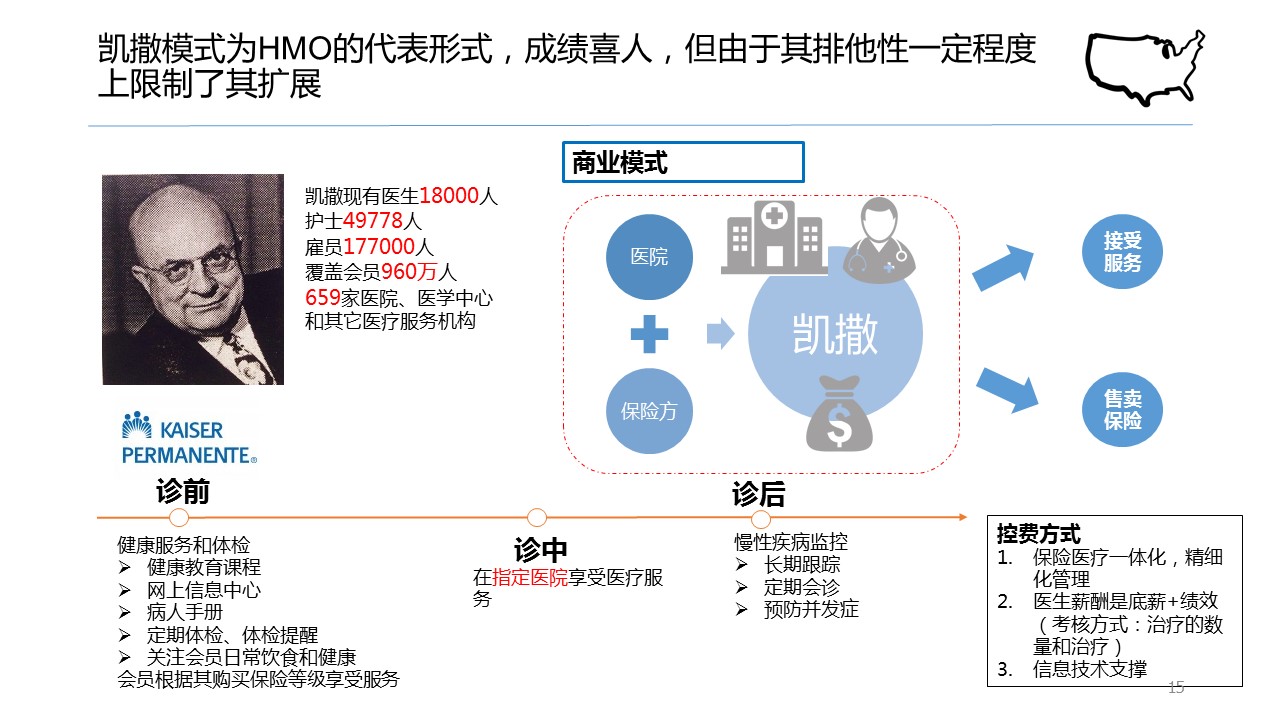
4. Managed care organizations are exemplified by Health Maintenance Organizations (HMOs), which emphasize the integration of health insurance and medical services. In addition to typical HMOs, there are other derivative models such as Preferred Provider Organizations (PPOs), Exclusive Provider Organizations (EPOs), and Point-of-Service (POS) plans. Among these, the Kaiser Permanente–led HMO model is the most renowned; although it has achieved certain successes, its exclusivity has, to some extent, constrained its development.
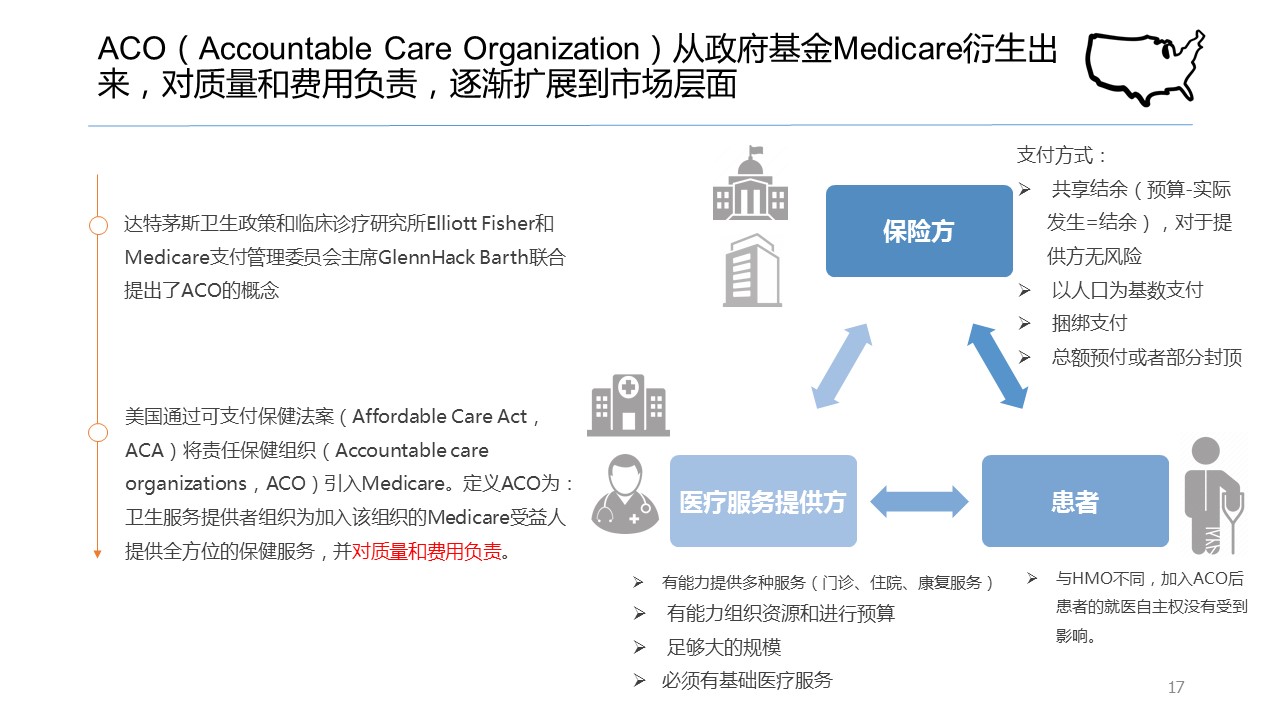
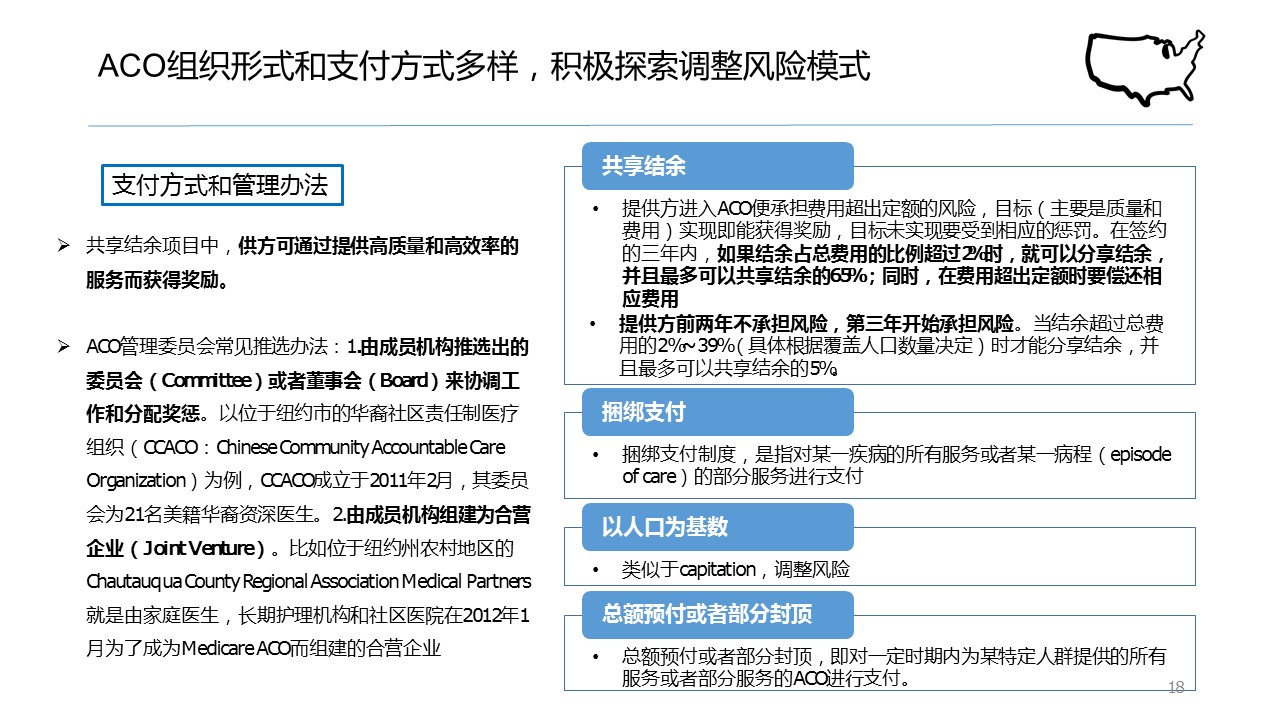
As a long-standing issue, healthcare insurance reform has gradually shifted its development trend from “direct cost containment” to “reducing intermediaries and achieving economies of scale.” Against this backdrop, Elliott Fisher of the Dartmouth Institute for Health Policy and Clinical Practice and Glenn Hackbarth, Chairman of the Medicare Payment Advisory Commission, proposed the organizational model of Accountable Care Organizations (ACOs). Originating from the government-funded Medicare program, ACOs adopt diverse organizational and payment structures, assume accountability for both quality and costs, and have gradually expanded to the broader market level.
By examining the evolution and development trends of the U.S. healthcare system, we can distill the following insights.