

Peking University First Hospital Partners with Alipay's Future Hospital, Launches Nation's First Online Anti-Scalping System
Alipay’s “Future Hospital” Welcomes China’s Top Hospitals: Peking University First Hospital Announces Partnership with Alipay
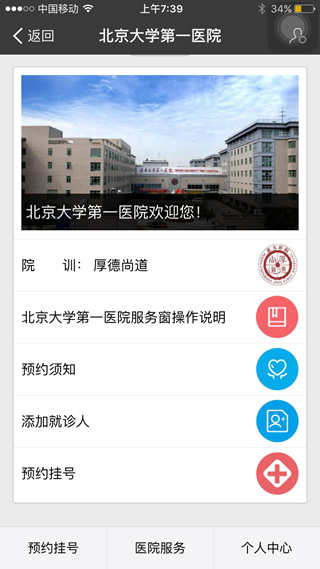
On August 9, Alipay’s Toutiao account announced that Peking University First Hospital (hereinafter referred to as “PKU First Hospital”) had partnered with Alipay to join its “Future Hospital” platform. By following the hospital’s service window on Alipay, users can access features such as online appointment registration, payment of registration fees, inquiry of test and examination reports, and collection of medical card information. Meanwhile, PKU First Hospital became the first in China to launch an “anti-scalper model,” which effectively blocks ticket scalpers through technical means and limits their number of registration attempts.
According to VCBeat, Peking University Sixth Hospital and Peking University International Hospital in Beijing had previously joined Alipay’s Future Hospital initiative.
According to Alipay’s Toutiao account, the “Anti-Scalper Model” is a system developed by Alipay for hospitals, leveraging its platform advantages such as real-name registration and big data. This model effectively identifies scalpers and curbs their occupation and resale of online appointment slots.
Regarding the principles of the hospital anti-scalper model, Wang Bo, General Manager of Ant Financial’s Healthcare Division, revealed that Alipay has over 450 million real-name verified users. By leveraging real-name verification data, the system can accurately match the individual making the appointment with the patient receiving care. Furthermore, it establishes a multi-dimensional, hierarchical profile system based on users’ identity information, behavioral characteristics, and relationship networks. Through data mining and modeling, the system assesses the potential risk posed by each entity, effectively identifying scalpers and enabling hospitals to maintain a “blacklist” database. It is understood that this model is powered by “Ant Shield,” an anti-fraud solution product developed by Ant Financial for merchants, banks, hospitals, and other institutions.
Once identified as a scalper, not only will their ability to engage in ticket reselling and slot hoarding on hospital and registration platforms be thwarted, but such misconduct will also negatively impact their internet credit score, potentially leading to restrictions on their activities in other scenarios.
Mobile internet has made appointment registration and medical consultations relatively simpler. Now, patients can successfully book appointments directly via their smartphones without leaving home, eliminating the need to queue at hospitals. However, this registration model has also introduced certain challenges; the emergence of online "appointment scalpers" has become a new problem facing major hospitals and registration platforms.
Previously, to crack down on ticket scalpers and establish a fair and efficient order for medical consultations, the Beijing Municipal Health and Family Planning Commission introduced multiple measures. These included abolishing doctors’ personal manual appointment slips, eliminating on-site registration at all 22 municipal hospitals in Beijing by the end of 2016, and implementing a comprehensive “non-emergency appointment-only” system. The Commission mandated that all appointment registrations through various channels must be conducted under real-name verification using valid identification documents, strictly controlling scalpers’ attempts to occupy appointment slots with fake IDs.
The new appointment registration system has not only made it more convenient for citizens to book appointments but also effectively cracked down on ticket scalpers. Meanwhile, it has given rise to new types of online scalpers: for instance, some scalpers use bulk mobile phone numbers and ID cards to register online and hoard appointment slots; others use patients’ real ID numbers, mobile phone numbers, names, and even photos to book appointments on their behalf, charging exorbitant fees for these services.
“To safeguard the rights and interests of patients, our hospital has consistently sought to comprehensively crack down on appointment scalpers through multiple channels,” said a representative from Peking University First Hospital. “Our collaboration with Alipay aims to leverage technology to ensure a fair healthcare experience for every patient.”
Dr. Wang stated that the hospital’s “Anti-Scalper Model” is an open technology. Alipay will provide general API access to hospitals and appointment registration platforms, enabling hospitals to independently implement effective restrictions on scalpers within their systems and ensure that genuine patients can successfully secure appointments.
According to VCBeat (WeChat ID: vcbeat), Peking University First Hospital is a top-10 Grade 3A hospital in China and has consistently been at the forefront of internet application adoption. This marks another instance of a major hospital in Beijing integrating with an internet platform following the scalper incident, aiming to enhance the efficiency of appointment registration and patient information collection through internet-based solutions. This also represents another breakthrough for Alibaba’s “Future Hospital” initiative on Alipay.