

China's First 3D Printing Ophthalmology R&D Center Launches in Qingdao
It is reported that the preliminary plan for the construction of the 3D Printing Ophthalmic Application R&D Center will be implemented in three phases: Phase I involves establishing the Ophthalmic 3D Printing Plastic Surgery Application R&D Laboratory, the Ophthalmic 3D Printing Prosthetic Application Laboratory, and the Sandi Space-Time Ophthalmic 3D Printing Application Data Processing Center. Phase II entails setting up a National-Level Laboratory for R&D of Ophthalmic 3D Printing Technologies and Materials, as well as an Ophthalmic 3D Printing Application Physician Training and Exchange Center. Phase III focuses on establishing the Bio-3D Printing Corneal Application Laboratory.
The Department of Ophthalmology of Qingdao Municipal Hospital (Group) was established in 1928. The Eye Center was formally inaugurated in 2014 and has since become a key discipline in healthcare and medicine in Qingdao. The Center comprises subspecialties including Vitreoretinal Diseases, Medical Retina, Cataract, Glaucoma, Ocular Trauma, Optometry, Pediatric Strabismus and Amblyopia, Orbit, Oculoplastics and Lacrimal System, and Neuro-ophthalmology. As the most comprehensive and capable large-scale eye center in the Jiaodong region, it boasts a strong team of highly respected experts and scholars with significant influence at both national and provincial levels.
Sandi Space-Time was established in 2013 with a total registered capital of RMB 440 million. It is committed to bridging the upstream and downstream sectors of the 3D printing industry, integrating industry resources, and building a collaborative platform for Chinese 3D printing companies, 3D printing enthusiasts, and related industry institutions. Currently, the platform has aggregated 95% of the leading domestic and international 3D printing equipment manufacturers, material suppliers, and printing service providers.
Upon completion of the project, Qingdao Municipal Hospital (Group) will deploy 3D printing-related technical equipment and, leveraging Sandi Shikong’s robust technical support in the field of 3D printing, strive to establish a premier training and R&D hub for ophthalmic 3D printing applications.
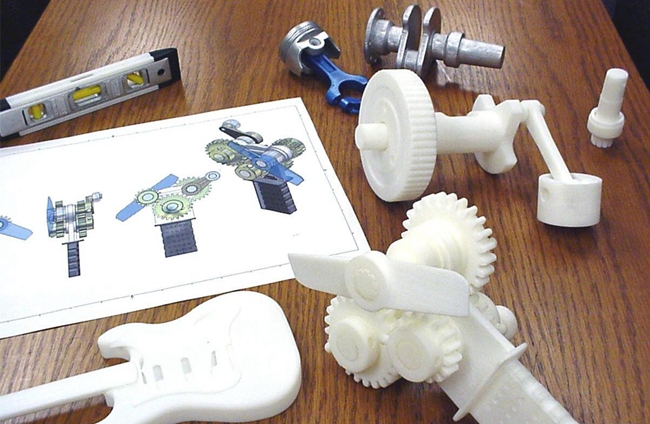
3D Printing (3DP), a form of rapid prototyping technology, is a technique that constructs objects by layer-by-layer printing using bondable materials such as powdered metal or plastic, based on digital model files.
In recent years, the application of 3D printing technology in the medical field has expanded rapidly, but its use in ophthalmology is still in its infancy. Abroad, there have been reports of 3D-printed ophthalmic surgical instruments, prosthetic eyes tailored to patients’ unique ocular structures, and 3D-printed orbital models that enable physicians to formulate treatment plans or simulate surgeries by referencing pathological models prior to operation. In China, however, the integration of 3D printing with ophthalmology remains unexplored.
3D printing technology can directly transform 3D design models into physical products, making it more suitable than traditional manufacturing methods for producing small-batch, customized, and complex-shaped items.
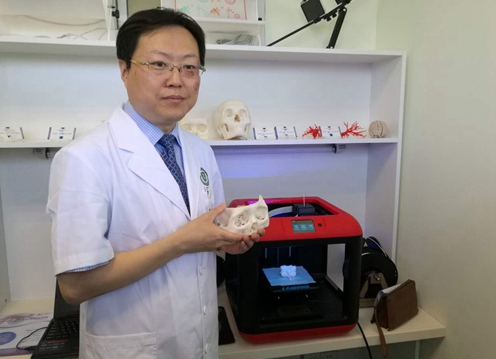
Director Zhou Zhanyu of the Ophthalmology Center at Qingdao Municipal Hospital Introduces the Application of 3D Printing in Clinical Ophthalmology
According to Zhou Zhanyu, Director of the Ophthalmology Center at the Municipal Hospital, orbital fracture repair surgery carries significant risks due to the confined space of the orbit and the complex arrangement of critical vascular and neural structures. Furthermore, as the shape and size of orbital fractures vary considerably among patients, the shape and dimensions of surgical implants must be individually customized. 3D printing technology enables the preoperative fabrication of patient-specific orbital models of the fractured area, helping surgeons familiarize themselves with the specific anatomical details, thereby enhancing surgical precision and reducing operative time.
Due to individual variations in human anatomy, there is a high demand for personalized custom medical devices and implants. Therefore, “personalization” has built a bridge for the deep integration of 3D printing technology with the healthcare industry. Typical applications include 3D models for preoperative planning, surgical guides, 3D-printed implants, as well as rehabilitative medical devices such as prostheses and hearing aids.
Furthermore, by integrating high-resolution VR technology, CT scanning, robotics, and 3D printing, revolutionary personalized healthcare solutions can be created. With the aid of virtual reality (VR) headsets and haptic feedback gloves, physicians can not only play a pivotal role in surgical planning but also remotely operate medical robots to perform surgeries on patients, thereby delivering personalized healthcare solutions through 3D printing.
Zhou Zhanyu stated, “Our next focus will be to tackle key challenges in material research and development, 3D-print bioactive corneas, and bring hope for restored vision and improved quality of life to tens of millions of patients.”
As a municipal key discipline, the Department of Ophthalmology at Qingdao Municipal Hospital is deeply committed to public welfare initiatives and has fully participated in the Qingdao Cataract Sight Restoration Project, making significant contributions to the prevention, treatment, and health education of ocular diseases in the Shandong Peninsula region. The establishment of the 3D Printing Ophthalmic Application Research and Development Center will provide critical technical support for scientific research, applied R&D, and diagnostic and therapeutic services in fields such as corneal transplantation, oculoplastic surgery, and even functional eyeball implantation. Zhang Hua, Deputy Director of the Qingdao Municipal Health and Family Planning Commission, stated, “Over the years, Qingdao has actively leveraged new technologies to enhance healthcare service capabilities. The establishment of the ‘Qingdao 3D Printing Ophthalmic Application Research and Development Center’ at Qingdao Municipal Hospital represents a strong alliance between medicine and technology, which will significantly elevate the level of ophthalmic diagnosis and treatment in our city and usher in a new era of ophthalmic diagnostic and therapeutic techniques.”
The implementation of this project is based on Sandi Space’s years of integration of domestic and international 3D printing resources, as well as the high technical standards and achievements of the Ophthalmology Center of Qingdao Municipal Hospital in the field of ophthalmology in China. It also represents an effective attempt to apply 3D printing technology in clinical ophthalmic practice.
The implementation of this project signifies that 3D printing technology will be increasingly utilized in clinical ophthalmology in Qingdao and across China. Physicians will be able to provide treatment plans involving simulated tissue reconstruction and organ repair based on patient needs, thereby delivering personalized ophthalmic medical services. Furthermore, by leveraging their respective strengths, the collaborating parties will develop more 3D-printing applications in ophthalmology and accelerate the training of specialized professionals in medical 3D printing. These experts will be deployed to hospitals nationwide, ensuring that more patients receive superior care.
In the future, 3D printing technology will be increasingly widely applied in clinical ophthalmology. Physicians can provide treatment plans involving simulated tissue reconstruction and organ repair based on patient needs, thereby delivering personalized ophthalmic medical services tailored to individual requirements.