

Olympic Gene Doping Detection Technology Requires Re-evaluation!
The 2016 Rio Olympics have begun! Of course, in addition to the competitions in various events, the health status of athletes has also become a focus of public attention. Some tech companies have rolled out cutting-edge technologies to help monitor athletes’ physical conditions; the Zika virus remains a key target of prevention and control efforts by the Brazilian government, and discussions around EPO are rife… How should we interpret the intersection of the Olympics and healthcare? VCBeat (WeChat ID: vcbeat) has published a series of reports on this topic.
Athletes currently participating in the Summer Olympics in Rio de Janeiro may ultimately be subjected to a new doping detection method: screening for performance-enhancing “gene doping.” According to Richard Budgett, Medical and Scientific Director of the International Olympic Committee, blood samples collected in Rio will be sent to designated testing facilities for analysis of gene doping violations after the Games conclude.

Turkish weightlifter stripped of 2008 Beijing Olympics silver medal after failing retest
This form of gene doping is also known as EPO (short for Erythropoietin), or erythropoietin. Under normal physiological conditions, erythropoietin is a hormone-like substance secreted by the peritubular interstitial cells of the renal cortex and the liver, which promotes red blood cell production. However, if a short segment of synthetic DNA is implanted into an athlete’s tissues or muscles, this DNA can enhance the kidneys’ capacity to secrete EPO, resulting in significantly higher red blood cell counts compared to those of healthy individuals. In high-intensity competitive sports, this hormone facilitates oxygen delivery to muscles, thereby increasing muscle strength and endurance, allowing for prolonged performance without the need for pharmacological agents.
Sundberg, an exercise physiologist at the Karolinska Institute and a member of the World Anti-Doping Agency (WADA) panel, explained that this improved anti-gene doping detection and analysis technology was scheduled to be tested at the European Science Open Forum (ESOP) held in Manchester from July 23 to 27 this year. So, how effective is this new detection technology in practice? When testing blood samples from athletes at the 2008 Beijing and 2012 London Summer Olympics, the positive rate for prohibited substances increased from 1% to 8%. However, as of press time, no cases of gene doping violations have been identified among athletes at the Olympic Games, nor is there clear evidence indicating which athletes are undergoing this specific doping test.
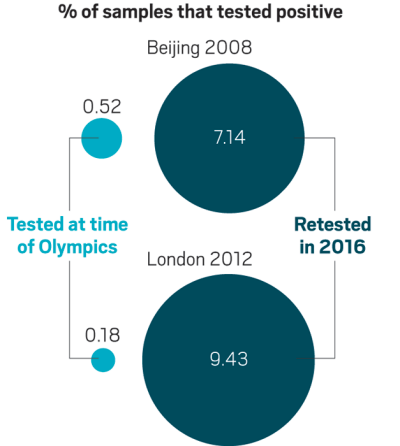
The proportion of banned substances increased significantly when retesting the blood samples of athletes from 2016.
When Did Gene Doping Actually Begin to Be Used in Athletes? Clear evidence emerged during a 2006 trial, which revealed that Thomas Springstein, a former coach of the German Sports Association, had requested erythropoietin (EPO) from drug dealers via email. Although only a few gene therapies intended for treating diseases have received regulatory approval worldwide, the World Anti-Doping Agency (WADA) initially paid little attention to gene doping in 2002. It was not until 2003 that WADA added gene doping to its list of prohibited substances.
Gene Doping Detection Method Is Based on the Research Findings of Anna Baoutina and Her Colleagues at the National Measurement Institute in Sydney. This technology relies on the fact that the endogenous human gene encoding erythropoietin (EPO) contains four introns. Introns are sequences that are spliced out from messenger RNA (mRNA) after gene transcription; therefore, mature mRNA lacks intron-encoded sequences, which represent nonfunctional remnants lost during evolution. In contrast, artificially inserted EPO DNA sequences do not contain introns. This distinction can be used to identify athletes who have engaged in gene doping.
Of course, in principle, this is not the only method for detecting EPO. Since gene dopers typically inject EPO DNA into muscle tissue, it results in different glycosylation pathways. Researchers have also devised a method aimed at identifying a protein that matches the virus serving as the vector (Drug Test. Analysis 2012, DOI:10.1002/dta.1347), or using technology to detect specific sugar moieties produced by gene doping at certain sites. Under normal physiological conditions, EPO is produced exclusively in the kidneys and undergoes glycosylation at four distinct sites.
Through retesting of blood samples from the Beijing and London Olympics, researchers found that the majority of doping agents remain steroids. By upgrading detection equipment such as mass spectrometers, researchers can rapidly detect prohibited compounds in athletes’ urine, including dehydrochloromethyltestosterone, oxymetholone, and stanozolol.
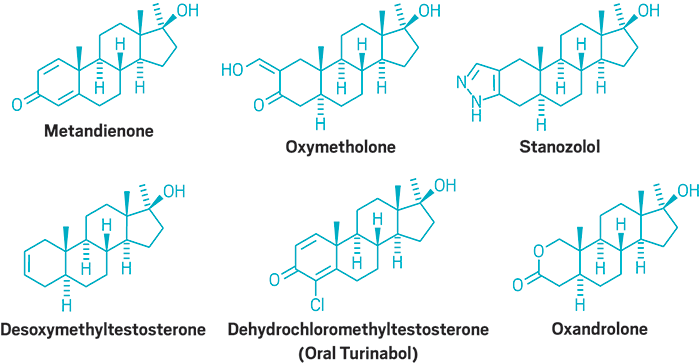
Through more sophisticated testing methods, it is possible to detect substances that have been latent in an athlete’s body for several months.Steroid Metabolites
In the past, researchers could only detect prohibited steroids in urine samples collected a few weeks prior; this window has now been extended to several months, enabling precise detection of these long-lasting metabolites. A WADA-accredited laboratory in Cologne, Germany, saw its revenue increase by 400% after mastering the detection of long-term metabolites of dehydrochloromethyltestosterone (DHCMT).