

Rock Health Report: Genomics at an Inflection Point with Transformative Potential for Healthcare
Rock Health, a San Francisco-based incubator akin to Y Combinator, provides startups with resources such as office space, industry mentorship, and seed funding. Rock Health recently released a report on genomics, which VCBeat has translated and compiled to offer insights for companies operating in the increasingly competitive genomics application sector.
“Genomics“holds immense potential and will have a significant impact on the healthcare industry. This is attributable to investments and initiatives by numerous high-profile companies and individuals, such as President Obama’s Precision Medicine Initiative (which saw one million participants join this month), as consumers increasingly focus on genomics and its role in the healthcare sector.”
The genetic code remains largely untapped in the healthcare industry, placing a significant burden on physicians, scientists, and technologists in this field. During the preparation of this report, we observed that genomics is at a critical inflection point. Despite breakthroughs in gene sequencing technologies and a substantial reduction in sequencing costs, gene sequencing has not gained strong appeal among the general public, nor has it been closely integrated with medical institutions such as hospitals.
The development prospects of genomics primarily depend on three factors, most of which are related to digital healthcare:
(1) Ensure the provenance of datasets that provide insightsofDiversity
(2) Breaking Down Barriers to Collaboration with Healthcare Institutions
(3) Advancing technological progress in laboratories and the cloud
To understand the potential approaches for promoting genomics and the current barriers, we surveyed 1,000 consumers, providing new data and insights into their willingness to purchase specific use cases, while also exploring issues of privacy and ownership.
Undoubtedly, genomics will improve the healthcare industry and advance personalized medicine. However, decades after its discovery, genomics remains an abstruse and complex science. Consequently, integrating genomics into clinical care faces significant challenges. We hope that our research will provide insights to facilitate the broader adoption of genomics and drive technological progress in this field.
Founder and CEO of BenchlingSajith Wickramasekara raised a question,Is it appropriate to claim that genetic data are more objective than other types of data? Will all data ultimately be transformed into binary outcome data? Although many questions remain unanswered, if we have exhausted all other approaches, this may represent the final solution to these challenging problems.
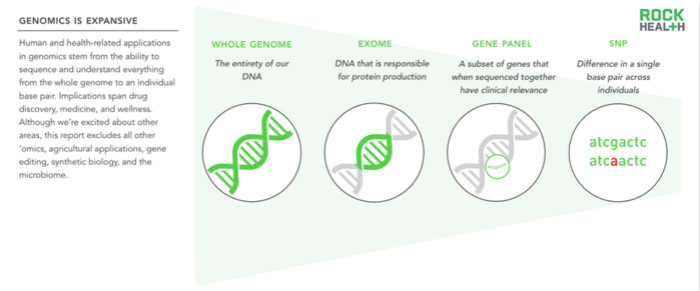
The impact of genomics is profound. This report examines the application of all medically relevant genetic data, including single nucleotide polymorphisms (SNPs), gene panels (sets of genes with clinical significance identified after sequencing), exomes (the 1–2% of the genome that encodes proteins), and whole genomes comprising three million base pairs. Other omics disciplines, such as proteomics and metabolomics, fall outside the scope of this report.
We use the terms “genomics” and “genetic testing” in this report; it is important to distinguish between them: genomics involves the study of variations across large segments or the entire genome, whereas genetic testing focuses only on specific individual genes.
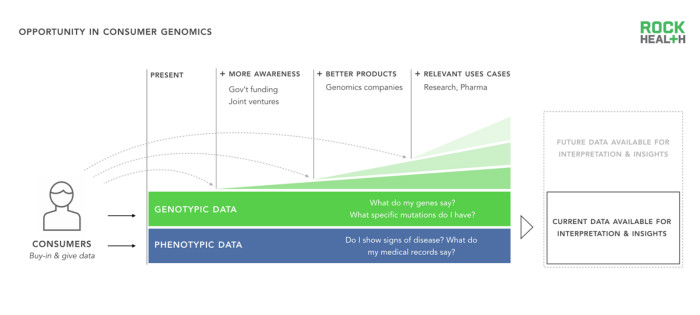
One of the primary goals of genomics is to provide personalized, actionable solutions for better healthcare. Achieving this goal still requires an understanding of how genes and human health interact. Scientists need more diverse genetic and phenotypic data (such as personal information) and must be able to freely access relevant data sources.
When consumers purchase direct-to-consumer (DTC) genomic products, such as opting for genetic testing in a physician’s office within the genetic testing ecosystem or participating in clinical longitudinal studies, the volume of genomic data within the ecosystem increases. The genomics industry can and should encourage consumer engagement at these touchpoints. Currently, this is primarily achieved through three approaches: (1) raising awareness of genomics; (2) providing consumers with better genomic products; and (3) developing more relevant user use cases.
The U.S. government has increased public awareness of genomics by funding high-profile initiatives, such as the Precision Medicine Initiative. Commercial companies have also contributed; for example, 23andMe is dedicated to providing products that are more accessible and easier to understand. Finally, diagnostic companies and research institutes (such as the Broad Institute) are planning new collaborative projects and leveraging user case studies to generate customer interest in personalized products.
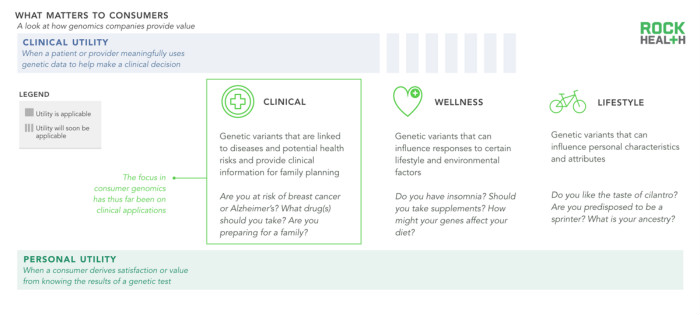
Through genetic testing, consumers or patients can benefit (or derive utility) in two ways: clinical utility and personal utility. Clinical utility is relatively clear-cut: Will the genetic test potentially alter my treatment regimen? Will knowing that I am at high risk for a certain disease change the decisions I make with my physician? Personal utility is more subtle and largely depends on how consumers process and use this genetic information. For example, will clarifying my family pedigree bring a sense of well-being? Is it meaningful to share this genetic information with family members or physicians, even if its contribution to clinical management is minimal?
We categorize genomics use cases into three types: clinical, health, and lifestyle. Clinical genetic testing helps patients determine whether they are at high risk for certain diseases. Genotype-guided medication (typically oncology drugs) can also be applied to family planning. Clinical testing accounts for the majority of currently available genetic tests. Health-related genetic testing provides information on chronic diseases, diet, and exercise, but it does not yet offer valuable clinical insights. Lifestyle genetic testing caters to consumers’ curiosity and has no direct connection to medical healthcare.
Although we have carefully examined the applications of direct-to-consumer genomics, we have found that nearly three-quarters of genomics companies provide tools (both physical and cloud-based) to pharmaceutical companies and academic research institutions. Scientists and researchers primarily use these tools to accelerate drug development and create more personalized medicines, with oncology-related applications being representative.
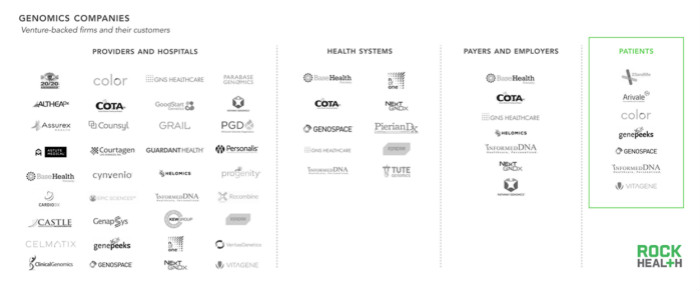
Although most genomics companies currently focus their research exclusively on the life sciences sector, this landscape is gradually changing as technological capabilities extend beyond research laboratories. For instance, there are nearly 40 venture-backed genomics companies within the healthcare services ecosystem, many of which aim to build a more personalized ecosystem. Syapse, for example, strives to achieve this goal by providing integration tools for clinical workflows; while other companies, such as InformedDNA, offer end-to-end genetic testing solutions that bypass the patient counseling process. Other firms provide diagnostic solutions, mostly related to prenatal screening and oncology drugs, and sell them to physicians who connect patients with testing services. Only a few companies offer genetic testing services directly to consumers, primarily focusing on ancestry genealogy, which poses regulatory challenges for the direct-to-consumer market.
Only a small number of companies directly serve payers and employers, promising clients that their products can reduce healthcare costs through advanced predictive technologies. For example, BaseHealth offers a platform that enables payers and employers to understand population-level disease risk factors, using genetic data as reference information to mitigate disease risks. These tools are not yet mature, possibly due to a lack of evidence and incentives for systemic reform.
Many genomics business models are built on data. In the field of genomics, as in healthcare, data ownership—the right to control when and how data is processed—often resides in a legal gray area. Although the Obama administration issued proposals affirming patients’ rights to access their medical records, including genetic test results, the stakeholders who “own” genetic data are not necessarily the entities that analyze and interpret it.
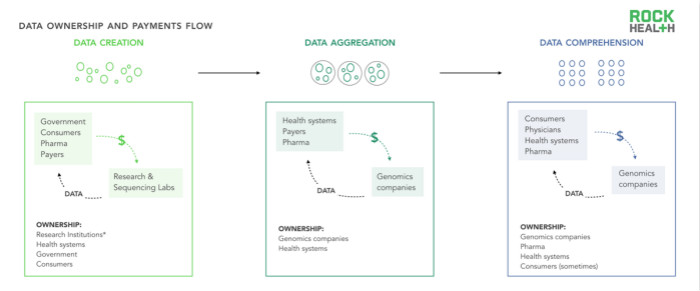
To illustrate, let us assume that a healthcare system seeks to better understand the impact of oncology applications on specific populations. To achieve this objective, the system engages a third-party vendor to consolidate and compile data from various sources, while relying on physicians to invite patients to undergo genetic testing or participate in research. The roles of these three stakeholders are critical within the data flow; however, there are currently no clear regulations defining who holds ownership of biological samples, identified data, and de-identified data. Does ownership belong to the healthcare system, the data collector, or the consumers themselves? In most cases, this depends on the specifics of the research protocol and the details outlined in the patient consent forms. Furthermore, DNA and associated data exist in multiple formats and can be stored in biobanks or on cloud servers managed by the healthcare system.
Policies clarifying data ownership remain to be refined. Such policies would not only protect consumer privacy but also provide safeguards for companies that build their business models on extracting value from consumer data. Companies entering the genomics field with data acquisition strategies must be prepared to navigate the complexities of mobilizing data and capital, and must adapt to potentially evolving regulations.
Many genomics companies rely on exclusive customer data (phenotypic and genetic) for their business models. In the future, two types of data ownership-based business models may emerge. Currently, most consumers choose only one genomics company and provide a single gene sample. However, as the cost of genetic testing decreases, companies are expanding their services and offering differentiated solutions. It is likely that consumers will provide gene samples or processed DNA to multiple companies. Hliex is preparing to launch a third business model: consumers provide a single gene sample but can use user cases an unlimited number of times.
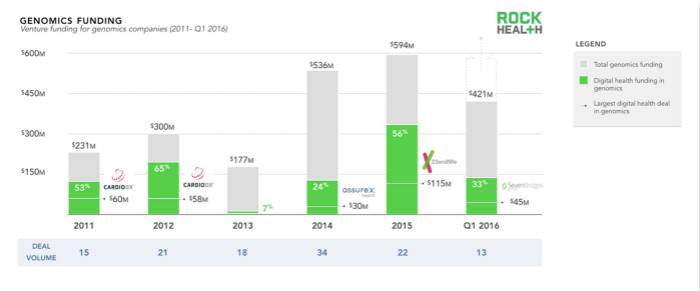
The genomics industry has attracted substantial funding from both public and private investors, underscoring its significant development potential. We have observed an upward trend in the number of venture capital investments over the past five years, with total investment in genomics companies exceeding $2.2 billion. The growth from 2015 to the first quarter of 2016 was driven by several major deals. In 2015, Helix and 23andMe each secured over $100 million in funding; in the first quarter of 2016, Grail and Guardant Health also raised $100 million each.
Although genomics has long been strongly associated with life sciences, it has only recently been integrated on a large scale with technology and cloud-based solutions. Over the past three years, digital health-oriented genomics companies—those equipped with the necessary technological components—have accounted for half of the total investment in the genomics sector. Driven by more user-friendly products, expanded relevant use cases, and better integration into clinical workflows, technological advancements continue to attract significant attention from consumers, healthcare institutions, and health systems. As technological progress in life sciences enhances research efficiency, digital health is poised to facilitate the application of genomics in healthcare delivery.
The recent surge in clinical trials and investment activities, exemplified by companies such as Guardant Health and Grail, has drawn attention to liquid biopsy technology for non-invasive cancer detection. Although its clinical application is still in the early stages, this technology is poised for broader adoption and promotion once favorable trial results are achieved.
Finally, although we have not delved deeply into the investors behind genomics, it is worth noting that Illumina has been driving industry development and progress. In addition to being an industry leader, Illumina has spun off two potentially transformative companies (such as Grail and Helix), invested in a cohort of early-stage startups through its corporate accelerator program, and recently announced that it will allocate $100 million in venture capital funding (Illumina Ventures) to plan investments in more startups.
To better understand how companies package tools and services into products, we analyzed the five elements of the genomics value chain: sequencing, analysis, interpretation, aggregation, and commercialization. Currently, nearly 40% of venture-backed genomics companies offer specialized solutions focused on only one element of the genomics value chain, with no company providing services across the entire value chain. One reason for this is the highly specific needs of researchers and laboratories; additionally, many vendors opt to target specific use cases and serve only a limited number of clients.
There is substantial demand for fully outsourced diagnostic solutions, with a large number of genomics companies (39% of venture-backed firms) offering ancillary sample-to-insight products to healthcare providers and medical systems. Most companies providing gene sequencing offer “sequencing-as-a-service” and incorporate Illumina’s Next-Generation Sequencing (NGS) technology into their service workflows. However, no company captures more than 10% of the value per sample, indicating that the business models of other players either fail to capture value or are not yet viable.
A new element has recently emerged in the value chain: the marketplace. The marketplace serves as a central repository for data, providing various stakeholders with access to this information. Its existence enables consumers to provide only a single sample, allowing them to continue deriving value and services from that sample as companies introduce new use cases and related research. Helix, funded by Illumina and other investment firms, is currently the only genomics company backed by venture capital that offers a marketplace-based product.
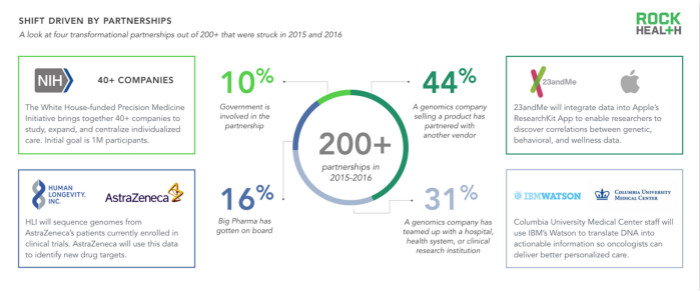
Most companies do not offer end-to-end solutions, and the development of genomics companies is typically driven by partnerships. To better understand the drivers behind these inter-company collaborations, we created a database comprising 200 corporate partnership projects (January 2015 to April 2016).
The largest category in the database—accounting for 50% of the analyzed collaborative projects—is product-related collaborations. For example, in March 2016, 23andMe announced that its software would be integrated with Apple’s ResearchKit app, enabling customers to share their genetic data with researchers. With customer consent, researchers can analyze behavioral/phenotypic data collected via the ResearchKit app on iPhones or Apple Watches.
Collaborative projects between government agencies and private companies (accounting for 10% of the database) have been strongly driven by President Obama’s Precision Medicine Initiative (2015). The initial focus was on advancing cancer research, with subsequent expansion to common diseases such as diabetes and Alzheimer’s disease. The White House has approved funding of $130 million for the National Institutes of Health (NIH), $70 million for the National Cancer Institute (NCI), $10 million for the Food and Drug Administration (FDA), and $5 million for the Office of the National Coordinator for Health Information Technology (ONC). For example, the FDA is collaborating with DNAnexus, a startup specializing in cloud-based DNA databases, on the PrecisionFDA project, which aims to establish a service platform that integrates genetic testing results and ensures high-quality standards.
Pharmaceutical companies and genomics firms have begun collaborating to explore new therapies based on genotype–phenotype associations. One of the largest such partnerships is the ten-year agreement between Human Longevity, Inc. (HLI) and AstraZeneca, announced in April 2016, under which HLI will sequence the genomes of 500,000 participants in AstraZeneca’s clinical trials. AstraZeneca plans to leverage data insights to inform drug development targets and enrich HLI’s knowledge base, which HLI claims is the most comprehensive in the industry. Meanwhile, AstraZeneca will also be able to conduct clinical trials using HLI’s proprietary knowledge base, strengthen biomarker research, and accelerate drug development.
Finally, we have compiled nearly 60 cases in which healthcare systems and vendors have collaborated to deliver precision medicine services. The partnership between Syapse and Intermountain Healthcare, as well as the collaboration between IBM Watson and Columbia University Medical Center, are two prime examples of healthcare systems leveraging genomic data to develop personalized oncology treatment plans.
Consumer adoption of genetic testing services is key to researchers gaining insights and value from genomics, as it provides more information for researchers to use and analyze. Although stakeholders have made some predictions about consumer preferences regarding genetic data, we hope to provide new data on consumers’ willingness to choose and purchase specific use cases, as well as their overall trust in companies to keep them informed about new products and services.
We surveyed more than 1,000 representative adults, asking them to answer the following questions: (1) How does the use of genetic testing vary among individuals? (2) What are public attitudes toward data sharing, ownership, and privacy? (3) Do people consider genetic data distinct from traditional medical data? (4) How much are people willing to pay for their health information?
n = 1,060
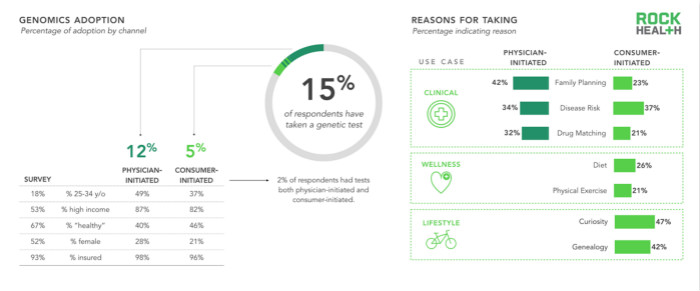
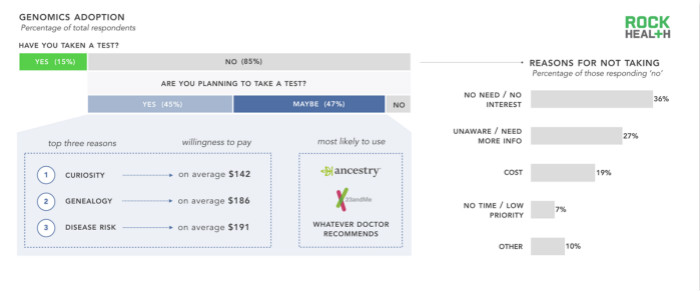
Studies have found that only 5% of respondents proactively purchased genetic testing services, while 12% underwent genetic testing upon medical advice. As predicted, individuals who proactively purchased genetic testing services did so for health and lifestyle reasons related to diet, exercise, curiosity, and genealogy. Most users sought information related to family planning, disease risk, or pharmacogenomic responses to specific medications.
n = 1,060
Most survey respondents and U.S. adults have not yet undergone genetic testing, and we are curious about the underlying reasons. Additionally, we seek to understand why some individuals plan to undergo genetic testing in the future. The most common response to our open-ended question (“Why have you not undergone genetic testing?”) was the perception that testing is unnecessary, followed by lack of awareness of available tests and the desire for more information before making a decision. Only one-fifth of respondents cited cost as the reason for not undergoing genetic testing.
Although many respondents who had undergone genetic testing did so for health reasons, the top three reasons cited by those planning to take a genetic test in the future were curiosity, genealogy, and disease risk. While numerous startups offer testing for health purposes, most respondents did not list health as their reason for undergoing genetic testing. Ancestry.com and 23andMe were the genomics companies most consumers planned to choose, and the majority of respondents indicated they would follow their physicians’ advice, regardless of whether the purpose was clinical, health-related, or lifestyle-oriented.
n= 1,060
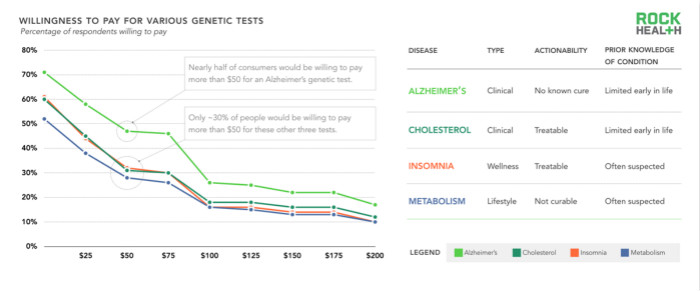
Given the disparity between the attention received by direct-to-consumer testing and the application of genetic testing in clinical settings, we aim to assess consumer acceptance of various condition-based tests across the following dimensions: (1) use cases (clinical, health, and/or lifestyle); (2) level of actionability (whether a specific genetic test can lead to targeted clinical interventions); and (3) prior knowledge regarding the known condition (e.g., the extent of the user’s understanding of their status before undergoing genetic testing). We asked respondents how much they would be willing to pay for a genetic test that predicts susceptibility to four conditions: Alzheimer’s disease, high cholesterol, insomnia, and slow metabolism.
We found that consumers are more willing to pay for genetic testing for Alzheimer’s disease than for tests targeting high cholesterol, insomnia, or slow metabolism. For example, 47% of consumers are willing to pay $50 for Alzheimer’s genetic testing, whereas only 28% are willing to spend the same amount on metabolic testing. Apart from family medical history, it is difficult for individuals to assess their risk of developing Alzheimer’s disease; however, genetic testing provides new insights into future risks. In contrast, consumers are least willing to pay for genetic testing for slow metabolism, possibly because such tests do not offer information beyond what is already known.
Finally, it is worth noting that we found respondents’ willingness to pay was identical regardless of whether the question was framed positively (genetic testing confirming susceptibility to a certain disease) or negatively (genetic testing confirming non-susceptibility to a certain disease).
n= 1,060
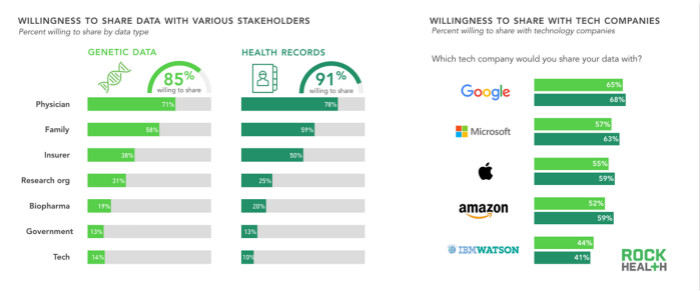
Users demonstrate a strong willingness to share their medical records and genetic data with physicians and family members, underscoring the critical importance of trust. While users’ willingness to provide medical data to insurance companies is comparable to their willingness to share it with family members, trust in insurance institutions significantly decreases when it comes to genetic data. This may stem from consumers’ concerns that genetic data could be used to hinder their access to affordable insurance premiums. Although the Genetic Information Nondiscrimination Act (GINA) of 2008 explicitly prohibits health insurers from using genetic information as a basis for denying coverage or increasing premiums, this legislation does not extend to long-term care insurance or life insurance. These national laws offer varying degrees of protection but have failed to alleviate consumer concerns.
In our survey, only 11% of respondents were willing to share their medical data with technology companies, a proportion lower than that for pharmaceutical companies and government agencies. Among the tech companies mentioned in the survey, Google was the most trusted by consumers, although other companies, such as IBM and Apple, are more prominent in the field of genomics.
n= 1,060
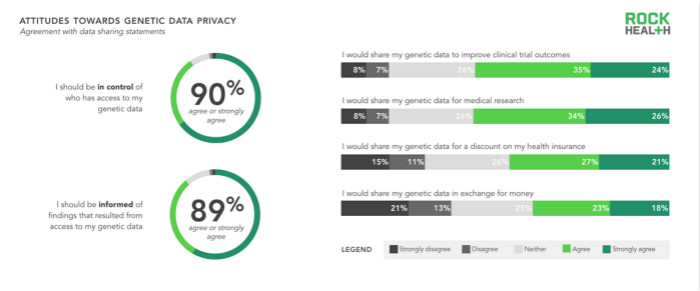
Nearly 90% of respondents believe they should have the right to control who can access their genetic data, and 89% hope to be informed of the results after their genetic data is analyzed. However, consumers remain concerned about sharing their genetic data, despite incentives such as reduced insurance premiums, improved clinical trial outcomes, and cash rewards. In fact, there is a negative correlation between sharing genetic data and accepting cash rewards. Nevertheless, as consumers become increasingly aware of managing their health and genetic data in the future, they may gradually accept sharing their genetic data, especially when compensation and feedback are provided. Currently, the best approach for genomics companies is to offer valuable use cases to consumers to acquire more samples and data.
As mentioned above, consumers derive value from three categories of genetic testing: clinical, health, and lifestyle. Despite significant interest in genomics, many consumers lack a clear value proposition regarding why they should undergo genetic testing. Consequently, how can the industry increase the availability of effective use cases or enhance value for users? The industry is facing a “chicken-and-egg” dilemma: obtaining more valuable insights requires more data, while acquiring more data necessitates greater consumer purchase.
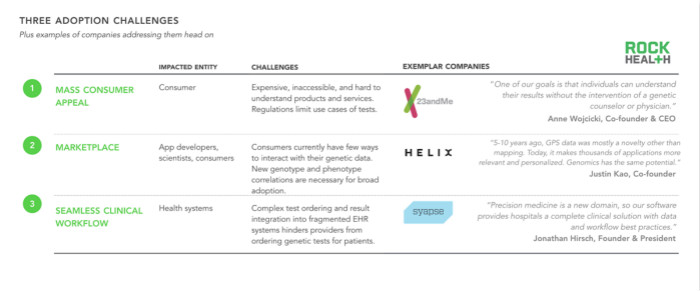
After engaging with more than 30 companies, we have identified three approaches that may incentivize consumer purchasing behavior: First, genomics companies (such as 23andMe) should break down barriers to mass-market appeal by offering affordable and accessible products, thereby encouraging the most hesitant consumers to make a purchase. Similarly, companies should provide products that continue to deliver value to users long after initial genetic sequencing—for example, by offering insights that are not yet uncovered at present—which can even more effectively motivate consumers to undergo genetic testing; Helix has already begun working toward this goal. The third approach involves physician- and health system-driven data collection. We examined several innovative healthcare systems (including Intermountain Healthcare) and found that many medical institutions are encouraging broader patient populations (not limited to specific groups, such as oncology patients) to utilize genetic testing. Intermountain is collaborating closely with Syapse to launch products that streamline clinical workflows for genetic testing.
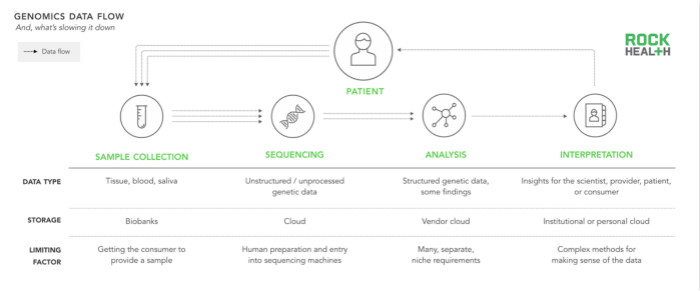
Beyond merely generating more data, the industry should improve all aspects of the genomics lifecycle by better absorbing, understanding, and reporting the value of data. Historically, the development of the genomics lifecycle was constrained by the high cost of gene sequencing. However, advances in life sciences technology have reduced sequencing costs, while increased computational and storage capabilities (such as Amazon Web Services) have enabled most laboratories to meet their computing and storage requirements.
Based on our interviews, many scientists and engineers agree that the ability to interpret data or identify associations between genetic and phenotypic data has become a key bottleneck limiting the pace of development. Although these challenges can be addressed through algorithms, the process requires highly specialized bioinformaticians to make subtle adjustments to testing methods based on different hypotheses. As Andrew Guo from Omicia stated, “We are discussing a field in which scientists spend hundreds of hours analyzing which variants are most lethal and most relevant.”
So, assuming that the first two requirements—more high-quality data and data translation—have been met, what about the other requirements?
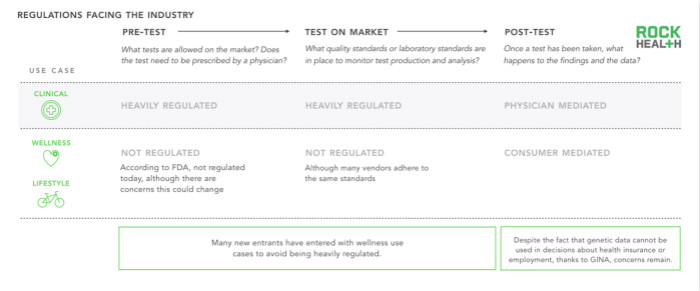
Two barriers to the application of genomics stem from the lack of clear regulations and restricted reimbursement policies. Corresponding regulations should be established during the early, middle, and late stages of bringing genetic testing to market.
Regulations stipulate which test items may be sold and how genetic data should be applied. These regulations are subject to continuous change, taking into account that clinical use cases fall under the oversight of the Food and Drug Administration (FDA). At the time of writing this report, if a claim is filed for diagnosis or treatment based on a genetic test, the request cannot be initiated by the patient independently but must be handled by a physician. To date, the only legislation that explicitly governs the post-test use of genetic information is the Genetic Information Nondiscrimination Act (GINA), which prohibits the use of genetic information in health insurance and employment discrimination.
In addition to the continuous evolution of relevant laws, many institutions are also affected, further complicating the process of genetic testing. The Centers for Medicare & Medicaid Services (CMS) mandates that every clinical laboratory must hold a certificate under the Clinical Laboratory Improvement Amendments (CLIA). The Food and Drug Administration (FDA) is responsible for regulating genetic testing devices, assessing whether the tests demonstrate accuracy and reliability (analytical validity), yield medically meaningful results (clinical validity), and provide medical information that offers clinical utility to patients. Certain states have additional requirements stipulating that genomics companies must develop and market their products within the state (e.g., New York State).
As regulations governing genetic testing continue to evolve, while those pertaining to health and lifestyle-related tests remain relatively sparse, a large number of start-up consumer genomics companies have chosen to enter the market with non-clinical genetic products.
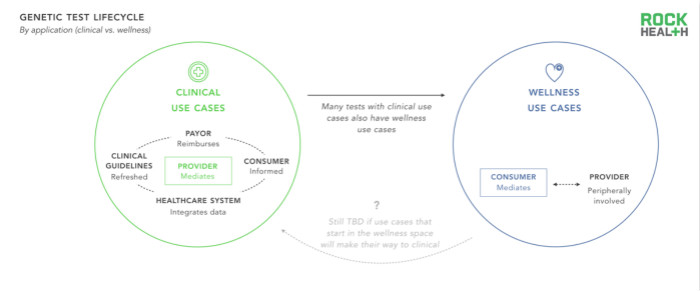
When genetic testing is integrated into a closed-loop healthcare system—ranging from physician-ordered tests and patient reimbursement to the incorporation of genetic data into electronic health records (EHRs)—test results can inform clinical decisions and influence final medical outcomes. Consequently, achieving the validity and cost-effectiveness of genetic testing becomes feasible, with the potential to serve as guidelines for future medical decision-making and insurance reimbursement. Many genomics companies, seeking to avoid scrutiny by the Food and Drug Administration (FDA) upon market entry, have opted to launch tests related to health and lifestyle; however, these tests cannot be integrated into the broader healthcare system. As a result, these genomics companies have missed the potential opportunity to establish feedback loops, relying instead on the traditionally more challenging channel of direct consumer payment.
Whether genetic testing for health and lifestyle use cases will pass regulatory review for application in clinical treatment (the test itself still analyzes and reports the same genes, but its scope of application will be expanded), whether regulations for health testing will become stricter, or whether health and lifestyle testing will continue to remain separate from clinical applications, all remain to be seen. As the healthcare system continues to benefit from understanding which genetic testing items can create medical value, it is particularly well-positioned to drive demand for clinical testing.
Genomics companies that can resolve issues related to regulatory review, reimbursement, and data access will ultimately deliver substantial value to patients and generate significant returns. Consumers have long desired, and will indeed be able, to access their own genetic data. However, it remains uncertain whether physicians and experts will continue to serve as intermediaries for interpreting genomics, or whether consumers will become the stewards of their own genetic data. For now, it is clear that the healthcare system is well-positioned to exert a profound influence on the development of genomics, as it can collect data and increasingly rely on evidence to guide clinical decision-making. Genomics will continue to understandHumansThe three billion base pairs of the genome: We are delighted to witness the profound impact this science is having on the healthcare industry and on people’s health and well-being.