

Five Key Applications of 3D Bioprinting in Bioengineering for Partial Organ Repair
The advancement of healthcare has been bolstered by technological innovations; for instance, 3D printing has made the customized repair of bodily organs more feasible. Bioengineers predict that this technology may eventually be used to fabricate authentic cellular materials. Such techniques could lay the foundation for personalized biomedical devices, tissue-engineered skin, cartilage, and bone, as well as functional bladders. In a recent special issue of *Trends in Biotechnology*, researchers reviewed and reflected on the progress of 3D bioprinting and its potential applications in the coming years and even decades.
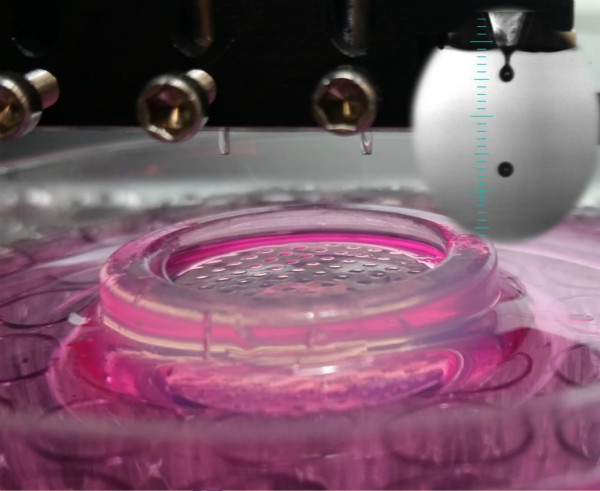
This figure illustrates the process of high-throughput bioprinting cells into microwells.
Three-dimensional microengineered systems that simulate the structure and function of human tissues—known as “organs-on-chips”—are strong contenders in the race toward affordable, efficient, and personalized medicine. Lung, intestinal, and pancreatic tissues can now be grown from human stem cells on chips, enabling researchers to investigate physiological differences in these cells among different patients and to conduct drug screening. The challenge in manufacturing organs-on-chips lies in the rapid scaling of this technology, while 3D printing can reduce the labor and costs required for fabrication, guidance, and meeting chip specifications.
“The intersection of 3D-printed microfluidic fabrication and bioprinting of 3D tissues holds great promise for single-step organ-on-a-chip engineering, enabling greater flexibility and throughput in research,” said Savas Tasoglu (@SavasTasogler), an Assistant Professor at the University of Connecticut who is developing new applications of 3D printing in microfluidics and organ-on-a-chip technologies. “In future studies, more advanced 3D bioprinters capable of printing a range of viscous materials will be employed to print and fabricate complex, patterned tissues within microfluidic platforms and devices. Such closed, integrated systems will greatly simplify the manufacturing of organ-on-a-chip models and accelerate design iterations.”
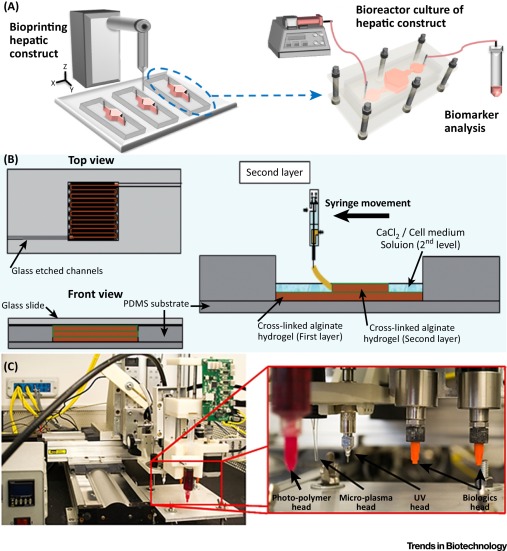
3D Bioprinting of Cells in Microfluidic Devices
3D printing technology has achieved continuous success in the fabrication of microfluidic devices and bioprinting applications. With rapid innovations in these two fields, 3D printing is highly likely to become a key tool for organ-on-a-chip engineering in the coming years. Currently, the availability of biocompatible printing materials limits the structural dimensions of microfluidic channels and bioprinted tissues. However, with the rapid improvement in 3D printing resolution, even low-cost consumer-grade 3D printers may resolve this issue in the near future.
Studies have found that skin printed from cells seeded on the surface of a collagen gel exhibited intercellular junctions and markers characteristic of biologically normal cells after 10 days in culture. In another study, researchers were able to cultivate blood vessels on top of this cell layer. These findings suggest that bioprinting of skin is closer to reality than previously thought; however, design strategies sufficient to benefit patients, particularly those with burns and chronic wounds, remain in the early stages of development.
The skin is a complex organ with a well-defined spatial architecture comprising multiple cell types. “Engineering constructs of tissues using sophisticated machinery has already been achieved,” conclude Wei Long Ng from Nanyang Technological University and the Agency for Science, Technology and Research (A*STAR) in Singapore, along with their collaborators. “Although the ultimate goal of bioprinting skin with functional performance equivalent to that of native skin has not yet been realized, bioprinting holds significant potential in many critical aspects of skin tissue engineering, including the generation of pigmented and/or aged skin models, vascular networks, and hair follicles.” Overall, relatively simple skin constructs containing keratinocytes and fibroblasts have been successfully fabricated using bioprinting technology. In in vivo studies, these skin constructs have demonstrated certain similarities to native skin and its functions.
Regarding the current state of bioprinting, 3D skin constructs can be fabricated based on imaging data, alongside other relatively less challenging thick tissues and organs. As previous studies have demonstrated, once the technology matures, printed skin structures will closely resemble native skin tissue. With further advancements in skin bioprinting, it will become possible to customize autologous skin-mimetic constructs on demand for patient wounds. Another promising application is in situ bioprinting of skin for wound treatment.
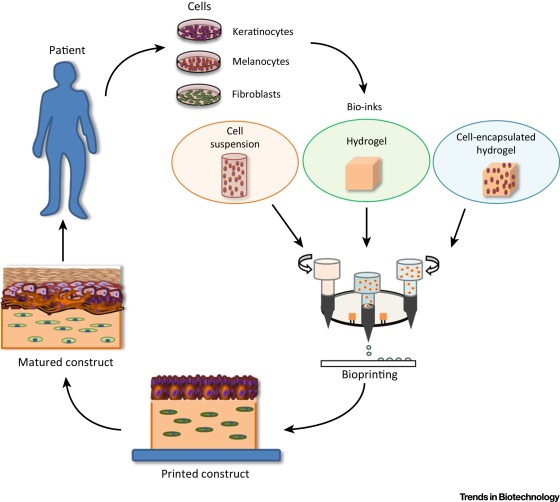
Schematic Process of Skin Fabrication Using 3D Printing Technology
In terms of commercialization and regulation, the regulatory processes and diversity governing tissue engineering and regenerative medicine (TERM) pose significant challenges to its development. The successful commercialization of printed constructs largely depends on regulatory and funding approvals. For 3D-printed skin constructs, which incorporate various biomaterials, cells, and growth factors, the difficulty in obtaining regulatory approval stems from the increasing complexity and potential risks associated with clinical studies. Critical standards, such as quality control and manufacturing procedures, are essential for bioprinting.
Although bone, cartilage, skin, muscle, blood vessels, and nerves can already be printed in the laboratory, methods for constructing more complex structures suitable for patient transplantation are still under development. Craniofacial reconstruction can benefit patients with cancer or facial trauma, and since work on these cell types has been completed, it is evident that this technology warrants further research and development investment. In the short term, 3D-printed scaffolds can be used to address focal defects in the mandible or other facial regions.
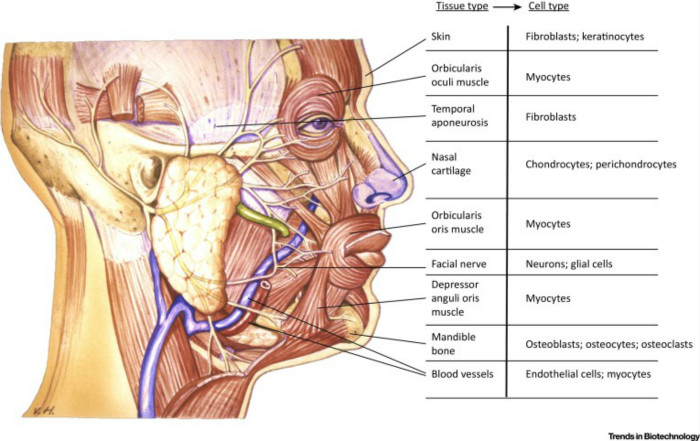
Craniofacial Anatomical Diagram: Highly Complex Structure
While various bioprinting techniques hold promise, printing multicellular tissue constructs remains challenging because each tissue currently requires specific technologies. “The technology still has a long way to go, driven by the demand for high-quality manufactured products for long-term (pre)clinical studies, smart polymers, and, most importantly, bioprinted architectures,” said surgeon Dafydd Visscher and his colleagues at Amsterdam University Medical Centers.
“Handheld bioprinting devices capable of delivering cells to tissues such as skin and cartilage may emerge as a promising approach for treating external craniofacial tissues,” said Dafydd Visscher. “At present, optimizing bioprinting technology to enhance the self-repair capacity of tissues in the craniofacial region should constitute a rational first step toward its clinical application.”
3D bioprinting has demonstrated that precise models can enhance the way we evaluate new drugs, such as by generating “organoids” composed of multiple cell types and tumor models with engineered vasculature. Such approaches enable rapid, real-time monitoring of drug interactions across multiple organs, although achieving this may require iterative refinement, such as incorporating vascular networks and linking organ models.
“As new advanced bioprinting technologies emerge, the fabrication of physiologically relevant tissue models will become a critical tool in drug development over the next decade,” said Ibrahim Ozbolat and Weijie Peng from Binzhou University, along with Derya Unutmaz from the Jackson Laboratory for Genomic Medicine. “When integrated with other 3D biofabrication and supporting technologies, bioprinted organ-on-a-chip/human models and microarrays will significantly reduce the attrition rate of new therapies during preclinical trials and substantially shorten the drug development process.”
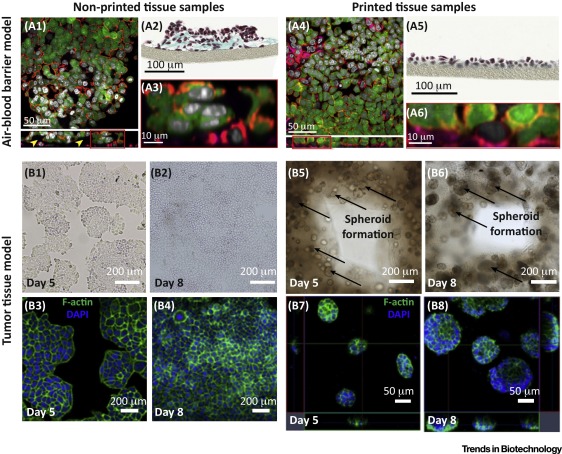
Comparison of Responses Between Bioprinted and Non-Bioprinted Blood Vessels
Bioprinted tissue models and microarrays represent a promising technology in the pharmaceutical industry, particularly for pharmacokinetics, toxicity testing, and anti-tumor assays. Unlike traditional methods, 3D bioprinted tissue models and drug-application microarrays are not constrained by the security and ethical concerns associated with the potential leakage of valuable clinical data. Commercial products such as bioprinted micro-liver and micro-kidney arrays have recently attracted interest from several companies.
Fabricating 3D vascular networks within bioengineered tissues is essential for ensuring tissue survival post-transplantation and accurately replicating human morphology. This approach focuses on stacking 2D cell layers or bioprinting 3D networks, enabling a high degree of spatial control. However, manufacturing tissues with vascular networks that can be directly anastomosed to a patient’s arteries or veins remains a significant challenge.
“Currently, vascularization is considered one of the major obstacles to the large-scale translation of tissue engineering into clinical applications,” say Jeroen Rouwkema and Ali Khademhosseini, bioengineers at MIT and Harvard University. “Evidently, methods for effective patterning within engineered tissues have achieved the highest level of control over the initial organization of vascular structures.”
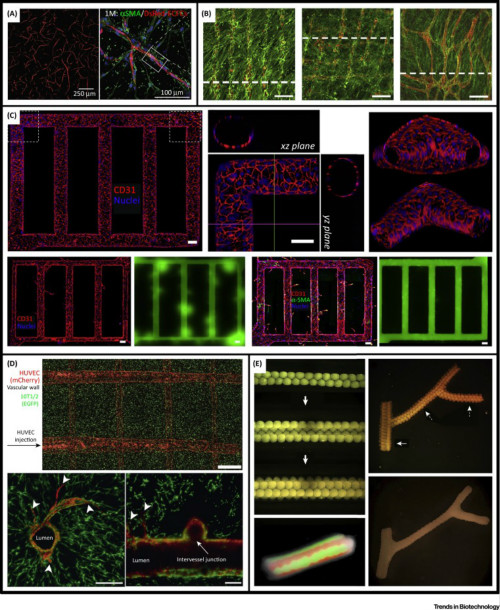
Vascular Network Fabrication: Multiple Methods Have Been Explored for Patterning Vascular Cells
When discussing engineered vascular networks, it is particularly crucial to recognize that quality outweighs quantity. The key factor is not the number of vascular structures within a given tissue volume, but rather the volume of blood perfused through the vascular network and its distribution throughout the tissue volume. Therefore, proper organization and maturation of the vascular network are essential. Studies have shown that excessive stimulation of angiogenesis leads to an overabundance of vessels; tracer perfusion experiments demonstrate that such vessels exhibit poor perfusion efficacy.